DD
MM
YYYY

PAGES

DD
MM
YYYY

spot_img

PAGES

Home Blog Page 48

NTT DATA Chief Says AI Bubble Will Deflate Fast and Any Correction Will Be Brief

0

A potential artificial intelligence bubble will deflate faster than earlier tech cycles but ultimately give way to an even stronger rebound once enterprise adoption aligns with the enormous infrastructure build-out underway, according to NTT DATA Inc. chief executive Abhijit Dubey.

Dubey said in an interview with the Reuters Global Markets Forum that even though concerns about supply chains and overheated valuations are rising, the overall trajectory of the technology remains unmistakably upward. He said there is absolutely no doubt that, in the medium to long term, AI will remain a dominant global trend.

“Over the next 12 months, I think we’re going to have a bit of a normalization … It’ll be a short-lived bubble, and (AI) will come out of it stronger,” he said.

The tech industry is grappling with unprecedented demand for compute capacity. Dubey said supply chains are almost fully spoken for for the next two to three years, with pricing power shifting toward chipmakers and hyperscalers. Their valuations have stretched across public markets, echoing the kind of concentrated exuberance seen in earlier cycles.

The broader environment shows why bubble talk is spreading. AI has triggered the biggest technological shake-up since the early internet era. The scale of capital flowing into data centers, model training clusters, power projects, and high-end chip manufacturing has reached trillions of dollars. Yet the revenue model for many players is still thin.

Companies supplying the infrastructure are booming, but many downstream firms have yet to translate user interest into meaningful profit. Even the largest AI developers report rising costs outpacing monetization, fueling the belief among investors that spending has run too far ahead of earnings. For some market strategists, this mismatch is a classic early-bubble symptom.

Dubey said that despite the unease, the long-term fundamentals remain robust. He highlighted that AI has already caused shortages of memory chips, attracted attention from regulators, and raised questions about labor markets. His firm has begun rethinking recruitment as AI reshapes global employment structures. He said there will clearly be an impact and that over a five- to twenty-five-year horizon, there will likely be some dislocation. Even so, he said NTT DATA is still hiring across multiple locations.

“There will clearly be an impact … Over a five- to 25-year horizon, there will likely be dislocation,” he said.

The labor shift was a major theme at the Reuters NEXT conference in New York, where speakers discussed how AI could reshape work and job growth. May Habib, CEO of Writer Inc., said customers are increasingly focusing on slowing the pace of hiring. She described conversations with clients who immediately think about reducing headcount once they adopt new AI systems, recounting a CEO who asked how soon he could cut thirty percent of his team.

“You close a customer, you get on the phone with the CEO to kick off the project, and it’s like, ‘Great, how soon can I whack 30% of my team?’,” she said.

Yet adoption patterns are more uneven than many executives acknowledge. A PwC survey of the global workforce released in November said daily use of generative AI remains significantly lower than what corporate leaders claim internally. Workers who have AI skills are earning far more, with average wage premiums hitting fifty-six percent, more than double last year. But access to training is uneven. PwC said about half of non-managers reported access to learning resources compared with nearly three-quarters of senior executives.

That contrast reinforces concerns that organizational readiness is lagging far behind investment levels.

This gap between spending and usage is at the heart of the bubble argument. Power-hungry data centers, GPU clusters, and model-development budgets are expanding at a pace usually associated with markets that already have mature demand. Instead, enterprises are still testing pilots, rolling out small-scale deployments, and debating return-on-investment metrics.

Investors have started to question how long companies can keep pouring in cash before they see widespread revenue payback. Some funds have already trimmed exposure to high-cost AI builders because profit margins remain narrow or negative.

At the same time, regulators are sharpening their focus. The escalating energy demands of AI infrastructure have been flagged by policymakers across major economies, and global antitrust agencies are examining chip supply chains and cloud dependencies. Heightened scrutiny adds another layer of uncertainty at a moment when valuations are already stretched.

Even so, Dubey’s view points to a cycle unlike the dot-com bust or the crypto downturn. He believes the correction will be shorter because AI is already embedded in business planning across industries and sits at the center of long-term digital transformation strategies. Once the supply bottlenecks ease and enterprises scale their deployments, he expects revenue models to catch up.

That rebound, he suggested, will be stronger and more durable than the early-phase gains that have characterized the latest boom.


The Epic Showdown; CZ vs. Peter Schiff on Bitcoin vs. Gold

0

At Binance Blockchain Week in Dubai, Binance founder Changpeng Zhao (CZ) and gold maximalist Peter Schiff went head-to-head in a highly anticipated debate: Bitcoin vs. Tokenized Gold as the Future of Sound Money.

The event drew massive online buzz, with X users calling it a “masterclass” in crypto advocacy. CZ didn’t just defend Bitcoin—he dismantled gold’s outdated limitations with sharp wit, real-world demos, and data-backed arguments.

Schiff pushed back hard, framing BTC as “pure speculation” and tokenized gold as a “modernized” store of value. CZ structured his case around the core properties of money: verifiability, portability, divisibility, scarcity, and utility.

He argued Bitcoin isn’t just like gold—it’s a superior, digital evolution designed for the internet age. Physical gold requires labs or experts to confirm purity—easy to fake or adulterate.

Instant, trustless checks via blockchain explorers; every satoshi is provably unique. Handed Schiff a 1kg gold bar gifted by a Kazakh official and asked, “Is this real?” Schiff: “I don’t know—needs testing.” CZ: “Bitcoin verifies in seconds, no lab required.”

Moving gold means armored trucks, customs hassles, and risks, it diffucult flying with $20K in jewelry without scrutiny. Send millions globally in minutes via wallet-to-wallet transfers—no borders, no paperwork. “Gold is heavy; Bitcoin is weightless. Why ship bars when you can email value?”

Gold bars aren’t practical for small transactions—try buying coffee with a fraction of a nugget. Down to 8 decimal places (satoshis); seamless for micro-payments. “Gold’s for hoarding; Bitcoin’s for using.”

Total supply unknown—estimates vary, and new mining adds uncertainty. Hard-capped at 21 million; every coin tracked transparently on-chain. “We don’t know how much gold exists or where it all is. With Bitcoin, we know exactly—and no more will ever be minted.”

Rarely used for payments today; industrial uses don’t make it money. Tokenized gold still relies on custodians. Powers a global monetary network: payments, DeFi, remittances, 3-min settlements vs. gold’s weeks. Growing adoption via crypto cards.

“How many people buy stuff with gold? Bitcoin’s already spendable everywhere—user experience matters, not backend magic.” Schiff scored points by noting gold’s ~59% YTD gains in 2025 vs. Bitcoin’s dip below $100K now rebounding above $90K.

Over 4 years, precious metals edged out BTC. But CZ flipped the script: “Look at 8 years—Bitcoin crushes gold.” Bitcoin’s volatility pays off: from $0.50 in 2010 to $90K today, it’s outpaced gold by orders of magnitude over any multi-year horizon.

Schiff called BTC a “lottery ticket,” but CZ countered: “Speculation is just one layer—developers, institutions, and real payments make it a network.”

Schiff jabbed at Binance as a “casino” suckering retail traders, while CZ kept it light, joking pre-debate on X about feeling “nervous” because “Bitcoin has so many advantages, it should be easy.”

Post-event, X lit up with memes of Schiff’s gold bar fumble—audience polls gave CZ an 83% win. Even Schiff stayed cordial, suggesting a crypto card for his gold business. This wasn’t just talk; it spotlights crypto’s maturation.

Tokenized gold bridges TradFi to blockchain, but CZ proved Bitcoin’s native digital design wins for a borderless world. As adoption grows—ETFs, nation-states stacking, and everyday payments—gold feels like the horse and buggy to BTC’s Tesla.

Europol Dismantles €700M Crypto Fraud and Laundering Network

0

Europol announced the successful takedown of a sophisticated international criminal network responsible for operating fake cryptocurrency investment platforms and laundering over €700 million approximately $815 million in illicit funds.

This multi-year operation, coordinated across Europe and beyond, culminated in coordinated raids and arrests, marking a significant blow to online investment scams exploiting crypto’s anonymity.

The network lured thousands of victims—primarily retail investors—through deceptive online ads promising sky-high returns on cryptocurrency investments. These ads often featured deepfake videos impersonating celebrities or financial experts to build false credibility.

Once hooked, victims were directed to bogus trading platforms displaying fabricated profit dashboards to encourage larger deposits. Aggressive call centers then employed social engineering tactics, pressuring users to send more money via bank transfers, credit cards, or crypto wallets under the guise of “unlocking” gains or covering fake fees.

Stolen funds were quickly funneled through a web of cryptocurrency exchanges and multiple blockchains, leveraging mixing services to obscure trails and complicate recovery. This infrastructure spanned at least nine countries, including servers and operations in Cyprus a hub for fake platforms and affiliate marketing rings in Eastern Europe.

The bust unfolded in two main phases, building on years of intelligence from Eurojust and national agencies. Raids in Cyprus, Germany, and Spain—initiated at the request of French and Belgian authorities—led to the arrest of nine key suspects accused of laundering proceeds from the platforms. Seizures included, €800,000 in frozen bank accounts. €415,000 in cryptocurrencies, €300,000 in cash. Digital devices, luxury watches, and other high-value assets worth millions

Phase 2: Focus shifted to the scam’s support ecosystem, with searches in Belgium, Bulgaria, Germany, and Israel targeting deceptive ad networks and recruitment channels. This disrupted the flow of new victims and included analysis by Europol’s cryptocurrency experts to trace remaining funds.

Agencies from Belgium, Bulgaria, Cyprus, France, Germany, Israel, Malta, and Spain collaborated, with Malta’s Blockchain Analysis Unit identifying four local victims who lost €493,750 combined.

Investigations continue to seize additional assets and pursue affiliates. This operation follows a string of Europol-led crypto crackdowns, including the June 2025 shutdown of a €450 million investment fraud ring and the recent dismantling of the Cryptomixer service, which laundered over €1.3 billion in Bitcoin.

It highlights the growing sophistication of “pig butchering” scams in crypto, where emotional manipulation meets technical evasion. While exact victim counts remain undisclosed, the network’s scale suggests impacts on thousands across Europe and possibly further afield.

Unlike most crypto scams where funds vanish forever, Europol seized €800k in bank accounts, €415k in crypto, cash, luxury goods, and real estate. Some of the frozen/seized assets will eventually be redistributed to victims via court-ordered restitution especially in EU jurisdictions.

Victims in France, Belgium, Germany, Malta, etc., should formally file police reports now to be included in any future compensation pool. The use of deepfake videos of celebrities and financial influencers was central to this scam.

Expect platforms Meta, Google, TikTok to face renewed regulatory pressure in the EU to pre-screen ads containing video of real people claiming investment returns. Mainstream headlines will again equate “crypto” with scams, reinforcing the narrative that retail investors should stay away.

Longer-term, however, these high-profile busts help separate legitimate projects from the fraudsters and may accelerate clearer EU regulation. For those affected, Europol advises reporting to local authorities and monitoring for recovery options through seized assets.

This bust underscores ongoing efforts to clean up crypto’s underbelly, but experts warn that fragmented global regulation leaves room for similar schemes to evolve.

Understanding Impermanent Loss and Michael Egorov’s View on Reducing Losses

0

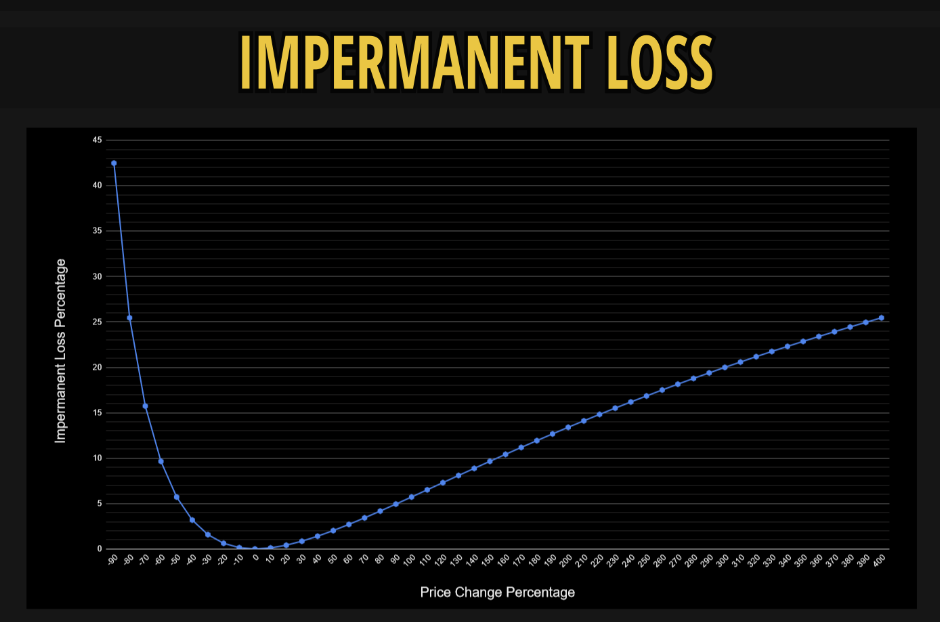
Impermanent Loss (IL) is the main pain point for passive liquidity providers in constant-function AMMs like Uniswap v2, most classic DEX pools, and even many Curve pools when prices move a lot.

Impermanent loss is the unrealized loss in value when providing liquidity to a decentralized finance (DeFi) liquidity pool compared to simply holding the assets. It occurs because market price changes rebalance the ratio of tokens in the pool, and the loss is only “impermanent” until you withdraw your liquidity, at which point it becomes permanent. You can mitigate this risk by providing liquidity to pools with stablecoin pairs or correlated assets, or by choosing pools with high trading volumes to earn more in fees. 

It occurs because the AMM rebalances the pool automatically, forcing LPs to sell the appreciating asset and buy the depreciating one ? when the price reverts or keeps moving, the LP ends up with less dollar value than if they had simply held the tokens.

Michael Egorov— Curve’s founder has been working on several ideas over the years to reduce or eliminate IL. LLAMMA lending-liquidating AMM algorithm, powers Curve’s native stablecoin crvUSD and its associated “Lending” markets.

A user deposits Bitcoin into a 2x-leveraged BTC/crvUSD Curve pool. The protocol borrows crvUSD to maintain the target leverage while managing exposure so LPs behave economically like spot BTC holders. The user doesn’t need to provide any crvUSD. Instead, the protocol borrows crvUSD against the liquidity position itself, for the other side.

Then, when price moves up or down, the protocol will grow or shrink the position so that the LP position moves in line with BTC prices. It gets larger when BTC goes up (increasing leverage), and gets smaller when BTC goes down (reducing leverage).

This is often what people mean when they talk about “Yield Basis” or Michael’s solution to impermanent loss, even if the branding has evolved. LLAMMA basically eliminates impermanent loss. Traditional AMM like those present on Uniswap v2/v3, classic Curve pools, your deposit is always 50/50 or fixed-ratio.

Any price move forces you to sell the winner and buy the loser ? IL. LLAMMA used in crvUSD markets and Curve “Lending” pools, instead of providing passive liquidity in a normal AMM, your collateral like ETH, BTC, is placed into a special “banded” AMM that continuously converts your collateral into crvUSD as the price moves against you, and converts back when price moves in your favor.

The conversion happens in the exact same direction and magnitude as a liquidator would do in a lending protocol like Aave or Compound. So the P&L of the position is almost identical to just holding the asset outright, minus small fees.

Result is near-zero impermanent loss actually slightly positive in many cases because of the soft-liquidation mechanics and the way bands are priced. When you deposit WBTC into the WBTC/crvUSD lending market, you’re not really suffering classic IL.

Your position slowly converts to crvUSD as WBTC price drops protecting you from further downside, and converts back to WBTC as price rises letting you capture upside again. WBTC/crvUSD and cbETH/ETH/crvUSD LPs have had effectively zero or slightly positive “IL” compared to holding, even through massive volatility.

Current products that use this mechanism as of Dec 2025 crvUSD lending markets (WBTC, WETH, cbETH, tBTC, etc.) – the original LLAMMA pools. Curve Crypto V2 pools with LLAMMA mode – some newer pools (e.g., ethenaUSDe/crvUSD, various LST pools) are being deployed with the same engine.

LlamaLend – one-click isolated lending markets basically private LLAMMA pools that Michael has been pushing more recently. Remaining limitationsIt only works well when one side is a stable asset crvUSD or similar. You still get classic IL in volatile/volatile pools.

Liquidity is still lower than the biggest Uniswap or classic Curve pools, so trading fees can be lower. Slightly more complexity. Michael’s LLAMMA mechanism (crvUSD + Lending markets) is currently the closest thing DeFi has to a real solution to impermanent loss for LPs who are happy to pair volatile assets with stables.

In many cases it doesn’t just reduce IL — it essentially removes it and even gives LPs very close to hold returns + yield.If you’re providing liquidity today and care about IL, the highest conviction places are usually: crvUSD lending markets (WBTC/crvUSD, WETH/crvUSD, etc.)

Some of the new LLAMMA-based crypto pools are the practical embodiment of what was once talked about under the “Yield Basis” name.

Polymarket Integrated into MetaMask Prediction as Race for Liquidity Deepens

0

MetaMask has officially integrated Polymarket into its mobile app, launching “MetaMask Prediction Markets”.

This feature embeds Polymarket’s decentralized prediction markets directly into the wallet interface, allowing users to bet on real-world event outcomes—like elections, sports, or economic forecasts—using USDC stablecoins without leaving the app.

Users fund their wallet swapping other assets for USDC if needed, access a new “Predictions” tab, and buy shares in event outcomes. Share prices reflect crowd-sourced probabilities, enabling on-chain trades that settle automatically based on verified results.

With MetaMask’s 30 million monthly active users, this turns the wallet into a seamless Web3 hub for prediction trading, building on recent additions like Hyperliquid perps and Solana support. It’s mobile-first to fix pain points like app-switching during live events.

The move follows Polymarket’s CFTC approval for U.S. operations and its November 2025 integration with Google Search and Finance for real-time odds display. It’s a step toward mainstream DeFi adoption, emphasizing self-custody and regulatory compliance.

The integration slashes friction in prediction market participation, allowing MetaMask’s 30 million monthly active users to fund trades with any EVM-compatible token from Ethereum, Polygon, Base, or Arbitrum and place bets without app-switching or bridging hassles.

This mobile-first design addresses pain points like mid-event delays, making it ideal for real-time events such as elections or sports. Early users report seamless onboarding and fast chart refreshes, turning wallets into intuitive “truth machines” for crowd-sourced insights.

Broader retail adoption, as prediction markets evolve from niche DeFi tools to everyday crypto features. MetaMask tie-up could flood the platform with liquidity—potentially $100M+ in new volume—as users from 250M+ wallet downloads worldwide gain one-click access.

It positions prediction markets as a mainstream alternative to traditional betting vs. Kalshi’s CNN broadcasts, with volumes already hitting $1.43B monthly on Polymarket alone. Higher participation sharpens market accuracy, drawing institutions and amplifying on-chain signals for events like the 2026 World Cup.

This isn’t just growth—it’s a catalyst for prediction markets to rival polls in forecasting power. MetaMask introduces a 4% flat fee per trade split with Polymarket, benchmarked against sports betting apps, providing predictable revenue while Polymarket remains free standalone.

Users earn MetaMask Rewards points (2 per $1 traded), tying into the upcoming $MASK token for deeper ecosystem perks like referrals and spending. For Polymarket, it boosts visibility and user count, potentially accelerating a $POLY token launch amid $9B valuations from recent investments.

It monetizes self-custody without compromising decentralization, fostering a “super-app” wallet model. MetaMask shifts from a simple gateway to a full DeFi hub, layering prediction markets atop perps via Hyperliquid and Solana/Bitcoin support.

This leverages Ethereum’s smart contracts for trustless settlements via oracles like Chainlink, enabling futarchy-style governance where market prices guide decisions. Prediction markets become “collective intelligence” tools for policy, crypto sentiment, and culture—more accurate than experts due to skin-in-the-game staking.

It could front-run narratives, with on-chain liquidity influencing real-world events, but requires robust anti-bot measures to preserve integrity. Regulatory scrutiny looms as prediction markets blur lines with gambling/securities, especially post-CFTC nods—U.S. users may face geo-restrictions despite compliance.

Oracle vulnerabilities could lead to faulty settlements, and volatile markets risk losses for novices. Fees and bot interference might deter purists, while centralization concerns arise if liquidity concentrates.

In essence, this integration democratizes probabilistic forecasting, accelerates Web3’s shift to unified experiences, and cements prediction markets as a core primitive for understanding reality through incentives. It’s bullish for DeFi’s maturity, but success hinges on scaling liquidity without compromising decentralization.