
DD
MM
YYYY

PAGES

DD
MM
YYYY

spot_img

PAGES

Home Blog Page 48

Kalshi Moves Beyond Prediction Markets With WTI Perpetual Futures

0

Kalshi is pushing deeper into the world of regulated derivatives with plans to seek approval from the U.S. Commodity Futures Trading Commission (CFTC) for a perpetual futures contract tied to West Texas Intermediate (WTI) crude oil.

The proposed product would represent another major expansion for the prediction-market operator, which is increasingly positioning itself as a broader financial exchange rather than a platform focused exclusively on event contracts.

According to Reuters, Kalshi is preparing to file for approval of the WTI perpetual, potentially making it the first perpetual oil futures product offered through a regulated U.S. platform.

The proposed contracts would allow traders to maintain positions without the traditional expiration and rollover requirements associated with conventional futures. They could trade 24 hours a day, five days a week, while also providing leveraged exposure to movements in crude oil prices.

The move follows Kalshi’s successful expansion into perpetual futures earlier this year. In May, the CFTC approved KalshiEX’s BTCPERP contract, a perpetual futures product referencing Bitcoin’s spot price.

The regulator determined that the contract complied with the Commodity Exchange Act and applicable CFTC regulations. The approval also opened the door for market participants to submit additional perpetual products for regulatory review.

WTI is a particularly significant target because it is one of the world’s most closely watched crude-oil benchmarks.

Oil prices influence inflation, transportation costs, industrial production and monetary policy, making WTI exposure relevant not only to energy traders but also to investors attempting to hedge broader macroeconomic risks.

Kalshi already has experience offering WTI-related event contracts. Its existing regulatory filings describe contracts based on whether the settlement price of WTI crude oil futures reaches specified levels by particular dates.

The proposed perpetual product would represent a substantial evolution from those binary-style contracts toward a more conventional continuous trading instrument. The timing is also notable.

The CFTC has been examining the regulatory framework surrounding perpetual contracts and around-the-clock commodity trading. Earlier efforts by CME Group to introduce 24/7 crude-oil futures encountered regulatory resistance.

While the CFTC has separately opened discussions around perpetual contracts involving physical or storable energy commodities. Securing approval would strengthen its argument that prediction-market infrastructure can evolve into a broader regulated derivatives marketplace.

The company has already filed proposals involving perpetual futures linked to other asset classes, including equities, foreign exchange and interest rates. Its August filing for equity-index perpetuals demonstrated its ambition to compete more directly with traditional financial exchanges.

However, the proposal will likely face significant scrutiny. Oil is a highly liquid and systemically important commodity, and regulators must consider leverage, market manipulation, price formation, liquidity and risk-management mechanisms.

Perpetual contracts introduce different risks from traditional futures because positions can remain open indefinitely. If approved, Kalshi’s WTI perpetual could nevertheless mark an important development in the convergence between prediction markets and conventional derivatives.

It would give traders a regulated U.S. venue for continuously managing directional exposure to crude oil without the mechanics of repeatedly rolling expiring futures. More broadly, the initiative reflects Kalshi’s transformation. Its original model centered on contracts tied to real-world events.

But its recent expansion suggests a much larger ambition: building a regulated marketplace where participants can express views on prices, economic indicators, financial assets and major events.

The proposed WTI perpetual is therefore more than another product launch. It is another step in Kalshi’s attempt to redefine what a modern financial exchange can look like.

SEC Chair Atkins Expects CLARITY Act to Clear Senate by September 15

0

U.S. Securities and Exchange Commission Chair Paul Atkins has expressed confidence that the Digital Asset Market CLARITY Act could advance through the Senate this month, identifying September 15 as a critical date for the legislation and the future of cryptocurrency regulation in the United States.

His comments have renewed attention around a bill that has become central to Washington’s effort to establish a clearer regulatory framework for digital assets.

Atkins reportedly told Fox Business that he anticipates and hopes the CLARITY Act will pass the Senate and eventually reach President Donald Trump’s desk for signature.

The Senate is scheduled to take up a procedural vote on September 15, although that vote is not itself final passage. The measure must first overcome the Senate’s procedural requirements before lawmakers can move toward a final vote.

The distinction is important for crypto markets. The September 15 vote is expected to test whether lawmakers can secure the 60 votes needed to advance the legislation. Industry participants therefore view the date as a major political milestone rather than an automatic indication that the bill will immediately become law.

At the heart of the CLARITY Act is an attempt to resolve one of the cryptocurrency industry’s longest-running regulatory problems: determining which digital assets fall under the jurisdiction of the SEC and which should instead be overseen by the Commodity Futures Trading Commission.

Greater clarity could provide exchanges, token issuers, developers and investors with more predictable rules for operating in the American market.

For years, uncertainty over whether particular tokens should be treated as securities or commodities has generated disputes between regulators and the crypto industry.

A statutory framework could replace much of that uncertainty with clearer classifications and defined responsibilities. The legislation is therefore being watched not simply as another crypto bill, but as a potential foundation for America’s broader digital-asset market structure.

Atkins’ support also comes as the SEC pursues its own regulatory initiatives. The agency has proposed a broader framework known as “Regulation Crypto Assets,” which Atkins has described as an important step toward modernizing the rules governing digital assets.

The proposal includes exemptions and regulatory approaches that are intended to align with the framework contemplated by the CLARITY Act. This parallel approach could prove significant if Congress fails to complete the legislation.

Atkins has indicated that the SEC can continue developing crypto rules under its existing authority even without congressional action. Legislation would provide a stronger statutory foundation and could make the resulting framework more durable across future administrations and changes in SEC leadership.

For the cryptocurrency industry, the potential passage of CLARITY represents more than regulatory housekeeping. Clearer rules could influence where exchanges establish operations, how companies raise capital.

How tokens are listed and traded, and whether institutional investors feel comfortable expanding their exposure to digital assets. The September 15 Senate vote will therefore be closely monitored by both Wall Street and the crypto sector.

Atkins’ optimism signals growing confidence within the regulatory establishment, but significant political hurdles remain. Until the Senate actually advances and ultimately passes the legislation, the CLARITY Act remains a work in progress.

If lawmakers succeed, the bill could mark one of the most consequential developments in U.S. crypto policy, potentially replacing years of regulatory uncertainty with a more defined market structure. For an industry seeking mainstream adoption, September 15 could become a pivotal date in that transition.

Standard Chartered Enters UAE Crypto Market With Spot Bitcoin and Ether Trading

0

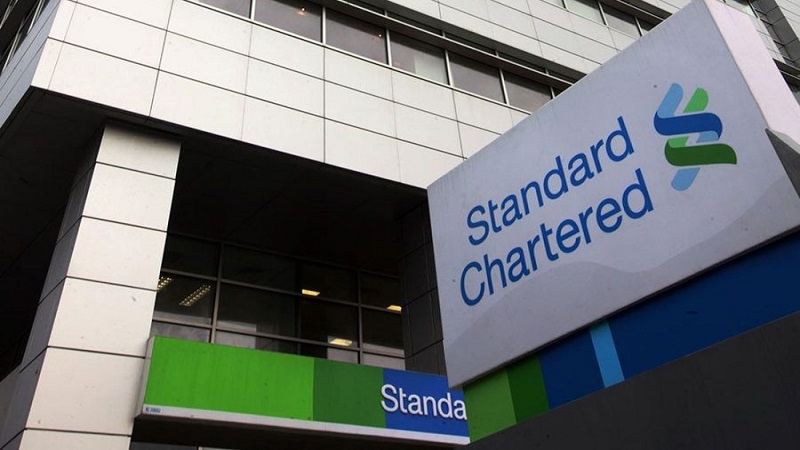
Standard Chartered has taken another significant step into institutional cryptocurrency markets, launching spot trading in Bitcoin and Ether for eligible institutional clients in the United Arab Emirates.

The move, announced on September 3, 2026, makes the bank the first Global Systemically Important Bank (G-SIB) to offer institutional spot crypto trading in the UAE, reinforcing Dubai’s growing position as a regulated hub for digital assets.

The new service is being delivered through Standard Chartered DIFC, the bank’s entity operating within the Dubai International Financial Centre and regulated by the Dubai Financial Services Authority.

Institutional clients can access deliverable Bitcoin and Ether through the bank’s existing electronic trading infrastructure, rather than having to establish separate relationships with cryptocurrency-native exchanges.

That integration is arguably the most important aspect of the announcement. Standard Chartered is placing Bitcoin and Ether directly into an environment familiar to institutional traders.

Clients can execute crypto transactions through interfaces traditionally used for foreign-exchange markets, effectively bringing digital assets closer to the workflows already used for currencies and other financial instruments.

The distinction between spot trading and derivatives also matters. The service provides deliverable Bitcoin and Ether, meaning institutions are able to buy and sell the underlying assets rather than simply taking exposure through contracts linked to their prices.

This gives asset managers, corporations and other eligible professional investors another route into direct digital-asset ownership and liquidity. The launch builds on infrastructure Standard Chartered has already established in the UAE.

The bank introduced digital-asset custody services in the country in September 2024, meaning the latest offering adds execution capabilities to an existing custody framework. Clients can settle their trades with a custodian of their choice, including Standard Chartered’s own digital-asset custody service.

Strategically, the development is part of a broader transformation in how major financial institutions approach cryptocurrency. Rather than treating Bitcoin and Ether solely as speculative products outside traditional finance.

Banks are increasingly incorporating them into regulated institutional infrastructure encompassing custody, execution, tokenization and settlement. Standard Chartered has been building toward this model for several years.

In July 2025, its UK branch launched institutional spot trading in Bitcoin and Ether, becoming the first G-SIB to provide deliverable spot crypto trading to institutional clients. The UAE expansion therefore represents an extension of an existing institutional strategy rather than an isolated experiment.

The UAE is a particularly significant market for this expansion. Dubai and the wider UAE have aggressively developed regulatory and financial infrastructure designed to attract digital-asset companies and institutional capital.

For a global bank, operating through the DIFC provides a regulated framework while positioning its crypto services close to one of the Middle East’s most active financial centers.

For the broader cryptocurrency industry, Standard Chartered’s entry could strengthen the legitimacy of Bitcoin and Ether among institutional investors.

The involvement of a systemically important bank reduces some of the operational barriers traditionally associated with crypto markets and demonstrates that digital assets can increasingly be accessed through conventional financial institutions.

Institutional adoption will depend on more than spot execution. Deep liquidity, reliable 24-hour infrastructure, risk management, custody, derivatives and regulatory clarity will remain important as professional investors expand their participation.

Standard Chartered’s UAE launch therefore represents more than another crypto trading product. It signals the continuing convergence of traditional banking and digital assets—and suggests that Bitcoin and Ether are increasingly being integrated into the institutional financial system rather than operating alongside it.

Volkswagen Plans 50,000 More Job Cuts as Automaker Launches Biggest Restructuring in Its History

0

Volkswagen plans to eliminate roughly 50,000 additional jobs worldwide as part of an aggressive restructuring designed to reduce costs, simplify its sprawling vehicle portfolio and restore profitability amid intensifying competition from Chinese automakers.

The German automaker’s supervisory board approved its “Future Plan 2030” on Thursday, a 12-part programme that Volkswagen described as the most extensive transformation effort in its history.

The company said it would need a “fundamental adjustment” of its global workforce, including management positions, beyond cost-cutting measures already under way.

Volkswagen did not specify which countries or operations would bear the new reductions, when the jobs would be eliminated or how much of the reduction would come through compulsory layoffs, voluntary buyouts or natural attrition.

The additional cuts mark a significant escalation of Volkswagen’s restructuring as the group confronts a combination of excess manufacturing capacity, weak demand in Europe, high production costs and the expensive transition to electric vehicles. The company is also under growing competitive pressure from Chinese manufacturers that have expanded rapidly in Europe with lower-cost electric vehicles and sophisticated technology.

Volkswagen to Halve Model Portfolio

The workforce reduction is only one element of the restructuring.

Volkswagen plans to halve its model portfolio by 2035 and cut the complexity of its vehicle offerings by about 75%. The company wants to concentrate production and investment on fewer models and variants, allowing higher volumes per vehicle while reducing development, manufacturing and supply-chain costs.

By 2030, Volkswagen is targeting annual vehicle sales of about 9 million units and an operating margin of 9%.

The strategy represents a substantial shift for a group whose size and brand portfolio have historically been major competitive advantages.

Volkswagen controls a collection of marques ranging from mass-market brands such as Volkswagen, Skoda, Seat and Cupra to premium and luxury names including Audi, Porsche, Bentley and Lamborghini. The group has found that scale alone does not guarantee adequate returns. Its large number of platforms, models, powertrains and variants has created substantial manufacturing and development complexity at a time when the industry is demanding faster product cycles and lower costs.

Reducing that complexity could improve factory utilization and purchasing economics while allowing Volkswagen to concentrate capital on models with stronger demand and margins.

German Factories Face Uncertain Future

The scale of Volkswagen’s manufacturing challenge is particularly visible in Germany. The company said its European factories currently have capacity to produce more than 500,000 vehicles above existing demand. That excess capacity leaves the future of four German plants in Emden, Zwickau, Hanover and Neckarsulm uncertain from 2031 through 2034.

Volkswagen said it is examining alternative uses for the facilities.

The announcement adds another layer of uncertainty for Germany’s automotive manufacturing base, where high labor and energy costs have become more difficult to reconcile with weaker European demand and intensifying international competition.

Volkswagen has already agreed with German labor representatives to reduce more than 35,000 positions at its German sites by 2030 under a programme announced in 2024. The company has not yet clarified how the new global target of roughly 50,000 additional job reductions will overlap with those previously announced German cuts.

That will help to assess the true scale of the restructuring. If the new figure is incremental, Volkswagen’s global workforce reduction could be substantially larger than the reductions already announced. If some of the positions overlap, the headline figure would overstate the number of additional jobs ultimately lost.

Chinese Competition Changes the Economics

Volkswagen’s restructuring comes as Chinese automakers increasingly challenge established European manufacturers in their most important markets. Chinese companies have built cost advantages in electric vehicles through large domestic production bases and highly integrated battery and supply chains. They have also moved quickly on software, connected-car features and battery technology.

Volkswagen competing against those manufacturers requires substantial investment at the same time that the company is trying to lower its cost base. The EV transition has therefore created a difficult capital-allocation problem. Automakers must finance new electric platforms, batteries, software and manufacturing technologies while maintaining conventional vehicle programmes during the transition.

Higher energy costs and U.S. tariffs add further pressure to a business model already facing weaker margins.

Volkswagen’s response is to reduce the number of products it develops and manufacture larger volumes of the models it retains. The approach is expected to help the company achieve economies of scale, but it also carries risks. A smaller portfolio gives Volkswagen fewer products with which to capture different segments of the market, while concentrating sales on fewer models increases the consequences if consumer preferences shift or a key product underperforms.

A Broader Auto Industry Reset

Volkswagen’s moves form part of a broader restructuring across the global automotive industry.

Manufacturers are reducing model ranges, consolidating platforms, closing or repurposing plants and cutting corporate overheads as they seek to cope with slowing growth, excess capacity and rising technology costs. The pressure is especially acute in Europe, where manufacturers face relatively high production costs while competing with imported vehicles from lower-cost producers.

For Volkswagen, the immediate challenge is to convert its enormous industrial footprint into a smaller and more profitable operation.

The 9% operating-margin target by 2030 will require more than job cuts. It will depend on whether the company can raise factory utilization, simplify engineering and procurement, improve the profitability of its electric vehicles, and allocate investment toward models capable of competing on both price and technology.

The restructuring also signals that Volkswagen no longer views its extensive product and manufacturing footprint as an asset in its current form. The company’s strategy for the next decade appears to be centered on doing less, but doing it at greater scale and lower cost.

Volkswagen shares jumped 5.8% on Friday. It’s down 21% since the beginning of the year.

Charmius and New Technology Trends in Online Casino Gaming

0
Innovative casino technology integration

The online casino industry moves at breakneck speed, and 2026 promises to be a landmark year for technological breakthroughs. Players no longer settle for static screens and repetitive gameplay; they demand immersion, speed, and fairness. This shift pushes platforms to adopt cutting-edge solutions that redefine the digital gambling experience. For those seeking the cutting edge, exploring the live casino games at Charmius reveals how far interactive play has come. Real dealers, real-time chat, and high-definition streaming create an atmosphere that rivals physical venues.

Modern platforms now treat technology as the core of their service, not an add-on. From artificial intelligence to virtual reality, every component works to make sessions smoother and more engaging. The focus stays on player satisfaction, transparent mechanics, and instant feedback. As these tools mature, they bridge the gap between the physical and digital worlds, offering convenience without sacrificing excitement. Let us break down the key numbers driving this transformation.

 Key Facts: Numbers That Define the Shift

The following statistics highlight why 2026 stands as a turning point for online gaming technology.

  1. A 2026 industry report from Statista shows that 68% of online casino players now prefer platforms with live dealer options over automated games.
  2. Virtual reality casino headsets saw a 340% sales increase in the first quarter of 2026, driven by improved graphics and lower hardware costs.
  3. Artificial intelligence-driven customer support now resolves 82% of player queries in under 30 seconds, up from 45% in 2024.
  4. Blockchain-based provably fair systems processed over 12 million verified transactions in January 2026 alone, marking a 200% year-over-year growth.
  5. Mobile gaming accounts for 71% of all online casino revenue in 2026, with 5G networks enabling seamless 4K streaming on handheld devices.

How Artificial Intelligence Personalizes Player Sessions

Artificial intelligence now powers the backbone of modern casino platforms, learning from every click and wager. Algorithms analyze playing patterns to suggest games that match individual preferences, from high-volatility slots to strategic table classics. This personalization extends beyond recommendations. AI also detects problematic behavior, offering responsible gaming tools before issues escalate. The technology adjusts difficulty levels, bonus triggers, and even visual themes based on user data. Players see a tailored interface that feels intuitive, almost as if the platform knows their next move. Behind the scenes, machine learning models process thousands of data points per second, optimizing payout schedules and game availability. This results in faster load times and zero lag, even during peak hours. The human touch remains, but AI handles the heavy lifting. It flags suspicious activity instantly, ensuring a secure environment for everyone. As these systems learn, they become sharper, crafting unique journeys that keep players engaged for longer sessions. The practical outcome is simple: smarter play, quicker rewards, and fewer frustrations.

Virtual Reality and Augmented Reality Reshape Spatial Gaming

Virtual reality moves from novelty to necessity in 2026, with major developers releasing full-scale casino environments. Players don headsets and walk through lobbies, approach tables, and interact with dealers using natural hand gestures. The sensory feedback mimics reality, from the shuffle of cards to the spin of a roulette wheel. Augmented reality offers a lighter alternative, overlaying digital elements onto the physical world. Imagine projecting a blackjack table onto your coffee table while the dealer appears through your smartphone camera. These technologies eliminate the screen barrier, creating a social presence that chat windows cannot replicate. Developers focus on comfort, reducing motion sickness through refined tracking and frame rates. Multiplayer VR rooms let friends gather from different continents, sharing a private table with voice chat and avatars. Hardware prices drop below the $300 mark, making entry accessible to a broader audience. The result is a hybrid space where geography no longer limits who you play with or how you experience the game.

Enhanced Security and Fairness Through Blockchain Integration

Blockchain technology revolutionizes trust in online gambling, turning transparency into a feature rather than a promise. Every bet, card shuffle, and payout logs onto an immutable ledger that players can inspect at any time. This open book approach eliminates doubts about rigged outcomes or delayed payments. Smart contracts automate winnings, releasing funds the instant a round concludes, without human intervention. Provably fair algorithms let users verify each result independently, confirming that no external party manipulated the odds. This system also protects personal data, as cryptographic keys replace traditional passwords. Players control their information, sharing only what necessary for transactions. The decentralized nature of blockchain means no single point of failure, reducing downtime and hacking risks. Casinos adopting this tech attract a tech-savvy demographic that values verifiable honesty. The numbers confirm the trend, with blockchain-based platforms reporting 50% higher player retention rates compared to traditional sites. As regulatory frameworks catch up, expect this technology to become the standard, not the exception.

Final Thoughts

Technology does not just improve online casinos; it reinvents them. The blend of artificial intelligence, virtual reality, and blockchain creates an ecosystem that is faster, fairer, and far more engaging than anything seen before. Players in 2026 expect these advancements as standard features, not luxury extras. The platforms that thrive will be those that embrace innovation while keeping the human element front and center. Whether you seek the thrill of live dealers, the immersion of virtual worlds, or the security of verified transactions, the options have never been more exciting. The future of gambling is here, and it works for you.