

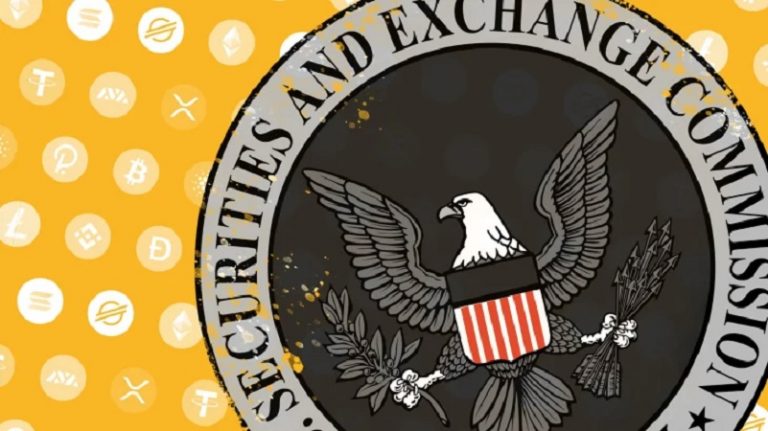
U.S. Securities and Exchange Commission Chair Paul Atkins has expressed confidence that the Digital Asset Market CLARITY Act could advance through the Senate this month, identifying September 15 as a critical date for the legislation and the future of cryptocurrency regulation in the United States.
His comments have renewed attention around a bill that has become central to Washington’s effort to establish a clearer regulatory framework for digital assets.
Atkins reportedly told Fox Business that he anticipates and hopes the CLARITY Act will pass the Senate and eventually reach President Donald Trump’s desk for signature.
The Senate is scheduled to take up a procedural vote on September 15, although that vote is not itself final passage. The measure must first overcome the Senate’s procedural requirements before lawmakers can move toward a final vote.
Register for the next Tekedia Mini-MBA.
Register for Tekedia AI in Business Masterclass.
Join Tekedia Capital Syndicate and co-invest in great global startups.
The distinction is important for crypto markets. The September 15 vote is expected to test whether lawmakers can secure the 60 votes needed to advance the legislation. Industry participants therefore view the date as a major political milestone rather than an automatic indication that the bill will immediately become law.
At the heart of the CLARITY Act is an attempt to resolve one of the cryptocurrency industry’s longest-running regulatory problems: determining which digital assets fall under the jurisdiction of the SEC and which should instead be overseen by the Commodity Futures Trading Commission.
Greater clarity could provide exchanges, token issuers, developers and investors with more predictable rules for operating in the American market.
For years, uncertainty over whether particular tokens should be treated as securities or commodities has generated disputes between regulators and the crypto industry.

A statutory framework could replace much of that uncertainty with clearer classifications and defined responsibilities. The legislation is therefore being watched not simply as another crypto bill, but as a potential foundation for America’s broader digital-asset market structure.
Atkins’ support also comes as the SEC pursues its own regulatory initiatives. The agency has proposed a broader framework known as “Regulation Crypto Assets,” which Atkins has described as an important step toward modernizing the rules governing digital assets.
The proposal includes exemptions and regulatory approaches that are intended to align with the framework contemplated by the CLARITY Act. This parallel approach could prove significant if Congress fails to complete the legislation.

Atkins has indicated that the SEC can continue developing crypto rules under its existing authority even without congressional action. Legislation would provide a stronger statutory foundation and could make the resulting framework more durable across future administrations and changes in SEC leadership.
For the cryptocurrency industry, the potential passage of CLARITY represents more than regulatory housekeeping. Clearer rules could influence where exchanges establish operations, how companies raise capital.
How tokens are listed and traded, and whether institutional investors feel comfortable expanding their exposure to digital assets. The September 15 Senate vote will therefore be closely monitored by both Wall Street and the crypto sector.
Atkins’ optimism signals growing confidence within the regulatory establishment, but significant political hurdles remain. Until the Senate actually advances and ultimately passes the legislation, the CLARITY Act remains a work in progress.
If lawmakers succeed, the bill could mark one of the most consequential developments in U.S. crypto policy, potentially replacing years of regulatory uncertainty with a more defined market structure. For an industry seeking mainstream adoption, September 15 could become a pivotal date in that transition.