DD
MM
YYYY

PAGES

DD
MM
YYYY

spot_img

PAGES

Home Blog Page 4841

Void, Unenforceable contracts

0

A legal contractual document was leaked to the general public last week and it trended across social media channels. 

The content of the document is the Political Agreement/ arrangements by some top political officials of Ogun state to share political slots and political positions amongst themselves and between their allies.

What the lawyer that prepared this document failed to point out to them is that the contract is void abinitio and can never be ratified or enforced in any court of law peradventure there is a breach of it by any of the contracting parties because such a contract is repugnant to public policy.

A void contract, therefore, is a contract that is not legally enforceable, starting from the time it was created. It is illegal and invalid and cannot be enforced in any court of law due to its illegality. A void contract is totally null and the contract cannot be ratified by either the contracting parties or the court.

A legal agreement between top office holders of a state on how slots and positions should be shared amongst them and amongst their protégés is totally illegal and void and such a contract if/ when there is a breach cannot be enforced in any court of law.

For a contract to have the backing of the law, it must be legal, and valid, the contracting parties must be of statutory age and they must be of sound mind as of the time they are entering into the contract. Anything other than this, the contract becomes voidable or void abinitio.

In a legal sense, a void contract is treated as if it was never created and becomes unenforceable in court.

Outside legality as a sacrosanct feature of a valid contract, other features that must be present for a contract to be valid and enforceable include; Offer, Acceptance, Awareness, Consideration, and Capacity.

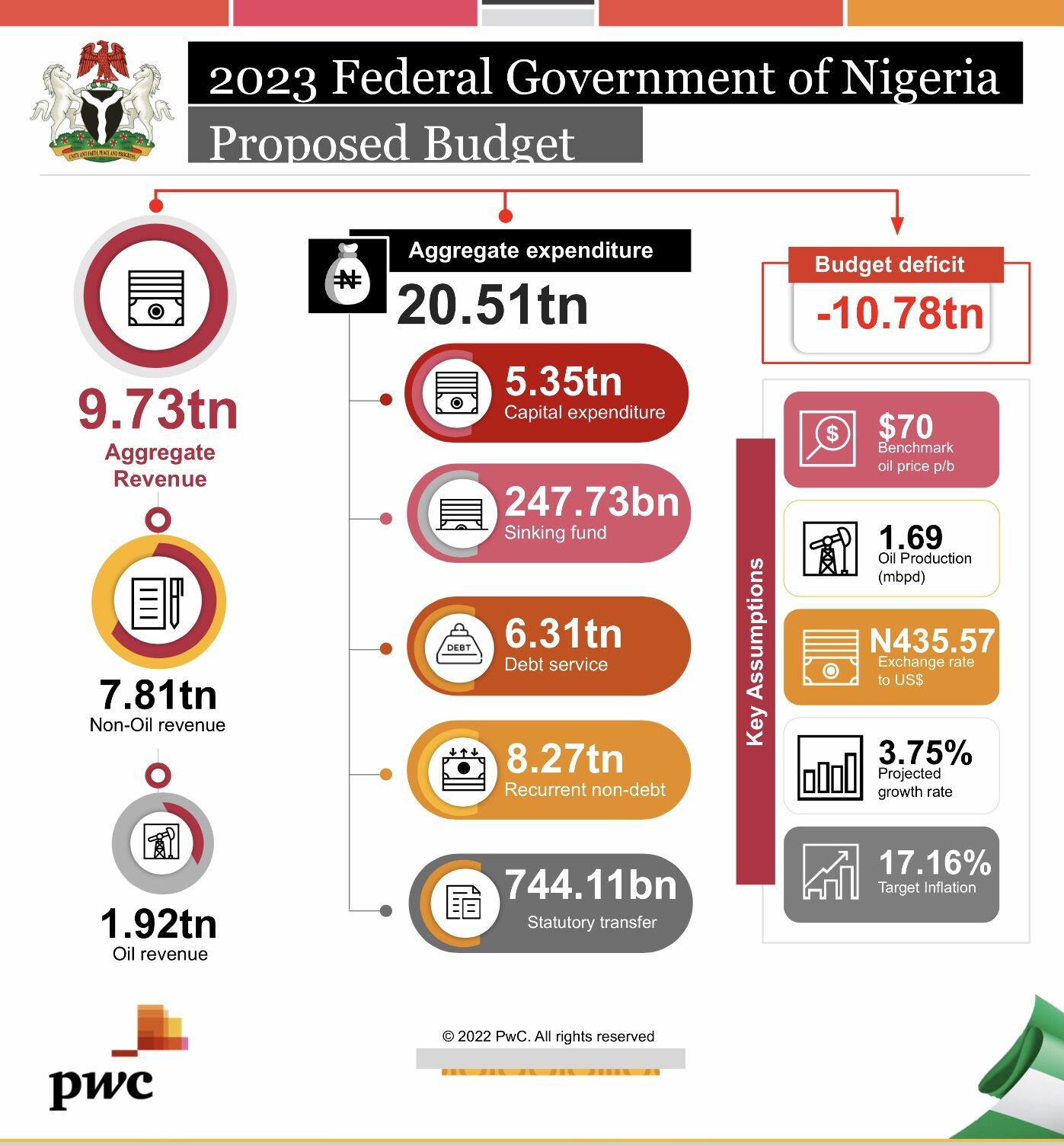
Breakdown of Nigeria’s 2023 Federal Budget – Budget of Fiscal Consolidation and Transition

0

Nigeria’s Federal Government 2023 Budget of Fiscal Consolidation and Transition, courtesy of PwC.

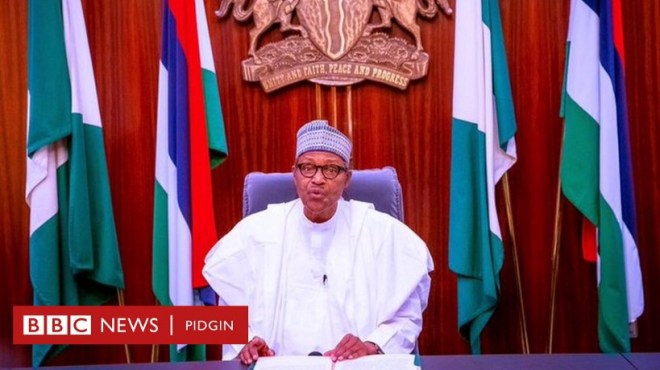
I am very pleased to be here today to present the 2023 Budget Proposals at this Joint Session of the National Assembly. This is the last time I will be laying the budget of the Federal Government of Nigeria before the National Assembly.

  1. Mr. President; Mr. Speaker: As I address this Joint Session on the Budget for the last time, let me highlight some of the progress that we have made in last seven and half years, in just two important areas of Critical Infrastructure and Good Governance.

  2. We have made transformational investments in Infrastructure, notably:

a. Establishing the Infrastructure Corporation of Nigeria (‘InfraCorp’), in 2021, seed capital of N1 trillion from the Central Bank of Nigeria (‘CBN’), the Nigeria Sovereign Investment Authority (‘NSIA’) and the Africa Finance Corporation (‘AFC’);

b. Leveraging finance through the NSIA into the Presidential Infrastructure Development Fund (‘PIDF’) to facilitate the accelerated completion of the Second Niger Bridge, Lagos-Ibadan Expressway and Abuja-Kano Road;

c. Through the Road Infrastructure Tax Credit Scheme pursuant to Executive Order #7 of 2019, incentivised responsible companies to invest billions of Naira in constructing over 1,500km critical roads in key economic corridors. Under this Scheme, the Dangote Group has substantially completed the Reconstruction of 34km Apapa-Oworonshoki-Ojota Expressway and the 43km Obajana-Kabba Road. Similarly, Nigeria LNG Limited is on track to complete the 38km Bodo-Bonny Road and Bridges Project by the end of 2023;

d. Under our Sukuk Bonds scheme, since 2017, over N600 billion has been raised and invested in 941km for over 40 critical road projects nationwide, complementing the Ministry of Works and Housing’s Highway Development and Management Initiative and other interventions;

e. Investing significantly to restore our national railways, completing and commissioning the 156km Lagos-Ibadan Standard Gauge Rail (and its 8.72km extension to Lagos Port); the 186km Abuja-Kaduna Standard Gauge Rail; and 327km Itakpe-Warri Standard Gauge Rail. These completed projects complement our ongoing investments in Light Rail, Narrow and Standard Gauge Rail, Ancillary Facilities Yards, Wagon Assembly Plants, E-Ticketing infrastructure as well as the training and development of our rail engineers and other workers;

f. We have completed New Airport Terminals at Lagos, Abuja, Kano and Port Harcourt, and reconstructed the Abuja Airport Runway in its first overhaul since its construction in the early 1980s.

g. Other investments in airports safety facilities, aeronautical meteorological services delivery complement ongoing development of seaports and ancillary infrastructure at the Lekki Deep Sea Port, Bonny Deep Sea Port, Onitsha River Port, as well as the Kaduna, Kano and Katsina Inland Dry Ports to create a truly multimodal transport system;

h. We have transformed Nigeria’s challenging power sector, through bespoke interventions such as the Siemens Power Program, with the German government under which over 2 billion US Dollars will be invested in the Transmission Grid.

i. We have leveraged over billions of US dollars in concessional and other funds from our partners at the World Bank, International Finance Corporation, African Development Bank, JICA as well as through the Central Bank of Nigeria, working with the Finance Ministry, to support the power sector reforms.

j. The Central Bank has also been impactful in its interventions to roll out over a million meters to on-grid consumers, creating much needed jobs in assembly and installation. Our financing interventions have recently been complemented with the takeover of four electricity distribution companies and the constitution of the Board of the Nigeria Electricity Liability Management Company.

k. On the generation side, we have made significant investments in an incremental 4,000MW of power generating assets, including Zungeru Hydro, Kashimbila Hydro, Afam III Fast Power, Kudenda Kaduna Power Plant, the Okpai Phase 2 Plant, the Dangote Refinery Power Plant, and others.

l. Our generation efforts are making the transition from a reliance on oil and diesel, to gas as a transitional fuel, as well as environmentally friendly solar and hydro sources. Under the Energising Education Programme, we have commissioned solar and gas power solutions at Federal Universities and Teaching Hospitals in Kano, Ebonyi, Bauchi and Delta States. Similarly, our Energising Economies Programme have taken clean, sustainable power solutions to the Sabon-Gari Market in Kano, Ariaria Market in Aba, and Sura Shopping Complex in Lagos.

  1. In terms of Good Governance, one significant challenge this Administration met at our inception was the inability of successive Governments to institutionalise reforms to ensure their sustainability. We inherited an archaic set of corporate, banking and capital markets laws; drafted but unenacted Bills to reform the critical petroleum sector; an unimplemented Oronsaye White Paper to reform our civil service, amongst others.

  2. I was therefore committed, at the onset of this Administration’s Good Governance and Fighting Corruption Reforms, to focus on the much-neglected area of law reform, to bequeath a better legacy to the succeeding Administration, than the one we met. Our innovative, encompassing and historically significant legislative interventions include:

a. Critical corporate and financial laws to enhance our countries’ global competitiveness, including the repeal and re-enactment of Companies and Allied Matters Act (‘CAMA’) 2020 – the first comprehensive reform since 1990; enacting the Federal Competition and Consumer Protection Commission (FCCPC) Bill, the first legislation in Nigeria’s history focused on curbing anti-competition practices; establishing the Federal Competition and Consumer Protection Commission; re-pealing and re-enacting the Banks and Other Financial Institutions Act (BOFIA) 2020; enacting the Asset Management Corporation of Nigeria, AMCON (Amendment) Acts of 2019 and 2021; enacting the Credit Reporting Act (CRA) 2017 and Secured Transactions in Movable Assets Act (STMAA) 2017, to mention our major legislative interventions;

b. Fundamental anti-corruption, anti-money laundering and financial intelligence laws, such as the Nigeria Police Act, 2020 (being the first comprehensive reform of Police legislation since the Police Act of 1943); the Nigerian Financial Intelligence Unit Act 2017 (which resolved the longstanding impediments to Nigeria’s full participation in the global efforts to combat illicit financing of terrorism and crime under the auspices of the global Egmont Group); the Money Laundering (Prevention and Prohibition) Act, 2022; the Terrorism (Prevention and Prohibition) Act 2022, Proceeds of Crime (Recovery and Management) Act, 2022; Mutual Assistance in Criminal Matters Act, 2019; Nigerian Correctional Services Act, 2019; Suppression of Piracy and other Maritime Offences Act, 2019; amongst others.

c. Historic reforms to our Constitutional and other public laws, including the first ever amendments to the Constitution of the Federal Republic of Nigeria to support the engagement of young persons in our politics by passing Not Too Young to Run legislation, as well as to improve the funding and independence of States’ Legislatures and Judiciaries; enacting overdue reforms through the Electoral Act, 2022;

d. Finally enacting into law the Petroleum Industry Act, 2021 after close to two decades of drafting, debates and delays – leading to the commercialization of NNPC Limited, and other much needed reforms to our energy sector. This important law also complements other landmark legislations such as the Deep Offshore and Inland Basin Production Sharing Contracts Act, 1993 (Amendment) Act, 2019, to increase oil and gas revenues accruing to the Federation;

e. Enacting annual Finance Acts of 2019, 2020 and 2021 to support our annual Budgets and respond to emerging tax, fiscal and economic issues, including:

I. reducing headline corporate tax rates for Small and Medium-Sized Enterprises;

II. reforming archaic tax legislation in line with global best practices to combat Base Erosion and Transfer Pricing;

III. reforming the taxation of securities lending and real estate investment trusts to spur increased investments on our capital markets;

IV. empowering the Federal Inland Revenue Service and the Nigeria Customs Service to optimize their use of technology to more efficiently collect taxes and levies; and

V. increasing VAT revenues predominantly to support our States and Local Governments’ precious finances during and after the impact of the COVID-19 Pandemic on the economy;

f. Furthermore, we have issued eleven Presidential Executive Orders on a range of important issues, including the Promotion of Transparency and Efficiency in the Business Environment, 2017;

I. Promoting Local Procurement by Government Agencies, 2017;

II. the Submission of Annual Budgetary Estimates by all Statutory and non-Statutory Agencies, including Incorporated Companies wholly owned by the Federal Government of Nigeria, 2017;

III. the Voluntary Assets and Income Declaration Scheme, 2017;

IV. Planning and Execution of Projects, Promotion of Nigerian Content in Contracts, Science, Engineering and Technology, 2018;

V. the Voluntary Offshore Assets Regularization Scheme (VOARS), 2018;

VI. Open Defecation and enhanced sanitation, 2019;

VII. the innovative Road Infrastructure Development and Refurbishment Investment Tax Credit Scheme, 2019; and

VIII. the National Public Buildings Maintenance, 2022.

  1. We could not have made these historical achievements without the exceptional partnership this Administration has had with the Leadership, and Members of the National Assembly. So may I pause here, to once again, thank the Senate and the House of Representatives for your engagement, support and contribution to these successes, which history will remember us all favourably for.

RECENT ECONOMIC DEVELOPMENTS

  1. The 2023 Budget was prepared amidst a very challenging world economy that is weakened by the lingering effects of the COVID-19 pandemic, high inflation, high crude oil prices resulting in huge cost of PMS Subsidy and negative spill over effects of the Russia-Ukraine war.

  2. Many economies around the world are currently contending with fiscal instability, slow growth, food crisis, and high interest rates. Like many other countries, our economy faces headwinds from low revenues, high inflation, exchange rate depreciation and insecurity.

  3. However, Nigeria’s real Gross Domestic Product grew by 3.54 percent in the second quarter of 2022, marking the seventh consecutive quarter of growth. Our interventionist and reflationary measures have been very effective and impactful. We must however continue to work towards achieving much higher levels of growth, especially given our high population growth rate, so that the average Nigerian can truly feel the impact of planned economic growth.

  4. Distinguished Senators and Honourable Members, despite continuing efforts, unemployment, underemployment, and poverty rates remain high. We are currently implementing several skills development programmes and work opportunity programmes to enhance the employability of our youths and tackle the troubling level of youth unemployment.

  5. While it is evident that our economy still faces significant challenges, what could have happened without the implementation of some of the measure we introduced, would have been much worse for the country.

REVIEW OF 2022 BUDGET IMPLEMENTATION

  1. Distinguished and Honourable Members of the National Assembly, the implementation of the 2022 ‘Budget of Economic Growth and Sustainability commenced on the first day of the year. It was, however, necessary to forward an amended budget proposal to address some exigent issues, especially the significant increase in fuel subsidy.

  2. The amended 2022 Budget was based on a benchmark oil price of 73 US Dollars per barrel, oil production of 1.60 million barrels per day, and exchange rate of 410.15 Naira to US Dollar.

  3. As at 31st July 2022, Federal Government’s retained revenues was 3.66 trillion Naira, excluding the revenue of Government-Owned Enterprises. Thus, revenue collection was only 63 percent of our target, largely due to the underperformance of oil and gas revenue sources.

  4. Despite higher oil prices in 2022, oil revenue was below target due to significant oil production shortfalls and high petrol subsidy cost resulting from the significant rise in Crude prices which ultimately increased PMS prices worldwide.

  5. Oil output stood at an average of 1.30 million barrels per day as at June 2022, while the sum of 1.59 trillion Naira was spent on fuel subsidy between January and June 2022. The NNPC, working in collaboration with security and other relevant agencies, is putting in place additional measures to curb the incidence of pipeline vandalism and crude oil theft in order to meet our crude oil production quota.

  6. On the expenditure side, the sum of 8.29 trillion Naira had been spent by July 31 2022 out of the total appropriation of N17.32 trillion. Despite our revenue challenges, we have consistently met our debt service commitments. Staff salaries and statutory transfers have also been paid as and when due.

  7. Total non-debt recurrent expenditure in January to July 2002 was 3.24 trillion Naira, of which 2.87 trillion Naira was for Salaries, Pensions and Overheads. A total of 3.09 trillion Naira was spent on debt service obligations during the period.

  8. Furthermore, about 1.48 trillion Naira had been released to MDAs for capital expenditure as at the end of July 2022. I am pleased to inform you that we expect to fund MDAs’ capital budget fully by the end of the fiscal year 2022.

  9. To further address structural problems in the economy and drive growth, capital releases thus far have been prioritised in favour of critical ongoing projects in the power, roads, rail, agriculture, as well as health and education sectors.

  10. As at the end of July 2022, the fiscal operations of the Federal Government resulted in an estimated budget deficit of 4.63 trillion Naira. This represents 63 percent of the estimated deficit for the full year. This is largely attributable to revenue shortfalls and higher debt service obligations resulting from rising debt levels and interest rates.

  11. The deficit was mainly financed through domestic borrowing amounting to N4.12 trillion. Hence, total public debt stock increased from 39.6 trillion Naira as at the end of December 2021 to 42.8 trillion Naira as at the end of June, 2022.

  12. However, our debt position remains within cautious and acceptable limits compared to peer countries. As at the end of June 2022, total public debt is within our self-imposed limit of 40 percent of GDP, which is significantly below the 55 percent international threshold for comparator countries, and a global average of 99 percent post-COVID-19.

  13. Nonetheless, our debt-service-to-revenue ratio needs close attention. The current low revenue performance of government, as reflected in the lowly revenue-to-GDP ratio of just about 8 percent. Our medium-term objective remains to raise this ratio to 15 percent, at which the debt service to revenue ratio will cease to be a concern.

  14. Mr. Senate President and Rt. Honourable Speaker, revenue shortfalls remain the greatest threat to Nigeria’s fiscal viability. We have therefore accelerated efforts towards ensuring that all taxable Nigerians declare income from all sources and pay taxes due to the appropriate authorities. We are also monitoring the internally generated revenues of MDAs to ensure they are appropriately accounted for and remitted to the Consolidated Revenue Fund.

  15. The 50 percent cost-to-income ratio in the Finance Act 2020 has significantly improved operating surplus remittances by Government Owned Enterprises (GOEs). I therefore solicit the continuing cooperation of the National Assembly in enforcing the legal provision and other prudential guidelines imposed on the GOEs during the consideration of the budget proposals of the GOEs.

  16. I am happy to report that the revenue collection and expenditure management reforms we are implementing are yielding positive results, with recent significant improvements in non-oil revenue performance. However, while we continue to implement revenue administration reforms and improve our collection efficiency, we urgently need to find new ways of generating revenue.

  17. As we seek to grow our government revenues, we must also focus on the efficiency of utilization of our limited resources. Critical steps we are taking include immediate implementation of additional measures towards reducing the cost of governance and the discontinuation of fuel subsidy in 2023 as announced earlier. We are however mindful of the fact that reducing government spending too drastically can be socially destabilizing, and so will continue to implement programmes to support the more vulnerable segments of society.

  18. Petrol subsidy has been a recurring and controversial public policy issue in our country since the early eighties. However, its current fiscal impact has clearly shown that the policy is unsustainable. As a country, we must now confront this issue taking cognizance of the need to provide safety nets to cushion the attendant effects on some segments of society.

RECENT ACHIEVEMENTS

  1. Over the last year, this Administration has implemented several priority projects. Our focus has been on the completion of key road and rail projects; the effective implementation of power sector projects; the provision of clean water; construction of irrigation infrastructure and dams across the country; and critical health projects such as upgrading Primary Health Care Centres across the six geopolitical zones.

  2. We have also gone further on the implementation of several power generation, transmission, and distribution projects, as well as off-grid solutions, all aimed towards achieving the national goal of optimizing power supply by 2025.

  3. In the determination to ramp up grid electricity supply to at least 7,000 megawatts by 2024, we have procured purpose-built critical power equipment under the Presidential Power Initiative with Siemens as we promised. These projects will have multiplier effects on the economy.

  4. Under the Road Infrastructure Tax Credit Scheme, we are undertaking the construction and rehabilitation of about two thousand kilometres of roads and bridges, nationwide, to be financed by the grant of tax credits to investing private companies.

  5. As I mentioned earlier, we have made appreciable progress in the rehabilitation and reconstruction of key road networks like the Lagos – Ibadan expressway, Abuja-Kaduna-Kano expressway and East-West Road in Niger Delta. Work has also reached completion stage on the Apapa – Oworonsoki expressway, Loko-Oweto Bridge and the Second Niger Bridge. We hope to commission these projects before the end of our tenure in 2023.

  6. Furthermore, we have awarded several contracts to rehabilitate, reconstruct and construct major arterial roads to reduce the hardship to commuters and increase economic activity.

  7. Regarding personnel costs, we have extended the coverage of the Integrated Payroll and Personnel Information System (IPPIS) to all MDAs to automate personnel records and the process by which salaries are paid and eliminate the incidence of ghost workers. The system is currently being reviewed to enhance its functionality and applicability to MDAs in the different sectors.

  8. Distinguished Senators and Honourable Members, although we have recorded more achievements over the last year, I will now proceed with an overview of the 2023 Budget proposal.

THEME AND PRIORITIES OF THE 2023 BUDGET

  1. The 2023 Budget proposal is the eighth and final budget of this Administration. It reflects the serious challenges currently facing our country, key reforms necessary to address them, and imperatives to achieve higher, more inclusive, diversified and sustainable growth.

  2. The expenditure policy of Government in 2023 is designed to achieve the strategic objectives of the National Development Plan 2021 to 2025, including macroeconomic stability; human development; food security; improved business environment; energy sufficiency; improving transport infrastructure; and promoting industrialization focusing on Small and Medium Scale Enterprises.

  3. Against the backdrop of the challenging global and domestic economic environment, it is imperative that we strengthen our macroeconomic environment and address subsisting challenges as a country. The 2023 Appropriation therefore is a Budget of Fiscal Sustainability and Transition. Our principal objective in 2023 is to maintain fiscal viability and ensure smooth transition to the incoming Administration.

2023 BUDGET PARAMETERS AND FISCAL ASSUMPTIONS

  1. Distinguished Members of the National Assembly, the 2023 to 2025 Medium Term Expenditure Framework and Fiscal Strategy Paper sets out the parameters for the 2023 Budget as follows:

a. Oil price benchmark of 70 US Dollars per barrel;

b. Daily oil production estimate of 1.69 million barrels (inclusive of Condensates of 300,000 to 400,000 barrels per day);

c. Exchange rate of 435.57 Naira per US Dollar; and

d. Projected GDP growth rate of 3.75 percent and 17.16 percent inflation rate.

2023 REVENUE ESTIMATES

  1. Based on these fiscal assumptions and parameters, total federally-collectible revenue is estimated at 16.87 trillion Naira in 2023.

  2. Total federally distributable revenue is estimated at 11.09 trillion Naira in 2023, while total revenue available to fund the 2023 Federal Budget is estimated at 9.73 trillion Naira. This includes the revenues of 63 Government-Owned Enterprises.

  3. Oil revenue is projected at 1.92 trillion Naira, Non-oil taxes are estimated at 2.43 trillion Naira, FGN Independent revenues are projected to be 2.21 trillion Naira. Other revenues total 762 billion Naira, while the retained revenues of the GOEs amount to N2.42 trillion Naira.

  4. The 2023 Appropriation Bill aims to maintain the focus of MDAs on the revenue side of the budget and greater attention to internal revenue generation. Sustenance of revenue diversification strategy would further increase the non-oil revenue share of total revenues.

PLANNED 2023 EXPENDITURE

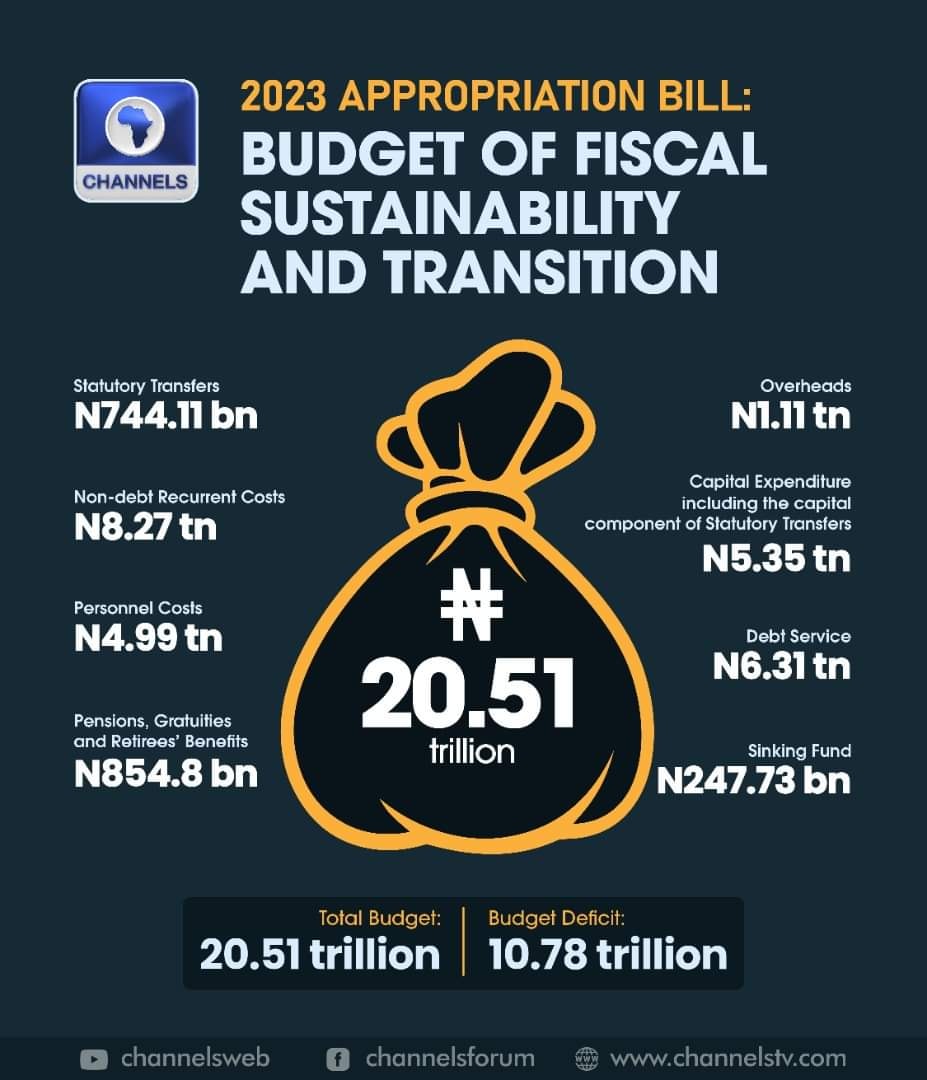
  1. A total expenditure of 20.51 trillion Naira is proposed for the Federal Government in 2023. This includes 2.42 trillion Naira spending by Government-Owned Enterprises. The proposed 20.51 trillion Naira 2023 expenditure comprises:

a. Statutory Transfers of N744.11 billion;

b. Non-debt Recurrent Costs of N8.27 trillion;

c. Personnel Costs of N4.99 trillion;

d. Pensions, Gratuities and Retirees’ Benefits of N854.8 billion;

e. Overheads of N1.11 trillion;

f. Capital Expenditure of N5.35 trillion, including the capital component of Statutory Transfers;

g. Debt Service of N6.31 trillion; and

h. Sinking Fund of N247.73 billion to retire certain maturing bonds.

FISCAL BALANCE

  1. We expect total fiscal operations of the Federal Government to result in a deficit of 10.78 trillion Naira. This represents 4.78 percent of estimated GDP, above the 3 percent threshold set by the Fiscal Responsibility Act 2007.

  2. As envisaged by the law, we need to exceed this threshold considering the need to continue to tackle the existential security challenges facing the country.

  3. We plan to finance the deficit mainly by new borrowings totalling 8.80 trillion Naira, 206.18 billion Naira from Privatization Proceeds and 1.77 trillion Naira drawdowns on bilateral/multilateral loans secured for specific development projects/programmes.

  4. Over time, we have resorted to borrowing to finance our fiscal gaps. We have been using loans to finance critical development projects and programmes aimed at further improving our economic environment and enhance the delivery of public services to our people.

  5. As you are aware, we have witnessed two economic recessions within the period of this Administration. A direct result of this is the significant decline in our revenue generating capacity.

  6. In both cases, we had to spend our way out of recession, resulting in higher public debt and debt service. It is unlikely that our recovery from each of the two recessions would have been as fast without the sustained government expenditure funded by debt.

FINANCE BILL 2022

  1. In line with our plan to accompany annual budgets with Finance Bills, partly to support the realization of fiscal projections, current tax and fiscal laws/regulations are being reviewed to produce a draft Finance Bill 2022.

  2. It is our intention that once ongoing consultations are completed, the Finance Bill 2022 would be submitted to the National Assembly to be considered alongside the 2023 Appropriation Bill.

ENSURING FISCAL SUSTAINABILITY

  1. To ensure fiscal sustainability, we will further improve our business-enabling environment, accelerate current revenue-based fiscal consolidation efforts and strengthen our expenditure and debt management.

BUDGET OF GOVERNMENT-OWNED ENTERPRISES

  1. Distinguished Senators, Honourable Members, you may recall that we earlier integrated the budget of Government-Owned Enterprises into the FGN’s 2019 budget submission. This has helped to enhance the comprehensiveness and transparency of the FGN budget. It has however come to my attention that Government-Owned Enterprises liaise directly with relevant NASS committees to have their budget passed and issued to them directly.

  2. I would like to implore the leadership of the National Assembly to ensure that the budget I lay here today, which includes those of the GOEs, be returned to the Presidency when passed. The current practice where some committees of the National Assembly purport to pass budgets for GOEs, which are at variance with the budgets sanctioned by me, and communicate such directly to the MDAs is against the rules and needs to stop.

FINANCING INFRASTRUCTURE GAP

  1. Nigeria requires a huge outlay of resources to close current infrastructure gaps and boost its economic performance. Government will develop projects that are good candidates for Public Private Partnership (PPP) by their nature for private sector participation.

BUDGET PROCESS BILL 2022

  1. Distinguished Senators, Honourable Members, ladies and gentlemen. Over the course of this Administration, we have embarked on a number of reforms in the Public Finance Management space. These reforms are bearing fruits and we have seen some of the benefits of the return to a predictable January to December fiscal year for the FGN budget.

  2. Earlier this year, I was briefed on the impressive performance of Nigeria in the Open Budget Survey, as the third best or most improved country in the world, matching the global average score in budget transparency and exceeding the global average in public participation.

  3. I commend the Budget Office of the Federation and the Supervising Ministry of Finance Budget and National Planning, the National Assembly Leadership, the relevant Appropriation and Finance Committees as well as non-state actors who have worked tirelessly in pushing for greater transparency and accountability in our budget process.

  4. We need to sustain and institutionalize the gains of these reforms. To this end, I have directed the Minister of Finance, Budget and National Planning to immediately work on mainstreaming these reforms and work with the National Assembly on passing an Organic Budget Law, which I hope to assent to before the end of this Administration.

HUMAN CAPITAL DEVELOPMENT

  1. The Government notes with dismay the crisis that has paralysed activities in the public universities in the country. We expect the staff of these institutions to show a better appreciation of the current state of affairs in the country. In the determined effort to resolve the issue, we have provided a total of 470.0 billion in the 2023 budget from our constrained resources, for revitalization and salary enhancements in the tertiary institutions.

  2. Distinguished Senators and Honourable members, it is instructive to note that today Government alone cannot provide the resources required for funding tertiary education.

  3. In most countries, the cost of education is jointly shared between the government and the people, especially at the tertiary level. It is imperative therefore that we introduce a more sustainable model of funding tertiary education.

  4. The Government remains committed to the implementation of agreements reached with staff unions within available resources. This is why we have remained resolute that we will not sign any agreement that we would be unable to implement. Individual institutions would be encouraged to keep faith with any agreement reached in due course to ensure stability in the educational sector.

  5. Government is equally committed to improving the quality of education at other levels. Recently, we implemented various incentives aimed at motivating and enhancing teachers’ development in our schools.

  6. In the health sector, the Government intends to focus attention on equipping existing hospitals and rehabilitating infrastructure. Emphasis will also be on local production of basic medicines/vaccines.

  7. As human capital is the most critical resource for national development, our overall policy thrust is to expand our investment in education, health and social protection.

WOMEN’S EMPOWERMENT

  1. To harness the potentials of all Nigerian women and enable them to productively contribute to the economy, we will continue to prioritise women’s empowerment programmes across various MDAs in 2023.

FOOD PRICES

  1. Government is very concerned about the high food prices in the country. Various measures are being implemented to address structural factors underlying the issue. We will also step-up current efforts aimed at boosting food production and distribution in the country. You will recall our efforts in improving production of fertilizer, rice, maize cassava among other earlier initiatives.

BOOSTING MANUFACTURING PERFORMANCE

  1. Government is not unaware of the challenges confronting the manufacturing sector. We will ensure effective implementation of policy measures aimed at positioning the manufacturing sector to generate more foreign exchange in the near future. We are also committed to improving the business environment to stimulate local and foreign investment.

SAFE SCHOOLS INITIATIVE

  1. We ratified the Safe Schools Declaration in 2019. We remain committed to the effective implementation of our Safe Schools Policy. A total of 15.2 billion Naira has been specifically provided in the 2023 Budget to scale up current measures to provide safer and conducive learning environment in our schools.

DEFENCE AND INTERNAL SECURITY

  1. The Government remains firmly committed to the security of life, property and investment across the country. Accordingly, defence and internal security continue to be accorded top priority in 2023. Current efforts to properly equip and motivate our valiant personnel in the armed forces, police and paramilitary units will be sustained.

  2. I assure you, insecurity, especially banditry and kidnapping, will be significantly curtailed before the end of this Administration. We will redouble our efforts to ensure we leave a legacy of a peaceful, prosperous and secured nation.

  3. Mr. Senate President, Mr. Speaker, Distinguished and Honourable Members of the National Assembly, let me conclude my address today by again expressing my deep appreciation for your enormous support, patriotic zeal, and cooperation in our efforts to accelerate the socio-economic development of our country and improve the lives of our people.

  4. I appreciate the efforts and commitment of the leadership and staff of the Federal Ministry of Finance, Budget and National Planning, especially the Budget Office of the Federation, who have worked hard to achieve early submission of the 2023 Appropriation Bill.

  5. The 2023 budget proposal is a product of inter-agency collaboration, extensive stakeholder consultations and productive engagements. I would therefore like to acknowledge the efforts of the media, the organized private sector, civil society organizations and our development partners for their contributions in the process of preparing the Budget.

  6. Considering the challenging situation in our country presently, we must continue to cooperate and collaborate to ensure fiscal sustainability, macroeconomic stability and smooth transition to the incoming Administration.

  7. This Administration remains resolutely committed to our goals of improving the living standard of our people and effective delivery of public services.

  8. Distinguished and honourable members of the National Assembly, although no single government can solve all the problems of a country during its own tenure, I have no doubt that you share our aspiration that the 2023 transition budget is designed to address critical issues and lay a solid foundation for the incoming Administration.

  9. It is with great pleasure therefore, that I lay before this distinguished Joint Session of the National Assembly, the 2023 Budget Proposals of the Federal Government of Nigeria.

I thank you most sincerely for your attention. May God bless the Federal Republic of Nigeria.

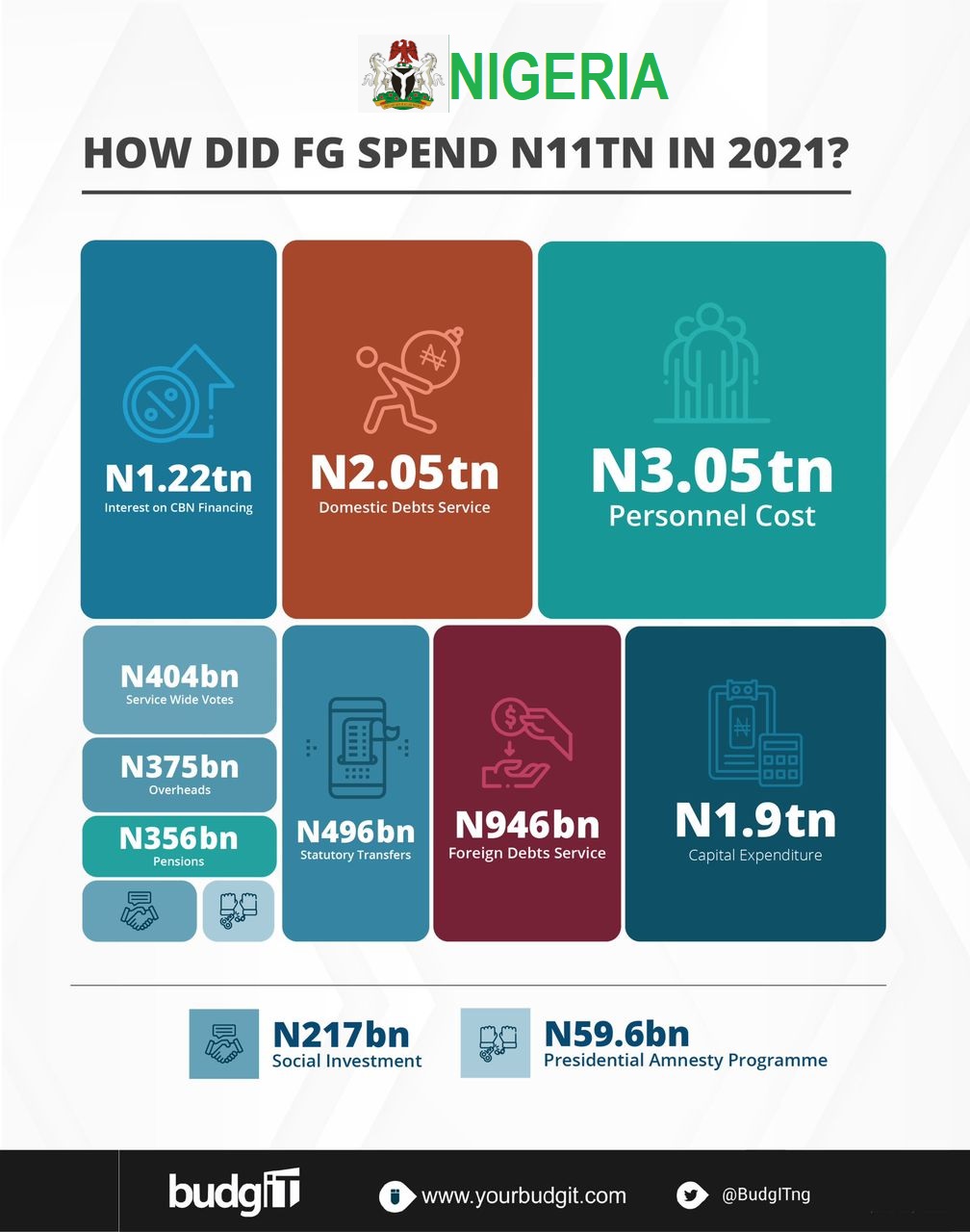
Nigeria’s 2021 Spending Regime – And Top 5 Corporate Tax Payers

0

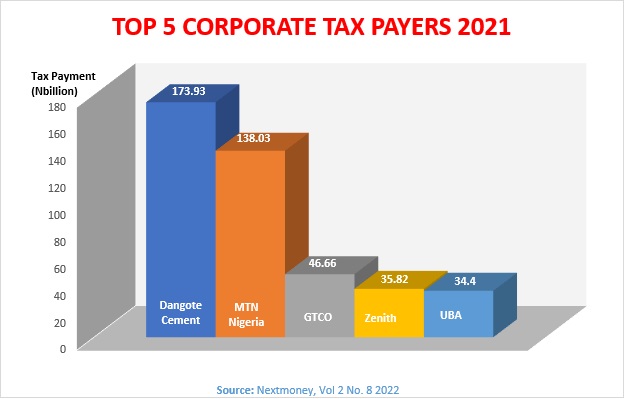
If they ask me to moderate a debate among Obi, Atiku and Tinubu, I will give them this chart – and then give them 10 minutes to return with an answer! Lol. If you are a startup looking for funds in Tekedia Capital and your numbers look like this, you will not pass our first phase.

Largely, under this financial spending regime, you have really nothing to leverage or compound because you are trapped! A personnel cost that much must at least generate 10x its value if you have a productivity mantra in that company. Then, the debts must be dealt with.

Fellow Citizens, make the 2023 election work for Nigeria. #VOTE.

Top Tax Payers

Nigeria is very lucky that Aliko Dangote was born in Nigeria. Dangote Group* pays more tax than all the banks and insurance companies combined! When the refinery business begins, the Group may pay more than 30% of Nigeria’s non-oil tax. Every citizen should respect what this man has done for the nation. This man’s impact is generation-shaping. See Nigeria’s Federal Government 2023 Budget of Fiscal Consolidation & Transition and think of executors in market

  • Group, not just the cement business.


Nigeria’s Globacom Launches Banking Payment Platform ‘MoneyMaster PSB’

0

Lately, there has been a growing trend that has seen several telecom operators launching into the Fintech space. These companies diversify their product stack and go beyond telecoms into a different avenue leveraging their huge customer base.

Recently, Nigerian multinational telecommunications company Globacom, commonly known as ‘Glo’, has launched a banking payment service platform called ‘MoneyMaster PSB’ to serve both the unbanked and underbanked.

In a statement made by the company, it disclosed that the aim of launching the payment service platform was to empower Nigerians by providing them with unlimited opportunities.

The Statement reads, ‘’MoneyMaster will be leveraging Globacom’s pan-Nigerian spread and pervasive agents’ footprint in the rural and urban areas as it begins its massive rollout.

‘’To open an account, all the customer needs to do is dial *995# then follow the prompts from a Glo line or from any other telecommunications network as MoneyMaster PSB is network agnostic.

‘’MoneyMaster PSB is poised to redefine the payment service banks’ landscape while driving financial inclusion in Nigeria,’’ it said.

According to Glo, one key feature of the MoneyMaster product is that the customer’s phone number will be used as his or her account number.

It further stated that the company was grateful to the Central Bank of Nigeria (CBN) for granting the opportunity to deepen financial inclusion in Nigeria, using its cutting-edge technology and vast network.

Glo stated that the platform became necessary because there were 133.5 million bank accounts in Nigeria as of December 2021, according to figures released by the Nigeria Inter-Bank Settlement System (NIBSS), with only 54 million BVNs registered as of April 10, 2022.

Also, the company further disclosed that PSB commenced commercial operations on May 30, 2022, while MoneyMaster PSB was granted a payment service bank license by the CBN on August 27, 2020.

Glo joins the likes of MTN and Airtel that have launched fintech services in Nigeria. There is no disputing the fact that a financial revolution is taking place around the globe, with telecom companies among the significant players thriving in the financial technology (fintech) space. 

These telecom companies no doubt have broader customer reach and distribution capabilities compared to traditional financial services. Thus, with the development of smartphones and the ability to access banking facilities and capabilities on the go, telcos prove their greater relevance in the financial services segment.

The recent entry of telcos in the fintech space will no doubt heighten competition in the sector, as they get to compete with other telecom companies as well as other fintech companies.

Best Places to Buy Solana Cryptocurrency

0

Solana is one of the best-performing digital currencies of recent years – with the popular crypto asset growing by nearly 2,000% in 2021 alone. This has resulted in Solana becoming a top-10 cryptocurrency in terms of market capitalization.

If you believe that this is the right digital token for your portfolio, this guide will explain where and how to buy Solana coin in under five minutes with a regulated broker.

>>>Buy Solana Now<<<

Virtual currencies are highly volatile. Your capital is at risk.

How to Buy Solana Crypto- 4 Easy Steps

If you’re looking to buy cryptocurrency with low fees today, you’re not alone. You’ll be pleased to learN that you can buy Solana crypto right now vie the eToro platform for just $10 deposit.

Follow the quickfire guide to learn how to buy Solana (SOL) coin in a few minutes.

  • Step 1: Open an eToro Account
    First, open a free account on eToro.com. Enter your details when prompted. Next, verify your account by uploading a copy of your ID.
  • Step 2: Deposit Funds
    USD deposits are fee-free at eToro, and US clients are required to fund their account with just $10. Choose from a debit/credit card, PayPal, bank wire, or any other supported payment method.
  • Step 3: Search for Solana Coin
    To go straight to the relevant investment page, search for ‘Solana’ and click ‘Trade’.
  • Step 4: Buy Solana Coin
    And finally, let eToro know how much money you want to invest in Solana – from $10. Click ‘Open Trade’ to confirm.

>>>Buy Solana Now<<<

Virtual currencies are highly volatile. Your capital is at risk.

Best Places to Buy Solana Today

Potential investors will need to choose where to buy Solana crypto tokens – fortunately as a top 10 crypto asset, dozens of brokers and crypto exchanges have listed this popular token.

The best place to buy Solana from our research would be via one of the leading cryptocurrency platforms reviewed below:

1. eToro – Overall Best Place to Buy Solana Coin

At the top of our list of the best places to buy Solana coin is eToro – which is a regulated online broker that was first launched in 2007. In choosing eToro, you will be able to buy Solana on a spread-only basis, which means that instead of paying conventional commissions – your fee amounts to the difference between the buy and sell price at the time of the order.

Moreover, when funding your eToro account in US dollars, no deposit fees will be charged. This is the case across all accepted deposit and withdrawal methods – which is inclusive of debit/credit cards, ACH, online banking, and domestic wires. eToro also accepts e-wallets, such as PayPal and Neteller. The minimum deposit requirement at eToro is just $10 for US and UK clients. $10 is all you need to buy Solana too, as eToro supports fractional crypto purchases.

Alongside Solana the eToro crypto platform has listed 70+ other coins. Some of the most popular cryptos invested at eToro include Bitcoin, ApeCoin, Cardano, Litecoin, Dogecoin, Ethereum, and XRP.

eToro also offers traditional asset classes, which include US, UK and foreign stocks, ETFs, forex, indices, and more. If you are interested in buying Solana but also wish to gain exposure to other digital assets, you might consider the eToro CryptoPortfolio.

This is a passive financial product that through a single investment, allows you to buy more than a dozen different cryptocurrencies at various weights. The portfolio is managed by eToro, so you won’t need to worry about research or ongoing maintenance. In terms of supported platforms, eToro allows you to buy Solana coin through its main website or via an iOS/Android app. eToro is regulated by the SEC (among other bodies) and registered with FINRA.

>>>Buy Solana Now<<<

Virtual currencies are highly volatile. Your capital is at risk.

2. Crypto.com – Simple Place to Buy Solana Coin With a Debit Card

The second best platform to buy Solana is through Crypto.com. This platform is now one of the most popular online cryptocurrency exchanges in the market. The platform strives to offer its customers a simple but cost-effective way to invest in crypto assets. In fact, once you have gone through the process of opening a Crypto.com account and verified your identity, you can then buy Solana coins with a debit card.

With both Visa and MasterCard accepted, this offers a super-convenient way to invest. In terms of fees, Crypto.com charges a commission of 2.99% to buy Solana with a debit card. With that said, the platform waivers this fee for the initial 30 days after you have opened an account. In addition to Solana, Crypto.com is home to over 250+ other digital tokens. This covers a range of small, mid, and large-cap projects – so the choice on offer is plentiful.

In addition to traditional exchange and brokerage services, Crypto.com offers a wide spectrum of other digital asset products. For instance, the platform offers a pre-paid debit card that is backed by Visa, which allows you to buy products and services online and in-store, as well as withdraw cash from an ATM. Moreover, through the Crypto.com Earn tool, you can generate interest on idle cryptocurrency investments. Crypto.com also offers a mobile wallet that supports over 110+ digital currencies.

>>>Buy Solana Now<<<

Virtual currencies are highly volatile. Your capital is at risk.

3. Coinbase – Best Site to Buy Solana Coin Today

If you’re looking for a regulated cryptocurrency platform that allows you to buy Solana coins today in a simple manner, Coinbase could be the right broker for you. Launched in 2012, this established platform has since become a NASDAQ-listed stock. With tens of millions of customers on its books, Coinbase has a great reputation in this industry.

In order to buy Solana coin at Coinbase, you first need to register an account and upload some ID. Then, you can pay for your digital tokens instantly via a Visa or MasterCard deposit. The fees to buy Solana coin with a debit or credit card amount to almost 4% at Coinbase, which is pricey. You can also transfer US dollars via ACH on a fee-free basis. Then, when the funds arrive, you will pay a commission of 1.49% to buy Solana.

Coinbase offers dozens of other digital tokens in addition to Solana, so this is a good platform for those looking to diversify. Although fees are high at Coinbase, we do like the broker for its top-notch security protocols. For instance, when you sign in to your account from a new device or IP address, you need to confirm access via an email code. Moreover, all account users need to set up two-factor authentication. 98% of client digital tokens are kept offline at all times, too.

>>>Buy Solana Now<<<

Virtual currencies are highly volatile. Your capital is at risk.

4. Binance – Buy Solana Today with Low Fees

If you’re looking for the cheapest way to buy Solana coins from the comfort of your home, you might consider Binance. This top-tier exchange is now used by over 100 million traders, not least because fees are super-competitive. That is to say, when you trade Solana against a supported digital asset – such as Bitcoin, Ethereum, BNB, or USDT, Binance will charge a commission of just 01.0%.

This low fee structure is, however, on the proviso that you have the ability to deposit funds in crypto. The reason for this is that US clients will pay a whopping 4.5% to deposit funds with a debit or credit card, and a further 0.5% to buy Solana with USD. On the other hand, Binance does allow you to deposit funds via ACH and domestic bank wire for free. Take note, while ACH withdrawals are also fee-free, domestic wires cost $15 per cash-out request.

In using the Binance US website, you will also have access to over 60 other digital currencies. This covers a good blend of large-cap blockchain assets like Bitcoin, Ethereum, and Cardano, as well as less liquid ERC-20 tokens. Irrespective of how you decide to pay for your Solana investment, Binance offers a range of storage options. This includes its very own Trust Wallet app, which also gives you access to the popular decentralized exchange PancakeSwap.

>>>Buy Solana Now<<<

Virtual currencies are highly volatile. Your capital is at risk.

What is Solana?

Solana is one of the best altcoins today in the market. Solana was launched in 2019 as a means to improve on the short fallings of legacy blockchains like Ethereum. By this, we mean offering network users a faster, cheaper, and more scalable blockchain ledger.

As a prime example, although Ethereum is the world’s second-largest cryptocurrency and the de-facto smart contract protocol of choice, only 15 transactions per second can be facilitated. This is nowhere near efficient enough to operate as a global blockchain network. In comparison, Solana can allegedly process in excess of 65,000 transactions per second.

Another reason why Solana is so popular is that the blockchain network is able to process transactions in just 2-3 seconds, while Ethereum takes 13-15 seconds. Moreover, while Ethereum is known for charging high fees when the network is busy, Solana transactions cost a tiny fraction of $0.01.

Taking these performance-driven metrics into account, many market commentators believe that Solana could one day surpass Ethereum both in terms of market capitalization and global adoption. Just like Ethereum, Solana has its own native cryptocurrency token – which is traded as SOL.

Is It Worth Buying Solana?

While Solana has dipped from its all-time high price, some crypto experts still believe Solana is a good investment and it could be one of the next crypto to explode in value. As we have seen from the price predictions, there is a good chance that the token might go as high as $200 by the end of this year.

This means that several price analysts are positive that Solana might surpass its all-time high price before the year comes to an end.

However, given Solana’s revolutionary technology, we are positive that it might be a great investment going forward. The fast-paved price momentum makes it a good long-term investment as well as a gem for day traders.

In fact, according to The Motley Fool, Solana might be crypto’s hidden gem, and only a few investors have realized its future potential. The blockchain is quickly gaining mainstream adoption, with several high-profile businesses using it for faster, secure and decentralized online transactions.

Its combination of a proof of stake and proof of history consensus algorithm makes it not only the fastest blockchains but also a much-needed utility for businesses.

The PoS mechanism means that the more money you put into the network’s liquidity pool, the more you get in the form of rewards. This alone makes Solana an attractive option for investors.

Apart from the attractiveness of its innovative technology, Solana is also proactively working to ensure that it becomes both a reliable blockchain technology for its users and a profitable asset for its investors.

For instance, in October 2020, Solana partnered with Circle, one of the biggest online payment systems, to enable faster processing of payments using the USDC stablecoin. In turn, Circle benefits from Solana’s robust ecosystem of fast payments and blockchain-based financial applications.

What is more, Digital Assets AG is now offering tokenized stocks on Solana. Tokenized stocks make it easy for investors all over the world to access the U.S. stock market and also buy fractional shares instead of whole shares.

This not only boosts the network’s credibility but also the value of its native token as it will be exposed to more use cases.

In fact, the association with the $100 trillion stock market exposes Solana to a massive potential for increasing its market share and luring more investors aboard.

So, generally, we believe Solana will make a great addition to your portfolio going forward. However, being a cryptocurrency and a highly volatile one, we don’t guarantee that you will get your money’s worth when you invest in Solana.

Another reason why you might consider buying Solana, the leading best altcoins today is that in comparison to the broader crypto markets, the digital currency continues to offer more attractive returns.


>>>Buy Solana Now<<<

Virtual currencies are highly volatile. Your capital is at risk.

Ways of Buying Solana

The best way to buy Solana is via a debit or credit card and PayPal. When using one of the top-rated brokers reviewed above, you will get to choose from the following deposit types:

Buy Solana With Credit Card or Debit Card

Once you have opened an account with a regulated online broker like eToro or Coinbase, you will then have the option to buy Solana with a credit or debit card.

In terms of the positives, this payment type allows you to invest in SOL tokens instantly, as your chosen broker will debit your card straight away and subsequently add the digital assets to your portfolio.

However, some brokers charge high fees on credit and debit card payments. For example, Coinbase charges 3.99%, while at Crypto.com – you’ll pay 2.99%. eToro, on the other hand, permits USD-backed credit and debit card deposits on a fee-free basis.

>>>Buy Solana Now<<<

Virtual currencies are highly volatile. Your capital is at risk.

Buy Solana With Paypal

If you’re wondering how to buy Solana coin with PayPal, you’ve got several options. For instance, you can complete the process at Coinbase after opening a verified account.

But, fees mirror that of credit/debit card payments at 3.99% of the transaction amount. Once again, in choosing eToro, you can buy Solana with PayPal without paying any deposit fees.

>>>Buy Solana Now<<<

Virtual currencies are highly volatile. Your capital is at risk.

How to Buy Solana Crypto – Tutorial

If you’re on the hunt for a detailed walkthrough of how to buy Solana crypto coin today in a safe and low-cost manner, whether to invest in the coin or to use it to buy the best NFTs, the steps below will explain the process with top-rated broker eToro.

Step 1: Open a Crypto Account

To get the Solana investment process started, you will first need to visit the eToro website and open an account. When you click any of the sign up buttons, a form will appear. Fill the form out by providing your contact details and full name.

When you click on the ‘Create Account’ button, additional details are required – such as your residential address, date of birth, and social security number.

>>>Buy Solana Now<<<

Virtual currencies are highly volatile. Your capital is at risk.

Step 2: Verify your Crypto Trading Account

In order to buy Solana coins at eToro with US dollars, you must first get yourself verified. This process at eToro is automated, meaning that as soon as you upload the required documents – you shouldn’t need to wait more than 1-2 minutes.

To verify your identity, upload a clear copy of a state ID card, passport, or driver’s license. For proof of your residency status, choose from a bank account statement or utility bill.

Step 3: Deposit Some Funds

You will need to deposit a minimum of $10 into your eToro account before you can buy Solana coins. The number of supported payment methods at eToro is extensive, which includes the likes of Visa, MasterCard, and ACH.

E-wallets like PayPal and Neteller are also supported. No fees will be charged on your chosen deposit method as long as the respective payment type is denominated in US dollars.

Step 4: Search for Solana

You will see a search box at the top of the eToro dashboard. Here, you can start to type ‘Solana’.

eToro will then populate Solana from the drop-down list of relevant markets. When you see Solana, click on ‘Trade’.

Step 5: Buy Solana Coin

Now it’s just a case of letting eToro know how much capital you are looking to invest in Solana. This can be any USD amount from $10 upwards.

In our example above, we are looking to buy $50 worth of Solana. To confirm your investment – click on ‘Open Trade’.

>>>Buy Solana Now<<<

Virtual currencies are highly volatile. Your capital is at risk.

Conclusion

Solana is one of the top cryptocurrencies to invest in today – with the project’s underlying blockchain offering super-cheap transactions at a highly scalable level.

If you’re looking to buy and add Solana crypto to your portfolio right now – the process takes just five minutes at SEC-regulated provider eToro. You can pay for your Solana tokens instantly and fee-free with a debit/credit card or e-wallet, and eToro requires a minimum capital outlay of just $10.

>>>Buy Solana Now<<<

Virtual currencies are highly volatile. Your capital is at risk.


FAQs on Buying Solana

Where can I buy Solana crypto?

eToro is one of the best places to buy Solana, as the broker is fully regulated and permits spread-only Solana investments.

Where is the best place to buy Solana?

After reviewing a number of leading cryptocurrency exchanges and platforms, we found that eToro offers the best way to buy Solana. It takes just minutes to set up a verified trading account and you can pay for your Solana tokens with a debit/credit card, e-wallet, or bank transfer.

>>>Buy Solana Now<<<

Virtual currencies are highly volatile. Your capital is at risk.