DD
MM
YYYY

PAGES

DD
MM
YYYY

spot_img

PAGES

Home Blog Page 4853

NNPC Limited Acquires OVH Energy

2

The Nigerian National Petroleum Company (NNPC) has acquired downstream assets of OVH Energy, the company behind the Oando retail brand in Nigeria.

The acquisition was announced on Saturday in Abuja during the unveiling and rebranding of one of the retail stations of Oando to NNPC.

With the merger, NNPCL now officially controls all Oando retail outlets comprising fuel, and aviation among others across Nigeria.

This strategic acquisition of OVH Energy by NNPC aims to create the leading downstream energy company in Nigeria and West Africa, driven by operational efficiency, best-in-class management, and physical infrastructure while offering premium petroleum products and related services to customers, in line with global standards.

Through this acquisition, NNPC Retail Limited will build on the existing success of OVH and operate model service outlets leveraging OVH’s extensive asset base and commercial capabilities.

The transaction also positions NNPC Retail Limited as the fastest growing commercial energy company in its pursuit to guarantee energy security for Nigeria’s growing population and significantly more growth opportunities for the business.

Speaking at the rebranding ceremony, the Group Chief Executive Officer (GCEO) NNPCL, Mele Kyari said the acquisition of OVH Energy was a strategic move to create the leading downstream energy company in Nigeria and West Africa, driven by operational efficiency, best-in-class management, physical infrastructure while offering premium petroleum products and related services to customers, in line with global standards.

He stated that the acquisition came on the heels of the direction issued by President Muhammadu Buhari, on the need for the company to provide energy security.

In his words, “And that there is no way you can do this except you have the robust systems and processes. You have a network that will work.

“We have struggled with this for many years and we saw the opportunity to latch on to the competencies of the OVH group. We have worked with them. Yes, they were our partners. They are also our customers.

“And ultimately, we knew that this company works. It has a system, it has processes it has a network that has potential to make us achieve our aspirations to be a global company of choice.”

Mr. Kyari also noted that the merger is a vehicle to ensure that the Company delivers on its energy transition goals.

“We will use this vehicle to deliver LPG into the markets, CNG into the market, and also very poor members of our communities who are now relying on biomass to cook. 70% of our people don’t have access to clean cooking fuel,” he added.

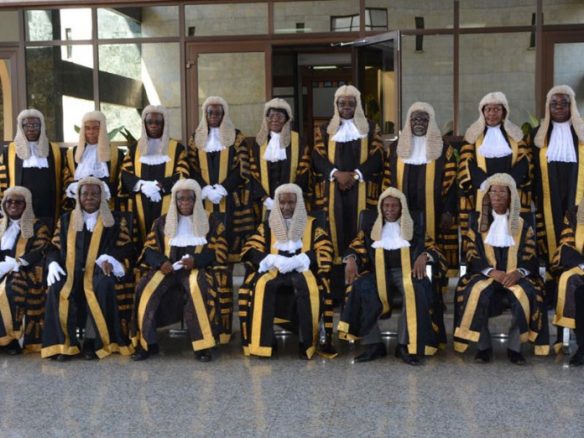
Nigerian Legal System Must Update Its Rules Forbidding Solicitation of Clients

0

Comment: “The ethical rules governing Legal practice forbid open advertisements…” (in Nigeria)

My Response: “The ethical rules governing Legal practice forbid open advertisements ” – American system does that all the time. They advertise everywhere – TVs, billboards, radios, etc. Does it mean it is not ethical? What is wrong advertising for the “wronged” to come out to get help. I do not get the “ethical issue” here. “I am a lawyer, I sue companies which make bad medical equipment. If you have been a victim of ABC product, call me. I will get help for you”. What is unethical about this?

Emmanuel Ifeanyi Ogbuka, Esq, can you help? I do think that the Nigerian legal system must allow lawyers/law firms to advertise for class action and recruit clients so that we can put pressure on the many issues in the nation. In America, everyone fears trial lawyers but those trial lawyers will not work without the ability to use Facebook, TVs, etc to recruit victims which strengthen their cases. In Nigeria, I am told that recruitment is illegal and unethical…WHY?

Comment on Feed

Comment 1: The Rules of Professional conduct for legal practitioners in Nigeria does not prohibit advertising.

What the Rules forbid is solicitation of clients. Advertising is allowed so far it in accordance within the bounds provided by the Rules, for example publishing thought leadership materials, appearing on TV or Radio programs etc.

I however, align myself with the School of thought that the Rules of Professional Conduct should be amended to reflect the current realities in the digital ewe now live in to allow lawyers engage in some form of regulated direct advertising.

My Response: “What the Rules forbid is solicitation of clients.” The American legal system allows that. Do you have any professional opinion on how that diminishes the US legal system?

This is the Jumia class action ad and solicitation for client by Rosen law “To join the Jumia class action, go http://www.rosenlegal.com/cases-register-1569.html or call Phillip Kim, Esq. toll-free at 866-767-3653 or email pkim@rosenlegal.com or cases@rosenlegal.com for information on the class action.” I am just curious why this makes law look bad to be illegal in Nigeria.

Comment 1b: Prof. I’d agree that solicitation hasn’t diminished the American system hence the calls for reforms which I am largely in support of.

However, my learned colleagues aren’t doing enough within the allowed bounds of the rules to build effective visibility.

Comment 2: What is written, is written. Drops mic

My Response: Not for the new generation. Many badly written things have been revised. We cannot use an ordinance for alchemy age to run a knowledge age. We sap ourselves of efficiency and productivity. I am not a lawyer but if I have to code a model on the capacity to win a case, the number of litigants will be an input variable.

If 1000 people are suing “ABCD Ltd” for a bad drug which caused harm to their babies over just 1 person, my weighing factor will vary. But the ability to recruit those 1000 should not be abstracted by old ordinance.

Comment 3: Ndubuisi Ekekwe Personally, i believe such rules are outdated for the Digital age we currently live in, but laws don’t care about personal feelings.

The Nigerian Legal System is still a derivative of the English Common Law system, which treated the Legal Profession as a sober closed society with its own ethics, the benchmark being fundamental mutual respect between all lawyers, including those in pupilage.

These ethics, backed up by principles such as “The Cab Rank Rule”(In Pidgin, “All  taxi be the same, if one no gree, enter the next one”), sought to create a set of advertising rules that would maintain equality and fairness among lawyers while maintaining the dignity of the lawyer and the legal profession.

As a result, TV , Billboard, and Radio advertisements were forbidden,as well as things like Trial publicity (granting interviews on cases still being determined by court as a way of self-promotion) and what is called “unfair advertisement”(“ABC lawfirm is the foremost leading Commercial lawfirm in Nigeria” or “Having lengthy delays in Court? Change your lawyer and port to XYZ lawfirm, where you have REAL lawyers!”) , touting, running a legal practice as a limited liability company, newspaper advertisements, champerty & maintenance (lawyers instigating and commencing non-criminal litigation with their own funds) and then ambulance chasing (going round looking for cases and influencing aggrieved parties to sue  through you or hire you with talk like “That man cheated you, you should sue o, i can run it for you!”, a lawyer’s version of clout-chasing).?

All these things greatly reduced allowed advertising to the following:-

  • Sharing your complimentary cards.

  • Public informative interviews, articles on new or relatively unknown aspects of law.

  • Letters of Introduction/Proposal letters.

  • Notifying your NBA branch members of your practice.

  • Referrals.

The rules also totally cut off in-house counsel from private practice (i will be posting an article on Tekedia.com about this).

The ethical rules didn’t foresee online Lawfirms, virtual law offices or online marketing which is usually organic in nature.

The law only allows for newspaper advertisements from non-lawyer groups like people with similar causes in the form of representative suits (class action suits in the US) in matters of Land disputes, Consumer Rights actions, and Labour disputes or Community-based suits in Oil spillage and environmental suits.

Most Common Law jurisdictions have realized the dynamic nature of Legal developments and have amended their rules on advertising for lawyers . This isn’t exactly the case in Nigeria, with the last undisputed amended set of ethical rules for lawyers being carried out in 2007.

So yes, we’re still kinda under strict rules here.?

Bill To Prohibit Late Payment Of Salary Passes Second Reading in Nigeria’s Parliament

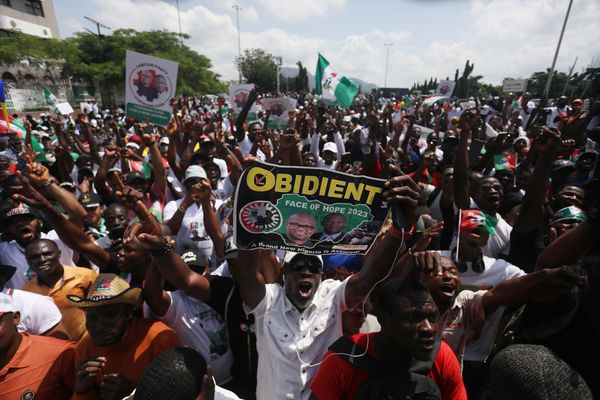
The Peter Obi’s Campaign Playbook Is Thriving

0

In largely self organizing and aggregating systems, powered by digital platforms, the most important phase is passing the  inflection point for compounding. When you do that, your leverageable factors begin to compound, not necessarily because of new energies you are adding, rather, a natural virtuoso circle which has been formed.

Good things lead to better things and those lead to things which are even more exciting. As a result, most players converge or join that ecosystem because more value would be acquired or captured by being a member of that ecosystem. Over time, that ecosystem wins because of network effects which are now a positive loop of amazing outcomes.

Peter Obi campaign strategy is simple: seed a dynamic online system and create a translation into the physical world. In Nigerian politics, at this point in a campaign, its result is unprecedented.  From Zaria to Lagos, Benin to Enugu, and beyond, provided telecom networks remain, its disintermediation playbook of old political structures is working.

I worked in the Obama campaign and in the summer of 2012, the message was this: define Mitt Romney so that when the core campaign begins, he will have a lot of grounds to cover. Peter Obi has defined himself in this rainforest season in Nigeria. When the harmattan season begins, his positioning could be huge for opponents to dislodge. Aspirational campaigns have always won – and Obi is executing one here. May the best win!

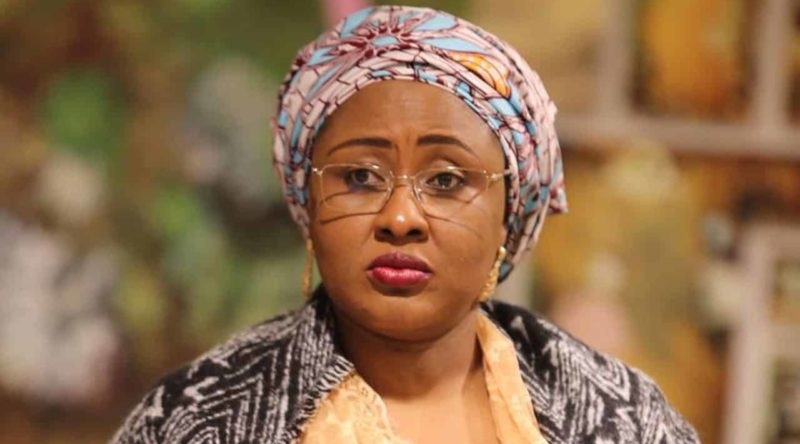
Nigeria’s First Lady, Aisha Buhari, Apologizes to Nigerians on Behalf of Buhari’s Govt.

0

On the day of Nigeria’s 62nd Independence Day celebration, Nigerians have been recounting unpleasant stories that have characterized the country’s existence as a sovereign nation.

Their ordeal, which has been amplified in the last seven years under the leadership of President Muhammadu Buhari, ranges from economic hardship to insecurity to poor infrastructural development. This backdrop means that the majority of Nigerians are living under multidimensional poverty, compounded by insecurity that has spread across the six geo-political zones of the country in the last seven years. And this is in contrast with Buhari’s pledge to lift 100 million Nigerians from poverty in 10 years.

Although Buhari has tried to absorb himself from blame, claiming that his administration has done well, the indices keep saying otherwise.

In his Independence Day address, Buhari said that besides “emphasis on infrastructural development with its attendant opportunities for job creation, employment generation and subsequent poverty reduction, our focused intervention directly to Nigerians through the National Social Investment Programme is also yielding benefits.” He added that he saw an opportunity to create a better Nigeria and has done that with the support of Nigerians.

The above statement is what the majority of Nigerians, including the First Lady, Dr. Aisha Buhari, have found very hard to agree with. In her speech on Friday, during the 62nd Independence Day Special Juma’at prayer and Public Lecture themed Shura, conducted by the Islamic Foundation of True Democracy at the National Mosque Conference Hall, Abuja, the First Lady apologized to Nigerians on behalf of her husband’s administration.

“Your Excellencies, distinguished guests, ladies and gentlemen, as you may be aware that this government is making its exit and perhaps witnessing the last anniversary of the regime, I ask Nigerians to pray for a successful election and transition programme.

“The regime might not have been a perfect one, but I want to seize this opportunity to seek forgiveness from the Ulamas and Nigerians in general. We all need to work together to achieve a better Nigeria.

“Your Excellencies, distinguished guests, it is also noticeable that our Naira is being evaluated and the foreign exchange rate has affected our economy causing a lot of hardship and difficulties in terms of education, health and other day-to-day activities of our citizens,” she said.

The First Lady said she been doing her part by helping women, youths and children through her humanitarian foundation.

“I, through my Aisha Buhari and Future Assured Foundation, have put in place deliberate efforts and programmes focused on improving the quality of women, youth and children.

“Through this effect, I have empowered many communities. I appreciate all my partners and collaborators, the wives of the governors, the wives of service chiefs, my associates, well-wishers, and international bodies, that is development partners, I thank them all,” she added.

The Lesson for Telcos As Banks Hold the N80 Billion USSD funds

0

Nigeria must improve on service level agreements: “It has been reported that there is a fresh crisis brewing between the banking sector in Nigeria and the telecom operators over the lingering N80 billion unstructured Supplementary Service Data (USSD) debt banks owed the telcos. The telcos have called out the banks for not complying with the repayment plan, stressing that the debt has increased to N80 billion from N42 billion reported last year.”

I find it very strange when some disputes emerge. Does it mean people do not sign agreements before launching some products. Why should banks keep the monies? But read me: I hope this alleged N80 billion is not already disclosed as “profits” by banks.

But this is a lesson for telcos: disrupting banking will require more than technology. Indeed, since MTN and Airtel Africa listed in the Nigerian stock exchange, many banks have lost steam. That disintermediation is well correlated on banking performance and offered investors options which would have been available had they not existed. What that means is clear: frenemy infinity, they will be friends and enemies for a really long  time until regulatory ordinance evolves into a decent level of maturity.

Comment on Feed

Comment:  The telcos are not thinking fast, we have passed the era of begging customers to pay for services already enjoyed. Telcos just need to roll out prepaid plans and sell to banks. Yes, you can purchase 1 million USSD calls, and once you reach that limit, if you don’t top up, the USSD service halts!

No time for ‘we are calling on’, ‘we are pleading’; those pitiful lines make you weak. Collect your pay upfront!

Comment 2: Well said. Pay as you use is the best solution. The telcos should cut off their services right now, that will be the solution to paying up what the banks already owe.

Telcos Lament Over Lack of Cooperation From Banks as USSD Debt Hits N80bn