DD
MM
YYYY

PAGES

DD
MM
YYYY

spot_img

PAGES

Home Blog Page 4859

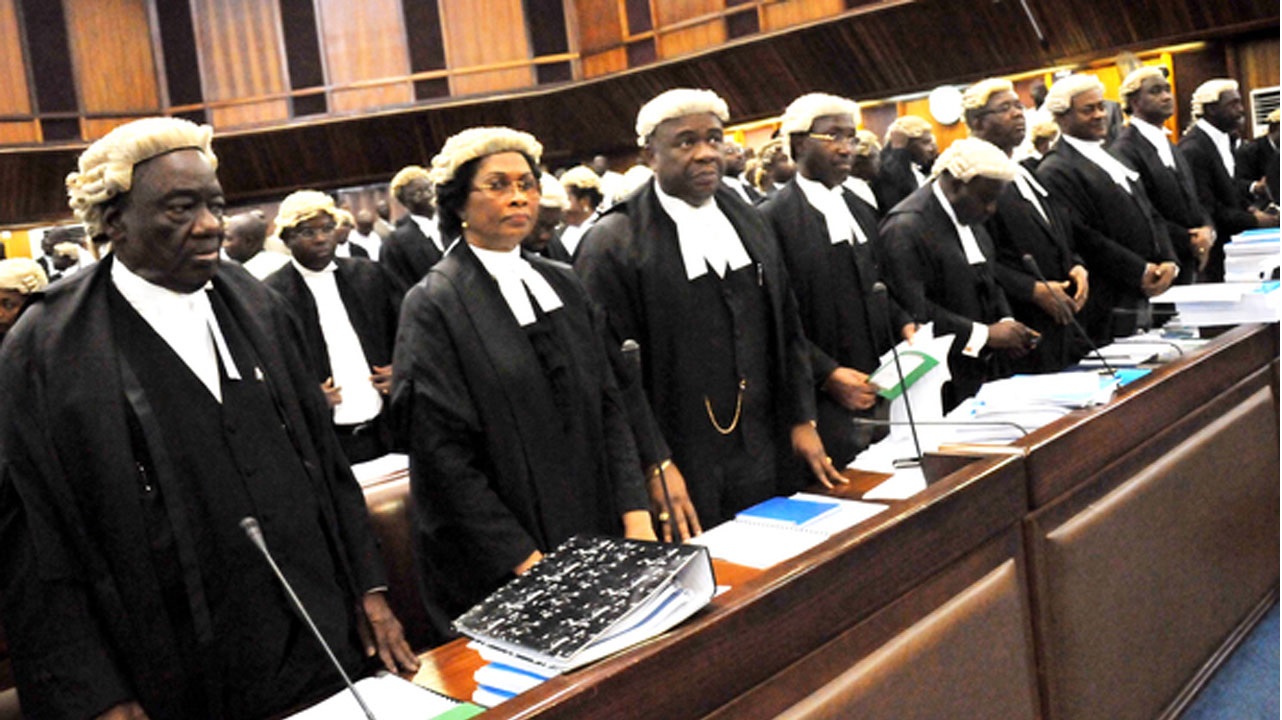
In-house Legal Counsel in Nigeria – All You Need To Know

0

In procuring Legal services, there is usually a set of various delivery platforms through which as a client or employer you can access those legal services. One of the most commonly used Legal service providers however is the In-house Legal counsel, a type of lawyer that will be the focus of this article.

What this article aims to do is deal with the topics of :

-Who exactly an In-house Legal counsel (or In-house counsel) is.

– The purpose of hiring in-house counsel.

– The functions/duties of an In-house counsel.

– The legal services an In-house counsel can & cannot render in Nigeria.

Who is an in-house counsel?

An in-house counsel is a type of lawyer hired as a salaried & usually full-time internal employee of a company, organisation, agency or corporation for the purpose of performing a set of defined legal functions/services.

Why hire in-house counsel?

You might need to hire an in-house counsel for the purpose of having in a standby position, readily available legal assistance for the purpose of greatly reducing the Legal risk & compliance portfolio of your business or organisation.

What are the functions of an in-house counsel?

The functions of an in-house counsel are :

– the rendering of general & industry-specific Regulatory compliance services to their employers;

– to render legal advisory services to their employers;

– rendering dispute/litigation management services to their employers;

– rendering contractual & legal documentation vetting services for their employers;

– rendering corporate governance and company secretarial services to their employers;

– rendering legal audit and external solicitor/retained external counsel management and liaising services to their employers;

– rendering representation services in courtroom and dispute resolution proceedings as agents of their employers.

Are there legal services that in-house counsel cannot render in Nigeria and if they exist, what are they?

Yes, such services exist. In-house counsel are also governed by the Rules of Professional Conduct for lawyers in Nigeria and as such, cannot render the following services to their employers :

– the rendering of documenting Legal opinion and contractual documentation/signing services for their employers;

– where being employed as military officers, appearing in court martial proceedings in lawyer robes and gowns;

– preparing Deeds of Assignment and Land sale documentation services for their employers;

– aiding the unauthorized practice of law (mainly in the form of acting as retained counsel to their employers and preparing legal documents for their employers while in fact being salaried staff/in-house counsel of the company);

– appearing in court robed in a lawyer’s wig and gown while still being in-house counsel;

– allowing their employers to engage in the touting of their services and charging fees for those services(this is a very rampant practice among Real Estate Development companies and Mortgage banks in Nigeria). 

Is it possible to hire in-house counsel on a contract/non-salaried basis?

Yes and no. This is because while you can hire a lawyer or law firm as an outsourced or seconded Legal adviser/manager, such legal counsel will either not be working full-time or as your internal employee, which is basically what in-house counsel are. You thus need to know exactly what suits your business needs in terms of relevance, competence and affordability.

What is the legal effect of a contract or documentation prepared and signed by an in-house counsel?

Such a document will be voidable as it will constitute unauthorized practice of law and such an in-house counsel risks professional suspension and disbarment. Any employer aiding such unauthorized practice of law also risks a 2-year jail term under the Legal Practitioners Act of Nigeria.

Conclusion :- It can be seen that the In-house counsel is a legitimate and innovative model for the delivery of always available legal services for the purpose of Legal risk management for many companies, although they are not applicable to every situation requiring legal input. 
Nigerian Senate Approves Buhari’s N8.4trn Borrowing Plan

0

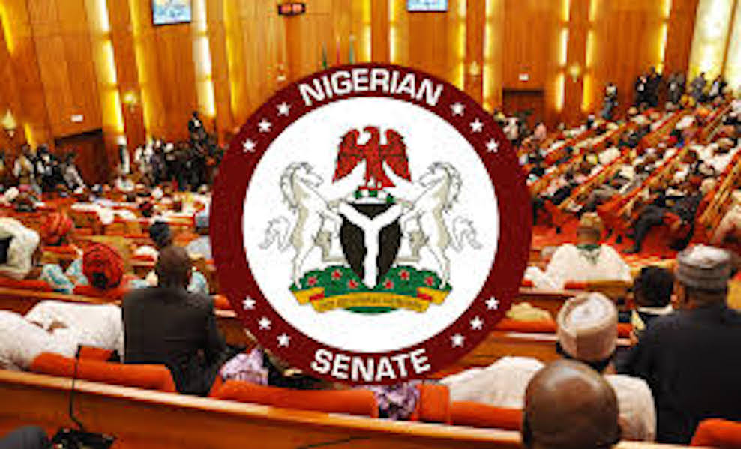
The Nigerian Senate on Wednesday approved the N8.4 trillion borrowing plan presented to it by President Muhammadu Buhari, aimed at funding fuel subsidies in 2023.

The approval defied the recommendation of the Senate Committee to slash the N3.6 trillion mapped out for the subsidy to N1.7 trillion. Buhari is to present N19.76 trillion 2023 Appropriations bill to the joint session of the National Assembly on Friday.

The N3.6 trillion subsidy fund is to cover from January to June 2023, when the Buhari administration has set to end the subsidy regime. The N3.6 trillion was factored in the 2023-2025 Medium Term Expenditure Framework and Fiscal Strategy Paper (MTEF/FSP).

The Minister of Finance, Budget and National Planning, Zainab Ahmed, had in August, told the House of Representatives’ Ad Hoc Committee investigating the Petroleum Products Subsidy Regime from 2013 to 2022, that not ending the subsidy means that the federal government will have to borrow more than N6 trillion to offset the budget deficit that will result from it.

“One thing that stands out in the Medium Term Expenditure Framework was that if the nation holds on to fuel subsidy as it is designed now, we will be incurring from January to December, a subsidy cost of N6.4tn. But we suggested to the Federal Executive Council, and the council approved that, maybe, we could look at the option of exiting the subsidy (regime) half year. So, if we did that, then the cost would be N3.35tn, which is half of the N6.7tn,” she said.

The Senate Joint Committees on Finance and National Planning and Economic Affairs, which worked on the fiscal document, had recommended that the cost of petroleum subsidy be capped at N1.7trn in 2023. This is after Ahmed informed the Committee that under-remittance from revenue-generating agencies have made it impossible for the government to fund the subsidy in 2023 without borrowing.

However, the Senate approved a fiscal deficit of N11.3 trillion, projected revenue of N9.352 trillion and new borrowings of N8.437 trillion (including foreign and domestic borrowing), subject to the provision of details of the borrowing plan to the National Assembly.

In addition, the Senate approved an increase in the oil benchmark from $62 to $73 per barrel and a daily oil production of 1.83 million barrels per day, an increase from the current oil output that has fallen below 1mbpd.

In its recommendation, the Senate also gave a nod to the exchange rate of N437.57/US$1 and the projected Gross Domestic Product (GDP) growth rate of 3.75%; as well as 17.16% inflation rate.

The red chamber of the national assembly also consented to the Statutory transfers totaling N722.11 billion; Debt Service estimate of N6.31trn; Sinking Fund to the tune of N247.7bn; Pension, Gratuities and Retirees Benefits of N827.8bn.

Nigeria’s revenue growth has been dampened by some factors that have apparently slipped out of government’s control. At the helm of these factors is crude oil theft.

On Tuesday, the Chief Executive of Nigeria National Petroleum Company Limited (NNPC), Mele Kyari, revealed that the company has uncovered an illegal 4km pipeline that has operated undetected in the past nine years, from the Forcados export terminal Delta State into the sea, exporting about 250,000 barrels of oil per day.

“Oil theft in the country has been going on for over 22 years, but the dimension and rate it assumed in recent times is unprecedented,” Mr Kyari said.

The Senate President Ahmad Lawan said based on observations and findings made by the Senate Committee, Nigeria is in a war situation as far as crude oil theft and under-remittance of revenue by many of the MDAs are concerned.

Investment App Stash Adds Crypto to Its Platform, Enables Users to Buy And Sell Assets

0

Financial service startup that aims to make investing approachable for beginners Stash is adding crypto to its set of products it offers its 2 million users.

With a valuation of $1.4 billion, Co-founder and president of Stash Ed Robinson disclosed in an interview that the company sees itself as being different from its competitors because of its focus on cultivating customers who are long-term investors rather than encouraging more frequent, riskier trading for short-term profits.

Deposits on the platform have grown tremendously with a 30% increase over the past year, also having nearly $3 billion in assets under management today.

Speaking on its latest crypto offering, the company’s co-founder disclosed that the firm is sticking with what he describes as a “curated approach” which will allow customers to buy and sell eight different cryptocurrencies on the platform which includes Bitcoin, Bitcoin Cash, Chainlink, Ethereum, Avalanche, Ethereum Classic, Solana and Uniswap.

In his words, “We’re not doing a wholesale approach of listing hundreds or thousands of cryptocurrencies on the platform. It’s this very small curated list with education and guardrails around it, and we believe that we’re offering to our customers the more established cryptocurrencies that have a longer-term use case associated with them”.

He further stated that the company’s crypto offering has been in the works for over a year, adding that Stash has no immediate plans to widen the list of digital currencies offered because it wants to maintain its focus on what it sees as high-quality assets.

He contrasted Stash’s approach with that of other crypto investment platforms, saying: “It’s not about making a quick buck off the transactional revenue. 80% of our revenue comes through the subscription fee of $3 a month or $9 a month. 

“In those tiers, you get access to all the investment products, personal retirement accounts for your kids, you get a banking product to get access to stock back rewards and you get life insurance.”

With Stash’s new crypto offering, customers won’t be able to store their crypto in a wallet but will be able to buy and sell the assets 24/7, much like on an app like Coinbase

The company stated that a crypto wallet launch is not necessarily out of the question in the future. For the time being, the company is partnering with Apex Crypto as its custodian.

The Stash app will show pop-ups to customers each time they attempt to make a crypto transaction, showing them what percent of their overall portfolio is at play.

It will also make recommendations to customers about what percentage of crypto they should hold in their portfolios based on a risk tolerance survey they answer when joining the platform. Investors on Stash also will have to go through a mandatory training on the platform before interacting with crypto.

The Legal Framework on Advertising in Nigeria

0

It goes without saying that one of the most important aspects of business is generating demand through letting your target market know about your product or service in the first place.

This is the overall objective of advertising, which is the usually paid use of mass communication tools to communicate with the target users of a product or service for the purpose of brand awareness, letting potential customers/clients know about a product or service specifications(customer information), brand promotion,and generally influencing demand .

This write-up will be dealing with the legal aspects of advertising in Nigeria, with a focus on :-

– The Regulatory agencies and Legal Framework governing advertising in Nigeria.

– The principles governing Advertising Practice in Nigeria.

– The prominent legal provisions on the process of putting out adverts.

– The Regulatory requirements for putting out advertisements in Nigeria.

– The extent of applicability for advertising laws and regulations in Nigeria.

What is the Legal and Regulatory Framework governing advertising in Nigeria?

Advertising in Nigeria is governed by the following laws :-

– The Advertising Practitioners Registration Act.

– The Advertisement Practitioners Council of Nigeria Vetting Guidelines (or “The Vetting Guidelines”).

– The Nigerian Code of Advertising Practice, Sales Promotion & Other Rights/Restrictions on Practice (or “The Advertising Code”).

– The Standards Organization of Nigeria Act .

– The Federal Competition and Consumer Protection Commission (FCCPC) Act.

Compliance with Advertising laws and regulations as well as the vetting of Advertising concepts in Nigeria is administered by the Advertising Practitioners Council of Nigeria (APCON) and the Advertising Standards Panel (ASP). 

What are the basic principles of Advertising Practice in Nigeria?

The regulatory principles on which advertising in Nigeria are anchored are :-

  1. Legality (No Advertisement shall be used to promote objects that are illegal/in violation of any law in force in Nigeria or contrary to public policy or morality. Advertisements are to procure SON certification where necessary).
  1. Truth (No Advertisement shall make any representations that are false, not yet subjected to objective testing and confirmation, or evasive concerning product and service pricing). 

What are the requirements for getting an advertisement concept approved by APCON for broadcasting ?

This will first require making an application to the Registrar of  APCON through an APCON-registered practitioner as well as applications to relevant Regulators for industry-specific advertisements e.g. Banking or Financial service advertisements will require prior vetting by the Central Bank of Nigeria.

This APCON application will be supported by :-

– a duly filled and signed ASP form by an Advertising Practitioner not below an Associate men we stating his APCON registration code;

– a letter of authorization to advertise the product or service from the client (advertising business) signed by an APCON-accredited practitioner;

– a copy of the Advertisement concept which must be approved;

– a minimum of 12 unit samples of the product to be advertised or service demonstrations where necessary;

– a NAFDAC certificate where necessary;

Is the use of foreign models allowed in Advertisements in Nigeria?

No it is not. All models in Nigerian adverts are to be strictly Nigerians except where the Advertisement concept requires the use of foreigners as models.

Even then, such Advertisement concepts will require a fee of 500 Thousand Naira payable to the ASP for each version of the advertising concept.

What will happen if i choose to place my advertisment without APCON/ASP approval?

Placing or broadcasting an advertisement without ASP approval will incur a risk of a minimum 500 Thousand Naira penalty for both the Advertising Agency and the Advertiser.

Can an ASP/APCON approval be revoked?

Yes, it can. This can occur if a condition upon which the Advertising approval was granted by the ASP has been violated by the Advertiser.

How far does the jurisdiction of APCON/ASP go in Nigeria?

The APCON has jurisdiction over all advertisement media in Nigeria, including Internet advertisements.

What are the requirements for approving Online advertisements?

Online adverts require a clearance fee of 25 Thousand Naira per Advertisement concept, with separate payments required where the same advertisement is released in different versions with different models and different languages.

The enforceability and legality of regulations governing online advertisements however remains a controversial topic.

Conclusion :- Advertising in Nigeria carries with it a wide framework which requires a lot of guidance in terms of Legal advice and representation.

Here’s How NFTs Are Contributing In A Cultural Shift: Big Eyes Coin, Decentraland and The Sandbox

0

Imagine this: you made a lot of money in life and are satisfied with your monetary accomplishments. But according to Maslow’s hierarchy of needs, the next stage is — esteem needs. To fulfil that, you buy an expensive Van Gogh (not the Starry Night), and you display it in your living room. This will not only nourish your esteem needs, but you will also have an increased sense of status quo. The idea of ownership is deeply appealing to humans, and a painting from the Dutch artist would contribute to that, the same way NFTs are working on Web 3.

A generation of kids grew up trading Pokémon cards, and raising investment dollars to dream up NFTs of all kinds. From irreplaceable toilet paper to virtual food you can never eat to fantasy lands on the Metaverse, NFTs rule where our imagination takes us.

Big Eyes Coin (BIG), Decentraland (MANA) and The Sandbox (SAND) are such imaginative and disruptive NFT tokens.

The Sandbox: Crypto Games And NFTs

A decentralised gaming platform, The Sandbox (SAND), is bringing a cultural shift in the gaming world. Users can easily trade and build digital assets on its platform that operates on the Metaverse ecosystem.

The users have complete autonomy over the digital assets that they have earned in the games and can be easily traded.

Earlier, gamers were fascinated by Playstation and XBOX. But blockchain technology is so limitless that it has provided the option of ‘play-2-earn’ games where gamers can earn in the form of cryptocurrencies. No more playing for leisure — this is business!

Decentraland: Virtual Land And Concerts

It is so difficult to find a house these days, let alone buy land or an apartment for investment purposes. The renting crisis has engulfed most metropolitan cities around the world. In such times, Decentraland (MANA) provides a breather. This token allows its users to buy and sell virtual land, attend virtual conferences and even virtual concerts.

With real-estate prices touching the sky, MANA can be your next investment. It is backed by robust and decentralised blockchain technology that provides security and faster transaction speed.

Its official website reads — Create, explore and trade in the first-ever virtual world created by its users. Right on the money!

Big Eyes Coin: Sushi Crew And Oceans

Big Eyes Coin (BIG) is a full-on community token with the express goal of shifting wealth into the DeFi ecosystem and protecting an important part of the world’s ecosystem. A new token on the block, Big Eyes Coin (BIG), is making headlines for raising more than $3.7M in its presale. Having entered stage 3, the token has big plans for the future in the NFT space.

NFTs were mostly ruled by the bored apes from the Bored Ape Yacht Club (BAYC) collection. However, that is changing now. Looking at the crypto crash earlier this year, trends are changing in the NFT space. ApeCoin (APE), the native token in the BAYC ecosystem, has seen a significant loss in value.

Big Eyes Coin (BIG) is entering the market at the right time when the war wounds from the crypto crash have healed, and investors are looking for new and promising NFT projects.

The token will launch 10 NFT projects with its mascot, the cute-eyed cat, going to sea. The cat is on a mission to save the oceans and sea life. The collection will be called Big Eyes Coins NFT Sushi Crew.

Owning these digital assets will allow its customers to attend several NFT events, and they can also win rewards by participating in competitions. The cute-eyed tokens will certainly shift the way people look at NFTs.

Big Eyes Coin is also in the process of making the second donation to ocean preservation projects — amounting to 5% of wallet profits.

The Bottom Line

If Van Gogh were alive today, he would have definitely shilled some NFTs. The bottom line is that NFTs and blockchain technology are gradually taking over the art world and the gaming industry and might soon enter the film industry as well. Netflix has already started issuing NFTs to analyse the engagement data.

Click on the links below to be a part of the Big Eyes Coin (BIG) community.


Presale: https://buy.bigeyes.space/

Website: https://bigeyes.space/

Telegram: https://t.me/BIGEYESOFFICIAL