DD
MM
YYYY

PAGES

DD
MM
YYYY

spot_img

PAGES

Home Blog Page 4867

The New Savings Deposit Rates And CBN’s 99.4 % Challenge

1
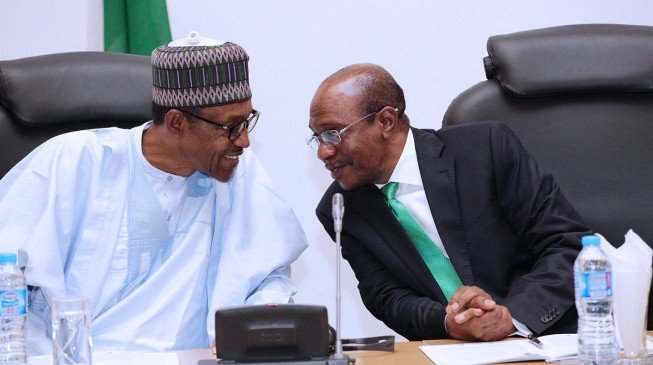
President and CBN boss

A case in point: “On Tuesday, the Central Bank of Nigeria (CBN) directed banks to pay at least 4.65% interest on savings deposit accounts; a remarkable move which is believed will motivate depositors to save.”

Follow me. The government had already jacked up interest rates to fight inflation: “The Central Bank of Nigeria’s monetary policy committee raised its policy rate again as inflation reached its highest level in 17 years. The MPC ordered a 150 basis point increase in its monetary policy rate on September 27, to 15.5%, its third increase since May, when the rate was 11.5%.” 

When rates are raised in Nigeria, companies suffer significantly since our consumer credit system does not exist. In other words, people are not directly affected by rates since no one is lending to consumers. Rather, companies are the ones affected since they remain a huge chunk of borrowers within the financial system. When rates go up, companies increase prices of products to cover the extra cost of production. 

(This contrasts with US and Europe with solid consumer lending where rates can reshape consumer spending. In Nigeria, it is marginal and only relevant for fighting inflation.)

Possibly, the central bank wanted to use the “gains” from the savings accounts to help consumers. So, if you make money from your savings accounts, you can use that to deal with the expected extra costs of things when you shop. The problem is this: many Nigerians have nothing in their bank accounts: “99.4 % of bank accounts contain less than N500,000” according to Nigeria Deposit Insurance Corporation.

Run the numbers and you will see that only 0.6% of depositors will benefit significantly.  If you do have the N500,000, you get about extra N2,000 per month. But the problem is clear: in that 99.4%, more than 90% may not have more than N100,000 in their bank accounts. So, in the end, this may not be very significant.

Way forward? I have noted that CBN should push for legislation that would make reporting of credit data mandatory so that within ten years, our consumer lending will deepen. If not, it will remain a guesswork! Yes,  the poor will not get any benefit (they have nothing to save) from this policy while big people suddenly get blessed!

I have noted that CBN should push for legislation that would make reporting of credit data mandatory so that within ten years, our consumer lending will deepen. When you do that, you can use rates to influence consumption. Imagine instead of increasing rates on savings (few save), you have more options that can get directly to consumers.

“The IADI Core Principle No. 8 on coverage limits specifically requires that the thresholds should be limited, credible with the capacity to fully cover substantial majority of bank depositors while the rest remain exposed to ensure market discipline. Deposit insurance coverage should also be consistent with the deposit insurance system’s public policy objective.

“In addition, the coverage limits are not designed to be static but subject periodic reviews to ensure that they are consistent with the public policy objectives of the Deposit Insurance System. The Corporation successfully reviewed upward the coverage limits from N50,000 at inception in 1989 to N200,000 in 2006 and N500,000 in 2010.

“The implication of this is that in the event of failure of a bank, above 97% of depositors would be fully covered by the Corporation.
“From the foregoing statistics, it could be observed that the Corporation’s deposit insurance coverage limits are not only adequate but robust enough to engender confidence in our banking system.”
Central Bank of Nigeria Increases Interest Rate on Savings Deposits to 4.65%

0

On Tuesday, the Central Bank of Nigeria (CBN) directed banks to pay at least 4.65% interest on savings deposit accounts; a remarkable move which is believed will motivate depositors to save.

The new interest rate is an uptick from the 4.2% that the CBN had earlier directed banks to implement. It comes on the heels of the Monetary Policy Committee (MPC)’s decision to raise interest rate to 15.5% from 14% to combat rising inflation.

The decision to raise interest on savings deposits is believed to be geared toward limiting the amount of money in circulation due to its potential to encourage bank customers to save.

Last month, when the CBN directed banks to implement at least 4.2% interest rate on savings, the apex bank said that it had been reduced to 11% previously to cushion the effect of Covid on Nigeria’s economy.

“It will be recalled that as part of the efforts to ameliorate the impact of the COVID 19 pandemic, the Central Bank of Nigeria reduced the minimum interest rates payable on local currency savings deposits from 30% to 10% of the Monetary Policy Rate (MPR). This was aimed at stimulating growth in the larger economy following the economic-slowdown occasioned by the Pandemic,” the CBN said.

The new rate is in line with the Monetary Policy Rate (MPR), which the CBN uses as lending benchmark in the financial services sector. The apex bank also uses 30% of the MPR as a benchmark of interest rate on savings deposits. When the MPR was pegged at 14%, interest rate on savings deposits was 4.2%, representing 30%. With the MPR at 15.5%, interest rate on savings deposits has been moved to 4.65%, also representing 30%.

The negotiable minimum interest rate on local currency savings, which took effect on August 1, was recently moved from 10% to 30%.

However, while an increase in the interest rate on a savings deposit is designed to serve as a form of contractionary monetary policy, bolstering savings, it falls woefully short of what is actually required to motivate depositors.

This is because, as Nairametrics noted, inflation has risen above the rates, causing monies under savings deposit to lose purchasing power over time. This means that overtime, with higher inflation rate eclipsing interest generated on savings, depositors will lose money.

Nigeria’s inflation rate rose to 20.52% in the month of August 2022, from 19.64% recorded in the previous month, the highest in 17 years. This means that the increase on savings deposit interest will bear no meaning.

Many Nigerians have been converting their savings from naira to dollar in a bid to preserve its value.

Nigeria Wants To Legislate Out Late Payment of Salaries; I Prefer Changing the Non-solicitation Ordinance

1
The coat of arm of Nigeria

Whoever is championing this has my support – abolishing late payment of salaries in Nigeria. It has to stop in Nigeria by all means. I mean, it must end. I am an employer of labour and I am very happy to say that I have never run a late payment of salary.  Sure, there are genuine reasons which can cause delays on the payment of salaries, but I do think, in Nigeria, late payment of salary is uncorrelated with a company’s finances most of the time, as some organizations prefer to  fix money in banks and expect workers to pray and freeze. A good example: government agencies! So, this new bill must have government agencies in UPPER CASE..

Nonetheless, Nigeria can improve many things by releasing the lawyers. I think part of our problem is that our legal system does not have trial legal ordinance where people can band together and sue. That is why trucks fall on the roads and kill people, companies owe workers with reckless abandon, etc. In America, try those; lawyers will recruit the workers and sue you out of existence.

By allowing solicitation, organized by trial lawyers, you empower societies. It is easier when 200 workers come together to sue than when just one does the same. I am told that it is not allowed in Nigeria. I think it has to change. You cannot legislate out medical malpractice, stock insider trading, bogus financial statements, etc. Trial lawyers clean such systems through the societal energy of the people!

People, why cannot we overturn the non-solicitation ordinance in the Nigerian legal system so that lawyers can use the court and force governments and companies to behave? Medical malpractice? Insider trading? Why can’t trial lawyers evolve and force organizations to behave? Yes, release the lawyers and clean the mess!

The employees’ unpaid wages prohibition bill of 2019, has been reported to scale through the second reading at the house of representatives.

The bill which is titled ‘A Bill for an act to prohibit late non-payment, and underpayment of workers wages and other emoluments in Nigeria’, prescribes penalties for violations.

The bill was proposed to the house of reps by the Speaker of the House Hon. Femi Gbajabiamila, who introduced it on the 7th of March 2019, and has now passed the second reading on Tuesday during plenary.

Comment on Feed

Comment 1: What you described (coming together to sue) already exists in Nigeria – they are called representative suits and are slightly different from class actions in the US in that over here a select number of people have to represent a suing group.

This method of commencing lawsuits here is very common in Land matters (The Maroko,Magodo & Gbagada cases) and Labour dispute suits (The Bristol Helicopters cases), and while this suing mechanism is effective in theory, the main issue is a rather lengthy delay in dealing with matters, an issue really bugging the Nigerian judicial system. The Magodo case took more than 2 decades, while the National Industrial Court operates comparatively quickly, the appeal system here can take 5-10 years! Lawsuits only move quickly in Election Petition Matters (6 months at trial level).

So the first step is creating legislation to set minimum benchmarks in entry-level pay for fresh graduates and corpers as well as a set timeframe for settling Labour lawsuits. The Labour Act needs to be amended ASAP.

My Response: Awesome. Thanks Barrister. But my understanding is that a lawyer cannot market his/her services openly, like recruit people who were affected by medical practice. I do think that makes it harder to get clients that will help your case in court. Do you think that could help?  I understand the lengthy delay in our legal system; that has to change.

Comment 1b: Hmmmm, yes and no. The ethical rules governing Legal practice forbid open advertisements & trial publicity in the manner of most businesses and only allows advertisement in a set number of ways (how effective these ways are in attracting business is a topic for another day). The rules also have to be amended because other Common Law jurisdictions (including the UK where our system came from) have now been amended to allow for TV and Radio/Online Solicitations, especially with class actions.

Experienced lawyers in Nigeria have found a clever way to circumvent these rules without breaking them, but it’s still a walk in the dark for many clients who don’t know how to identify specialist lawyers and who have to rely on any lawyer they see(some businesses even try to aid the unauthorized practice of law by pushing their In-house Legal counsel to delve into direct private practice on their behalf which could lead to disbarment).

It’s only recently i thought up a way to effectively and ethically in the manner you’re suggesting using Tech (Legal-Tech beyond Virtual Lawfirms is still a novelty in Nigeria). I would like to set up something in this regard someday.

My Response: “The ethical rules governing Legal practice forbid open advertisements ” – American system does that all the time. They advertise everywhere – TVs, billboards, radios, etc. Does it mean it is not ethical? What is wrong advertising for the “wronged” to come out to get help. I do not get the “ethical issue” here. “I am a lawyer, I sue companies which make bad medical equipment. If you have been a victim of ABC product, call me. I will get help for you”. What is unethical about this?.

Bill To Prohibit Late Payment Of Salary Passes Second Reading in Nigeria’s Parliament

Bill To Prohibit Late Payment Of Salary Passes Second Reading in Nigeria’s Parliament

0

The employees’ unpaid wages prohibition bill of 2019, has been reported to scale through the second reading at the house of representatives.

The bill which is titled ‘A Bill for an act to prohibit late non-payment, and underpayment of workers wages and other emoluments in Nigeria’, prescribes penalties for violations.

The bill was proposed to the house of reps by the Speaker of the House Hon. Femi Gbajabiamila, who introduced it on the 7th of March 2019, and has now passed the second reading on Tuesday during plenary.

Hon. Femi Gbajabiamila stated that the bill seeks to provide for the ban of late payment, non-payment, and underpayment of workers’ wages in Nigeria and prescribes punishment for breaches and other issues.

It also seeks to provide compensation for employees as well as improve the general welfare conditions of employment for labor in Nigeria.

The law prescribes that in case of a breach concerning other monetary benefits separate from the monthly pension, the fine shall be 30 percent of such financial benefits for that period.

Gbajabiamila further suggested a time frame and penalty schedule for unpaid wages or pensions if the employer or employee breached the law for more than two months.

The bill partly reads, “Notwithstanding anything to the contrary contained in any Act or any other enactment or law, the provision of this Act shall apply to all matters about payment of wages, pension, benefits and other emoluments by employers to workers in Nigerian.

What The Bill Says;

Section 1

“An employer is prohibited from entering into any contract with any workman for any deduction from the sum contracted to be paid by the employer to the workman, or for any payment to the employer by the workman for or in respect of inadequate or negligent work or injury to the material or other property of the employer or respect of any fine unless.

“(a) The terms of the contract contained in a notice kept constantly affixed at such place or places open to the workman and in such a position that it should be seen easily read and copied by any person whom it affects, or the contract is in writing signed by the workman.

Section 2

“Every employer of labor in Nigeria, whether private or public, and whether it is employing any worker on permanent or contract basis must ensure that all payment of wages, salaries, pension and all benefits to workers are paid promptly without delay weekly, fortnightly monthly, quarterly or yearly as may be agreed by parties in the contract of employment of the additional individuals”.

Section 3 (1a,b,c)

Prohibits employers from making arbitrary deductions from the wages or pension of workers unless expressly provided in the contract of engagement.

“The terms of the contract contained in a notice kept constantly affixed at such place or places open to the workman and in such a position that it should be seen easily read and copied by any person whom it affects or the contract is in writing signed by the workman unless the deduction or payment to be made under the contract does not exceed the actual or estimated damage or loss occasioned to the employer by the proven Act or omission of the workman or of some other person over whom he has control or for whom he has by the contract agreed to be responsible.”

Section 4

“an employer shall not hold on to the salary, wage, pension, or any other benefit and emolument of any workman for a period of seven days and above from the day the payment of such salary, wage, pension, and any other benefit and emolument falls due save in the event of any force majure.”

As punishment, the bill seeks one-month imprisonment for any employer that owes salaries for more than 60 days.

The passing of the bill is a welcome development that will correct some mischievous acts by some employers in the country. Some employers do not adhere to contracts, rather they breach them and do whatever they like, constantly treating employees unfairly.

Some of these employees have been plagued by late or non-payment of salaries, as heartless employers exploit the lack of legislation prohibiting the practice in the country.

Rocketize: The Neil Armstrong Token Taking Tether and Algorand Users To the Moon

0

The Rocketize (JATO) website references the saying by Neil Amstrong on landing on the moon in July 1969. “Houston, Tranquility Base Here. The Rocketize Token has Landed.”

This is the basis of Rocketize (JATO) as a community token designed to rocketize investors to an outer space journey through the wonders of memes and gains. The development team behind the project intends to catapult the platform to heights previously unseen in the crypto space.

The Theme Of Rocketize (JATO) Ecosystem

The theme of the meme project draws its inspiration from the wholesomeness that meme crypto brings to its community and the need to break down traditional incentive structures further.

With Rocketize (JATO) utilizing the recreated system of financial operation- DeFi, users globally will have the resources and no limitations to grow and earn. Soon enough, the token will be a household name in crypto communities.

Additionally, Rocketize (JATO) will invest in NFTs, with special minting events, to produce new non-fungible tokens. The mint will use  Web 3 dApp Wallets to generate and store NFT collectibles. Holders will be able to tokenize their favorite memes into collectible trading cards.

For usability, the team is currently working on the development of a comprehensive eCommerce platform. The platform will provide support for its meme trading cards. From there on, non-fungible tokens will remain another source for users to earn passive income.

Rocketize (JATO) DEX

Rocketize’s (JATO) plan of introducing a decentralized exchange (DEX) will facilitate peer-to-peer transactions, allowing users to buy and swap digital assets straight from their wallets.

This will be done without going through an intermediary. The DEX will be governed by the community and managed by the DAO, effectively giving power to the people.

Rocketize (JATO) Presale Incentives

The second phase of public presale ends in a month, but Rocketize (JATO) has plans for early buyers. Buyers can get the token using ETH, BNB, Tether, BTC, and SOL for up to 15% bonus.

Also, all purchases for the next couple of weeks carry an automatic 7% bonus.

The First Stablecoin- Tether (USDT)

Tether (USDT)  is ranked number three on the list of cryptocurrencies with high market capitalization and has declared itself to be the driving force of money. Even cryptocurrency.

Tether (USDT) tokens pioneered the concept of the digital token space, attaching its value to a fiat current and backed by reserves that provide stability. The tokens are on blockchains and accepted by merchants globally, pushing on the mission for cryptocurrency adoption.

Sustainability With Algorand (ALGO)

Algorand (ALGO) is an institutional-grade blockchain for sustainability, security, decentralization, and scalability.

One of the major chains that solve blockchain’s trilemma, Algorand (ALGO), is also environmentally friendly, operating on a proof-of-stake protocol for consensus. The Algorand (ALGO) blockchain gives global innovators the chance to effect change within the crypto industry and worldwide. 

It is exciting to see Rocketize (JATO) breaking the norms, especially with meme coins. As the crypto market opens up to accept projects with fresh perspectives, JATO has the potential to shine as a profitable token.

For more information about Rocketize (JATO) token:

Website: https://rocketize.io/

Presale: https://launch.rocketize.io/register

Telegram: https://t.me/RocketizeTokenOfficial