DD
MM
YYYY

PAGES

DD
MM
YYYY

spot_img

PAGES

Home Blog Page 4872

Axie Infinity And Moshnake On BNB Chain Would Be Doing More For The Gaming Ecosystem Than Any Technology In The Past

0

Axie Infinity(AXIE) and Moshnake(MSH) are two games cut from the same cloth. Both games could do more for the whole gaming ecosystem than any other revolutionary tech it has experienced in the past. Technology has done a lot for video games in the last several years, and the ecosystem has improved with every new advancement it can adopt.

From the time of 3D graphics improving the visual experience of gamers to the use of the internet in connecting to other gamers and interacting, gaming has come a long way, and blockchain games like Moshnake and Axie Infinity seem like revolutionary advancements for the ecosystem.

The primary thing blockchain is known for is decentralization which in turn gives back the power or funds to the users which would have otherwise gone to the central authority on the system. Another tech that has contributed immensely to the growth of the gaming industry is live streaming. Since the emergence of the tech, gamers have taken to live streaming platforms like Twitch to live stream themselves while playing their favorite video games.

However, blockchain gaming introduces something more rewarding than anything from the past. Blockchain gaming uses blockchain tech to process and manage in-game activities and assets such that those assets can become tradable and be moved out of the game if necessary.

To Infinity And Beyond – Axie Infinity(AXIE)

Axie Infinity(AXIE) is the leading blockchain game and has been around since 2018. Axie Infinity is an online game around a Pokemon-style creature called Axies. These axies serve as virtual pets or cute monsters in the game, which players battle against each other for prizes. Players have a higher chance of winning battles and earning prizes if they enhance their Axies and give them various powers. Axie Infinity blew up in June 2021, allowing some users to make money, and in just 30 days, it produced sales of around $780 million.

Axie Infinity easily integrates online gaming with blockchain tech, and it sets it apart from other online games. The Ethereum-based game uses a framework that lets players control their virtual assets and pays them for mastering more difficult game levels.

Although the ethereum blockchain is recognized as incapable of running a game because of its scalability issues, Axie Infinity was run on the network via a sidechain called Ronin, which allowed users to process transactions at a quicker speed and lower fees.

Snakes Eyes — Moshnake(MSH)

Moshnake(MSH) is a new play-to-earn blockchain game in the style of games like Axie Infinity. The new game on the BNB Smart Chain looks quite promising as a top game when it launches because of the potential it poses for adoption. The game was derived from classic snake games available on Nokia phones several years ago.

The game takes a more refined version and has various gameplay modes that feature a battle royale gaming mode where multiple players can play anonymously online and battle for MSH tokens, NFTs, and other in-game assets. You may enhance the potential profitability of your Moshnake NFT by developing or evolving it. Your chances of winning and making money increase as the snake grows longer and you spend more time in the arena. Experienced players would be able to quickly turn this into a means to make some money while having fun.

The new game on the BNB chain would have the opportunity to break into the market, unlike any other blockchain game, because it refines a very popular game that could get players back to playing for nostalgia reasons instead of just the value it provides.

Moshnake Token(MSH) is currently on presale, and with the potential it poses to users, it could be one of the smartest earliest buys you’d see in the cryptocurrency market.

Moshnake

Website: https://moshnake.io

Telegram: https://t.me/MoshnakeOfficial

Twitter: https://twitter.com/moshnakeToken

Tech Talent Shortage Threatens Financial Inclusion, Innovation In Nigeria

0

The mass exodus of tech talent in Nigeria who are aggressively migrating to Europe and other parts of the world has posed a lot of challenges to few industries in the country, most especially the banking industry.

Enticed with mouth-watering offers, competitive salaries, and incentives, these tech talents do not hesitate to tender their resignation letter to their employers to migrate to another country or industry.

Analysts recently disclose that the mass resignation of tech talents in banks in the country has created gaps in the efficient running of mobile banking services which poses a threat to Nigeria’s financial inclusion drive, digital innovation, and the growth of fintechs.

According to the managing director/chief business officer at Optimus by Afrinvest Limited, Ayodeji Ebo, while commenting on the exodus of tech talent, he said;

It is going to affect the case of innovation in the financial services sector because the focus will now be on stabilizing current platforms.

“It would affect the confidence of customers using the platforms because of the increased failed transactions”.

Also during a post-Bankers’ Committee meeting press briefing held in April, chief executive officer at Sterling Bank Plc, Abubakar Suleiman lamented on how the banking industry had been hit by the great resignation.

He complained that many of the experienced tech talents in the industry, especially in the area of software engineering, are either leaving the industry or leaving the country.

Most banks in Nigeria have witnessed a high-level exit of tech talents, which has seen the digital banking services, USSD, and money transfers come under severe strain in recent times.

In June this year, it was reported that customers stormed several banks in the country to make complaints about the challenges they were facing with transaction issues. These complaints were centered majorly on network problems and bank transfer issues.

So many issues have been attributed to what has spurred the exodus of tech talents from Nigeria, such as the rising inflation, unemployment, Poor infrastructure, and constant devaluation of the naira against the dollar as these talents seek foreign employers to earn in dollars as a hedge against inflation and devaluation.

It was earlier reported on Tekedia that some banks have adjusted the education criteria for their recruitment process in a bid to cope with the skills gap.

To curb the exit of top tech talents from Nigerian banks, the chartered institute of bankers of Nigeria had earlier disclosed that to cover up for these vacant positions, they will drive the process of training individuals with the necessary skills in areas where there are deficits.

They further stated their plans to fund training for new tech-focused staffers to fill in vacant positions of those who have left.

CBN Raises Interest Rate to 15.5%, the Highest in 20 Years

0
Central Bank Governor, Nigeria

The much anticipated Monetary Policy Committee meeting was held in Abuja, the nation’s capital, on Tuesday. Following the MPC meeting, the Central Bank of Nigeria (CBN), announced that the Monetary Policy Rate (MPR), which measures interest rate, has been raised to 15.5 percent from 14 percent.

The MPR was raised by 150 basis points from 14 percent as the financial regulator seeks to tame rising inflation that currently stands at 20.52 percent.

The asymmetric corridor of +100/-700 basis points around the MPR was retained but the Cash Reserve Ratio (CRR) was raised to a minimum of 32.5 percent. The Liquidity Ratio was also retained at 30 percent.

CBN Governor, Godwin Emefiele, said on Tuesday that the decision to raise the interest rate has come from the majority of the MPC members.

“The committee voted unanimously to raise the MPR…The MPC voted to raise the MPR to 15.5, retain the asymmetric corridor at +100 -700 basis points around the MPR. Increase the Cash Reserve Ratio (CRR) to a minimum of 32.5% and retain liquidity ratio at 30%,” he said.

Emefiele explained that the decision was informed by the members’ deliberation on the impact of the widening margin between the current policy rate of 14 percent and the inflation rate of 20.52 percent.

“At this meeting, the option of reducing the policy rate was not considered as this would be gravely detrimental to reigning in inflation. The committee thus agreed unanimously to raise the policy rate to narrow the interest rate gap and reign in inflation. The committee thus voted unanimously to raise the MPR.

“10 members voted to raise the MPR by 150 basis points, one (voted to raise it) by 100 basis points and one by 50 basis points. 10 members voted to increase CRR (Cash Reserve Ratio) by 500 basis points, while two members voted to increase it by 750 basis points,” he said.

However, the MPR, which is the highest in 20 years, has raised some concern. The concern stems from the impact the new interest rate will have on the entities under the CBN debt list. The CBN has lent about N20 trillion to the federal government and about N10 trillion to selected entities.

Experts believe that raising the interest rate to 15 percent on all the loans will severely impact local production.

“No SME producing locally can survive with 15%+ interest rates,” Kalu Aja, a financial expert wrote.

The central bank had in its last MPC meeting, increased the interest rate from 11.5% to 14%. But the decision failed to tame the surging inflation rate, which rose from 19.6 percent in July by 0.92 basis points to 20.52% in August, the highest in 17 years.

Forex scarcity has been fingered as the major cause of the rising inflation, which the CBN’s policies, including schemes and intervention programmes, have failed to mitigate.

CBN Disburses N41bn to Wheat Farmers In Nigeria Amid Russia-Ukraine War

0

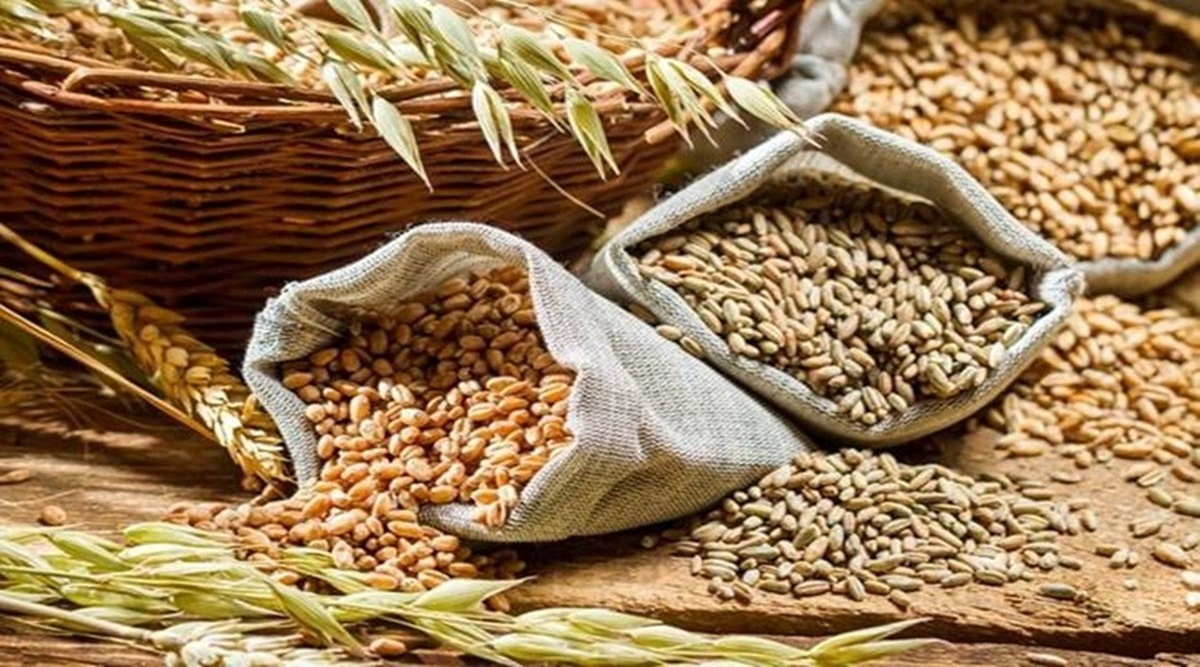
The central bank of Nigeria (CBN) has disbursed the sum of N41 billion to wheat farmers amid the Russian-Ukraine war to cushion the effect of the war.

These farmers were given these intervention funds to aid production as the availability of the wheat dropped drastically in the country due to the impacts of the Russia and Ukraine war.

The Central Bank of Nigeria (CBN), through Heritage Bank, aided in disbursing the funds. Heritage Bank Executive Director, Oko-Oboh while speaking at the Chartered Institute of Bankers of Nigeria’s (CIBN) 15th Annual Banking and Finance Conference, tagged  “Repositioning the Financial Services Industry for an Evolving Global Context”, stated that the Bank had to partner with the CBN to support wheat farmers to enable the growth of wheat in the country following the setback faced in the importation of the staple crop.

He said, “As a Bank, we partnered CBN and other stakeholders such as wheat farmers association of Nigeria, wheat farmers, processors and marketers’ association of Nigeria, Lake Chad Research Institute and other development partners, flour mills of Nigeria, and several seed companies and others to support over 100,000 farmers in wheat production.”

He further stated, “Also, Heritage Bank further factored consideration of value addition of financial services and products flowing to and/or through value chain participants to address and alleviate constraints to growth that have distorted product financing, receivables financing, physical-asset collateralization, risk mitigation products, and financial enhancements.”

Wheat is one of the most consumed staples in Nigeria, as the value chain is quite large that it can be processed into a wide range of foods including bread, crumpets, muffins, noodles, pasta, biscuits, cakes, pastries, cereal bars, sweet and savoury snack foods, crackers, crisp-breads, sauces, and confectionery.

Wheat was Nigeria’s third most imported product in 2019, as according to the observatory of Economic complexity, Nigeria’s import of $1.48 billion worth of wheat in 2019 made it the world’s 6th largest importer of the cereal grain that year with its two top sources from the US, and Russia.

Due to Nigeria’s dependence on imports to satisfy growing wheat consumption, it faced its biggest challenge this year due to Russia’s invasion of Ukraine as 30 percent of the world’s wheat exports were cut off from the global market.

As the war intensified, in the last few months, wheat-based products such as the popular pre-packed wheat flour and bread (sliced and unsliced) have witnessed a steady price increase across the country.

Nigeria and other import-reliant countries, therefore, had two options to either invest massively in critical infrastructure in states where it has competitive and comparative advantage to boost wheat production or look elsewhere away from Russia and Ukraine to import wheat.

With the recent disbursement of N41 billion naira by the CBN to wheat farmers in the country, it will cushion the impact of the Russian-Ukraine war as it will aid in Wheat availability, thereby ensuring stability it the prices of wheat products.

Vendease, African Food Procurement Startup, Raises $30m in Series A Round

0

For years, African restaurants have struggled with procurement and preservation of foodstuffs, resulting in waste of food products and loss of revenue. This situation created a huge friction in the African food markets that inspired Tunde Kara, Olumide Fayankin, Gatumi Aliyu, and Wale Oyepeju, to found Vendease.

The startup, which focuses on procuring and preserving food for restaurants in Africa – moving food from farms to restaurants, has grown into a multi million dollar company that has continued to attract investors.

Vendease announced that it has raised $30 million ($20 million equity and $10 million debt) in a Series A funding round. The round was led by Partech Africa and TLcom with participation from existing investors such as VentureSouq, Hustle fund, Hack VC, GFR Fund, Kube VC, Magic Fund and Kairos Angels.

Kara CEO, Fayankin COO, Aliyu CPO and Oyepeju CTO, came together in 2020 with the vision of solving Nigeria’s food industry’s inefficiencies and eventually expanding to other African markets. The platform is designed to mitigate losses and help food businesses thrive.

In about two years since it was founded, Vendease has raised more than $35 million. Last year, the YC-backed startup raised $3.2 million to expand its operations across Nigeria.

Kara told TechCrunch that the company plans to use the new funds to expand and consolidate its operations in eight cities in Nigeria and Ghana. He also said that it is planning to move into new markets and build new products to increase customers’ efficiency.

“We’re building technology to efficiently move food from the point of production to the point of consumption. Everything we build at Vendease: financing, logistics, warehousing, inventory management, is tailored towards ensuring that food flows efficiently from that point of production to the point of consumption,” he said.

Vendease, described as a series of stacks, said most of its customers, including restaurants and food businesses, hospitals, hotels and schools, are subject to $100 billion in annual losses due to several factors. The factors include unreliable supply, wastage, limited data on making informed procurement decisions and little or no capital to fund procurement.

Over the last 12 months, the company said it has moved approximately 400,000 metric tonnes of food for its over 2,000 customers, helping them to save about $2 million in procurement costs and over 10,000 in person-hours.

Kara said that Vendease has saved its customers almost $500,000 in wastage costs due to overstocking by using the businesses’ data and providing them with the necessary resources — particularly around inventory management.

“Since businesses don’t have access to accurate data, they usually buy what they don’t need. We help them to solve that problem in two ways. One, because businesses know they can get anything on our platform in 12 hours, they don’t need to stock some of the things they would’ve stored before. Two, they can also track what they bought and know how much is left before they need to buy again,” he said.

Besides food procurement and preservation, Vendease also offers financial services – Buy-Now-Pay-Later (BNPL) to its customers, which it now uses financial institutions that provide its financing – a different format from its earlier method. The company said it has been able to provide businesses more than $12 million worth of inventory via this embedded finance product.

“Something important to us about our current growth and impact is despite the ongoing global food supply shortage and inflation, Vendease is helping our users save big and provide relative stability for their stock levels. Shielding them (to a large extent) from the most severe effects of the current global shortage. What excites us is we can have even more impact as we extend and entrench our technology within Africa and the rest of the world. And that’s what keeps us going,” Kara said.