DD
MM
YYYY

PAGES

DD
MM
YYYY

spot_img

PAGES

Home Blog Page 4893

Protect your idea and trade secret with non-disclosure agreement.

0
Legal document Non-Disclosure Agreement on paper close up

Yesterday, a client came knocking at my office door saying that he has this billion dollar idea but due to lack of capital he cannot fund or execute it. He instead has set up a meeting with a prospective investor that will finance that idea but he is worried that if the investor ends up not working with him the investor may steal the idea since he will be divulging the idea to the investor at the course of the meeting. 

Many start-up founders and business owners have this worry. The worry of losing their ideas, patent rights, and trade secrets to prospective investors in the quest of getting funding or the worry of losing their trade secrets to their employees, interns, independent contractors, or project managers. Many have even learned the lessons of seeing their ideas or being executed by someone else they opened up to.

The good news is that the legal fulcrum has handled this fear by providing a binding contractual document that you as a startup founder or business owner should arm yourself with. 

You are to enter into this contract with your employees or with your prospective investor(s) before you divulge your billion-dollar ideas or expose your trade secrets.

 This contractual document is called a non-disclosure agreement.

A non-disclosure agreement is a legal contract or part of a contract between at least two parties that outlines confidential material, knowledge, or information that the parties wish to share with one another for certain purposes, but wish to restrict access to or wish that the information remains between the two parties and never to be disclosed to someone else or never for the other party to independently utilize the idea in the absence or without the authority or consent of the originator of the idea. 

An NDA (as it is fondly called) creates a confidential relationship between the parties, primarily to protect any type of confidential and proprietary information or trade secrets. 

A non-disclosure agreement can be entered between a company/business owner and the employees, independent contractors, or project managers. It can also be entered between a person or a company with an investor or a financier. 

The purpose of a Non-disclosure agreement is primarily to Protect your idea or your trade secrets. 

If you are in a manufacturing business or producing products where the intricate buildup of that product is not of public knowledge and you want it to remain a secret and only be known to the employees of the company, the best way to protect that trade secret or make it remain confidential information is to have your employees, interns, consultants, or partners sign an employee NDA to agree to keep that business information secret. 

On that note, if you have a billion-dollar idea and you have been struggling with executing it due to lack of finance and you have the opportunity of taking it to investors or financiers, make sure you go along with a legal contract called a non-disclosure agreement. 

Nigeria Loses Status As Africa’s Largest Crude Oil Producer

0

It is often said that “Eras Come To An End”. This is the case for Nigeria, as the country reportedly loses its status as Africa’s largest crude oil producer.

A recent Bloomberg report reveals that Nigeria lost its crown as Africa’s largest crude oil producer after it was surpassed by Southern African country Angola, for the first time in five years.

Angola’s average daily output in August of 1.17 million barrels was more than Nigeria’s at 1.13 million barrels. According to Bloomberg’s survey of monthly OPEC output, the last time that happened was in April 2017 when both nations were pumping about 500,000 barrels a day.

A huge cause of this decline in Nigeria’s crude oil production, has been attributed to the incessant crude oil theft that has ravaged the oil sector in the country. 

In the first quarter of 2022, Nigeria lost about $1 billion to oil theft, which has so far led to little or no contribution of the sector to Nigeria’s revenue.

A report revealed that the oil sector in Nigeria contributed virtually nothing to the country’s 3.54% GDP growth in Q2 2022, as the non-oil sector was mainly responsible for the revenue growth.

The oil sector reportedly declined by 11.77% in Q2 2022, as it also slumped by 26.04% in Q1 2022, all due to the drastic reduction in oil output.

According to the Nigerian National Petroleum Company Limited (NNPCL) it disclosed that in June, a whopping 9.425 million barrels were lost to the upstream challenges. This figure excludes the oil theft in the Niger Delta region, which is estimated to be 400,000 BPD.

A recent publication on Tekedia revealed that the NNPCL has been unable to remit a kobo to the account of the federation since this year, thereby crippling most dollar-related transactions in the Nigerian economy.

In a document in which the national oil company explained its operations to the Federation Account Allocation Committee (FAAC), it told the body that the nation lost 9.425 million barrels in nine major incidents in the course of its operations.

Nigeria’s upstream petroleum sector has struggled in the last one year, due to deteriorating facilities occasioned by waning investment as well as oil theft, sabotage, and community issues.

It is estimated that the country may have lost as much as $1.036 billion to the phenomena during the period under review.

Nigeria has tried to stamp out sabotage on its pipeline network in recent years without much success. The government on the other hand recently deployed more troops to the region where its oil pipelines are located in order to curb the menace of oil theft.

Group Chief Executive Officer (GCEO) of the NNPCL, Mele Kyari had announced cash rewards for anyone who blows the whistle on oil thieves and vandals, disclosing that he was personally spearheading the move to ensure that the identity of the whistle-blowers is kept under wraps.

He also disclosed that the NNPCL had deployed cameras to monitor its assets in real-time as well as the disclosure of the launch of an app to ensure the menace is brought to the barest minimum.

Nigeria’s production quota for August was at 1.826 million barrels per day. Libya produced 1.08 million barrels of crude a day in the same month, and could soon overtake Nigeria if the West African country continues on its current trajectory.

Tekedia Capital Joins Other Investors in Blockchain Payments startup Bitmama As It Raises $2 million pre-seed

0

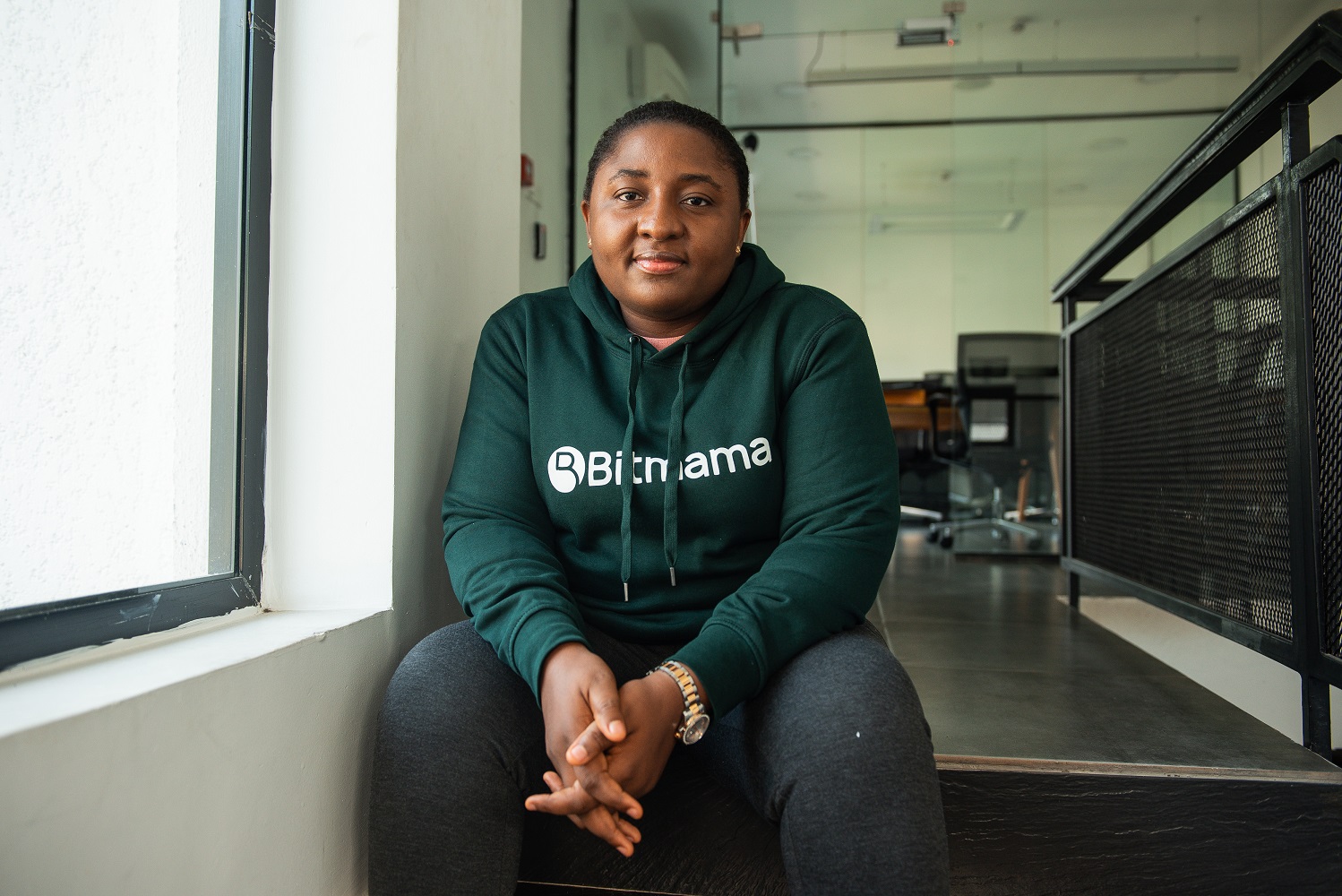
She is one of the most amazing  visionary founders in the tech ecosystem in Africa. Her visions are fascinating and what she has accomplished is huge. Tekedia Capital is excited to announce our investment in Bitmama Inc, led by Ruth Iselema. People, her numbers are superb, closing to 100,000 users even though she had not really raised much money. So, when she called, it took us 30 minutes to agree to invest in her company.

She was surprised because she had expected the process to last longer. Ruth, we are proud of what you have accomplished and very happy to join other investors in your mission. Go and win more markets and territories and advance Africa and our world. I was truly impressed speaking with you; excellence exponential.

The latest round is led by Unicorn Growth Capital and Launch Africa Ventures, with participation from Adaverse and follow-on from Flori Ventures, which led its earlier pre-seed round. New investors in the round include Tekedia Capital,  GreenHouse Capital, ODBA, Five35 Ventures, Chrysalis Capital, Enrich Africa, Thrive Africa,  Angellist Ventures, and angel investors including, CELO founders; Rene Reinsberg, and Marek Olszewski, and Honey Ogundeyi.

To learn more about Tekedia Capital, click here 
To download Bitmama app, go here https://bitmama.io/

The announcement is here for $2 million


Blockchain Payments startup Bitmama secures $2 million pre-seed to grow its operation in new markets 

Lagos, Nigeria – September, 2022

US and African-based blockchain payments startup Bitmama Inc. has raised an additional  $1.65 million, bringing its total pre-seed round to about $2 million. 

Bitmama closed this funding from a group of foreign and domestic investors ten months after its initial pre-seed round of $350,000. 

The latest round is led by Unicorn Growth Capital and Launch Africa Ventures, with participation from Adaverse and follow-on from Flori Ventures, which led its earlier pre-seed round. New investors in the round include, Tekedia Capital,  GreenHouse Capital, ODBA, Five35 Ventures, Chrysalis Capital, Enrich Africa, Thrive Africa,  Angellist Ventures, and angel investors including, CELO founders; Rene Reinsberg, and Marek Olszewski, and Honey Ogundeyi. 

Bitmama’s new pre-seed round will be used to expand the company’s operational presence, strengthen its team across different markets, consolidate its product offerings, and plot market penetration across Africa, while rapidly scaling new use cases for cryptocurrency within the continent. At present, the company’s major products are the Bitmama exchange, which allows users to access virtual assets and explore several cryptocurrency use cases, then Changera, a social payment solution that allows non-crypto-savvy customers to use their money without limits, from anywhere in the world.

Bitmama is a highly-secure blockchain payment platform pinoneering “Crypto Beyond Trading” for Africans globally. The company is approaching the African crypto market differently by promoting the awareness and adoption of crypto through innovative product offerings including its virtual crypto debit cards, which afford over $10,000 in monthly spending limits.  Powered by VISA, these cards are funded with stablecoins and can work anywhere in the world for online transactions.

Currently in three African markets; Nigeria, Ghana, and Kenya, Bitmama’s users are able to trade several cryptocurrencies, use their debit cards for regular online payments, pay utilities and  perform transactions such as staking to hedge against currency devaluation.  

Bitmama has built a distributed remote team across Ghana, Nigeria, and Kenya , working to democratize the highly fragmented payment system in Africa. The goal, according to the team, is to leverage the blockchain in building solutions to power seamless peer-to-peer payments across the continent. 

Ruth Iselema, Founder and CEO of Bitmama Inc. while commenting on the round said ”Bitmama has made a number of strides in the past year. We’ve rolled out two products, both of which are fast closing in on 100,000 users across the African market and recording impressive daily active users across our range of product offerings despite the market dynamics. We are building Africa’s most user-friendly, innovative blockchain company, and we are glad to have the backing of seasoned investors and partners who have walked similar turfs. We are privileged to learn from their blended experiences across corporate and blockchain business verticals. We’re  confident of the results we’ve achieved so far and  we’re set to build the next big solution that the market deserves.”
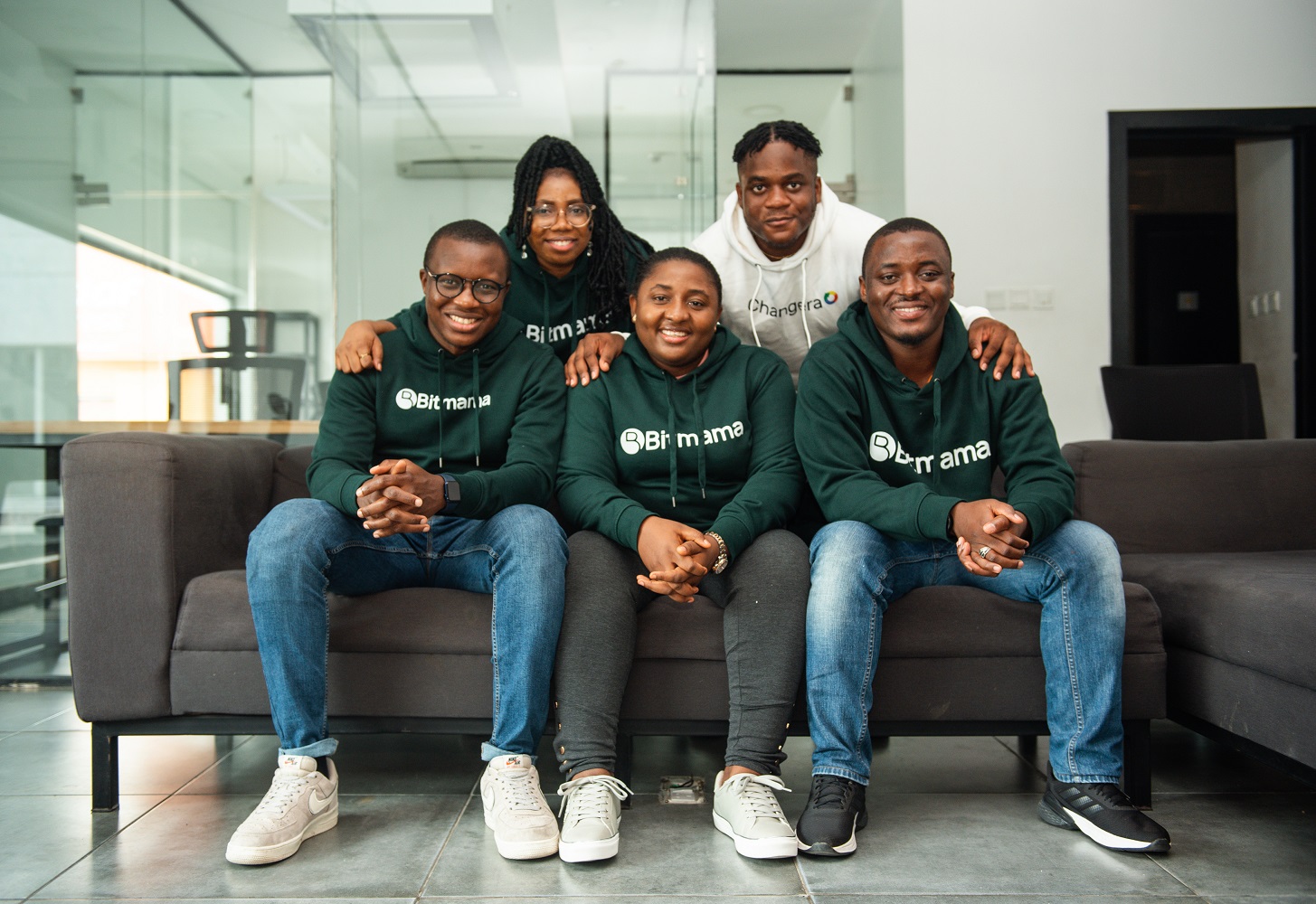
Also speaking on the round, Janade Du Plessis, Managing General Partner at Launch Africa said “As a prominent Pan-African VC fund, we see our partnership with Bitmama as a way to truly allow all Africans with the ability to trade and manage cryptocurrencies, and digital assets conveniently and universally, creating a significant impact on allowing more people to trade and transact across Africa.  This is something that we specifically value in our Fund and what Bitmama in particular delivers.”

Hema Vallabh, Founding Partner at Five35 Ventures said “Being a leading female-focused VC fund, we at Five35 Ventures look forward to helping Ruth and her dynamic team scale Bitmama, especially seeing the growth of Changera, the remittance platform that allows all Africans to transact internationally at much cheaper rates than established remittance companies in the market.”

About Bitmama

Bitmama Inc is a global blockchain payments company that is committed to building solutions to solve the fragmented payment challenges.  Bitmama has a core focus on blockchain technology and has successfully deployed two flagship products into the African market – Bitmama.io, a crypto exchange where users trade cryptocurrencies at the best rates, and safely acquire digital assets, and Changera a social payments  which facilitates payments for users globally. 

For more information, please contact: Thelma > thelma@bitmama.io 

Tekedia Mini-MBA Early Registration Discount Ends Today – Register Now

0

Tekedia Mini-MBA begins Sept 12; early registration benefits end today. If you plan to join the academic festival, go here . If you have registered and yet to get login details, please reach out to my team. We’re ready to welcome you to Tekedia Institute.

Tekedia Institute offers Tekedia Mini-MBA, an innovation management 12-week program, optimized for business execution and growth, with digital operational overlay. It runs 100% online. The theme is Innovation, Growth & Digital Execution – Techniques for Building Category-King Companies. All contents are self-paced, recorded and archived which means participants do not have to be at any scheduled time to consume contents. Besides, programs are designed for ALL sectors, from fintech to construction, healthcare to manufacturing, agriculture to real estate, etc.

The sector- and firm-agnostic management program comprises videos, flash cases, challenge assignments, labs, written materials, webinars, etc, and is delivered by a global faculty coordinated by Prof Ndubuisi Ekekwe. It will run from Sept 12, 2022 to end Dec 3, 2022. Tekedia Institute, Boston USA awards certificates of achievement at the end of the program.

Moral, Symbolic or Systemic Dysfunction? What to Blame When An Unfulfilled Graduate Decides to Relinquish His Certificate

0
University Graduation Cap with Scroll Icon Student Education Symbol Isolated Realistic Design Vector Illustration

A video recording of a graduate of the Ladoke Akintola University of Technology (LAUTECH) who recently stormed his Alma Mata to return his certificate and demanded a refund of his school fees because he couldn’t secure a Job since he graduated from the University has been making round on the social media since the past couple of days it’s uploaded on the internet. According to the man, as shown in the video, he’s not seen any financial benefit of the certificate since he got it from the school. Therefore, his decision to return it to the school.

Not a few individuals have described the Alumnus as irresponsible and an embarrassment to his Alma mata. Some have used words such as ‘psychologically impaired’ or ‘frustrated’ or ‘rude’ to qualify the situation. Others have sparingly foreclosed the action as simply chasing the clouts on the social media.

However, a closer or wider look at the behaviour seek to lay bare its latent meaning and the broad lessons to draw from it. The particular incident is typical of the many social issues that play out on a quotidian basis but which we often take for granted or in the least give only a paltry reflection in relation to the general state of our society.

Sociologists do not bother themselves much about the actions of the individuals; rather, they interrogate the interplay of social facts and social relations that inform individual’s actions or behaviours and their general implication or effect on the moral firmament of Society. The moral firmament is the basic of social life. And where the moral firmament is still very strongly rooted in the people’s consciousness, a disturbance to it will not likely go unpunished or unsanctioned as the case may be.

Morally speaking, your Alma mata is perhaps next to your parent or family to accord gratitude as a functional member of society. You should think to give back to your alma mata for the knowledge impacted in you. And even when you cannot afford to do this with the big cheque, you could at least make your alma mata proud by being a good ambassador of it. Here, the ungentle man has goofed; he’s committed a terrible moral blunder. So he’s sentenced unsparingly via the same court his lot had become public knowledge.

But is morality a one way street or a monolithic affair? Your guess is as good as mine. According to the social strain theory — I have explained it broadly in another article accessible here –.a sort of social contract exists between the people and the social system within which they exist. Where the contract could not hold simply due to the failure of the system to fulfill its own end of the bargain, people are hard pressed and they react in diverse ways to the anomic conditions that develop therefrom. From this sociological perspective, it makes a lot more sense to understand the ungentle man’s behaviour as a reflection or consequence of a systemic failure rather than as an extension of moral ineptitude from the individual.

There is yet another perspective that transcends the moral or systemic failure to the far-reaching effects of our day-to-day social interactions on our general social life. Here, it is important to ask fundamental questions such as these; what kind of conversations dominate our social life? What thought lies furtively in our collective conscience? These social cues are important because social thoughts constantly seek to manifest themselves as social realities. The increasing “fraudulization” of school, of adulthood and of the entire social system in our day-to-day conversations and social interactions no doubt has its telling effects on our moral attachment and general attitude in the social stratosphere.

The overused saying “school is a scam” among the young individuals, albeit a social expression of the pains experienced from the general systemic failure, is not only jaundiced but also myopic as it merely stereotype the school not minding the myriad of social issues that impact the institution. It is a sort of argument that throws the baby away with the bathwater. This thought has become so endemic in our collective conscience and it informs our tendencies to be unpatriotic, immoral, disloyal, rebellious or criminal. On this track, the rebellion of the Alumnus to his alma mata may have been informed by the emboldening social thought that has continued to pigeonhole school as scam.

But much bigger of a social problem that urgently needs to be addressed is the incidence of brain drain in the country, particularly among the youths who constitute the nation’s greatest manpower resources. Nigeria currently has a brain drain index of 6.60 compared to the global average of 5.21. The mass exodus of people from the country in search of greener pastures in other countries of the world, even though fundamentally a systemic problem, is increasingly aggravated by negative sentiments that have formed part and parcel of the youth social thought. Significantly driving this problem is the ‘Japa’ concept, meaning to escape for good, that has become commonplace and loosely used in the day-to-day conversations and social interactions of the youth.