DD
MM
YYYY

PAGES

DD
MM
YYYY

spot_img

PAGES

Home Blog Page 4895

Igwebuike and the United Kingdom’s Own-Goals

0

(This was written before I knew that Queen Elizabeth had died. May her soul rest in peace.)

Last year I wrote when the United Kingdom could not find truck drivers: “Feel free to throw the verbal flames. Yes, why should this village boy from Nigeria be discussing what is happening in the UK. I have to because it is a free world. When the UK voted for BREXIT, they voted for “freedom”. Yes, that guy is coming for my lunch. But interestingly, that guy coming for your lunch may be the one making sure you have breakfast and dinner.”

I made the point that the UK scored an own-goal by executing BREXIT. In our modern world, coming together deepens competitive and comparative advantages since we’re all living in gloCal (global + local) world. But when you disconnect, you pay a penalty. Yes, igwebuike – “strength in unity”

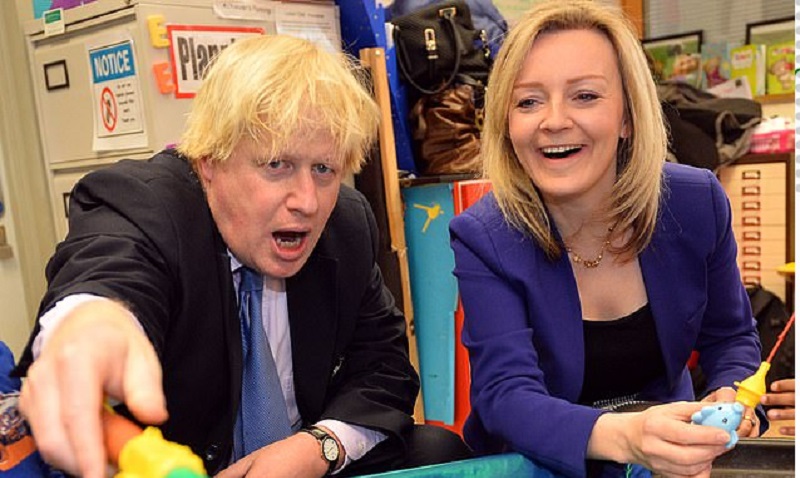
As Liz Truss takes over as the UK Prime Minister, starting with tax cuts and the typical conservative playbooks, there are many shifts she has to manage. And those shifts are invisible like the “invisible hand” of Adam Smith’s thesis many centuries ago. For those British doctors to thrive, they may need a garbage cleaner in that community. If you disconnect those cleaners, you introduce fudge factors that can be devastating to the economy.

People, the British Pound Sterling “dropped as much as 1% to $1.141, a low last reached by Margaret Thatcher’s government in 1985.” Within the next 4 years, I predict that the US dollars will be stronger than the Sterling. The primary reason is that the BREXIT is rebalancing the British currency, weakening it in the process.

A bleak economic outlook and the most recent surge in the value of the US dollar has caused the pound to decline to its lowest point in over four decades.

Sterling dropped as much as 1% to $1.141, a low last reached by Margaret Thatcher’s government in 1985.

The economic picture is difficult, just like then. Double-digit inflation and the potential for a protracted economic downturn are two concerns that Britain is currently battling. The Bank of England has issued a more than one-year recession warning.
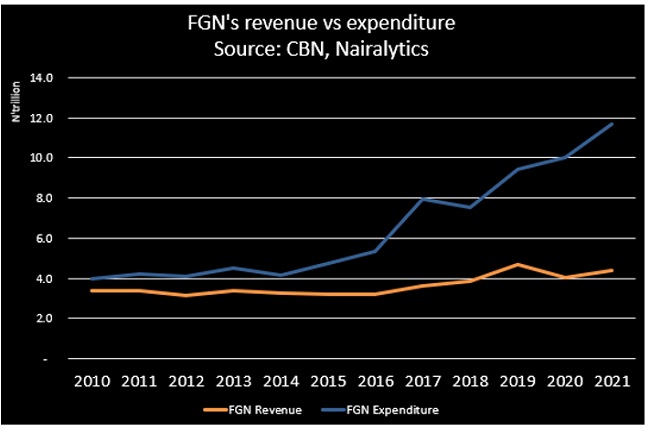
The Nigeria’s Imbalance in one plot

0

In MTH 201 in FUTO, we studied L’Hopital’s rule or what some like to call Bernoulli’s rule. The rule does one thing really well: helps you  evaluate limits of indeterminate forms. You differentiate the numerator;  differentiate the denominator. Then, you take the limits. Just like that, a difficult problem has a path to a solution.

Look at this plot, you can see Nigeria’s problem. Our revenue has stayed largely flat over years when the expenditure (funding bureaucracy) has ramped up. As in business, when expenditure does not impact revenue growth, over time, you could be in trouble. Typically, you cut down expenses to address that imbalance and lack of correlation.

Nigeria’s future under this trajectory looks indeterminate and what that means is that Nigeria is not creating its future. And when a nation cannot create its future, it cannot predict it. You cannot have a linear growth under a parabolic expenditure and expect to have a stable future. (Enjoy calculus guys, I went to FUTO and studied under Prof Oyet and Prof Effiong, the finest breeds in calculus.)

For the 2023 elections, the key issue is who can engineer growth. Sure, you can include expenditure but I do think that Nigeria does not even spend a lot of money, because it has no money (relatively) to spend. Our budget is off by $100 billion to what South Africa spends on a population less than 30% of our population. Someone needs to ramp up growth! And of course spend smartly to impact revenue.

Comment  on LinkedIn Feed

Comment 1: Nice Analyses Engr. Ndubuisi, always proud of you. Your evaluations were quite clear in your use of fundamental expressions. There is need to develop a good prediction model using the present economic reality to find the best measure to predict and address the future economic behavior in the country due to its uncorrelated characteristic. This will help for a better stability determination in the economy especially when it has to do with the income and expenditures even in a worst case scenario, otherwise, our economy will keep dwindling until it gets to a point of no recovery.

Nigerian Fintech Company NowNow Raises $13m Seed Fund To Promote Financial Inclusion Across Africa

0

There is no disputing the fact that the most prevalent startup businesses in Nigeria are Fintech startups. With the inflow of investment reaching new levels and an influx of innovative product features, Fintechs have contributed a great deal to Nigeria’s economy.

Recently, Nigerian Fintech startup, NowNow Digital systems, a leading African B2B and B2C FinTech company whose mission is to deliver best-in-class financial services to SMEs, Agents, and Consumers alike, has raised $13 million in its seed round to improve financial inclusion in Africa.

The funding round saw participation from Neo Vision Ventures Ltd, DLF family office, and Shadi Abdulhadi. The company via a statement disclosed its intentions to use the funds raised to improve Financial exclusivity across Africa and drive empowerment, as well as introduce new products that will further enhance its already existing services.

This is coming after a year the company was named the Best Mobile Fintech Solution in the 2021 Leaders in Fintech awards. The fintech startup company is on a mission to create the best technology in the world for digitizing cash payments in Africa and for Africans.

Speaking about the raise, CEO and co-founder of NowNow Digital Systems, Sahir Berry revealed how the company is committed to reaching its goal by including a large percentage of people financially.

He said:

With the secured funding, we look to not only provide services that include everyone financially but also upscale our agile ecosystem which ensures that our multidimensional offering remains a market leader.

“The credit facility will also support our unique strategy to advance financial inclusion and independence through financial education. The interest and backing of our investors will enable us to grow our world-class team as we would be unveiling innovative products and services”

It is interesting to note that NowNow was the only African startup chosen for the latest Mastercard Start Path Global program cohort. The program was created to assist startups on their global scaling journeys in the financial services industry.

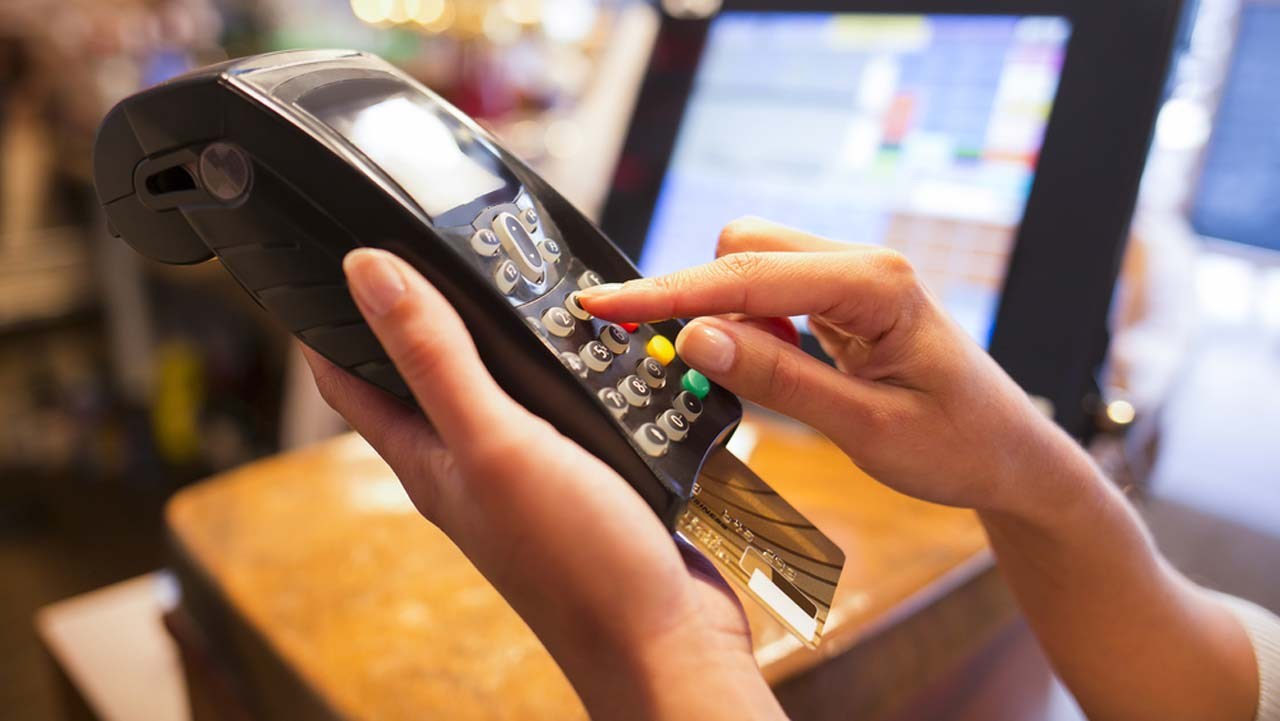
As part of their commitment to enabling seamless financial services in Nigeria, the fintech startup launched a first-of-its-kind fully integrated Near Field Communication (NFC) enabled wallet in 2017, allowing them to offer a complete contactless payment service.

Also commenting on the raise, is Gary Peters, Managing Partner at Capital V Ltd, who disclosed that what propelled them to invest in the startup was due to the the founders’ tenacity to grow the company.

In his words;

One of the key elements that propelled us to invest in NowNow through one of our funds is based on the founders’ tenacity to grow the company to a viable level, as well as overcoming many challenges and market cycles since its inception in 2018.

“Whenever we meet a company founder like Sahir Berry, whose leadership’s vision aligns with Capital V’s fund of funds strategy to back disruptive and high-potential start-ups, especially in emerging markets like Africa, the decision process becomes easier.”

The team at NowNow disclosed that their mission is to deliver best-in-class financial services to SMEs, agents, and consumers through a digitized ecosystem, providing financial empowerment to Africans while eliminating the traditional banking experience.

The company also recently collaborated with the prestigious Lagos Business School (LBS) and Sustainable Inclusive Digital Financial Services (SIDFS) to launch a financial education and literacy program aimed at driving financial inclusion growth in Nigeria.

International Literacy Day – A Look At Nigeria’s Literacy Rate And The Need For Improved Literacy Rate

1

Today 8th September is celebrated as International Literacy Day (ILD), which was proclaimed by the United Nations Scientific And Cultural Organization (UNESCO) in 1966, to raise awareness and concern for literacy problems that exist within local communities as well as globally.

According to a report, there are more than 781 million adults around the world who cannot read, as the scourge of illiteracy spares no nation on earth, including developed nations. For example, in the United States, there is an estimation that around 32 million American adults are illiterates.

In a bid to curb the high illiteracy rate in nations of the world, UNESCO had to set up the International Literacy Day, to remind the international community of the importance of literacy for individual communities and societies, and the need for intensified efforts toward more literate societies.

Literacy has been proven to lift people out of poverty. Beyond the functional level, literacy plays a vital role in transforming individuals into socially engaged citizens. Being able to read and write will ensure that an individual is able to keep up with current events, trends, communicate effectively, and understand the issues that are shaping the world.

What Are The Traditions Of The International Literacy Day

  • On International Literacy Day organizations and individuals take charge and use their literacy to encourage and assist those who are facing difficulties in how to read and write.
  • Students tutored by people who volunteer to teach children in the different communities.
  • Books are generously donated to Libraries, and a student’s tuition and learning are sponsored to launch their lifelong success.
  • Institutions, Government, and International organizations campaign at the grassroots level, as well as host think tanks and discussion forums to strategize and implement the best policies for the eradication of illiteracy. They also host fundraisers for the cause.
  • A theme is set for International Literacy Day every year, which is used as a way to build awareness around specific issues.

A Look At Nigeria’s Literacy Rate, And The Need For Improved Literacy Rate

According to the federal government of Nigeria, they recently disclosed that the number of illiterate Nigerians is now at an estimated 31 percent.

The government revealed that as of September 2021, 38 percent of the estimated 200 million population, representing over 76 million adults, are non-illiterates. In 2022, based on estimations, it captured the non-literate population at about 31 percent of the estimated total population.

The government disclosed that it has so far recorded successes in its efforts to improve literacy levels in the country.

Over the years there have been efforts by the federal government to boost literacy levels, such as the setting up of strategic institutions, commissions, and centers for learning across the nation. However, the major challenge has always been at the level of the states and the local governments.

Nigeria’s illiteracy rate burden supports the argument that the neglect of teachers and education has dire consequences for the populace.

The implication of this is that when education is neglected and treated with disdain, a greater number of people end up as illiterates who contribute little or nothing to the development of society.

To address this problem, there is a need for investment in both formal and non-formal basic education to ensure that all citizens, irrespective of age or class, have access to adequate educational opportunities which will help them develop their literacy skills.

For now, despite the government’s acclaimed progress in improving the literacy rate in the country, they are not doing enough in funding education, even when compared to countries within the African continent. A case study is the incessant ASUU strike.

It is proven higher literacy rates are associated with healthier populations, less crime, greater economic growth, and higher employment rates. Once the government successfully eliminates illiteracy to the barest minimum, all these aforementioned will be evident in the country.

Why Fintech Is Leading Fundraising in African Startup Universe

1

Investors continue to pump money into Nigerian fintech startups. Many will say when will this stop? People, this will be decades-long. Why? The digitization and transformation of African financial services is still at infancy. Yes, nothing has happened. The African banking sector was merely a rent collector for decades. Now, we are just beginning the redesign.

Of more than $360 billion that moves from consumers to businesses in Nigeria yearly, a huge part remains cash-based. In Oriendu Market in Ovim Abia State, business is all-cash. So, the fintech has not reached my village – and possibly they have not reached yours. Though they are fighting in Lagos, Nairobi, Accra, etc, rural Africa runs on cash.

Tomorrow, big news is coming. A Tekedia Capital (our next investment cycle begins Sept 19, register and join us) portfolio firm will announce a raise. This business run by an amazing young woman will be HUGE. She is a visionary and one of the finest in the continent. Yes, it is fintech but the friction being fixed is unique. We support such innovators.

Because finance is the operating system of commerce, more money goes into it. That is why NowNow has just raised $13 million!

Nigerian-based fintech startup, NowNow Digital Systems, has raised $13 million in its seed round led by NeoVision Ventures Ltd., DLF Family Office, and Shadi Abdulhadi heralds, which will be used to implement the company’s plans to scale and expand its service offerings across Africa.

NowNow said the fund will be used to improve financial inclusion across Africa by providing financial services to the continent’s unbanked and underbanked.

The CEO & co-founder, NowNow, Sahir Berry, said besides driving financial inclusion across Africa, the new fund will be used to promote financial education as a way of empowering Africans at the last mile.

Yes, if finance is the operating system of commerce, Africa possibly has to fix it before we can redesign most other sectors. Yes, everyone wants to have a means to be paid. And because of that, investors are making friends with fintech builders!

Nigeria-based Fintech Startup, NowNow, Raises $13m in Seed Fund to Scale Operation Across Africa