DD
MM
YYYY

PAGES

DD
MM
YYYY

spot_img

PAGES

Home Blog Page 4897

The Legal Framework Governing Company Directors in Nigeria

0

It is usual to hear about top-level staff in a firm or company having official titles,the most common of them being the title of a “director”.

However, there is a lot to know about company directors considering the Legal framework surrounding the position, and this article aims to provide more insight into by dealing with the topics of:-

– Who a company director is under Nigerian law.

– The duties of a director under Nigerian law.

– The types of company directors under Nigerian law.

– Who is eligible to be a company director under Nigerian law.

– Whether or not company directors can hold their positions indefinitely.

Who is a company director under Nigerian law?

A company director is a corporate position (who may or may not be a founder or founding member of a company) appointed or chosen via ordinary employment, a resolution of a company’s management board, or by means of a company’s articles of association to either manage a company, oversee the running of the company, represent the interests of a member or majority shareholder of a company or provide a specialist service to a company by virtue of being a highly skilled & experienced member of a particular profession. 

What is the Regulatory Framework if any governing company directors in Nigeria?

The appointment, duties, removal, powers and daily professional conduct of company directors in Nigeria are regulated by the Companies and Allied Matters Act (CAMA) as well as the Nigerian Code of Corporate Governance(NCCG).

What are the duties of a company director under Nigerian law?

The general duties of a company director under Nigerian law are :-

– The duty to not make secret profits.

– The duty to avoid a conflict of interests.

– The duty not to delegate his powers in a manner that will constitute an abandonment of duty.

– The fiduciary duties imposed by equity on a director i.e. :-

a). a duty as a trustee of the company;

b). a duty as an agent of the company;

c). a duty of uberrima fidei(utmost good faith).

– The duty of care and skill.

– The duty to not fetter discretion.

– The duty to not misuse information gained by virtue of his office/position as a company director even after leaving office.

– The duty to disclose his interest or any secret profit by way of gifts, dividends or any pecuniary interest that could & would be seen to be conflicting with the interests of the company in which he is a director.

What are the types of company directors in Nigeria?

The types of company directors in Nigeria are :-

Executive directors :- These are directors that constitute the day-to-day top-level management of a company e.g. the post of ‘Executive Director, Credit Risk Management’ or ‘Executive Director, Management Services’.

Non-Executive directors :- These are usually individuals appointed to be members of a company’s board of directors to participate in board meetings and for the purpose of rendering to the company their sector-specific high level expertise  e.g. high-level Corporate lawyers with director experience. 

Shadow directors – These are individuals according to whose instructions the directors and even the general staff of a company are used to acting . These persons are usually the actual owners of the company but might not be disclosed as such in a company’s MEMART (Memorandum & Articles of Association) , usually on the grounds of confidentiality.

Nominee Directors :- These are usually symbolic/representative directors apponted by a member or actual director of a company to participate on their behalf on the basis of confidentiality or inability to act naturally as directors e.g. companies that are appointed as directors of other companies lack natural legal personality and as such need individual representatives to act as their natural alter egos under law.

 As a result, these individuals are appointed to represent and guard the interest of the appointing party.

Independent Directors :- These are usually highly-experienced sector-specific professionals appointed in a strictly professional capacity to bring their professional skill sets to bear in the service of the company as directors independent of the control of either the party appointing them or the company itself . 

The appointment of such directors is also usually a compulsory compliance requirement in some sectors e.g. Banks and Public Limited Liability Companies (PLCs). 

What is the minimum required number of  directors for companies in Nigeria?

A small company under Nigerian Law is required to have at least 1 director while a private company other than a small company is required to have at least 2 directors. 

A Public Limited Liability Company (PLC) is required to have at least 3 independent directors who have not & whose relatives also have not within the preceding 2 years:-

– worked as employees of the company;

– made or received more than 20 Million Naira from the company;

– owned (or currently own) more than 30% of the Equity/Share Capital stock of a company that made or received more than 20 Million Naira;

– acted as a partner, director or officer of a partnership or company that made or received more than 20 Million Naira;

– been engaged directly or indirectly as an auditor of the company.

A company will be required to halt business operations if it goes below the required number of company directors required for its operation and cannot hire or appoint replacement or new directors.

What does Nigerian law say about life directors?

Under Nigerian law, a person can be appointed as a life director as long as he can be removed under Section.288 of the Companies and Allied Matters Act (CAMA). The appointment of an individual as a life director has to stated and provided for in the company’s Articles of Association.

Who is not eligible to be a company director/what are the grounds for the disqualification /removal of a company director in Nigeria?

The following persons are not eligible by law to be company directors in Nigeria :-

– Infants below 18.

– Persons of unsound mind.

– Persons disqualified by insolvency/bankruptcy.

– Persons convicted for fraud in relation to the formation, promotion, management or dissolution of a company.

– Persons originally qualified by lack of share ownership no longer owning those shares and requested by the board of directors or members of a company to vacate their positions.

– Companies can be appointed as directors of a company but cannot act naturally as directors under Nigerian law except via the appointment of Nominee directors.

– An individual cannot be a director in more than 5 Public Limited Liability Companies PLCs in Nigeria.

What is the position of Nigerian law on remuneration/payment of company directors?

Companies in Nigeria are not bound to pay directors except where expressly stated so and in such a case the payment will become receivable as a debt from the company and shall be out of its funds. 

Although directors are usually entitled to expenses incidental to their offices and in connection with the company’s business operations, company directors will be committing misfeasance where they take receipt of the company’s funds beyond what they are entitled to.

Also, loans , severance benefits or guarantees to company directors without the approval of a company’s members are prohibited under Nigerian law.

Is there a limitation on the period for which company directors can remain in office before compulsorily vacating their positions?

Yes. All directors are required at the first Annual General Meeting(AGM) of a company to retire and then 1/3rd of them in subsequent AGMs although retired directors are deemed reelected in the absence of newly appointed or elected replacements or by virtue of the company’s members resolution.

How are company directors appointed and removed in Nigeria?

Appointment

– The initial/pioneer directors of a company are to be appointed during its registration/incorporation.

– Company directors can be appointed by a simple employment letter.

– Company directors can also be appointed by a provision in its Articles of Association.

– In some business sectors, the approval of sector regulators will be required to appoint a director e.g. the appointment of company directors for a bank or finance company will require prior approval of proposed candidates for the positions by the Central Bank of Nigeria (CBN). 

– A company can also be appointed as a director of a company but can only operate as a director by means of a duly appointed human representative.

Removal 

– A company director can be suspended by the company’s board of directors or members before its next Annual General Meeting or Extraordinary General Meeting via an ordinary company resolution.

– A company director can also be removed via a special resolution given at its members meeting of which a 28-day special notice has been given.

– A company director can be removed in accordance with the terms of his appointment contract.

– The removal of a director is to be communicated to the Corporate Affairs Commission (CAC) by virtue of a Notice of Removal of a director.

It should be noted that removing a company director without recourse to due process will entitle the director to a right of action via courtroom action for legal reliefs that include but are not limited to damages.

Can company directors have personal or unlimited liability in their official capacities?

Yes , though this isn’t usually the case.

Personal and unlimited liability will only arise when:-

– When a company’s MEMART Memorandum Articles of Association describes the company as a registered unlimited liability company.

– Company directors are found to have paid dividends from the company’s Shareholder’s fund base.

– There is a case of company Tax evasion.

– Where there is a case/allegation of fraud by the company’s directors that can lead to a process known as “lifting the veil”(setting aside the Legal personality of a company to get hold of the individuals controlling the company).

– Where there is a case of misfeasance or the company directors acting ultra vires (beyond the scope of their given powers).

Conclusion :- Company director positions are a unique set of appointments that come with a unique set of compliance and Corporate Governance requirements and as such, require unique Director appointment contracts/ clauses in Company Articles of Association that require diligent professional insight and guidance. 

Nigeria Begins Digitisation Of National Library To Preserve Deteriorated Information Resources

0

In an effort to preserve information resources that are weak and deteriorated due to age and usage, the Federal Government of Nigeria has commenced the digitization of the 57-year-old National Library of Nigeria (NLN) and the automation of its services in line with the global standard.

The digitization of most of the weak heritage at the National Library is aimed at preservation, increased availability, and wider accessibility by leveraging information and communication technology.

According to reports, the information resources in the National Library were already weak and deteriorated due to age and usage which forced the government to begin this process.

The New National Librarian and Chief Executive of the National Library of Nigeria, Professor Chinwe Anunobi last year, stated that her administration will leverage Information and Communication Technology (ICT) to reposition and raise the standard of the NLN which was established by Act No. 6 of 1964.

Following her one year in office, Prof. Anunobi, who spoke recently while briefing newsmen on some of her milestones, disclosed that so far, progress has been recorded in the last one year in the efforts to reposition the National Library of Nigeria for effective and efficient services.

She described her effort so far, as building bridges to connect the old and the new, by leveraging technology. She further revealed that while digitization activities are ongoing, the development and deployment of the National Repository of Nigeria (NRN) is about 70 percent completed.

In her words, “The National Library is about 57 years old with a consequential sixty years old information resources. Hence, it is not out of place that some of the information resources are weak and deteriorated due to age and usage.

“To salvage and preserve them, we engaged in the digitization of this weak heritage aimed at preservation, increased availability, and wider accessibility leveraging information and communication technology.

“We hope to achieve completion and commissioning for public use by the end of November 2022. The NRN houses in electronic form, all Nigerian heritage that has been deposited from inception to date by authors, printers, or publishers, in compliance with the legal deposit law.

“We have deployed KOHA library automation software for cataloging and classification in National Library. On April 4, 2022, we launched our Online Public Access Catalogue (OPAC), the window for all the resources housed by the National Library of Nigeria.

“This will enable users to virtually check for the materials we have, and their exact location, without physically rummaging our shelves”.

Anunobi further added that the NLN would be accessible by every Nigerian and beyond, regardless of status, qualification, or location, saying the digitization was not only designed to increase the visibility of Nigerian intellectual heritage but also to enable creators of this intellectual heritage to have a return on their investments.

She, however, appealed to media, and newspaper houses particularly to deposit e-copies of their publications with the NLN to ease the digitization process, explaining that the digitization of archival information would commence from the strong room in Lagos.

This is a highly commendable move by the federal government to digitize the National Library of Nigeria (NLN) because a lot of publications in Nigeria are not being read beyond the shores of the country due to the dearth of materials online.

Also, digitizing resources in the library will not just preserve them, but also make them available to the public in an easier-to-access mode.

How to secure an Air Transport License and Airline Operations Permit in Nigeria

0
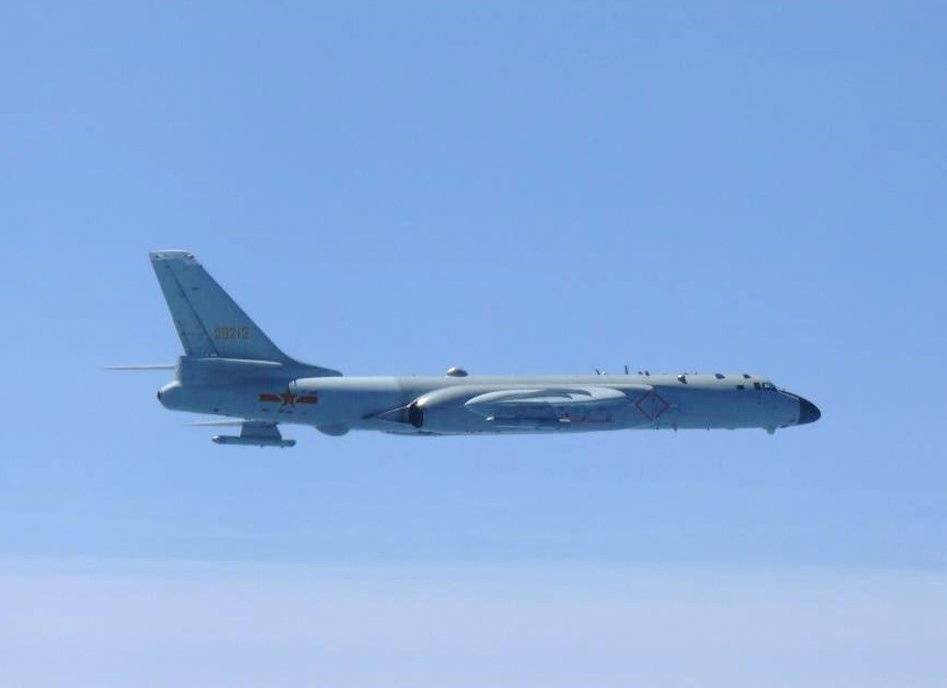
A Chinese H-6 bomber flies over East China Sea in this handout picture taken by Japan Air Self-Defence Force and released by the Joint Staff Office of the Defense Ministry of Japan May 24, 2022. Joint Staff Office of the Defense Ministry of Japan/HANDOUT via REUTERS ATTENTION EDITORS - THIS IMAGE WAS PROVIDED BY A THIRD PARTY.

Aviation, or more specifically Air Transportation, has proven to be one of the most indispensable means of movement in the 21st century, with passengers and goods being able to literally traverse continents in just a couple of hours. 

Like most innovations, it is not without its flaws, one of the most problematic flaws being the issue of safety and the close second being the constant possibility of Air Transportation being used to move illegal cargoes in any form . It is for this reason that Air Transportation is heavily regulated in almost every country of the world, Nigeria not being an exception.

This article will thus be looking at the main topics of :-

– What Air Transport licenses (ATLs) and Airline Operations Permits (AOPs) mean for their holders.

– The Legal and Regulatory Framework governing these Aviation licenses.

– The requirements needed to procure these licenses.

– The post-licensing operation guidelines for holders of these licenses.

What is an Air Transport license and an Airline Operations Permit?

An Air Transport license basically entitles its holder to engage in the commercial business of transporting persons, personal belongings, baggage, goods or cargo via the means of an aircraft while an Airline Operations Permit gives its holder to engage in Airline Operations which basically involve the aspects of making planes fly on the day of operation and involves the aspects of :-

– Flight operations (dispatch, flight planning, flight watch, operational control, ground-to-air communications, integration with the crew, schedule & maintenance planning).

– Ground operations( optimal risk allocation, training, reward systems, determination of operational manpower requirements, checking, baggage handling, loading the plane with cargo, bags , fuel , catering, embarking & disembarking the aircraft)

– Maintenance operations.

What is the Regulatory Framework governing the granting and operation of an ATL and AOP?

Airline Operations Permits and Air Transportation licenses along with the companies that seek or secure these licenses are governed by the Nigerian Civil Aviation Act through and the Nigerian Civil Aviation Regulations  through the Nigerian Civil Aviation Authority (NCAA) along with the Federal Airports Authority of Nigeria(FAAN). 

What are the requirements for the grant of an Airline Operations Permit?

The requirements for this permit are :-

-An  application for this type of license is to be made in writing to the Director-General of the NCAA & signed by a duly authorized representative (preferably a lawyer) of the applicant and should be submitted on or before a date not less than 6 months to the expected date of AOP utilization.

This application must contain:-

  • 1.The name and address of the applicant.
  • The type of services to be provided.
  • The number and types of aircraft to be utilized.
  • The proposed operational base of the applicant.

– 4 copies of the applicant company’s certificate of incorporation and MEMART (Memorandum & Articles of Association) as well as the Statutory forms showing the directors of the company and their particulars. At least 1 member of the board of directors must be an Aviation professional & the majority shareholding of such a company shall be held by Nigerians.

– A statement of the company’s share capital.

-4 copies of the Tax Clearance Certificates of the company and its directors (with original copies for sighting).

– 4 copies of the detailed business plan of the company indicating its vision, mission, market analysis and strategy, company’s ownership structure, personnel plan, fleet acquisition plan, financial plan including sources of finance, balance sheet, break-even analysis, pro forma income projections (profit and loss statements), cash flow analysis, proposed fares for passengers or cargo and other standard business plan requirements showing detailed road map of how the applicant’s strategy to provide efficient services in respect of safety, regularity, reliability and profitability of operations.

– A publication of a notice of the AOP application in 2 national daily newspapers. This publication should contain information in the application submitted to the NCAA.

– Evidence of the applicant’s financial solvency/ability to undertake the business. Applicants are expected to prove that they are solvent to run operations for a period of 3 months from the start of operations without resorting to any income from their operations.

– Duly completed application forms to be obtained from the NCAA.

– Duly completed Personal History Statement (PHS) forms & 2 passport photographs in respect of each of the shareholders of the company having more than 5% equity shareholding.

– Receipt of payment of a 500 Thousand Naira non-refundable processing fee payable to the NCAA.

– Evidence of adequate insurance cover for passengers, cargo and 3rd party liability.

– Publication in the official Government gazette by the NCAA in the process of carrying out the technical evaluation of the application. The cost implication of this publication will be borne by the applicant. 

– A security clearance via the NCAA forwarding the applicant’s duly completed PHS forms and other relevant documents to the ministry responsible for aviation to seek security clearance from the presidency.

– The applicant will be required to liaise with the airport service providers or the FAAN regarding the approval of its home or operational base.

The following should be noted :

– Upon the receipt of an AOP grant, an annual utilization fee of 100 Thousand shall be paid to the NCAA.

– On receipt of an AOP application, the Director-General of the NCAA may request for additional information from the applicant as may be deemed necessary.

– The outcome of the technical evaluation of the application accompanied by an appropriate recommendation will be forwarded to the Air Transport Licensing Committee (ATLC) for consideration & approval to issue the AOP or otherwise as soon as the security clearance or consent is received from the ministry.

– The Director-General shall refuse to grant a permit if the applicant is not cleared by the State Security Service.

– An AOP grant not utilized at the expiration of its validity period shall not be renewed.

– AOP holders are also required to return to the NCAA monthly statistical returns on aircraft movements as well as cargo & passenger up-lift.

What are the requirements for the grant of an Air Transport Licence (ATL)?

The requirements for an ATL grant are :-

– An application to be made in writing to the Director-General of the NCAA & signed by a duly authorized representative of the applicant (preferably a lawyer). 

This application must be submitted on or before a date not less than 6 months to the expected date of utilization of the ATL.

An ATL application must contain :-

a). The name and address of the applicant.

b). The type of air services to be provided.

c). The proposed operational base of the applicant.

d). Details of proposed routes to be operated where applicable.

e). The number and types of aircraft to be utilized.

f). Times and frequency of the services.

– 4 copies of the certificate of incorporation of the applicant company and its MEMART (Memorandum & Articles of Association).

– Statutory Corporate forms showing particulars of the applicant company’s directors. At least 1 member of the board of directors must be an Aviation professional in line with the Aviation Act. Also, the majority shareholding of the applicant company shall be held by Nigerians.

– 4 copies of the Tax Clearance Certificates of the company and its directors (originals should also be presented for sighting).

– 4 copies of the applicant company’s business plan.

– A publication of a notice of the ATL application in 2 national daily papers which should contain information on the application submitted to the NCAA.

– Evidence of the applicant’s financial solvency/ability to undertake the business. Applicants are expected to prove that they are financially solvent to run operations for a period of 3 months from the start of operations without resorting to any income from their operations.

– Duly completed application forms from the NCAA.

– Duly completed PHS forms and 2 passport photographs in respect of each of the shareholders of the company having more than 5% equity shareholding. 

– Proof of payment of a non-refundable processing fee of 1 Million Naira to the NCAA.

– A publication in an official Government gazette with the costs to be borne by the applicant.

The following should also be noted regarding ATL applications :-

– No person shall operate an aircraft in Nigeria without a security clearance issued by the government upon the forwarding by the NCAA of PHS forms and other relevant documents to the ministry in charge of security clearances. 

– The applicant will be required to liaise with the Airport Service providers or the FAAN regarding approval of its home or operational base. 

– Upon the receipt of an ATL application, the Director-General of the NCAA may request for additional information from the applicant as deemed necessary.

– Upon the grant of an ATL, an annual utilization fee of 200 Thousand Naira shall be paid to the authority.

– The outcome of the technical evaluation of tht application followed by an appropriate recommendation will be forwarded to the ATLC for consideration and approval to issue a Licence subject to a received security clearance from the Ministry.

– The Director-General of the NCAA shall refuse to grant an ATL if the applicant is yet to be cleared by the State Security Service.

– Every Commercial Air Transportation service provider must provide adequate insurance covers for passengers, cargo and 3rd parties.

– The financial health of an Air Transport Company or Airline Operations company shall be monitored closely by the NCAA. 

– Tariffs to be charged for the carriage of passengers and baggage shall be filed with the authority and the public duly notified before their introduction in respect of scheduled services. The Directorate of Air Transport Regulation, NCAA should be contacted further on this.

– ATL holders are also required to forward to the NCAA:-

  1. Monthly statistical returns on aircraft movements and passengers uplift.
  1. Details of flight schedules and changes thereof regarding frequencies & new destinations.

– An applicant wishing to operate regional and International scheduled services should obtain and seek further professional advice on the guidelines and requirements for designation as approved by the Honourable Minister . 

– ATL grants that are not utilized at their expiration shall not be renewed.

What is the validity period of an AOP and ATL?

AOP grants are valid for 3 years while ATL grants are valid for 5; years.

What are the minimum share capital requirements for an AOP and ATL?

AOP grants require a minimum share capital of 500 Million Naira while for ATLs the minimum share capital requirements are :-

– Domestic operations – 500 Million Naira.

– Regional operations -1 Billion Naira.

– International operations – 2 Billion Naira.

What is the basic insurance cover requirement for both AOP and ATL holders?

The insurance policy required of both AOP and ATL holders must at minimum be able to pay a compensation of $100,000.00 (a Hundred Thousand US Dollars) per passenger in case of death or injury.

Conclusion :- It can be seen from the above write-up that seeking entry into the Aviation sector requires dependable professional guidance and representation at the pre-licensing, licensing and operations phase of operations. Further consultation with a lawyer is very necessary if you are seeking advice on how to register an aircraft in Nigeria or secure operational base approval from the FAAN, two other topics that are very important pre-operation requirements for intending Aviation Service providers but which are not the core focus topics of this article.

CEREDEMS Africa: Experts Dissect the Role of the Media in Managing Information Crisis During Electoral Campaigns in Nigeria

0

The role of the press in providing timely and structured information to the people, especially during electioneering or electoral campaigns is evidently expanding and becoming more complex as more people have access to the digital-media space. The digital-media seeks to break barriers inherent in the traditional media. However, the challenges and opportunities presented by this digital revolution have continued to disrupt Journalism and the way we relate or deal with information.

The Nigerian political climate has not been impervious to this digital revolution which has continued to make information readily accessible to the electorate or political oppositions who invariably use these information to score political points. Therefore, the problem with this era is no longer due to paucity of information but due to increasing social toxicity as a result of the removal of walls that are meant to censor the information presented to the people for consumption. The social media is awashed with a plethora of unverified information that has continued to divide and disunite the nation’s population along religious, ethnic and political or ideological lines. With this challenge, it is only important to conceive and work towards achieving policies that can help create peaceful, harmonious and egalitarian society.

It is based on the foregoing that the Center for Research on Development of African Media, Governance and Society (CEREDEMS Africa) launched on Tuesday, September 20, 2022 with a project tagged “Improving Credible General Elections in Nigeria Through Real-Time Monitoring of Campaigns in Physical and Virtual Platforms project of the 2023 Nigerian Presidential Election” which will be executed in partnership with Positive Agenda Nigeria (PAN) for the next 52 weeks.

The launching ceremony with the theme, Reconstructing Nigeria’s Election Campaign Atmosphere in a Time of Conflicting National Unity and Information Pollution, held virtually on Microsoft meet and was graced by media and academic experts from different parts of the world including Nigeria, Russia, Egypt, Sweden, America etc.

Delivering the keynote address at the event, Professor Lai Oso, former Dean, School of Communication, Lagos State University and immediate Past President, Association of Communication scholar and Practitioners of Nigeria (ACSPN) remarked that CEREDEMS Africa is a laudable and timely initiative with a thorough agenda to resolve the information crisis that has continued to bedevil Nigeria’s democracy, especially at the eve of elections in Nigeria. The professor also noted that the project’s objectives should not be limited to Nigeria or west Africa but should be extended to other parts of the continent and the global south, drawing insights from the first world countries for the acheivement of a consolidated democratic governance locally.

Other speakers, Dr Sadia Jamil, Chair, Journalism Research and Education Section, International Association of Media and Communication Research; Dr Greg Simon, Uppsala University, Sweden; and Mr Lekan Otufodunrin, Executive Director, Media Career Development Network, also contributed insights on how the media can effectively deliver its role as the conscience of the people during elections periods which can easily evolve into crisis due to information disorder including; misinformation, disinformation and malinformation.

Dr. Ganiyat Tijani-Adene, media expert and lecturer at the Lagos State University’s School of Communication emphasized the politicization of information, noting that the current information crisis as it evolves in Nigeria is not necessarily due to media illiteracy but due to partisan politics and deliberate attempt to character assassinate political contenders or out-group members. It is saddening that some members of the press are being recruited into this, she said. She therefore admonished, thinking forward, that Nigerians, especially the politicians must look beyond elections and short-term gains if we must have a peaceful and economically viable nation to call ours.

The Executive Director of CEREDEMS Africa, Dr Mustapha Muhammad Jamiu  listed the objectives of the elections and political campaigns monitoring project of the center to include the following;

  • Monitoring activities of political parties, media establishments, media handlers of parties, candidates, supporters and individuals with the interest in communicating electoral and governance messages.
  • Improving capacity of media establishments, political parties and their media handlers towards positive engagement of campaign and/or policy issues and reduction in smear campaign activities.
  • Disseminating thought and behavioural change messages developed from the outputs of the monitoring of the stakeholders’ activities towards informed decision making before and during the elections, and reducing electoral violence.
  • Improving ability and capacity of the electorate to choose candidates during the elections through informed engagement from political actors.

Key expected results from the project are; ensuring issue driven and violence free campaign environments that enhance the electorate’s ability and capacity to choose the right candidates during presidential and governorship elections; and leading to better processes of generating and disseminating informed contents about candidates and political parties by their media handlers or communication teams.

CEREDEMS-Africa, PAN Set to Monitor Nigeria’s Election Campaigns, deploy over 100 Volunteers

The Dangers of Putin’s “It’s not a bluff”

0

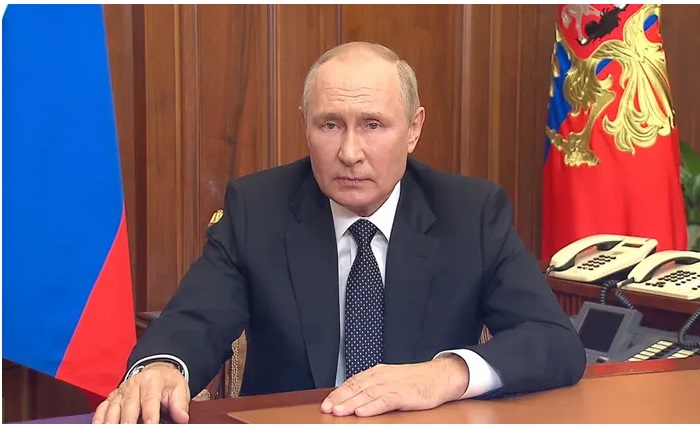
Everyone is waiting for President Biden to speak today at the United Nations General Assembly but Russia’s President Putin delivered some lines which are going to rattle many policymakers. Yes, Putin said “ I want to remind you that our country also has various means of destruction, and for separate components and more modern than those of Nato countries and when the territorial integrity of our country is threatened, to protect Russia and our people, we will certainly use all the means at our disposal,” And he added: “It’s not a bluff.”

In other words, Russia can use nuclear weapons and Putin is not bluffing on his threat. I hope the world takes the threat very seriously because indeed he does not bluff, looking at the fact that he indeed went into Ukraine.

Shortly after Putin’s announcement, the country’s defence ministry, Sergei Shoigu, said 300,000 citizens are going to be partially mobilized for military assignments.

Biden is speaking today at UNGA and will likely respond for the Western powers. This Ukraine crisis could potentially evolve into a luciferous dungeon if not well managed. Russia posited that it is at war with “the collective west”. Biden needs to respond. We do not want asymmetric perception which can lead to nuclear war.

The Russian leader’s televised address to the nation comes a day after Russian-controlled regions in eastern and southern Ukraine announced plans to hold “referendums” this weekend on becoming part of Russia. Kremlin’s plans to annex four regions are likely to further escalate the war following Ukrainian recent successes on the battlefield.

Comment on Post

Comment 1: I highly doubt that it will turn to nuclear war… nobody wins in a nuclear war

My Response: That is for a strategic nuclear war. But a tactical one was won by US against Japan (sure, atomic war). Russia will likely start with a tactical one which focuses on a geographic area. The threat is that it has ICM with supersonic systems which can bypass any known defense system in the world. Who wants to “doubt”. I think the key is never take risk. This war has to end.

Comment 2: He is only bluffing. The West would simply micromanage the crisis until Putin becomes irrelevant. There is obviously no path to peace with Russia with Putin in charge.

The US is more focused on its impending confrontation with an emergent China.

My Response: Russia’s second in command makes Putin look like a toddler. I mean the US may not prefer him. Putin is a gentleman in a world of Dmitry Medvedev. The problem of waiting for the bad actor to pass takes time. Check Iran, how many decades now? You do not need to wait for Putin to die, swallow pride and talk with him. China is a force but Russia is more deadly because it has the most advanced supersonic systems that can deliver nuclear warheads to any place on earth and cannot be “stopped”. President Biden said that it cannot be stopped. So, your defense systems do not matter! It’s almost impossible to stop it,” – said Biden

Comment 2b: Israel has much of advanced and sophisticated ICM than that of Russia. As it is now, Putin is at the mercy of Beijing.

My Response: According to all known data, only one country has operational supersonic systems and has used the same in war and that is Russia. The last time they used it, this was what Biden said “It’s almost impossible to stop it” . The Israel iron dome or the US Patriot cannot detect the supersonic. What you can say is this: the US may have weapons it has not revealed. But Satan 2 as NATO calls the Russian weapon is peerless. It is aeroballistic. They tested it and it circled around the world and returned back to base. What was that? No place is safe. This will not be stopped by weapons by paper and pens (peace agreements) and that should be the focus.