


I have limited my travels due to covid-19 paralysis. Now, feeling confident that the evil is behind us, I will begin my usual global shuttles. I will be in Riyadh, Saudi Arabia, in February 2023. While in the Kingdom, I will like to meet members of Tekedia Capital syndicate (we have many from there). Also, Tekedia Mini-MBA learners, we will connect.
INEC Discloses Why Diaspora Voting May Not Be Possible For Nigeria 2023
As preparations for the 2023 presidential election are in top gear, the Independent National Electoral Commission, INEC has recently disclosed that diaspora voting may not be possible in 2023 as it does not have the enabling laws to carry out diaspora voting in 2023.
This explanation was issued amid calls by many Nigerians in the diaspora, stating that it was time for Nigeria to take a cue from other African countries, the likes of South Africa, Cape Verde, Kenya, etc.
Last month August, a group, the Nigeria Diaspora Youth Ambassador, NDIYA, urged the Independent National Electoral Commission INEC, to allow Nigerians in diaspora to participate in the forthcoming 2023 presidential election.
The group in a statement through its president Amb. David Alozie disclosed that Nigerians are interested in exercising their franchise in the coming election, noting that those in the diaspora should not be denied the opportunity to vote.
See what he said;
“Nigerian youths and every Nigerian across the globe are interested in voting during the general elections, especially the president as that has a lot to contribute to how their affairs would be attended to by whoever becomes the commander-in-chief.
“So, for us, this is a simple message to the government on how eager Nigerians in the diaspora are, and if given the opportunity through online, we would be glad”.
In response to various calls for diaspora voting in the coming 2023 presidential election, the Chief Press Secretary to INEC chairman, disclosed that the commission had no laws allowing it to do so at the moment, as the national assembly needs to amend the law to allow it.
In his words;
“The current operative law does not allow diaspora voting. The National Assembly needs to amend the law to allow it. Once that is done, the commission will put the machinery in place to implement such law”.
He further disclosed that the commission is doing everything possible to bring all Nigerians, whether within the country or outside, to actively participate in the nation’s electoral process. All these calls became intense following the rising interest among Nigerians to eagerly participate in the forthcoming 2023 presidential election.
Different persons have stated that Nigeria is overripe for diaspora voting, as it is just a matter of proper planning. They revealed that it was time for the country’s democracy to move from its infancy stage.
Unfortunately, the Nigerian national assembly had during the recent constitution amendment exercise, rejected the bill for an act to alter the provisions of the constitution of the Federal Republic of Nigeria, to provide for diaspora voting, and related matters.
World Bank Steps In To Help Nigeria Get Rid Of Fuel Subsidies
The World Bank had earlier noted that Nigeria may spend up to $9 billion on fuel subsidies in 2022, warning that the country’s high spending on subsidies will dwindle its revenue, also negatively impacting the government’s ability to fund the 2022 budget.
Recently, the President of World bank David Malpass disclosed that the bank is ready to support Nigeria in phasing out regressive fuel subsidies while increasing social assistance for the poor and vulnerable.
He also stressed the need for a unified exchange rate in Nigeria, which would significantly improve the business-enabling environment in Nigeria, attract foreign direct investment and reduce inflation.
This was contained in a statement published on the Bank’s website, as it was reported that the World Bank President David Malpass had a meeting with the Vice President of Nigeria, Prof. Yemi Osibanjo.
Here is a readout from World Bank Group President David Malpass’ meeting with Vice President Yemi Osibanjo
“President Malpass and Vice President Osinbanjo discussed Nigeria’s Energy Transition Plan. President Malpass welcomed Nigeria’s commitment to achieving universal energy access and reducing GHG emissions while maintaining reliable baseload.
“President Malpass emphasized the importance of integrating climate and development, as well as the need for an enabling policy and regulatory environment alongside strengthened institutions in the energy sector.
”President Malpass affirmed to Vice President Osinbajo the WBG’s readiness to support Nigeria in phasing out regressive fuel subsidies while increasing social assistance for the poor and vulnerable.
“President Malpass encouraged a decisive move toward exchange rate unification and stabilization by Nigeria, highlighting the economic benefits for the Nigerian people.
”President Malpass emphasized to Vice President Osinbajo that a unified exchange rate will significantly improve the business enabling environment in Nigeria, attract foreign direct investment, and reduce inflation.
”President Malpass and Vice President Osinbajo also discussed the importance of increasing domestic revenues through broadening Nigeria’s tax base and increasing the efficiency of tax administration.”
One of the major reasons for the rise in subsidy payment in Nigeria, can be attributed to the fact that the country constantly imports petroleum products, as none of its refineries have the capacity to refine crude oil. Nigeria’s low crude oil production has been attributed to the lack of maintenance, organized oil theft, sabotage, and corruption among others.
It is interesting to note that the cost of fuel subsidies in Nigeria, increased by 890% over a five-year period (2017-2021) in the country, even though fuel prices have only increased by 12.1%.
In January this year, the Federal Government of Nigeria, ignored warnings from different economists, analysts and multilateral agencies such as the World Bank and the International Monetary Fund, by deciding to retain the controversial fuel subsidies for another 18 months following threats of protests by the Nigerian Labour Congress and other interest groups.
As of May 2022, the World Bank noted that Nigeria’s daily oil production, stood at 1.5 million barrels per day, quoted as the lowest in ‘fifteen years’ with an average daily figure of 1.54 million barrels per day in the first four months of 2022.
OPEC on the other hand, reported an even lower daily production figure in May, saying Nigeria’s crude oil production stood at 1.024 million barrels per day. Recently, the Ministry of Finance in Nigeria, disclosed that the federal government has estimated N6.72 trillion on petrol subsidy payments for the full-year 2023.
With Nigeria’s current high subsidy payments, the country has been unable to benefit from the rise in crude oil prices globally.
Let’s Serve Your Filling Station and digitize all end-to-end
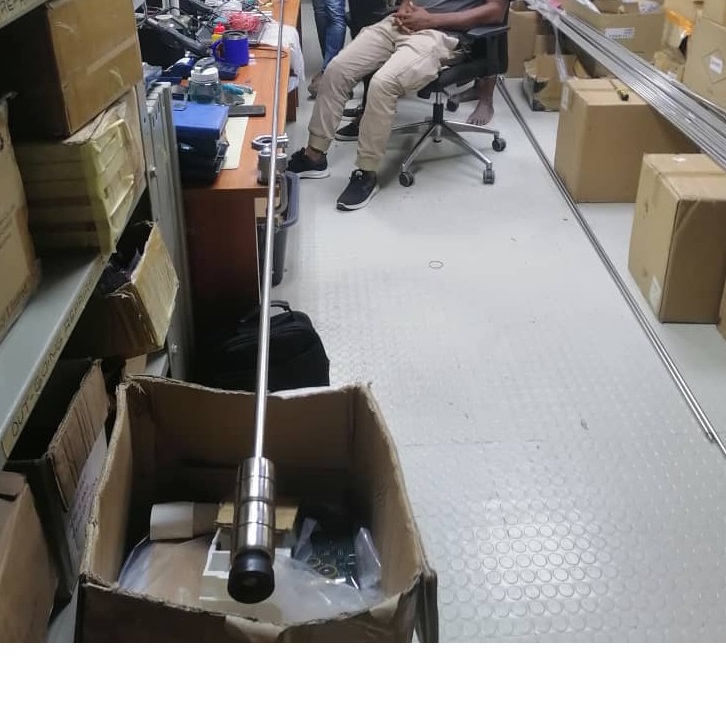
Our automatic tank gauge (ATG) is serving and digitizing the oil and gas sector in Africa. More and more companies are joining this party as our FuelPay technology delivers world-class uncommon visibility with absolute revenue assurance. With our technology, a filling station attendant, truck driver, depot manager, etc has zero chance of playing tricks. And we deliver this at a cost model of just 30% to what global brands do because we created and engineered the technology in-house.
We now serve 60% of leading filling station brands in Nigeria and want to hit 100% because everyone needs this. Contact the email here and our team will be on the way to serve you.
Engineers serve nations – we are leading in the digitization of the oil and gas sector downstream sector with robust homegrown technologies.
With our technology, you will not experience this accounting mess:
The Comptroller-General of Nigeria Customs Service, Col. Hameed Ali (retd.), has stated that the Nigerian National Petroleum Company Limited (formerly Nigerian National Petroleum Corporation) cannot justify the volume of Premium Motor Spirit (petrol) being consumed in the country daily to warrant the over N6.34tn subsidy payment on the commodity annually.
Ali, in his presentation to the House of Representatives’ Committee on Finance at the continued hearing on the proposed 2023-2025 Medium Term Expenditure Framework and Fiscal Strategy Paper in Abuja on Thursday, argued that the NNPC cannot scientifically prove the 98 million litres/day consumption it was claiming, alleging that the nation’s oil company was supplying an excess of 38 million litres of PMS daily.
The committee had asked Ali about the like deficit of between N11tn and 12tn in the 2023 budget as proposed in the 2023-2025 MTEF/FSP.
Join Tekedia Mini-MBA Graduation on Saturday, Sept 3rd

Tekedia Institute is very excited to invite the general public to Tekedia Mini-MBA edition 8 graduation on Saturday, Sept 3 at 7pm WAT. Over the last 12 weeks, our learners have mastered the mechanics of markets, and acquired skills and knowledge systems from executives in leading global and local companies, on innovation, business growth and operational execution. Join us.
Sat, Sept 3 | 7pm – 8pm WAT | It’s Graduation Day – public/open for everyone | Zoom Link
You’re Invited to Tekedia Mini-MBA Graduation – Sat, Sept 3 at 7pm WAT