DD
MM
YYYY

PAGES

DD
MM
YYYY

spot_img

PAGES

Home Blog Page 493

“I’m disappointed:” Nvidia CEO Jensen Huang Responds as China Orders Halt on AI Sales

0

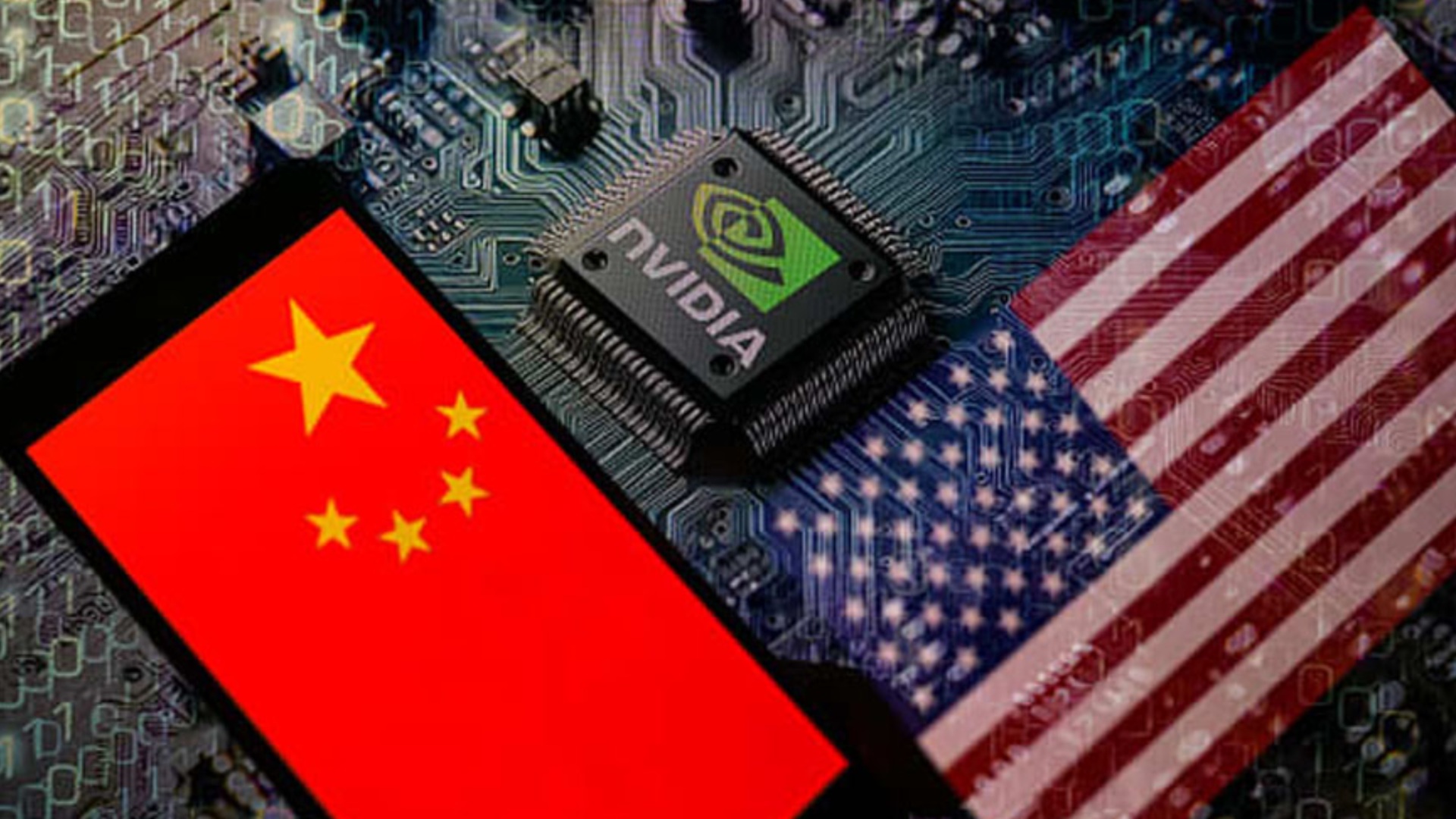
Nvidia chief executive Jensen Huang has weighed in on escalating tensions between Washington and Beijing after reports that China’s powerful cyberspace regulator had ordered some of the country’s biggest technology firms to halt purchases of the American company’s AI chips.

The Financial Times reported on Wednesday that the Cyberspace Administration of China (CAC) directed companies, including ByteDance, parent of TikTok, and e-commerce giant Alibaba, to terminate their testing and orders of the RTX Pro 6000D. The order also reportedly covered existing purchases, effectively forcing cancellations.

“We can only be in service of a market if a country wants us to be,” Huang said at a press conference in London when asked about the CAC order. “I’m disappointed with what I see, but they have larger agendas to work out between China and the United States and I’m patient about it. We’ll continue to be supportive of the Chinese government and Chinese companies as they wish.”

Huang acknowledged the challenges of doing business in China in recent years, calling it “a bit of a rollercoaster.” He explained that Nvidia has told analysts not to factor China into financial forecasts because access to the market is now dependent on ongoing political negotiations.

The reported ban marks the latest flare-up in the intensifying tech trade war. Successive U.S. administrations have restricted China’s access to advanced semiconductors, citing national security concerns. In response, Beijing has pressured its domestic firms to turn away from American suppliers. The measures have hit Nvidia particularly hard, given its dominance in the AI chip market. The chipmaker has touted the Chinese market, criticizing U.S. restrictions on chip exports to the Asian country as undercutting its revenue by billions of dollars.

A series of setbacks

The Financial Times report noted that several Chinese companies had signaled plans to buy tens of thousands of RTX Pro 6000D chips and had begun testing and verification work with Nvidia’s server suppliers. These firms halted orders after receiving the CAC directive, according to sources cited by the paper.

Nvidia’s RTX6000D, a tailored version of its AI chip designed to comply with U.S. export controls, has so far seen lukewarm demand, with some major Chinese companies opting not to place orders. The new restrictions, however, are far stronger than earlier guidance that focused on a previous generation of chips known as the H20.

Earlier this month, China’s State Administration for Market Regulation (SAMR) also opened an antitrust investigation into Nvidia’s $6.9 billion acquisition of Israeli networking solutions provider Mellanox — a deal completed in 2020. Beijing accused Nvidia of potential anti-monopoly violations, adding another layer of regulatory scrutiny.

The strain comes even after Nvidia and Washington appeared to reach a compromise in August. At the time, the White House announced that President Donald Trump and Huang had struck a deal under which Nvidia would receive export licenses in exchange for directing 15% of Chinese H20 chip sales back to the U.S. government.

U.S.-China tensions overshadow global push

The latest order underscores how Nvidia’s business in China remains highly vulnerable to political crosscurrents. Huang admitted that the market could not be reliably included in the company’s financial projections.

“That’s largely going to be within the discussions of the United States government and Chinese government,” he said.

Nevertheless, Huang stressed China’s importance: “The Chinese market is important. It’s large. The technology industry is vibrant. We’ve been in service of it for 30 years.”

He added that Nvidia would continue to support Chinese companies “as they wish” while also working closely with the U.S. government as geopolitical policies evolve.

Huang’s comments came during his trip to the U.K., where he joined U.S. President Donald Trump on a state visit. On Tuesday, Nvidia announced £11 billion ($15 billion) in investment into Britain’s AI infrastructure, part of a wave of pledges by U.S. tech giants including Microsoft, Google, and Salesforce to bolster their presence in the country.

The Implications

The dispute leaves Nvidia in a precarious position. On one hand, China represents a massive and growing AI market, with demand for high-performance chips expected to soar as its companies expand in cloud computing, social media, and autonomous technologies. On the other hand, U.S. restrictions and Beijing’s retaliatory measures make sustained access uncertain.

If U.S.-China tensions deepen, Nvidia could face a prolonged shutout from one of its most important markets, forcing it to double down on North America, Europe, and emerging hubs in the Middle East and Africa. That could slow growth but also push the company to diversify its revenue streams and accelerate investments in friendlier jurisdictions.

Conversely, a diplomatic thaw or a carve-out agreement — similar to August’s export-license deal — could reopen selective access to China’s tech firms, allowing Nvidia to salvage parts of its Chinese business. Such an outcome would likely require delicate balancing between national security concerns in Washington and Beijing’s desire for technological self-reliance.


Pump.fun’s Revenue Surges and $PUMP’s $8B FDV Milestone Signals A Robust Comeback

0

The Solana-based memecoin launchpad Pump.fun has made headlines today with a strong performance rebound, crossing key revenue and valuation milestones.

According to recent data from DeFiLlama, Pump.fun generated $3.38 million in protocol revenue over the past 24 hours, surpassing Hyperliquid’s $3.06 million and marking the platform’s highest single-day figure since February 13. This positions Pump.fun as the third-highest revenue-generating DeFi protocol.

Overall, trailing only stablecoin issuers Tether ($21.67 million) and Circle ($7.62 million). While Hyperliquid still leads on a weekly $16.4 million for Pump.fun vs. higher for Hyperliquid and monthly basis, this daily flip underscores a sharp spike in memecoin launch activity and trading fees on Solana.

The native token, $PUMP, has benefited from this surge, jumping 8% in the last 24 hours amid a broader sideways crypto market. Its fully diluted valuation (FDV) has now crossed $8 billion, reflecting aggressive buyback mechanics where 100% of platform revenue is used to repurchase and burn $PUMP tokens.

To date, over $97.4 million in buybacks have been executed, reducing circulating supply by approximately 6.67%. This includes $12.19 million repurchased in the past week alone, driven by the platform’s fee model that captures revenue from token launches and trades.

Pump.fun’s cumulative lifetime revenue now exceeds $800 million, with creators claiming over $20 million in fees in the last seven days. This rebound follows a tough period for Pump.fun, where daily revenue dipped to as low as $206K in August—a 96% drop from January’s $6.7M peak—amid regulatory scrutiny and market volatility.

However, recent updates like “Project Ascend” (a creator-centric overhaul unveiled in early September) and enhanced streaming features have reignited interest, boosting concurrent streams by 4x and mindshare by 383% week-over-week.

On-chain flows confirm the momentum: fresh wallets added $102.6M, public figures $1.82M, and smart money $631K in the last 24 hours, per Nansen data. Community sentiment has flipped dramatically positive (+677% shift since late August), with $PUMP forming a clean W-pattern on charts and outperforming the market.

Analysts highlight the reflexive tokenomics—where memecoin frenzy directly fuels $PUMP buybacks—as a key driver, potentially undervaluing it relative to peers like $HYPE despite similar revenue profiles. Pump.fun now controls ~90% of Solana’s memecoin launchpad volume, far ahead of competitors like Bonk_fun.

Pump.fun’s $3.38M daily revenue and ~90% share of Solana’s memecoin launchpad volume solidify Solana as the go-to blockchain for memecoin activity. Its low-cost, high-speed transactions continue to attract degen traders and creators, outpacing competitors like Ethereum or Binance Smart Chain.

Increased network usage boosts Solana’s TVL and $SOL demand, potentially driving its price higher. Projects building on Solana, especially launchpads, may face pressure to innovate or risk losing market share to Pump.fun’s dominance.

The 100% revenue-to-buyback model, burning ~6.67% of $PUMP’s supply so far, creates a deflationary pressure that supports price appreciation. The $97.4M in buybacks signals strong commitment to token value, distinguishing $PUMP from less disciplined memecoin projects.

This reflexive mechanism—where platform success directly fuels token demand—could attract long-term investors beyond degen traders, potentially stabilizing $PUMP’s valuation. However, the $8B FDV suggests high expectations, and any revenue slowdown could trigger corrections if buybacks falter.

Flipping Hyperliquid in 24-hour revenue ($3.38M vs. $3.06M) highlights Pump.fun’s ability to compete with top DeFi protocols, even those in different niches like perpetual futures (Hyperliquid). This signals a shift in revenue dynamics within DeFi.

Hyperliquid and similar platforms may need to enhance user incentives or features to maintain revenue leadership. Pump.fun’s success could inspire other protocols to adopt aggressive buyback-and-burn models, reshaping DeFi tokenomics trends.

The 4x increase in concurrent streams and 383% week-over-week mindshare growth, driven by “Project Ascend,” indicate strong creator and user engagement. Creators earning $20M+ in fees over the past week incentivizes more projects to launch on Pump.fun.

This virtuous cycle—more creators, more launches, higher fees, more buybacks—could sustain $PUMP’s rally and platform growth. Public figure involvement ($1.82M in flows) and positive sentiment (+677%) amplify network effects, drawing in new users.

At $8B FDV, $PUMP’s valuation is significant but arguably undervalued compared to Hyperliquid’s $45B–$52B FDV, given similar revenue profiles. The W-pattern on charts and strong on-chain flows ($102.6M from fresh wallets) signal bullish investor sentiment.

$PUMP could attract more institutional or smart money interest if revenue growth persists, potentially closing the FDV gap with top DeFi tokens. However, its high FDV requires sustained revenue to justify, making it a high-risk, high-reward play.

The platform’s tokenomics and creator incentives create a self-reinforcing growth loop, but its reliance on memecoin speculation introduces volatility and regulatory risks. For investors, $PUMP offers high-upside potential but requires careful monitoring of revenue trends and market sentiment.

For the broader market, this could herald a memecoin resurgence, with Solana at the epicenter—though sustainability hinges on navigating regulatory and competitive pressures. In a space dominated by degen plays, Pump.fun’s model proves resilient.

It’s not just capturing memecoin hype but recycling it into sustainable token value. If daily revenue holds above $3M, expect continued upward pressure on $PUMP toward new all-time highs.

Native Markets Has Won Bid On Hyperliquid For USDH Stablecoin Tiker

0

Native Markets has won the bid for the USDH stablecoin ticker on Hyperliquid, marking a significant milestone in the platform’s governance and ecosystem development.

This outcome came after a competitive week-long voting process involving Hyperliquid validators and staked HYPE token holders, where Native Markets secured over two-thirds of the vote approximately 70% support, outperforming established competitors like Paxos, BitGo, Frax, and Ethena which withdrew citing infrastructure misalignment.

Hyperliquid, a leading decentralized perpetuals exchange with billions in monthly volume, sought a native USDH stablecoin to reduce reliance on external assets like USDC which holds a dominant ~$6B position on the network.

Bidders proposed aggressive yield-sharing models to benefit the ecosystem, such as directing stablecoin reserve yields toward HYPE token buybacks and growth initiatives.

Native Markets, an early Hyperliquid backer co-founded by Max Fiege, submitted the first proposal and emphasized deep alignment with the platform, including 50% of yields going to HYPE buybacks via the Hyperliquid Assistance Fund and the other 50% to USDH distribution through partnerships.

USDH will be fully backed by cash and short-term US Treasuries, with off-chain reserves managed by BlackRock and Superstate for security and yield generation.

On-chain custody and compliance will be handled by Bridge (Stripe-owned), ensuring GENIUS Act and global regulatory compliance (e.g., MiCA). This setup combines institutional-grade reliability with Hyperliquid-native focus, avoiding the “white-label” approach of larger issuers.

Native Markets plans a phased rollout starting imminently: Capped mints and redemptions (e.g., $800 per transaction limit) to validate functionality, API stability, and on-chain mechanics. High-volume traders are invited to participate for feedback.

Launch of a USDH/USDC spot pair on Hyperliquid. Removal of caps for uncapped minting and redemptions, enabling broader adoption. The team will deploy the USDH Hyperliquid Improvement Proposal (HIP-1) and an Ethereum-compatible ERC-20 token contract in the coming days, positioning USDH for seamless integration across Hyperliquid’s perps, spot, staking, and HyperEVM apps.

Why This Matters for Hyperliquid and DeFi

This is Hyperliquid’s first major on-chain governance vote beyond routine listings, signaling maturing community control.

USDH could capture yield currently leaking to Circle from USDC reserves, potentially generating hundreds of millions annually for HYPE buybacks and ecosystem growth—boosting TVL, DeFi activity (e.g., lending on Hypurrfi or Kinetiq), and network effects.

Prediction markets like Polymarket gave Native Markets 99% odds pre-vote, reflecting strong community preference for speed and alignment over big-name incumbents. Critics have questioned the process for potential bias toward Native Markets but the supermajority vote underscores broad support.

USDH’s launch allows Hyperliquid to shift away from dependence on USDC, which currently dominates with ~$6B in on-chain volume. By redirecting yield from stablecoin reserves previously benefiting Circle to HYPE token buybacks and ecosystem growth, Hyperliquid can retain more economic value within its network.

This marks Hyperliquid’s first major on-chain governance vote beyond asset listings, demonstrating a maturing decentralized decision-making process. The strong support for Native Markets 70% of validator votes reinforces community alignment and sets a precedent for future governance initiatives.

Native Markets’ proposal allocates 50% of USDH reserve yields from cash and US Treasuries managed by BlackRock/Superstate to HYPE token buybacks via the Hyperliquid Assistance Fund. This could inject hundreds of millions annually into the ecosystem, potentially increasing HYPE’s value and incentivizing staking.

The other 50% of yields will support USDH distribution through partnerships (e.g., Hypurrfi lending, Kinetiq vaults), fostering new DeFi use cases like lending, borrowing, and yield farming. This could significantly boost Hyperliquid’s TVL and attract more users.

USDH’s backing by BlackRock/Superstate and custody via Bridge (Stripe-owned) ensures alignment with regulations like the GENIUS Act and MiCA. This institutional-grade setup could attract risk-averse users and institutions, enhancing Hyperliquid’s credibility in the DeFi space.

A successful USDH could inspire other DEXs or layer-1s to launch their own stablecoins, reducing reliance on centralized issuers like Circle or Tether. This trend could decentralize stablecoin markets and shift yield flows to native ecosystems.

The USDH launch positions Hyperliquid as a more self-sufficient, competitive player in DeFi, with potential to redirect significant economic value to its ecosystem. It strengthens community governance, incentivizes HYPE holders, and could catalyze new DeFi applications.

However, success hinges on flawless execution in the coming days’ test phase and sustained community trust. If USDH scales as planned, it could redefine stablecoin dynamics in DeFi and inspire similar moves across other platforms.

If successful, USDH could challenge USDC’s dominance on Hyperliquid and set a precedent for exchange-native stablecoins in DeFi. Watch for the test phase rollout this week for early signs of adoption.

Market-Implied Odds For A 25-Basis-Point Rate Cut Probability Surge to 90%

0

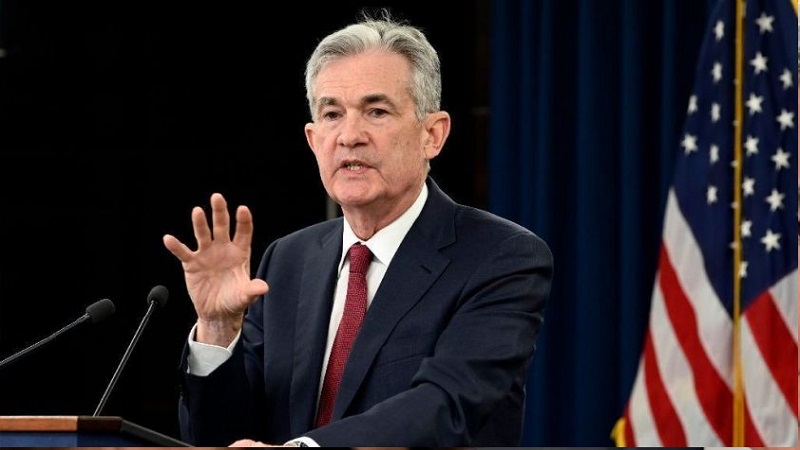
Market-implied odds of a single 25 basis point 0.25% rate cut by the Federal Reserve at its FOMC meeting on September 17-18, 2025, have climbed to around 90% or higher as of September 16, based on Fed funds futures data and economic analyses.

This reflects cooling in the labor market (e.g., recent downward revisions to job gains and unemployment at 4.2%), inflation trending toward the Fed’s 2% target around 2.7% as of June 2025, and signals from Fed Chair Jerome Powell suggesting easing to manage downside risks.

The current federal funds target range is 4.25%-4.50%, and a cut would bring it to 4.00%-4.25%. Probabilities for other outcomes are low: less than 10% for no change, and a small but growing chance (around 5-10%) of a larger 50 basis point cut due to labor weakness, though most analysts expect a measured 25 bp move.

The CME FedWatch Tool, which derives these odds from futures pricing, shows this consensus building since mid-August, with earlier estimates at 80-85% now firming up closer to 95% in some aggregates. The decision will be announced Wednesday afternoon, followed by Powell’s press conference.

Reduced rates on loans (e.g., mortgages, auto loans, credit cards) encourage spending. Mortgage rates, already declining (7.05% for 30-year fixed as of early September 2025), could drop further, boosting housing demand.

Cheaper corporate borrowing lowers the cost of capital for investment in equipment, expansion, or hiring, stimulating business activity. With inflation at ~2.7% and trending toward the Fed’s 2% target, lower rates ease financial pressure on households, especially as real wage growth has slowed (1.3% annualized in Q2 2025).

More disposable income could drive consumption, which accounts for ~70% of U.S. GDP. Recent data shows labor market softening. A rate cut signals the Fed’s intent to prevent further deterioration, potentially encouraging firms to maintain or increase hiring.

Lower rates typically lift stock markets by reducing discount rates for future cash flows, making equities more attractive. S&P 500 and Nasdaq futures have rallied slightly 1-2% in September on rate cut expectations. Housing and other asset prices may also rise, increasing wealth effects.

A rate cut could weaken the U.S. dollar, making exports more competitive. This helps manufacturing and trade sectors, though the effect may be modest given global currency dynamics (e.g., ECB and BoJ also adjusting policies).

With inflation close to 2%, a small cut is unlikely to reignite price pressures but will provide breathing room for the Fed to balance growth and price stability. However, if cuts are too aggressive, markets may worry about inflation rebounding.

How Rate Cuts Bolster the Economy

By lowering borrowing costs, a rate cut encourages investment and consumption, directly supporting GDP growth. Current projections estimate 2025 GDP growth at 1.8-2.2%; a cut could push this toward the higher end by reducing recession risks.

The Chicago Fed’s National Financial Conditions Index has tightened slightly in 2025 around 0.15 in August, above neutral. A rate cut loosens conditions, making credit more accessible and reducing default risks for households and firms.

With labor market signals (e.g., 818,000 fewer jobs created in 2024 than initially reported) and manufacturing PMI near contraction 47.2 in August, a cut acts as a preemptive measure to avoid a downturn, especially as consumer confidence dipped to 65.9 in September.

Lower rates reduce the hurdle rate for corporate projects, potentially reversing the 2% decline in business investment seen in Q2 2025. This supports long-term productivity and job creation.

A single 25 bp cut is modest and may not significantly alter economic trajectories if global demand weakens or geopolitical risks escalations. Markets have already priced in a 90%+ chance of a cut, so the impact on asset prices may be muted unless the Fed signals a more aggressive easing cycle.

A 25 bp rate cut would bolster the economy by lowering borrowing costs, encouraging spending and investment, and supporting a softening labor market, all while keeping inflation in check. It acts as a cautious step to sustain 2% GDP growth and avoid recession, though its impact depends on follow-through policies and global conditions.

From Avatars To Assets, Why Virtual Goods Are Becoming Real Investments

0

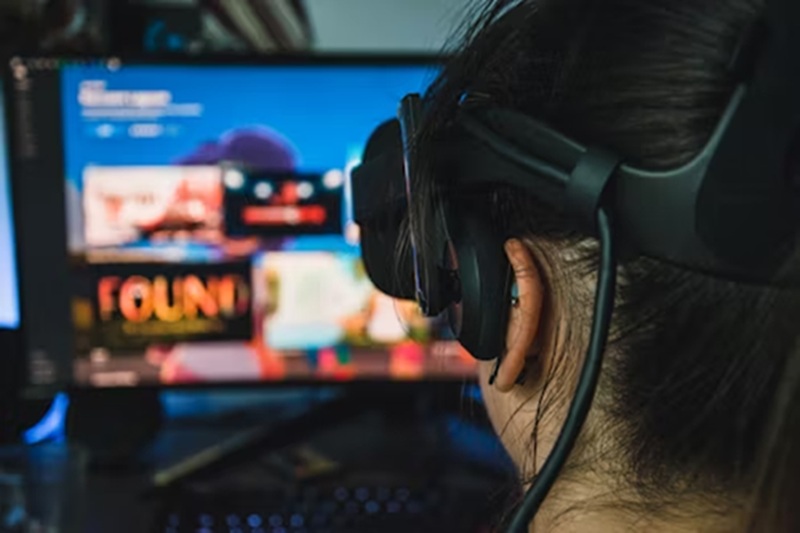
The digital world has now become an economy of its own, where, at one stage, it was just a space for entertainment and social connection. Billions are being spent each year on online games, metaverse platforms, and even virtual communities, where items are bought that only exist on a screen. From weapon designs, character outfits, to virtual land and branded accessories, these digital goods are now gaining recognition as assets with real financial value.

This shift has been fueled by the changing behavior of consumers, as they have a new understanding of digital identity. Many spend time in virtual spaces and see their online presence as an extension of themselves. The transformation from “just for fun” to something people are willing to invest in has grown drastically, both for self-expression and for profit growth.

Digital Ownership Through Blockchain

Blockchain technology is one of the most powerful technologies, turning virtual goods into real investments. Unlike the normal in-game purchases that disappear the minute a platform shuts down or accounts are lost, blockchain has backed items that are verifiable, secure, and transferable.

Blockchain allows digital assets, such as rare game skins, virtual land, or branded collectibles, to exist independently of the platform they were created on. Showing clear proof of ownership, these assets are more than just “pixels”, but become tradable items with a large financial value.

The cosmetics marketplace surged where virtual goods act more like commodities, or even collectables. Today, blockchain allows gamers to wager on various in-game cosmetic items, facilitating betting CSGO skins, for example. Not only can gamers participate in CSGO roulette, but they can also participate in a coinflip where players bet skins or coins against another player. At the end of the round, the lucky gamer walks away with both skins.

With blockchain now providing transparency and security, gamers can check a public ledger to ensure that the roulette or coinflip game was fair. This type of ownership transformed into investments of its own, combining the gap between online culture and financial markets.

Virtual Goods: A Cultural And Social Symbol

Social identity is no longer confined to physical spaces. Within gaming and online communities, virtual goods are now a powerful marker of self-expression and status. Like designer clothing or luxury cars would symbolize success in the physical world, avatars, rare skins, and in-game items have the same concept, which is shaping how an individual is seen by their peers.

Gamers are willing to invest in these virtual assets as they are improving their personal identity and social standing with other chosen communities. Owning a rare weapon or exclusive skin is not only an upgrade, but it also shows dedication, taste, or even your financial status. If you own these virtual assets, you stand out in a highly competitive environment, where your individuality can be quite difficult to express.

These cultural values of assets are then reinforced by influencers, streamers, or even esports professionals, showcasing them to large audiences. These virtual items not only elevate their personal brand, but are also a trend setter, creating inspiring goals for fans and followers. As this ripple effect drastically grows, the symbolic power of the virtual goods makes them highly sought-after commodities. In the physical world, one is unable to craft your identity; the opposite happens when owning virtual goods. These items give individuals the freedom to define who they are, or who they wish to be, online.

Virtual Goods Represent Real Opportunities for Monetization

Virtual goods started off as simple in-game perks, moving over and turning pixels into profit, more so than personal enjoyment. Gamers now look at the potential for resale or trade within thriving secondary markets. Platforms are now available that enable peer-to-peer trading, which have transformed virtual items into liquid assets, like rare skins, weapons, or collectables, selling for thousands of dollars.

Players are now viewing gaming as a potential investment, much like art collectors in the physical world; those holding digital assets are motivated by the chance to profit from scarcity and demand.

This trend has been legitimized due to the rise of blockchain-based items and NFT investments, ensuring ownership rights are secure and enabling users to sell their assets beyond the confines of one specific platform.

Monetization opportunities have also been embraced by publishers and developers, who have been designing ecosystems where limited releases or seasonal drops encourage ongoing interaction, while creating new revenue streams. Both creators and players benefit from this economy, as virtual goods gain real value. In-game marketplaces often allow players to cash out their earnings, filling in the gap between virtual and real-world money.

The monetization of virtual goods reveals why they are increasingly viewed as investments, whether through trading, direct sales, or speculation. Gamers are financially gaining from the potential of digital assets. Showing us that the virtual economy is becoming a serious counterpart to traditional markets and growing at a rapid pace.

Conclusion

The journey from avatars to assets highlights just how virtual goods have moved from playful add-ons to serious investments with real-world involvement. This transformation lies in digital ownership through blockchain, allowing players verifiable control over their virtual goods, which ultimately secures their place in the evolving digital economy.  Blockchain-backed goods are transferable, tradeable, and can hold value beyond the game itself, unlike traditional in-game purchases.

Virtual goods have also become a powerful cultural and social symbol, acting as markers of status, belonging, and identity in online spaces. Ranging from rare skins showcased by influencers to collaborative items, uniting communities, these virtual assets serve as an expression of individuality, reinforcing collective ties at the same time.

The financial potential is just as important, where these virtual goods symbolize real opportunities for monetization, where players are able to trade, resell, or even buy digital items, much like traditional assets. This trend is also being leveraged by developers, who are building marketplaces and ecosystems, creating a flow between users and platforms.

Combined, these forces show why virtual goods are becoming real investments, blending technology, culture, and commerce, proving that in this fast-paced digital-first world, what exists online can carry as much significance as what exists offline.