DD
MM
YYYY

PAGES

DD
MM
YYYY

spot_img

PAGES

Home Blog Page 4932

The Ascension of eNaira as Flutterwave Integrates it for Merchants

1

This is the beginning of the rise of eNaira, and I commend the Central Bank of Nigeria for understanding the economics of digital business. Yes,  in the mobile internet space, supply does not offer the full leverage because that ecosystem is governed by the construct of abundance.

In other words, there are many alternatives to any digital service and because of that ubiquitous nature of service supply, winning moves to platforms which control demand: “Today, the empire builders are those that control demand. This is possible because digital supply is unbounded and unconstrained, making it largely not a factor.” Indeed, the most important feature in LinkedIn or Facebook is that we’re all here – and if you go and create a clone, without the demand, the service offers not much.

In Nigeria today, Flutterwave is  the category-king. It has the merchants and users and can use those to deepen most products and services. Now that it has brought eNaira into its mega universe, many merchants will adopt the digital currency. The friction is gone and CBN can now expect higher adoption. 

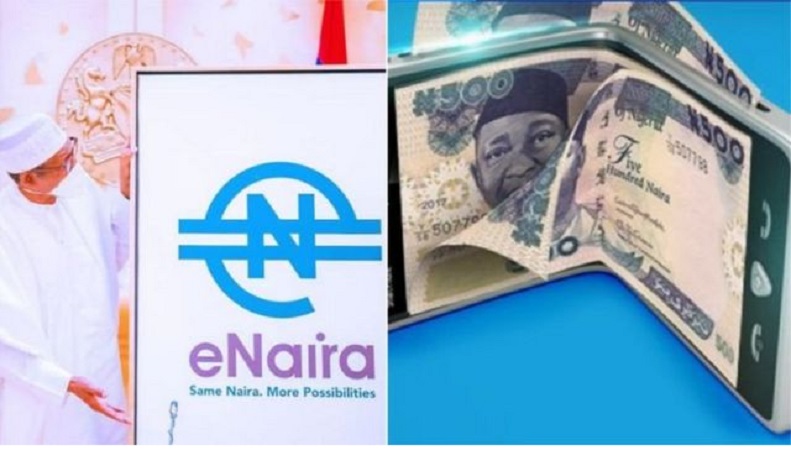
Africa’s leading fintech, Flutterwave, has announced the onboarding of Nigeria’s Central Bank Digital Currency, eNaira, onto its platform. The payment company said merchants on its platform can now accept eNaira payments.

Flutterwave offers a series of services using different methods which include bank transfer, cards and Barter by Flutterwave. The company has been adding other payment services as it grows. Earlier, fintech announced that it has secured a Switching and Processing license from the Central Bank of Nigeria (CBN), to offer transaction switching and card processing services to customers. Other services include agency banking and payment gateway services.

Of course, this does not mean that it is automatic. As in all products, there needs to be a value proposition which eNaira has to offer to me. I am not sure I have seen it yet. Indeed, whether it is paper Naira, momo Naira, Naira in wallet, or eNaira, most people are more concerned on how to make more Nairas than the form of Naira they have.

Flutterwave Onboards eNaira for Merchants in Nigeria

0

Africa’s leading fintech, Flutterwave, has announced the onboarding of Nigeria’s Central Bank Digital Currency, eNaira, onto its platform. The payment company said merchants on its platform can now accept eNaira payments.

Flutterwave offers a series of services using different methods which include bank transfer, cards and Barter by Flutterwave. The company has been adding other payment services as it grows. Earlier, fintech announced that it has secured a Switching and Processing license from the Central Bank of Nigeria (CBN), to offer transaction switching and card processing services to customers. Other services include agency banking and payment gateway services.

Onboarding eNaira is another bold step that will likely boost the use of the digital currency. Since it was launched last October, the CBDC has struggled to gain wide adoption. The CBN governor Godwin Emefiele said last month that the eNaira had only recorded 840,000 downloads with 270,000 active wallets comprising 252,000 consumer wallets and 17,000 merchant wallets accounting for N4 billion transactions since its launch.

With this adoption, Flutterwave merchants can enable the eNaira payment option on their dashboard for their customers’ use.

“With our new adoption of eNaira as a payment method on Flutterwave, we’re enabling various payment methods to merchants and their customers to ensure everyone has access to payment solutions that work for them. Flutterwave will continue to strive to be at the forefront of innovation as we develop and implement new solutions to facilitate global payments for our customers,” Olugbenga GB Agboola,  Founder and CEO of Flutterwave, said.

By being on Flutterwave’s platform, eNaira now stands a chance of being exposed to be adopted by more merchants and users, and Flutterwave sees an opportunity to bring thousands of eNaira users to its platform.

Flutterwave provides technology, infrastructure, and services to enable global businesses, payment service providers and Pan-African banks to accept and process payments on any channel (Web, Mobile, ATM & POS). The company currently operates across Africa, Europe, North America, and other emerging markets by providing a suite of payment tools that enable over One million businesses accept payments from their customers anywhere in the world in over 150 currencies, including the Naira and eNaira.

Recently, Flutterwave took the first step to get listed on the New York Stock Exchange. Although this has come on the heels of many hurdles, including allegations of fraud and malpractices in its key markets, the $3 billion company’s recent moves, including the acquisition of licenses from the central bank, indicate that it is not bothered.

Featuring the eNaira is Flutterwave’s latest push to expand its offering as Nigerians are increasingly adopting the digital currency.

“We’re the payment solution that strives to allow individuals and businesses with various payment needs and requirements to do business, easily. The eNaira feature is important for the merchants and customers because it offers an alternative payment method that many users find seamless. It’s a key update to Flutterwave and we continue to look out for opportunities like this to improve our offering to our range of customers,” Azeez Oluwafemi, Senior Vice President, Products and Design said.

When would you organize a Tekedia Institute hangout in your city?

0

Across Africa, more cities are hosting Tekedia Institute‘s Learners Hangout. We began this online, but the mission is spreading and waxing like the baobab tree, from one city to the other, independently organized by the community. When would you organize a Tekedia Institute hangout in your city?

Our impact is huge: the Bank of Industry has put more than $2 million into ventures of our members. Many have gone to raise capital by turning their Homework into companies.

We have celebrated promotions and ascensions. Just 3 weeks ago, I personally spoke with a Facebook HR  to recommend a young man who did an amazing Homework in our school. It turns out that Facebook saw the same thing and took action. As they tried to reach me, Arinze Onyeasigbulem alerted me. Today, he is a Meta (Facebook) program manager. You master the physics of business management and leadership in our school.

To all our Learners, #thank you. You look amazing on those t-shirts. Thank you.

Nigeria Missing Out On Global Oil Boom

0

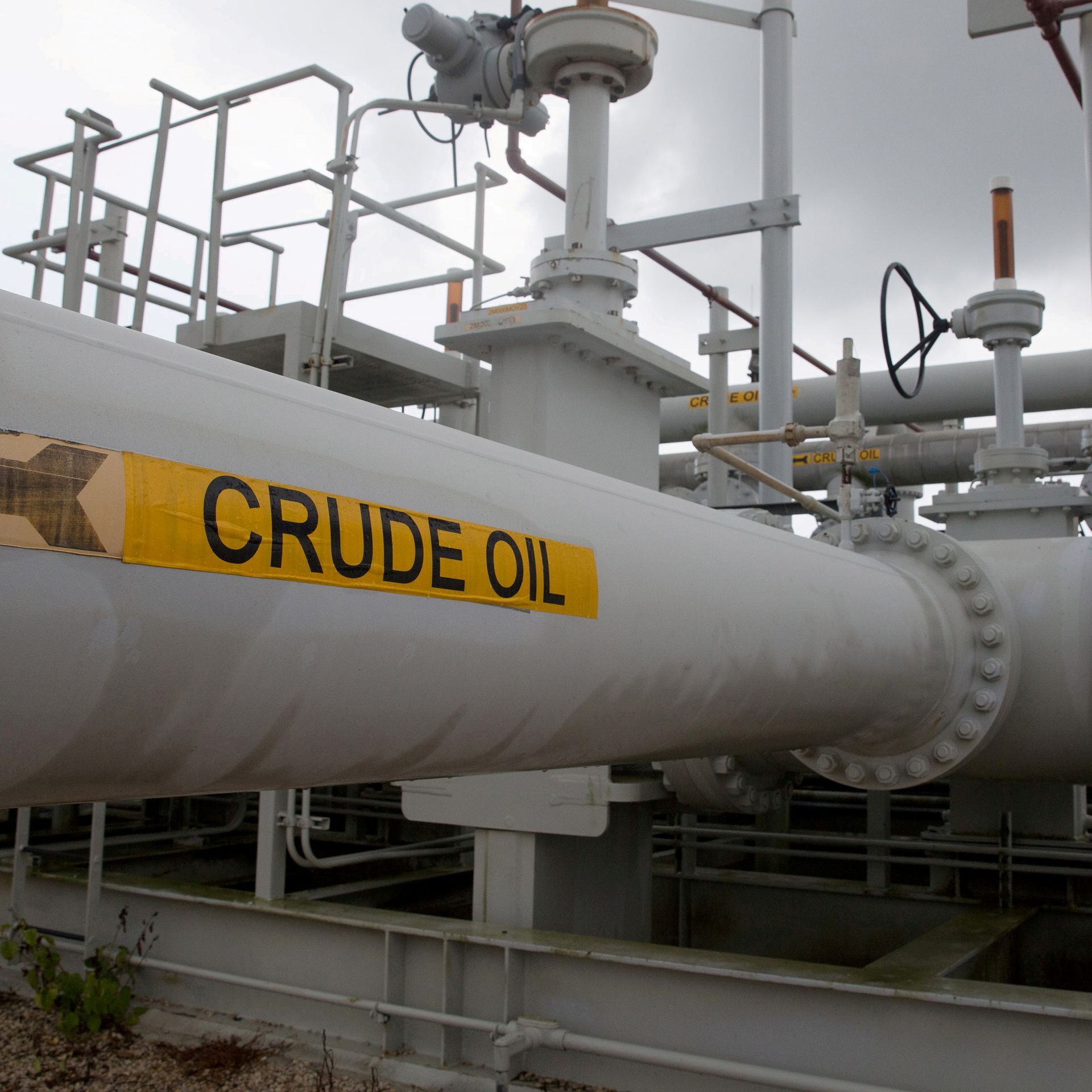
Following the rise in global oil prices, it is reported that Africa’s largest crude oil producer Nigeria has continued to miss out on the rare global oil boom opportunity.

Crude oil prices have for months stayed above $100 per barrel in the international market, a development rarely seen, ironically, it has not led to any positive impact on the Nigerian economy.

Unlike many oil-producing countries, this is an interesting time for them, as they are gaining excessively from the current oil boom.

Last month, the Director of Nigeria Employers Consultative Association (NECA), Mr. Wale Oyerinde, disclosed that Nigeria can’t benefit from the global surge in crude oil prices due to the burgeoning cost of subsidies on petroleum products in the country.

He further disclosed that until the country had significant alternative sources of foreign exchange and starts exporting more than they import, revenue challenges might continue to linger.

See what he said;

We acknowledge the revenue challenge currently faced by the nation. As it is well known, a major quantum of Nigeria’s foreign exchange comes from crude oil sales.

“Unfortunately, the price of crude oil is not within our control and we are not even meeting our quota of crude allotted to us by OPEC by about 600bpd.

While the price of crude went up as a result of the Russia-Ukraine war, we were not able to benefit revenue-wise because of the bourgeoning cost of subsidy of petroleum products.

“Until we have significant alternative sources of forex (non-oil), export more than we import, and reduce wastages, revenue challenges might continue for a while.”

It is disheartening that during this period when the country should be raking millions and billions of dollars from the oil boom, it continues to borrow massively in spite of what ordinarily should be a boom period for the economy and foreign exchange inflow.

The country has the challenge of having to buy petroleum products for use because it does not have functional refineries, which eats into the revenues it would have otherwise realized.

Despite its huge oil reserves, Nigeria has one of the lowest production per capita among oil-producing countries in the world, producing less than a barrel per 100 people.

Unlike its oil-rich counterparts, Nigeria seems to be lagging as other oil-producing countries are making excessive gains during this period.

Due to the global oil boom caused by the Russian-Ukraine war, Saudi Arabia is now so rich from the global oil boom that the country is planning a new futuristic city called Neom in the desert reaches along the Red Sea.

For every USD 10 rise in the price of a barrel of oil, Saudi Arabia stands to make an additional USD 40 billion a year.

Research by Mitsubishi UFJ Financial Group (MUFG) in February showed that Gulf Cooperation Council (GCC) countries are likely to see a GDP surge of 6.1% in 2022 on the back of increased oil prices, as well as fiscal surpluses for the first time since 2014.

The GCC consists of Saudi Arabia, Oman, United Arab Emirates (UAE), Kuwait, Qatar, and Bahrain. But meanwhile, Nigeria has continued to struggle to even meet her OPEC quota.

Nigeria’s 2023 Budget to Have N12.43 Trillion Deficit – Finance Minister

1

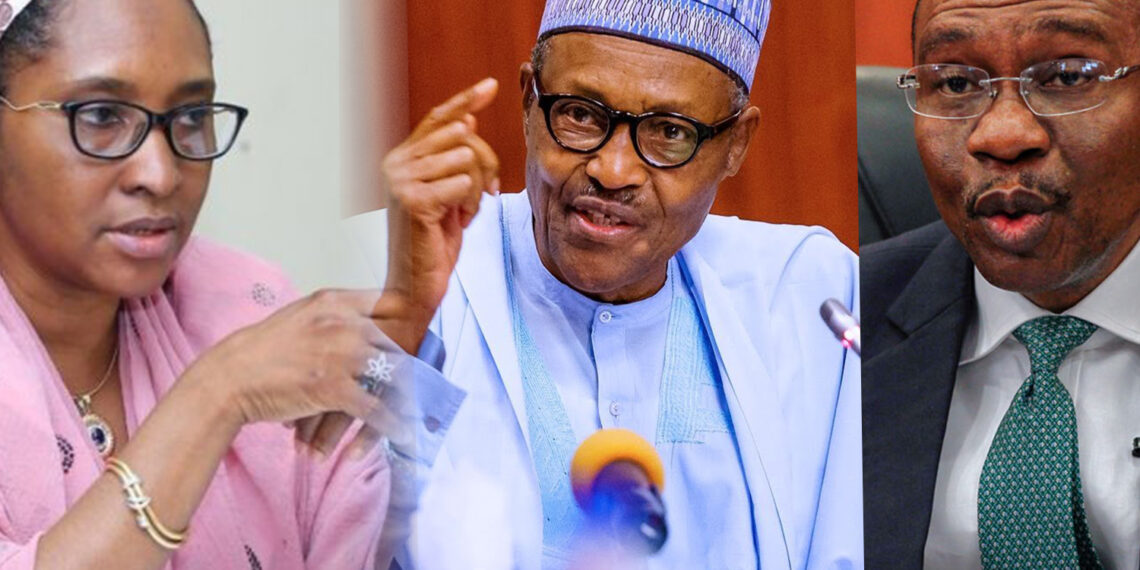
Nigeria’s 2023 budget is expected to have a N12.43 trillion deficit due to import duty waivers and fuel subsidy payments, according to the Minister of Finance, Budget and National Planning, Zainab Ahmed.

The finance minister had informed the Senate Committee on Finance on Tuesday during an interactive session that the proposed N19.76 trillion budget for 2023 will be greatly undermined by the aforementioned factors, particularly, if fuel subsidy is retained throughout 2023.

The concern, which was equally expressed by revenue generating agencies, prompted the Committee Chairman, Olamilekan Adeola, to ask the minister to critically review both the projected N12.43 trillion budget deficit and N6tn tax and import duty waivers downwards before sending the proposals to the National Assembly for consideration and approval.

Adeola demanded that the minister examine the list of beneficiaries of the N6 trillion waivers for a possible downward review to N3tn, which will minimize the volume of the whole budget deficit.

“The proposed N12.43 trillion deficit for the 2023 budget and N6 Trillion waivers are very disturbing and must be critically reviewed.  Many of the beneficiaries of the waivers are not plowing accrued gains made into expected projects as far as infrastructural developments are concerned.

“The same goes for the tax credit window offered by FIRS to some companies. Billions and trillions of naira can be generated by the government as revenue if such windows are closed against beneficiaries abusing them and invariably provide required money for budget funding with fewer deficits cum borrowings.

“The Nigeria Customs Service should help in this direction by critically reviewing waivers being granted on import duties for some importers just as the FIRS should also review the tax credit window offered to some companies without corresponding corporate social services to Nigerians in terms of expected project executions like road construction,” he said.

Nigeria’s revenue shortfalls have lingered for so long due to the deficiencies in the country’s oil sector. Last month, Nigeria’s oil output dropped to 972,000 barrels per day (bpd), pushing the once largest oil producing country in Africa behind Angola and Libya, according to a report by the Organization Of Petroleum Exporting Countries (OPEC).

The latest oil production drop has pushed Nigeria’s oil output far below its OPEC-stipulated 1.4 million barrels per day quota. This means that the hope of oil revenue recovery is not attainable in the short-term.

Nigeria is the only oil-producing country that has failed to cash in on the oil windfall orchestrated by the Russia-Ukraine conflict. As an oil-based economy, this has compounded the country’s economic growth as other means of revenue generation have fallen short of what is required to fund the budgets.

A key reason for Nigeria’s revenue crisis is the fuel subsidy. In 2022 alone, the subsidy is expected to gulp more than 74.07% of its capital expenditure. The federal government recently put the current daily spending on the petrol subsidy at N18.4 billion.

With the 2023 budget story sounding sadder, the N6.72 trillion mapped out for potential subsidy payment in 2023 signals that Nigeria’s capital expenditure may suffer from further revenue shortfall. Recently, revenue generating agencies have been making excuses for failed revenue remittances, indicating that the projected N12.43 trillion 2023 budget deficit may be exceeded.