DD
MM
YYYY

PAGES

DD
MM
YYYY

spot_img

PAGES

Home Blog Page 4943

Use of rotating or automatic plate number or more than one number plate is criminal

0

The recent trending video on social media is the display of a vehicle with an “automatic plate number” where the car uses two number plates attached to it and you can switch from one plate number to another electronically by just pushing a button installed inside the car. 

It looked cool and smooth and people went crazy over this display. So many people were making inquiries on how to get it as they would love their cars to use this “automatic switching” two number plates. 

The interesting thing is that there are laws prohibiting a vehicle owner from using two different plate numbers on a vehicle in Nigeria. A vehicle is only to be assigned with just one number plate and any act of acquiring or fixing a second plate number to your vehicle is a criminal offense.

It is the law that before you use a vehicle in Nigeria, you must register the vehicle first with the FRSC and obtain every necessary documentation, and be issued a number plate which will be affixed to the vehicle.

Section 10(3) of the FEDERAL ROAD SAFETY COMMISSION (ESTABLISHMENT) ACT, 2007, states that the  Federal Road Safety Commission has been charged with the duty (amongst others) of registering cars, designing and issuing number plates, and each vehicle is entitled to just one number plate; anything other than these; like obtaining a plate number from any other person other than the FRSC or using more than one number plate on a vehicle is a criminal offense.

Subsequently, the succeeding subsection 4 of section 10 provides that the FRSC has been empowered to arrest and prosecute anybody who fails to use or display a number plate on his or her vehicle. 

S.(10)(4)(s) provides thus; In the exercise of the functions conferred by this section, members of the Corps shall have the power to arrest and prosecute persons responsible or suspected of having committed any traffic offense including the following offenses and serve such person with court processes or notice of offense sheet-

(s) failure to display number plates on vehicles;

It is worthy of note that you are only permitted to drive a new car in Nigeria for just three months without registration or attaching a plate number but after three months and you still drive the car around without registering the car it then becomes a criminal offense and you can be arrested and prosecuted for that. 

Nigerians always feel that laws are made against them or to oppress them instead of them having the positive mindset that laws are made for their protection. Ironically, the laws bothering on the registration of vehicles and attaching number plates before use is one of the laws that is made for the protection and security of the vehicle users or owners because if by any means the car gets stolen or snatched it will be easier to be traced and recovered when the car has been registered and the details of the vehicle are in the database of the FRSC. 

The registration of vehicles also helps the security agencies keep track of the vehicles in the city and helps in the identification of the owners and users of the vehicle. There’s a reasonable presumption (which could be wrong) that those that refuse to register their vehicle with the appropriate authorities and attach an identifiable number plate are those that use their vehicle for criminal activities like kidnapping or robbery.

Tekedia Capital Portfolio Startup, AjoMoney, Raises Small Funds ; Continues To Grow

0

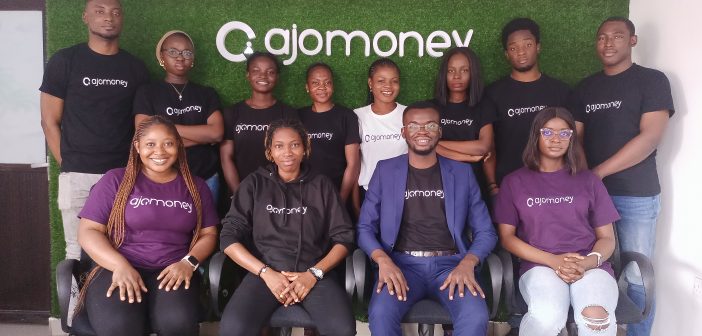
Let me congratulate AjoMoney for a small fundraise as it begins a new  round. Tekedia Capital led its pre-seed. They are growing very fast and now support 12,000 users at a total of  US$750,000 in GTV in just months of launch.

Founded by Ibrahim Adepoju and Chineye Ochem ACA, CFE, MBA, AjoMoney offers APIs and technologies to consumer-, mobile agent-, cooperative- and developer-platforms. They digitized Africa’s centuries-old rotating savings and credit associations (ROSCAs), making it possible for people to access zero or low interest credit when they collectively save and invest money.

Yes, buddies pull funds together and rotate who takes turns over months. Today, AjoMoney has technology to help you manage that, from two friends to cooperatives to a village, and beyond. Disrupt has a nice piece on AjoMoney.

https://school.tekedia.com/tekedia-capital/

Building Digital Infrastructure for Africa’s Agriculture – Tekedia Mini-MBA

0

He is building one of the finest structures for agriculture in Africa. He is an eminent operator and one of the most amazing in the continent. His technologies power institutions in Nigeria, Sierra Leone, Senegal, Kenya, etc. In short, a couple of universities in Nigeria depend on tools he has provided in some domains. Some banks run on his platforms – and he has millions of users!

DAVID MEEK JAH an emergent African industrialist, will be at Tekedia Mini-MBA live tomorrow to share what he is doing in the continent.

We have been working with 100 of his team in Tekedia Institute; welcome Sierra Leone to Africa’s largest business school for #builders and #makers. Amazing and brilliant young people.

The Regulatory Framework on Open Banking in Nigeria

0

 The Banking & Finance sector, especially the Fintech Industry, relies almost totally on information throughout all points of its value chain from Bank account opening to making deposits or withdrawals to creditworthiness assessments  to remittances and monetary transfers to Compliance measures and even to decentralized Digital asset transactions and Insolvency. 

Before the advent of Open Banking as a concept, the Fintech sector was basically a combination of sealed information compartments which provided a lot of problems in trying to effect seamless transactions based on limited end-user information, the closest thing at the time to a centralized information system being the Nigerian Interbank Settlement Scheme (NIBBS) as well as Credit Bureau.  

What this article thus aims to achieve is to treat in the most straightforward terms the following topics:- 

– An explanation of Open Banking as a concept. 

– The Regulatory Framework governing Open Banking in Nigeria. 

– The advantages and disadvantages of Open Banking, especially regarding the Fintech sector. 

– The stakeholders in Nigeria’s Open Banking system. 

– The most notable Regulatory Compliance requirements for Open Banking participants in Nigeria. 

What is Open Banking? 

Open Banking is simply a Financial service concept within Financial technology that states that Financial and Non-financial businesses should share or operate a seamless unified customer information system readily accessible with the prior consent of the Customers/End-users with the aim of providing more useful and competitive service packages for their customers mainly through the use of Application Programming Interfaces (APIs) which are software programs applied as digital connections for the purpose of Customer Data Request and transmission to 3rd parties. 

A practical illustration of this would be you trying to access a loan from your Digital Moneylender Mobile App on your phone which will in turn use APIs to access your Creditworthiness score from other online sources of your Financial state(such as your Banking app) in order to accurately determine if you qualify for a loan and then the appropriate loan offer for you in seconds as against the former practice of processing your application in 48-72 Hours during which manual Creditworthiness checks and KYC(Know-Your-Customer) due diligence had to be carried out. 

What is the Regulatory Framework governing Open Banking in Nigeria? 

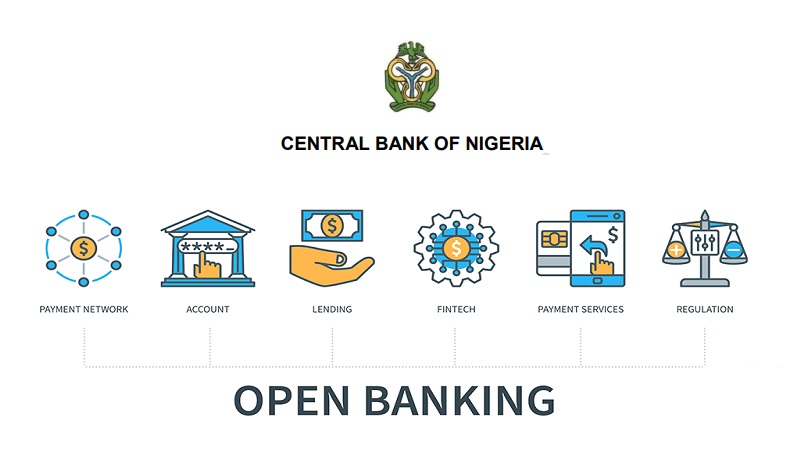
Open Banking in Nigeria is governed by the Central Bank of Nigeria (CBN) through the CBN Guidelines For Open Banking in Nigeria 2022. 

Who are the main participants in Nigeria’s Open Banking system? 

The following entities make up Nigeria’s Open Banking system : 

– The Central Bank of Nigeria (CBN) as a Regulatory Agency of the Federal Government in charge of granting licenses to API providers and consumers to operate in an Open Banking system. 

– The API Providers (or ‘APs’)  which are Financial Institutions that share data with other institutions , a notable example being Banks. 

– The API Consumers (or ‘ACs’) which are companies that apply or access data released to them by the APs. 

– The Customers/End-users which are the owners of the data released by the APs to the ACs with the consent of the  customers. 

What are the benefits and disadvantages of Open Banking? 

ADVANTAGES 

– Open Banking provides a centralized information network/centre where people who use financial services can share their information (especially their financial information) with other Financial service providers in a secure way. 

– Open Banking provides a means through which Lenders can be provided with a more accurate picture of an End-user’s Financial exposure/risk level/credit rating as well as providing End-users a better assessment of their credit rating/financial health when considering applying for loans. 

– The creation of a service package culture based on the offering of personalized products to suit each End-user or Customer based on Open Banking can lead  to a higher rate of healthy business competition in the Fintech space. 

– It reduces the low level of customer trust in traditional Banking institutions. 

– It reduces accurate Customer data scarcity within the Banking and Financial Service/Fintech sectors. 

DISADVANTAGES 

– Open Banking has inadvertently left to higher rates of Hacking attempts in Nigeria, a number of such attempts being successful to the detriment of Customers/Digital Final Service End-users. 

– Open Banking in Nigeria has led to an abnormally higher amount of Customer Data access privileges to APs and ACs and their employees in a way that can violate the fundamental right of Privacy guaranteed under the Nigerian Constitution. 

– Open Banking comes with a significantly higher risk of Cyber-Terrorism and mass remote espionage. 

– Open Banking has also led to a higher rate of Consumer Rights Violations via Cyber-Bullying, particularly in the Fintech subsector of Digital Lending. 

– Open Banking poses a higher risk of Phishing scams. 

– The creation of entirely new trust relationships with 3rd parties for in most cases unaware customers using Digital Open Banking applications leading to ambiguity as to where to apportion liabilities in the event of a Customer complaint or Customer Dispute Resolution e.g. most financially literate people in Nigeria still believe that Banks actually carry out the electronic operations of Automated Teller Machines directly and have never heard of companies like Interswitch.  

What are the most notable provisions of the CBN Guidelines on Open Banking? 

The following are some of the most notable/important provisions of the Guidelines on Open Banking :- 

The creation of an Open Banking Registry(OBR) :- This is a Regulatory oversight system &  public repository for the details of registered participants, with each participant being identifiable by its Corporate Affairs Commission (CAC) numbers as recorded in the OBR(Paragraph 6 of the Guidelines).  

– The outlining of Accreditation criteria for Open Banking System participation via onboarding to the OBR .(Paragraph 6.1). 

– The provision for Consent management rules (Paragraph 7). 

– The provision of responsibilities for APs and ACs (Paragraphs 8 & 9). 

– The provision of an Open Banking Dispute Resolution Framework (Paragraph 12) 

– The provision of a requirement for compulsory SLA Documentations of all transactions and contractual relationships between APs and ACs as well as a Regulatory fee structure to be outlined in the SLA documentation. 

Conclusion :- It can be seen from the above that while it might sometimes come across as a double-edged sword, Open Banking brings a lot of overwhelming advantages and constitutes another major value disruption in Nigeria’s Fintech space. Intending serious participants in the Open Banking system will thus be at a greater advantage when properly guided by the right set of professionals going forward.

The NFT Marketplace: How The Digital Component Has Become The Focal Point of The Metaverse

0

Cryptocurrencies have skyrocketed within the past couple of years due to several factors. One of those primary factors was the COVID-19 pandemic, which ironically helped popularise cryptocurrencies as people were searching for new ways to make financial fruition. Additionally, individuals wanted to divert away from traditional methods of investments such as stocks, property, and forex. Along with the rise in interest in cryptocurrencies comes other digital components such as utility tokens, decentralised finances, and non-fungible tokens. The latter has recently become a huge factor in blockchain technology, with NFTs often being incorporated into crypto networks. But why are NFTs so relevant in the metaverse today?

The Evolution of NFTs

Non-Fungible Tokens, also known as NFTs, are best described as cryptographic tokens that cannot be replicated and only exist within a blockchain. They can represent real-world products such as real estate properties like Allister Place Apartments Tampa FL 33617 or artwork, giving users the capability to distribute and display content while being able to monetise from it. Essentially, the incorporation of NFTs in blockchain technology has permitted a more efficient way to purchase, distribute and trade digitally.

Additionally, NFTs decrease the chances of fraudulent activity taking place. The idea of an NFT was heavily discussed in the early 2010s, being labeled as ‘coloured coins’ which would be issued on Bitcoin. However, NFTs emerged as a piece of Quantum artwork in 2014, minted on the Namecoin blockchain. The artwork was constructed by Kevin McCoy, showing a video of his wife Jennifer. This is widely regarded to be the first NFT in the metaverse.

The Current State of NFTs

Ever since Quantum came into the metaverse, many blockchain networks have capitalised on the digital component by having designated NFT marketplaces and clubs. Take a prominent blockchain network like Solana (SOL) for example, which has its NFT marketplace called Solanart. This is a platform where users can display their best digital works. There are a range of different collections on Solanart for people to choose from, such as Degenerate Ape Academy, Samoydecoin, and Yeah Tigers. Solana is one of the most reputable cryptocurrencies on the market, with a solid current market capitalisation of ninth on Coin Market Cap.

Another blockchain network that has garnered attention for its use of NFTs is Shiba Inu (SHIB). SHIB recently collaborated with Black Forest to construct a series of NFTs for the FIFA World Cup 2022. Block Forest is a decentralised network that operates on the Binance Smart Chain. This was announced in May 2022, the same month that the NFT World Cup launched five NFTs that convey different countries’ flags. Shiba Inu launched in August 2020 as a meme coin substitute for Dogecoin and has become its direct competitor.

An upcoming blockchain network that plans to enter ranking in the top ten NFTs is Big Eyes (BIG). As stated in an article published by Analytics Insight, one of the primary objectives of Big Eyes is to build a community around its mascot, a big-eyed kitten designed in an anime/manga-inspired style. The developer of Big Eyes has been stated to be its mascot, which they believe is targeting a ‘billion-dollar industry’ with its cuteness. BIG has an NFT group called the ‘Sushi Crew’, which gives BIG token holders who enjoy owning cute and fun things.

https://bigeyes.space