DD
MM
YYYY

PAGES

DD
MM
YYYY

spot_img

PAGES

Home Blog Page 4965

Nigeria Launches App To Put A Stop To Crude Oil Theft

1

For a very long time, Nigeria’s economy has been ravaged by the incessant crude oil theft that has made it impossible for the country to meet it’s crude oil production quota. The federal government disclosed that the country loses about 400,000 barrels of crude oil per day to theft, translating to a drop from 1.8 million to 1.4 million BPD.

Reports disclose that Nigeria lost a staggering $1 billion in revenue in the first quarter of 2022, endangering the economy of Africa’s top producer. This despicable trend of oil theft has continued to pose an existential threat to the oil and gas sector, and by extension to the Nigerian economy, if measures are not put in place to stop it.

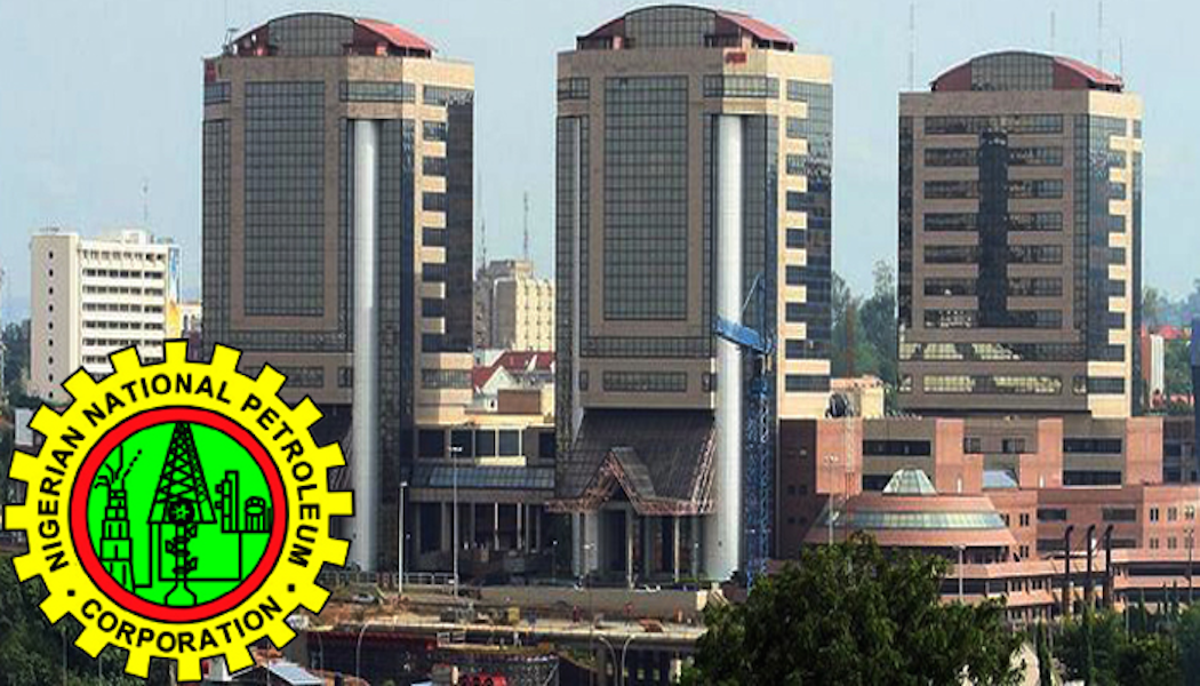
In a bid to put a stop to crude oil theft in Nigeria, the Nigerian national petroleum company Limited (NNPC), has recently launched a mobile app to monitor crude oil theft in country. The launch of the mobile app took place in Abuja at the signing of renewed production sharing contracts (PSCs) agreement between NNPC and its partners in oil mining leases.

NNPC disclosed that the platform ‘Crude theft monitoring applications’, was created for members of host communities and other Nigerians to enable early reporting of incidents of oil theft, to spur immediate action from relevant security and government authorities. Also, they have encouraged whistleblowing which they revealed will be a relevant form of security.

During the launch of the app, the Group Chief Executive Officer of the NNPC Limited, Mr. Mele Kyari disclosed that Nigeria lost a whopping $4 billion to oil theft at the rate of 200,000 barrels per day in 2021, while admitting that pipeline vandalism in the country has become too difficult to control.

The federal government in its recent draft fiscal strategy paper for 2023 through 2025, disclosed that oil revenue underperformed due to significant production shortfalls, such as shut down resulting from pipeline vandalism and crude oil theft.

Speaking at the launch of the App, NNPC Chief Executive Officer Mr. Mele Kyari spoke in-depth on how efficient the app will be to help curb the menace of crude oil theft.

See what he said;

“The actions of vandals on pipelines have become a difficult thing to deal with. There are still ongoing activities of oil thieves and vandals on our pipelines and assets, very visible in the form of illegal refineries that are continuously put up in some locations and insertions into our pipeline network.

“Arrests have been made and vessels have been arrested by the Nigerian Navy. I commend the Armed forces, in the last three months, they have done a substantive work and have destroyed some illegal refineries. 

“First, we have created a platform where members of the community and other Nigerians can report whenever incidents of theft occur and also reward them, and keep it confidential and private.

“We at the NNPC will guarantee absolute privacy on any such report that comes and I’m directly managing this myself as no one will be exposed.”

“Secondly, on an international scale, companies must report suspicious sales of crude. Every oil that leaves this country has a unique registration number that is issued by the NNPC and also validated by the OPEC commission. And I know that the destination reporting framework has been put up by the Commission.

“Ahead of this, we are also creating a platform where end-users, particularly investors and traders, can validate the crude they are handling from Nigeria as their only source. And whenever they have no validation report, then they must world.

“If they don’t do this, as I always say, our companies are international, which means they are part of the riggers and whenever we discover this, we will take necessary actions against them. And I’m sure that our partners will cooperate with us, to make sure that this is done. That way we know that we are looking at the market and also curtailing our local issues.

“To ensure that we respond to this situation and this also, we can’t do without government engagement and involvement, particularly government security agencies and also members of the community. We have put up a very robust framework for ensuring that we curtail this menace and we are already seeing results. Needless to say, there are still ongoing activities of vandals in our pipelines or oil thieves on our assets.

“This is very visible in the form of illegal refineries that are continuously put up in some locations and also insertions into our pipelines network. We are reacting to it, we are doing many things surrounding it. There are massive actions by our government agencies just to make it clear to us”.

Hopefully, this recently launched app will be able to reduce the amount of crude oil theft in the country, making it possible for Nigeria to meet its crude oil production quota and benefit from high oil prices.

Oil Revenue Threatened.

According to the Punch, Nigeria’s oil revenue is threatened: “Nigeria’s oil production slumped by 28 million barrels between January and July 2022, threatening the Federal Government’s N9.37tn oil and gas revenue target by the end of the year.

“The Federal Government, in the 2023-2035 Medium Term Expenditure Framework & Fiscal Strategy Paper recently presented by the Minister of Finance, Budget and National Planning, Dr Zainab Ahmed, blamed oil production shut-ins due to pipeline vandalism, crude oil theft and high petrol subsidy cost.

“Most industry experts who spoke with The PUNCH on Sunday also attributed the decline to oil theft, which appears to have defied solutions.” Possibly, with this app, we can find a solution.
Nigeria’s Headline Inflation Rate Hits 19.64% in July

0

The latest update by the National Bureau of Statistics (NBS), shows a 19.64% increase in Nigeria’s headline inflation rate in July.

The alarming new rate, which came on a year-on-year basis, was announced by Prince Semiu Adeniran, the Statistician-General of the Federation and Chief Executive Officer, NBS, through the Consumer Price Index (CPI) for July 2022 released in Abuja on Monday.

Speaking on the report, Adeniran said that the CPI measures the average change over time in the prices of goods and services consumed by people for day-to-day living, and it confirmed an uptick in inflation rate.

“This is 2.27% points higher compared to the rate recorded in July 2021, which was 17.38%.

“This shows that the headline inflation rate increased in July 2022 when compared to the same month in the previous year of July 2022. This means that in July 2022, the general price level was 2.26 per cent higher than in July 2021,’’ he said.

He said there were increments in all Classification of Individual Consumption by Purpose (COICOP) divisions that yielded the Headline index. He attributed the inflation to an increase in the food index which was created by the disruption in the food products supply chain.

Adeniran also attributed the increase in inflation to the rise in the cost of transportation which is as a result of the high cost of energy.

He said the increase in the inflation rate was also due to an increase in import costs as a result of currency depreciation, as well as a general increase in the cost of production.

“On a month-on-month basis, the headline inflation rate in July 2022 was 1.817%, which was higher than the rate recorded in June 2022 at 1.816%.

“The percentage change in the average CPI for the twelve months ending July 2022 over the average of the CPI for the previous twelve months period was 16.75%.

“This is showing a 0.46% increase compared to 16.30% recorded in July 2021,’’ he said.

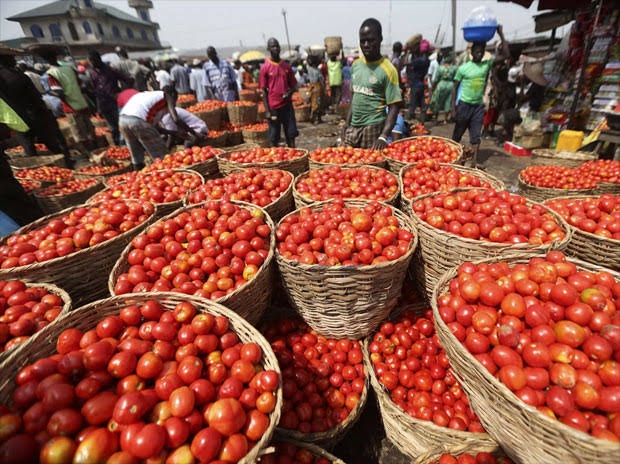
The Statistician General also noted that the composite food index rose year-on-year from 21.03% to 22.02% in July 2022. This reflected in the prices of food commodities such as bread and cereals, potatoes, yam, and other tubers, meat, fish, oil, and fat. But he said month-on-month, the food sub-index in July 2022 was 2.04% lower than the 2.05% recorded in the previous month.

“The index for all items less farm produce (Core inflation), which excludes the prices of volatile agricultural produce stood at 16.26% in July 2022 on a year-on-year basis.

“This was higher when compared to 13.72% recorded in July 2021. On a month-on-month basis, the core sub-index was 1.75% in July 2022 higher when compared to 1.56% recorded in June 2022,” he said.

Other areas where inflation was highly recorded are in prices of gas, liquid fuel, solid fuel, passenger transport by road, passenger transport by air, garments, cleaning, repair and hire of clothing.

Consequently, the new inflation rate means more suffering for Nigerians who are already overwhelmed by the weight of rising cost of living.

With N30,000 monthly minimum wage, a large number of Nigerians cannot afford basic human necessities, especially food. This means more Nigerians are going to fall into abject poverty by the end of the year.

The World Bank had warned earlier in the year that the number of poor Nigerians is expected to hit 95.1 million in 2022. The projection is unfortunately becoming a reality.

Join Us At Tekedia Capital As We Invest in Finest African Startups

0

Join us as we continue to breed Africa’s empires of the future. The next cycle begins next month. Category-king startups in real estate, downstream oil & gas, manufacturing, biomed, and more are coming.  Global citizens, companies, investment clubs, corporations, associations, etc, register here.

We have developed a way to pick winners and our startups have gone to YC, Seedstars, Techstars, etc, raising $millions and advancing communities and nations. Join Tekedia Capital Syndicate.

The Sandbox, Aave, and Celphish Finance: Three Crypto Tokens Below the Cryptocurrency News Radar

0

The cryptocurrency bear market has dominated news cycles and made it near impossible for other news items to make the rounds as many promising crypto projects and their tokens fall between the cracks. Investors are encouraged to take steps to protect their portfolios during this period. One of these methods is converting their crypto assets to stablecoins to protect them from volatility. Another method is purchasing promising crypto tokens while their prices are currently low. Ensure that you thoroughly research crypto tokens before making purchases. Whatever you decide to do, you should remember that capital preservation is the most important strategy during a bear market.

Investors have no idea how long the bear market will last, so they are a bit uncertain in their approach to the crypto market. It has become harder to follow the narrative of the current crypto cycle, which means investors would need extra help discovering promising tokens. The Sandbox (SAND), Aave (AAVE), and Celphish Finance (CELP) are three crypto tokens that are currently below the cryptocurrency news radar. To learn more about these tokens, read our summary of each project.

The Sandbox (SAND)

The Sandbox (SAND) is a crypto gaming metaverse project built on the Ethereum (ETH) blockchain. SAND, the utility token of the project, uses the ERC-20 token standard and is compatible with other tokens on the same network. The Sandbox platform is a gaming metaverse where users can play various games, buy items, build, create, and trade with other users. Additionally, users have full ownership over the items they purchase as they are NFTs they can take off the platform if they wish. Sandbox will change the gaming landscape by using technology to change how players view gaming. The project will introduce players to blockchain gaming and its concepts.

The Sandbox project runs a DAO, which uses the SAND token for governance rights. These rights allow users to vote on proposals and suggest changes to the Sandbox platform. On the other hand, SAND is used for transactions on the platform. Users can buy, sell, trade, and swap items using the SAND token. Finally, the Sandbox project incorporates a play-to-earn model, which rewards users for using the platform.

Aave (AAVE)

Aave (AAVE) is a decentralized exchange (DEX) where users can borrow or lend crypto tokens. The Aave protocol is compatible with different blockchains, so many different tokens are available on the protocol. These tokens are in liquidity pools that are funded by users known as liquidity providers. These providers deposit tokens in exchange for a share of the pool’s fees. On the other hand, users who want to borrow must pay a fee to access the pool and deposit collateral before taking out the loan.

AAVE is the protocol’s governance token, giving its users the right to vote on decisions regarding the protocol. In addition, borrowers can use the AAVE token to reduce the fees they have to pay when they borrow from liquidity pools. Aave operates a DAO model which controls all the actions on the platform. Additionally, its decentralized nature means any crypto user can access it at any time.

Celphish Finance (CELP)

Celphish Finance (CELP) is an NFT and DeFi platform that aims to bring stability to the sector. It would help users protect their NFT assets from hacks and give them the tools to properly manage their crypto assets from their smartphones. Celphish Finance will leverage the current smartphone market to bring more people into the crypto ecosystem. Furthermore, it would create easily accessible DeFi solutions for users to easily access the financial services they need at the touch of a button. The CELP token is the utility token of the project, and it would be front and center of the project’s DeFi efforts.

Get in on this groundbreaking project by purchasing tokens in its ongoing pre-sale. You will receive a 10% bonus when you purchase CELP with ETH and a 15% bonus when you purchase CELP using BNB. Additionally, refer a friend and get $25 worth of CELP tokens when they spend $75. Remember that bonuses can stack!

For more information on Celphish Finance (CELP) visit the links below: 

Presale: https://cel.celphish.io

Website: http://celphish.io/

Telegram: https://t.me/CelphishFinanceOfficial

The Power of “Rings” And WeWork Founder’s $350M Raise

1

Silicon Valley venture capital firm Andreessen Horowitz is investing $350 million in billionaire Adam Neumann’s Flow, a residential real estate startup. Adam founded office-sharing company WeWork, pushing it to $47 billion before it came down to earth at $4 billion.

But that is not the story; the story is that the VC is writing this cheque at a valuation of $1 billion! Yes – take $350 million before you have a bank account!

Why is that possible? Adam has a ring. Yes, he has bred a unicorn and VCs never forget. They believe that he can win again. And that is how the world is – those who have rings are recycled in politics, sports and in markets.

Work hard to get some rings!

WeWork founder Adam Neumann has managed to snag a surprising backer for his new venture: VC firm Andreessen Horowitz. The Silicon Valley giant that has backed companies including Facebook and Airbnb is investing about $350 million in Flow — the largest funding round check it has ever written to a company. Flow aims to transform the residential real estate market. Tech watchers are divided over whether Andreessen Horowitz is making a wise investment: WeWork imploded under Neumann’s watch, seeing its market value plummet from $47 billion at its peak to $4 billion today. (LinkedIn)