DD
MM
YYYY

PAGES

DD
MM
YYYY

spot_img

PAGES

Home Blog Page 4979

You cannot sack or suspend an elected official in a democratic government

0
The coat of arm of Nigeria

There has always been news in Nigeria where a governor or the state lawmakers suspend a local government council chairman or even outrightly sack the local government council chairman who has duly been elected by the electorate on grounds of gross misconduct.

The act of purporting to suspend or sack an elected official is quite new and fundamentally unknown to a democratic system of government around the world and the democratic system of government that Nigeria copied from the west therefore not properly copied right in this instance. 

The constitutional issue that does spring off whenever there’s news of this kind of a local government council chairman being suspended or outrightly sacked is “whether an elected official can be suspended or sacked by the governor of a state or anybody working under the directives of the governor or even by the state house of assembly?”.

I will not fail to make mention the fact that the Nigerian democratic system is quite unique; in Nigeria, there are three (so-called) regions or cadres of government; the federal, headed by an elected executive called the president, and the state, headed by the Mr governor and lastly the local government council headed by the chairman. Each of this level of government is to enjoy a great level of independence and autonomy from the other regions and that is how it has been structured to operate but according to s.7 of the constitution of the federal republic of Nigeria, the constitution has taken away some level of independence and autonomy that is to be enjoyed by the local government or regionally government and infused it on the state government. 

Interestingly, in Nigeria and most countries of the world that are practicing the democratic system of government, there are two kinds of governmental officials; the ones appointed and the ones that are duly elected by the electorates. The ones appointed either at the state or federal level can be suspended or relieved of their duties by the master that appointed them at any given time without any bureaucratic restriction or protocol. An appointed official is only at that office at the pleasure of the master that appointed him and the master can suspend, sack, or replace him at any given time but as for an elected official, anybody who was and has been duly elected by the electorate enjoys some high level of political immunity and independence and can only be relieved of his duty through a political process known as impeachment or can be recalled by the electorate or can as well be sacked by the court. No other process other than these highlighted methods is a valid or legal way of removing an elected official in a democratic government in the strict sense of it. 

This is how it should be or ought to be in Nigeria in terms of elected local government council chairmen and the power that has been given to the state government to suspend or fire a duly elected local government council chairman is quite gross and a fundamental departure from the federal and democratic system of government.

Local government councils in Nigeria are constitutionally provided for which are to be headed by chairmen who have been duly elected just like states of the federation are constitutionally provided for to be headed by the governor. Other higher executives or even lawmakers having the power to suspend, remove or sack an elected chairman makes a mockery of the independence or autonomy of that cadre of government and the independence of the person heading it. 

This is one of the “whys” most of us have been raising our voices to the high heavens in loud cry to demand total autonomy and independence of the local government councils in Nigeria and to be fully recognized as an independent region of government; independent of the federal or the state government both in finance allocation, structure, governance, and administration. 

Welcome Virginia Nkem Ogugua Memorial Scholars to Tekedia Institute

0

Let me welcome the recipients of Virginia Nkem Ogugua Memorial Scholarships to Tekedia Institute. You are an amazing class of 80 young women in the fields of finance, accountancy, economies and related areas.

Thank you Ideas Worth Billions Team, Hands & Knees Vocational and Youth Center, Tekedia Campus ambassadors and others who assisted in independently making the selections.  About 19 African post-secondary institutions are represented; that is a great spread!

Let me also this moment to extend further appreciation to the family coordinated by Chile OGUGUA FRSA for this annual endowment which is in the second year. Tekedia Institute offers close to 2,000 scholarships yearly and those are made available via endowments and scholarships to our Institute.

Learn more about this scholarship here.

To our CollegeBoost Program Manager, Eyitayo Adeleke, mMBA, thank you for coordinating everything. Thanks

Join Tekedia Capital As It Presents To Members of Club EFI

0

I am very excited to be invited by CLUB EFI to speak on Tekedia Capital Syndicate, especially now that we have scheduled our next investment cycle for  next month, with amazing startups coming. Club EFI is a global Financial club that is open to anyone interested in growing their Wealth through E (Entrepreneurship), F (Financial Literacy) and I (Investment Opportunities).

During this presentation, I will share how Tekedia Capital discovers, funds, and supports Africa’s category-king startups.  Club EFI opened a WhatsApp Group for this presentation, connect here 

Tekedia Capital has many investment clubs, cooperatives, and groups of friends who have joined individuals, families and companies to co-invest with us. We welcome you; learn more here and ask to speak with us.

Ponzi Schemes, Cancer To Nigeria’s Capital Market – SEC

0

In the past few years, millions of Nigerians have fallen prey to Ponzi schemes, also known as pyramid investment, that lures investors with high promise of returns, but often end up giving no returns at all, leading to the loss of investor’s total capital.

Financial experts have disclosed that these schemes continue to pose a big threat to investment in the country’s capital market. The Securities and Exchange Commission (SEC), have described Ponzi schemes as “cancer” bedeviling effective operations of the capital market.

The director-general of SEC, Mr. Lamido Yuguda, while speaking at a post capital market committee (CMC) meeting press conference in Abuja, disclosed that the commission had been fighting tooth and nail against Ponzi schemes, where people without licenses extort money from unsuspected victims.

He disclosed that the Securities and Exchange Commission has partnered with other agencies towards the reduction of access of Ponzi schemes to advertising platforms.

In his words;

“We have been saying that people should only deal with registered operators that have the registration of the commission. You must confirm that an operator is licensed with the commission before you patronize them. We have done a lot of sensitization to discourage people from patronizing Ponzi schemes, but unfortunately, a lot of people still patronize them.

“We have cases reported to us and our enforcement and police until now, have been working on many of these cases trying to resolve issues of investment that have been lost. It is not difficult to recognize a Ponzi scheme. When a return is too good to be true, desist from it”.

In a bid to strengthen the fight against Ponzi schemes in the country, Mr. Yuguda disclosed that the commission is collaborating with the Economic and Financial crimes commission (EFCC) to fight these schemes, as well as tackling money laundering.

Almost every year in Nigeria, there is usually the presence of one Ponzi scheme or the other operating under the guise of a legitimate business, thereby luring investors by promising them huge returns on their investment. These Ponzi schemes run in a cyclic fashion where old investors are paid with the deposits of new investors.

The scheme becomes unsustainable when the backing of old investors eligible for payment exceeds the investments coming into the system, which leaves them with no option but to abscond with investors’ money.

One surprising thing is that a lot of Nigerians seem not to ever learn a lesson from their previous experiences. They seem to have a short memory to forget their ordeals and that of others with these so-called schemes, as they do not hesitate to always try out new ones with the hope that they won’t be like the previous ones.

Today, Nigerians have reportedly lost over N300 billion in Ponzi schemes. The continuous operation of these schemes in the country dampens foreign investors’ confidence, undermines the reputation of the capital market, and also limits the circulation of money which often affects the nation’s economy.

Poverty, lack of financial literacy, and greed have been identified as the major reasons why a lot of Nigerians fall for the growing number of Ponzi scheme operators in the country.

However, the government should work relentlessly to clamp down on these Ponzi scheme operators due to the negative impact it poses on the country’s economy, considering the fact that funds that are meant to support productive activities in the country are taken away fraudulently.

Urbanization and Culture Lag in Nigeria’s Food System: A Call for More Rural-Intensive Agricultural Programmes

0

Urbanization is the movement of people and the transition of major economic activities from rural areas to urban centers. By 2050, the global urban population is projected to increase to 68% from 55% estimated in 2018 and a significant contribution (90percent) of this increment will be from Asia and Africa.

Urbanization in Africa has been very rapid. Over 75 cities have developed within the continent and almost half of sub-Saharan Africa’s population now live in the urban areas. By 2050, the number is expected to reach 60 percent. Also, in the coming years Africa will be home to almost 1billion new urban dwellers which is about what Europe, the US and Japan combined have managed over the last 265 years.

Nigeria is tipped to lead Africa’s urban growth with the country expected to produce an estimated 189million new urban dwellers by 2050. Lagos will significantly drive the numbers, expanding by 77 people per hour between 2020 and 2050.

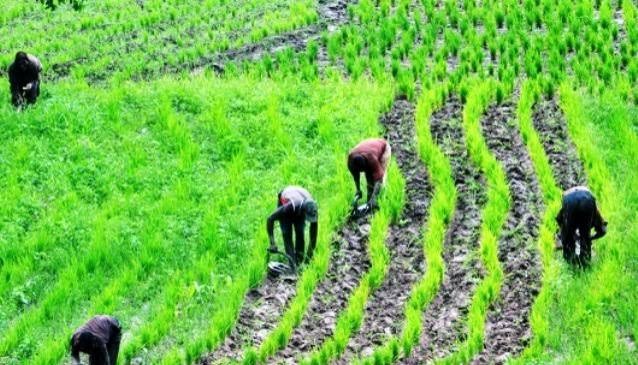
Among the factors impacting agriculture and food production in Nigeria, urbanization stands strong with its footprints felt in the economic, social, political, cultural and psychological lives of the people. One of the impacts of urbanization is the dwindling agrarian culture of the country. The massive exodus of people from rural to urban areas in search of better living conditions has caused many young individuals to develop apathy towards farming, a profession which hitherto has been the ancestral pride of most ethnic groups in the country.

Over the years, the failure of the Government to reach a lasting solution to the rural-urban development gap has led to more food crises in the country. More than 40 million smallholder farmers in the rural communities are increasingly marginalized and incapacitated to produce optimally due to rural-urban drift. According to a Statista report, in 2022, the extreme poverty rate in Africa stood at around 50 percent among the rural population compared to 10 percent in urban areas.

Despite its huge agricultural potential, Nigeria has one of the highest poverty index (more than 40 percent) and undernourished people in the world. In 2021, nearly 13 percent of the world’s population in extreme poverty, with the poverty threshold at 1.90 US Dollars a day lived in Nigeria and more than 80 percent of rural dwellers live within the poverty line.

According to the World Bank’s forecast in January 2021, an additional 10.9 million Nigerians is estimated to enter into the poverty line by 2022 due to the effect of the covid-19 pandemic. The vast opportunities in the agricultural landscape have remained largely untapped due to the underdevelopment of the rural regions where most farmers and farm settlements are concentrated.

One of the attendant effects of the scarcity of agricultural and social infrastructure in rural communities has been an increase in skill and technical deficiency among the local farmers which also culminates in culture lag in the agriculture and food sector. Culture lag is a situation where local farmers are unable to keep up with global agricultural practices at a pace needed to compete globally and address the local food needs. Thus, it should not come as a surprise that Nigeria loses about 7 billion US Dollars worth of agricultural produce yearly and spends 10 billion US Dollars annually on import to meet the local food shortfalls.

In order to position Nigeria to achieve sustainable development and drive continuous innovation for its food system, farmers and young agricultural entrepreneurs in the rural regions of the country need to be strengthened, integrated and transformed into highly skilled and competent individuals capable of producing optimally and competing favourably in the global agricultural ecosystem. This calls for more rural-intensive and inclusive agricultural programmes in the country.