DD
MM
YYYY

PAGES

DD
MM
YYYY

spot_img

PAGES

Home Blog Page 4983

The #calm wins more CEO roles

1

Be free, #boss your emotions. The #calm wins more CEO roles.


Besides your talent, a key attribute for success is the ability to manage emotions. TalentSmart research found that “ 90% of top performers are skilled at managing their emotions in times of stress in order to remain calm and in control.” Indeed, there are more “calm” successful people than otherwise.

I serve on company boards and provide private client advisory to owners of companies. When hiring CEOs, after all the typical evaluations, everyone looks for that “Calm Test”.

Here is the deal: you can only win your world after you have won your emotions. Under stress, what you’re not doing is as important as what you’re doing.  Some CEOs put on white lab coats before they sign consequential deals, as a way to condition emotions.  Until you can boss your emotions, you are not free!!

– Ndubuisi Ekekwe

“Blessed are the meek: For they shall inherit the Earth.” (Matthew 5:5)

A Despotic Judge on the Inibehe Effiong Matter?

0

What we are used to in Nigeria and other “developing” democratic governments around the world is the executive using their executive powers to unleash havoc on the citizenry or anybody that is found to be against the government. It is common in Nigeria for the Mr. president or the Mr. governor to arrest and detain an opposer of his government arbitrarily without following the due judicial procedures but not in this modern age could we ever imagine that a judge; a senior judicial officer, a custodian of the rules of the land, the last hope of the common man, the gatekeeper of rules and regulations of the country will use her judicial power to unleash horrendous mayhem on a lawyer or any other person over personal grievances. 

This is the attestation to the assertion of an old English historian, Lord Acton after studying humans and how they act when they are in a place of power and authority, he hissed and said; power tends to corrupt and absolute power corrupts absolutely.

Her Lordship has become a record breaker. She has smashed the record and set a new record that a judicial officer of her caliber has the power to prosecute and detain a lawyer because of mere disagreement.

This is nothing other than abuse of power and abuse of office, maybe drunk with her judicial power that she had no regard for the judicial procedure of trying a lawyer accused of contempt of court (if we are to even go by her accusations against the lawyer). 

She ordered his arrest and sentenced him to one month of committal in prison without obeying the constitutional and natural rule of fair hearing, giving the accused the chance to be heard. If that is not flaunting the laws that she as a judicial officer is meant to uphold then I don’t know what that is.
She secondly refused to make available the judgment of which she sentenced the lawyer, also breaching the constitutional rule of making judgment available for the accused so the accused can have what to appeal on.

She has been accused also of secretly varying her judgment as in recent days the lawyer was transferred from the previous prison he was sent to another prison of maximum security. 

She subjected a lawyer; a co-minister in the temple of justice, to be treated as a common criminal over a mere disagreement. 

The Nigerian Bar Association has applied diplomacy and even begged her Lordship to show mercy but it all fell on deaf ears. 

We can all assume that maybe her Lordship had had enough from the lawyer to have made her hardened her heart against the lawyer and every other diplomatic move from other interested parties including that of the NBA and some other senior lawyers but Whatever grievance her Lordship has against the lawyer or whatever point her Lordship wants to prove is it enough for her Lordship to sacrifice and sabotage her judicial career in her prime and rubbish the legacy she has built all her life over this. 

Everyone is watching and imagining what will happen next, what will be the fate of her Lordship as this case goes on.

Let’s all watch and pray!

Inibehe Effiong: A lawyer can be sent to prison by a judge for contempt

Africa Now Owns 70% Of The Global Mobile Money Market

2

With a rapidly expanding tech startup ecosystem, The African continent has consistently witnessed a significant increase in the number of startups in the region. As usual, Fintech startups continue to dominate in the region, as it accounted for nearly $3 billion or two-thirds of all the investment realized by startups across the continent in 2021.

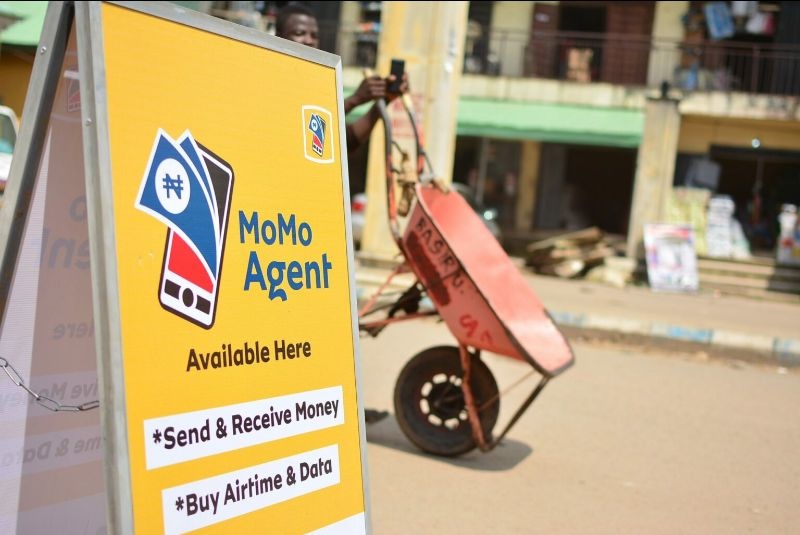
Due to the significant increase in the number of Fintech startups in the region, it has massively accelerated financial inclusion in sub-Saharan Africa. Africa currently owns 70% of the global mobile market. The mobile money industry remains one of the fastest-growing sectors of the African economy.

In 2021, the total value of mobile money transactions shot up by 39% to $701.4 billion. This effectively gives Africa a 70% stake in the global mobile money industry, which has now edged past the One-trillion-dollar valuation mark.

With some telecom companies moving into the Fintech space, such as; MTN, Airtel, and Safaricom, it has spiked the mobile money market in the African continent. It is interesting to note that the combined transaction value of the four leading mobile money platforms in Africa, the likes of MTN MoMo, Airtel Money, M-Pesa, and Orange money, have reached $50 billion per month.

MTN’s MoMo reportedly overtook Safaricom’s M-Pesa to become the largest mobile money service on the continent. MTN now has over 57 million mobile money users in Africa, surpassing Safaricom’s M-Pesa 52 million users as of March 2022.

The significant increase of mobile transactions in Africa, has been attributed to the high penetration of mobile smartphones in the region. The World Bank and African Development Bank (AFDB), estimated that there are about 650 million mobile phone users in Africa, with a population of over 1.3 billion people.

The region’s population has been projected to double by 2050, which will no doubt lead to an increase in smartphone penetration, which will help drive access to various financial products and services.

The mobile market in Africa has been projected to reach important milestones in the next five years, projecting a 50% subscribers penetration by 2025. Lately, there have been production of smartphones that are quite affordable, as it has enabled more citizens in sub-Saharan Africa to have access to technology.

This will no doubt have a ripple effect on the revenue and growth of Fintech companies, thereby increasing the size of their serviceable market.

Despite the fact that there are few constraints surrounding the financial inclusion of citizens in Africa, such as lack of access and digital illiteracy, there is still more room for improvement, as fintechs are making their platforms much more simpler and easy that even a market women can understand and know how to use.

It might interest you to know that Fintechs in Africa have only scratched the surface of Financial inclusion in the region, as there is a large percentage of people that are unbanked. There are high hopes that smartphone penetration in Africa remains bullish, and the revolution in the way Africans interact is much anticipated.

The IMF has also disclosed that Mobile money accounts have surpassed bank accounts in the African region. While access to traditional banking services remains almost a mirage for most Africans, the near-universal availability of mobile phones has allowed millions to access mobile money services.

Sub-Saharan Africa has been disclosed as the only region in the world where close to 10 percent of GDP in transactions occur through mobile money. This compares with just seven percent of GDP in Asia and less than two percent of GDP in other regions, as most African users now rely on mobile payments to send and receive money domestically.

The African region has now recorded about 4.8 billion transaction volume and an impressive $130 billion in transaction value. Sub-Saharan Africa gained 50 million mobile money accounts in 2019, raising the total number of registered accounts in the region to 469 million.

The enduring strength of Nigeria will depend on the values of its leaders – and the citizens

2

We have Obi, Tinubu and Atiku – pay attention to #values as you choose. The enduring strength of Nigeria will depend on the values of its leaders – and the citizens.


In the ancestral Akan kingdom (of Ghana), citizens were encouraged to follow leaders because of Values, not because of their personalities. They were told that whenever those Values shift, in ways they do not like,  they should disconnect their allegiance. 

When societies follow and elect leaders without preconditions, set on values, they fail and fade. Sankofa – a Twi word from that kingdom – makes it clear that looking back is vital for the current.

Personality cults have destroyed empires but values have built new empires. As Nigeria goes to the polls in 2023, ask yourself: who shares my values among the contestants? It is a vital question because besides competence, all enduring institutions are built on VALUES.

– Ndubuisi Ekekwe

Comment on LinkedIn Feed

Comment 1: This is spot on. Indeed ‘Sankofa’ re-echoes the need for us to go back in time and pick values shared in the past to reshape the present and future.

On the elections, there’re great expectations from the Nigerian youth. The youth constitute about 70 % of the Nigerian population with a median age of 18.1 years.

This makes them a formidable force and potential kingmakers ( decide the tides of the elections)

However, it remains unclear how tribalism, ageism and gerontocracy could deepen factions among the potential kingmakers.

Comment 1: Good point Nd. But in Nigeria most talk about values is all lie. People are not that deep in thinking to identify values. Some people don’t even know what their own values are. Here most follow bandwagon

My Response 2: Nigeria is a religious country and people actually know values. From villages where elders summon young men for doing despicable things in the community to churches and mosques, people know good and bad. You can argue that knowing what is good and doing it are different things. That is where leadership comes. If an accountant general can steal billions of Naira and get caught, he negotiates for a plea bargain with EFCC. If the state agrees and gives him maybe 18 months in prison, and while he is serving, he gets a presidential pardon, you shift many things.

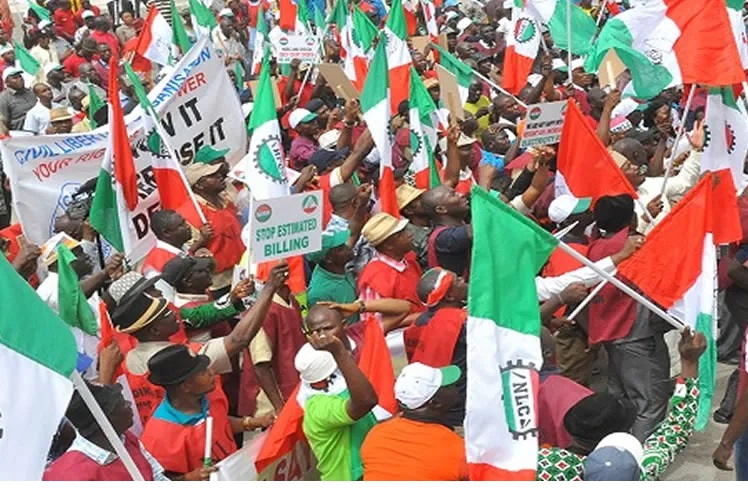
Economic Crunch: Nigerian Labour Congress Asks FG to Increase Salaries by 50%

0

As the Nigerian economic situation bites harder, workers are increasingly finding it hard to cope as salaries could no longer par with the cost of living.

Thus, the Nigerian Labour Congress (NLC) has recommended a 50 percent salary increase review across board to ameliorate the suffering.

In a letter dated August 8, addressed to President Muhammadu Buhari, the NLC said the current economic situation requires an upward review of salaries to enable workers to cope.

“While we commend you for your thoughtfulness for a wage increase, truth of the matter is that given the misfortune that has befallen the Nigerian populace, especially workers with fixed incomes, there is an urgent need for a massive intervention much deeper than the 22 percent,” the letter, signed by NLC President Ayuba Wabba, said.

“We would recommend a 50 percent salary review across the board given the realities on ground.”

The recommendation came on the heels of state governors’ prescription to peg retirement at 50 years.  The NLC had last week, lambasted the governors for expressing such an idea.

“We find this repugnant, shameful and utterly irresponsible. Aside from running contrary to your mission and principle of creating 100 million jobs (aside from poverty intervention schemes), this policy is a clear invitation to anarchy and damnation. Those promoting this idea should be treated as enemies of your government,” the union said in its letter to Buhari.

In a further argument, the NLC had said the implementation of the proposal will lead to the sacking of almost a quarter of the public sector workforce, the decapitation of that workforce through the retrenchment of its most experienced layer, and the intensification of poverty and misery among citizens.

“We find it necessary to reiterate our position here once again that any action or process or policy that will lead to the loss of jobs or incomes by workers will not only be inhumane and unconscionable, but shall be resisted by us,” it said.

In the proposal, the governors had urged President Muhammadu Buhari to begin the implementation of the updated Stephen Oronsaye Report, which recommended merger and shutdown of agencies and parastatals with duplicated or contested functions as a way to address bureaucratic inefficiency and reduce the cost of governance.

The union said that it considers as heartless the recommendation that the planned 22 percent salary increase for workers be put on hold, “given the massive devaluation of the naira leading to the pegging of the naira at 675 to the dollar at the parallel market, inflation rate at 18 percent, increased energy and sundry tariffs, combustive commodity prices and prohibitive cost of living which have wiped out every vestige of the value of their salaries.”

It further stated that at over N600 to a dollar, the minimum wage of N30, 000 amounts to no more than $42.8 for a family of four for 30 days.

However, the feasibility of salary increase by the federal government at this time of economic crisis has come under doubt. Many states across the federation are yet struggling to pay the newly implemented N30,000 minimum wage.

A survey published by BudgIT, a Nigerian civic tech organization, on Thursday, shows that 12 states across the federation have been unable to pay workers for months. According to the survey’s report, states like Abia, Adamawa, Ebonyi, Ondo and Taraba owe three years or less in arrears. Others are also caught owing six months or less.

In an interview with TheCable on May 1, Wabba identified Cross River, Zamfara, Taraba and Abia as states yet to implement the 30,000 monthly minimum wage. Even for the states that have implemented the minimum wage, honoring it has become a challenge.

A recent report noted that Borno State is paying teachers as low as N6,000 per month. The federal government has also been depending on loans to execute its recurrent expenditures.

With these realities, compounded by Nigeria’s revenue turmoil, the possibility of the federal government bending to the NLC’s demand for 50 percent workers’ salary increase, is said by economists to be practically unattainable.