DD
MM
YYYY

PAGES

DD
MM
YYYY

spot_img

PAGES

Home Blog Page 4986

Ghana Raises Interest Rate to 22% As Cedi is Ranked Worst Performing Currency in The World

0

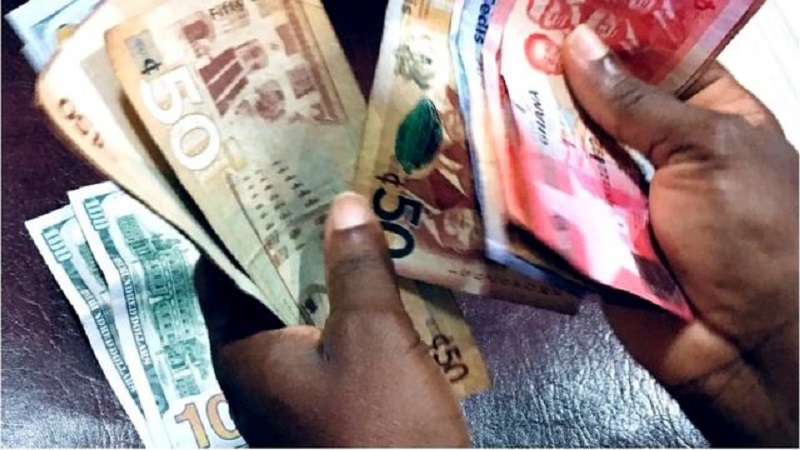
Ghana’s currency Cedi has continued on its downward trajectory that degenerated following the outbreak of Russia-Ukraine war.

Bloomberg reported Wednesday that the Cedi recorded its worst decline in three years, making it the worst-performing currency in the world after Sri Lanka’s rupee.

According to the report which is based on Bloomberg currency performance ranking, the Cedi dropped 1.1% on Wednesday, stretching its decline for the week to 5.2%, which marks the currency’s worst fall since March 29, 2019.

The cedi has been struggling to measure up to other currencies since the outbreak of covid. The Central Bank of Ghana said the cedi began the year at $1.00 to GH¢6.02, but has fallen to an average of GH¢9.37 to $1.00, meaning it has lost GH¢3.30 of its value to the dollar in less than 8 months.

Ghana’s central bank has been tightening its monetary policies to tame the tide. The measures taken by the central bank include pushing interest rates up as inflation rises.

As of July, Ghana’s headline inflation rate stood at 31.7%, more than 2% increase from the 29.8% it recorded in the previous month. This was driven by both food and nonfood price pressures. The monetary policies have failed to yield the needed result as the country’s currency continues to spiral downwards.

Against this backdrop, the central bank held an emergency Monetary Policy Meeting (MPC) on Wednesday where it agreed that the interest rate would be further raised.

“Under the circumstances, and considering the risks to the inflation outlook, the Committee decided on a 300 basis points increase in the Monetary Policy Rate to 22 percent,” the Bank of Ghana said at the end of the MPC.

The new adjustment on interest rate is expected to help in cushioning rising inflation, which has impacted the execution of the country’s 2022 budget.

“Revenue has not kept pace with projections and created financing challenges. In the absence of access to the international capital market and given the constrained domestic financing, central bank overdraft has helped to close the financing gap as reflected in the mid-year budget review. The Bank of Ghana is working with the Ministry of Finance to agree on a cap on the overdraft,” the bank said.

The MPC noted that whilst addressing the immediate financing problems, ongoing policy discussions with the IMF are expected to address the underlying macroeconomic challenges, restore fiscal and debt sustainability, and provide a sustainable balance of payments cushion.

To boost the supply of foreign exchange to the economy, the Bank of Ghana is working collaboratively with the mining firms, international oil companies, and their bankers to purchase all foreign exchange arising from the voluntary repatriation of export proceeds from mining, and oil and gas companies. This will strengthen the central bank’s foreign exchange auctions,” the bank said.

How to set up a Licensed Moneylending Business in Nigeria

0
Two african young women sitting in a car while have road travel

In my previous article (Available Fintech licenses in Nigeria), i briefly spoke about the business of Moneylending and some of its basic requirements.  

What this article will thus be aiming for is to go in-depth by dealing in detail with the topics of:- 

– What the Legal definition of a Moneylender is. 

– The Regulatory Framework governing the business of Moneylending in Nigeria. 

– The licensing requirements for Moneylending in Nigeria(with a focus on Lagos & Abuja). 

– What activities can be engaged in /cannot be engaged in by Moneylending businesses. 

What is the Legal definition of a Moneylender in Nigeria? 

A Moneylender is defined as a business engaged in cash loans in exchange for a bigger repayment sum consisting of the principal loan sum and accrued interest. 

Some laws in Nigeria such as the Moneylenders Law of Lagos State define a Moneylender as an individual who lends money at interest or even anyone who lends cash in consideration of a larger repayment sum being repaid until the contrary is actually proven. 

What is the Regulatory Framework governing the business of Moneylending in Nigeria? 

Moneylending as a business is governed by State Governments through their respective Moneylending Laws in collaboration with the Magistrate Courts of a state. 

What is the effect of operating as an unlicenced Moneylender? 

Apart from possibly committing an offence, an unlicenced Moneylender cannot exercise a right in Court or anywhere else legally for the repayment of Principal loan sums and accrued interests from borrowers in default of their loan obligations. 

Can Moneylenders operate Nationwide? 

No, they cannot as Moneylending is licensed by State governments, so anyone seeking to operate nationwide will have to register as a Moneylender in each state where it intends to operate or secure a Finance company license from the Central Bank of Nigeria. 

Can a Digital Moneylender operate nationwide? 

Technically, yes. This is because digital transactions are borderless and can be construed legally as taking place in the state where the digital company is based physically. However, it is advisable that a Fintech company seeking to render digital lending services Nationwide enters into a Technical partnership or Joint Venture or Service level agreement with either a Finance Company or National Microfinance Bank. 

Are Moneylending licenses renewable? 

Yes, Moneylending licenses are annually renewable. 

Can individuals operate as licensed Moneylenders in Lagos State? 

No, anybody seeking a Moneylending license in Lagos will have to do so as a Registered Company or a company in the process of being registered. 

Are all lending businesses described as Moneylenders under the Moneylending Laws of states in Nigeria? 

No, exceptions do exist. The definition of a Moneylender under the Moneylending Law of Lagos State for example, bars the following from being regarded as Moneylenders :- 

– Cooperative Societies. 

– Any Statutory corporation empowered by Law to lend money. 

– Pawnbrokers. 

– Banks or other licensed Financial/Lending Institutions. 

What is the procedure for obtaining a Moneylending license in Lagos and Abuja? 

LAGOS  

The procedure for obtaining a Moneylending license in Lagos State is as follows:- 

– instruct your lawyer to make a formal application for a police clearance report to the state Commissioner of Police along with an attached copy of the company’s Certificate of Incorporation, the company’s MEMART (Memorandum & Articles of Association) and other required CAC forms (especially the CAC forms for the particulars of directors and shareholders); 

– securing the thumbprints of the director’s of the company for the purpose of issuing a Police clearance report; 

– get your lawyer to make another application for the Magistrate Court in the district where the business is located for a Magistrate’s Ordinance Form B & C, which will be forwarded to the Ministry of Home Affairs confirming due compliance on the part of the license applicant and recommending the issuance of the Moneylending license; 

– get your lawyer to make yet another formal application to the Ministry of Home Affairs for a Moneylending license; 

– pay the required fees for the license grant to the Lagos State Government(the receipts should be attached to the application to the Ministry of Home Affairs); 

– upon the consideration of the application and other submitted supporting documents, a physical inspection of the Moneylending company’s offices by officials from the Ministry of Home Affairs will be carried along with an inspection of the company’s books where the business has already started the business of Moneylending. 

– a formal grant of the Moneylending license. 

ABUJA  

– secure through your lawyer a Police character clearance for the direcrors of the company; 

– get your lawyer to prepare an application for a Moneylending license to be submitted to a Chief Magistrate’s Court; 

– attach to this application all relevant CAC(Corporate Affairs Commission) documents; 

– attach also a general form affidavit that the company is not in debt alone with Tax clearance certificates of the directors and the company; 

– the Court in Abuja is also responsible for the issuance of Moneylending licenses and in Abuja, physical office inspections are not required. 

It should be noted that these requirements and procedures are subject to change by the relevant Regulatory Agencies. 

What is the procedure for Moneylending license renewal? 

To renew a Moneylending license (in this case in Lagos), you need to submit the following:- 

– a license renewal application by your lawyer; 

– a Moneylender’s Ordinance (Form B) & duly completed Form C from the Magistrate Court; 

– The previous license issued to the Moneylender; 

– evidence of payment of the Moneylending license renewal fee; 

– an updated Tax clearance certificate of the company; 

– a revisitation & physical inspection of the Moneylending company’s office by officials of the Ministry of Home Affairs. 

How long does it take to process an application for a Moneylending license? 

It takes an average period of 8 weeks (2 months) to process a Moneylending license application. 

Can i commence Moneylending activities while my license application is being processed? 

Yes you can, as long as you have registered a Moneylending company under the Corporate Affairs Commission and you diligently follow-up and complete your license application and attend to any queries that might be issued by the relevant Regulatory agency. 

What are the minimum capital and license fee requirements for Moneylending companies? 

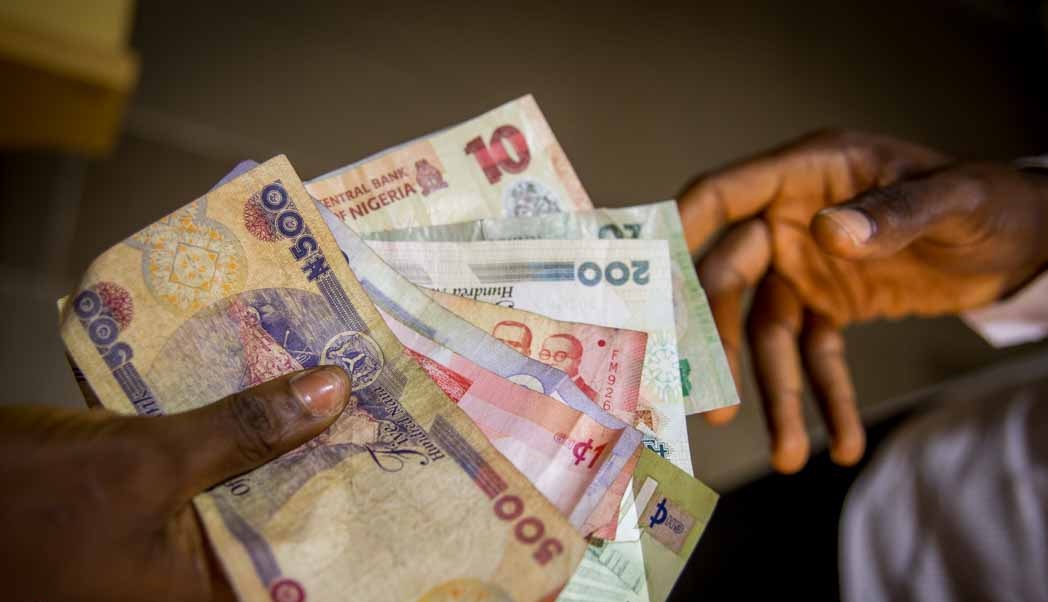
Moneylending companies seeking to be registered with the Corporate Affairs Commission must have a minimum share capital of 20 Million Naira. Please note that this amount is not to be paid to the Corporate Affairs Commission or Ministry of Home Affairs or Magistrate but is simply a statement that the Moneylending company has a share capital of that amount that shall be proved by paying a filing fee of around 10 Thousand Naira for every 1 Million Naira of the company’s share capital statement minus stamp duties which will amount to about 300 Thousand Naira in Incorporation costs minus Legal fees. 

In Lagos, Moneylending license applicants will then be required to pay to the Ministry of Home Affairs an license application fee of 25 Thousand Naira and a License registration fee of 200 Thousand Naira along with an annual renewal fee of 100 thousand Naira  

Conclusion :- It is hoped that a clearer understanding of the Regulatory Framework governing the licensing and operation of Moneylending businesses has been acquired by the above write-up even though it is not exhaustive and does not cover the licensing requirements in other states of Nigeria apart from Lagos and Abuja. It is thus necessary to further consult your lawyer further if you’re seriously interested in delving into this type of business. 

Beyond Fintech in Africa – Submit Your Pitch Deck to Tekedia Capital

0

Innovators: in our amazing Africa, we need to look for other frictions besides fintech. Tekedia Capital sector mapping shows that  in pitch decks /business plans we receive monthly, more than 80% are on fintech and broad finance.  The irony is that fintech cannot live on itself without other sectors. We do hope young people are open to solve problems in other sectors. Yes, fintech/finance is great but we need to share the visions to other sectors.

At Tekedia Capital, we make friends with innovators and builders. And if we fund you, we also give you $25,000 Amazon AWS credit (no one gives that much in Nigeria or Africa. Amazon likes us because we always discover great companies). Learn how to submit a pitch deck to Tekedia Capital here 

Liberate the mind via new knowledge at Tekedia Mini-MBA; Begins Sept 12

0
Two african young women sitting in a car while have road travel

When was the last time you had a liberation through knowledge? In the last year of primary school, we read a small version of Things Fall Apart by Chinua Achebe. Our teacher, Mr. Chigbu, said if you want to know the full story, you have to register for common entrance to secondary school. Most registered because we wanted to know what happened next to …Ikemefuna, etc.

Quickly, we read African Writers Series #1 and knew what happened. Then in secondary school, in JS2, I read a remarkable novel: Bertha M Clay’s “Beyond Pardon”. Lionel,  Eleanor, Countess Vivian of Lynn – call it the finest novel of all time in its class. I followed that with “A Woman’s Temptation”, another masterpiece by the same author.

Where am I going? Until you bring new knowledge, you will not appreciate the extent of your ignorance. Experience new knowledge with us on markets, from Sept 12. Register here.

Trapped Fund: Emirates Suspends Flights Operation to Nigeria

1
Two african young women sitting in a car while have road travel

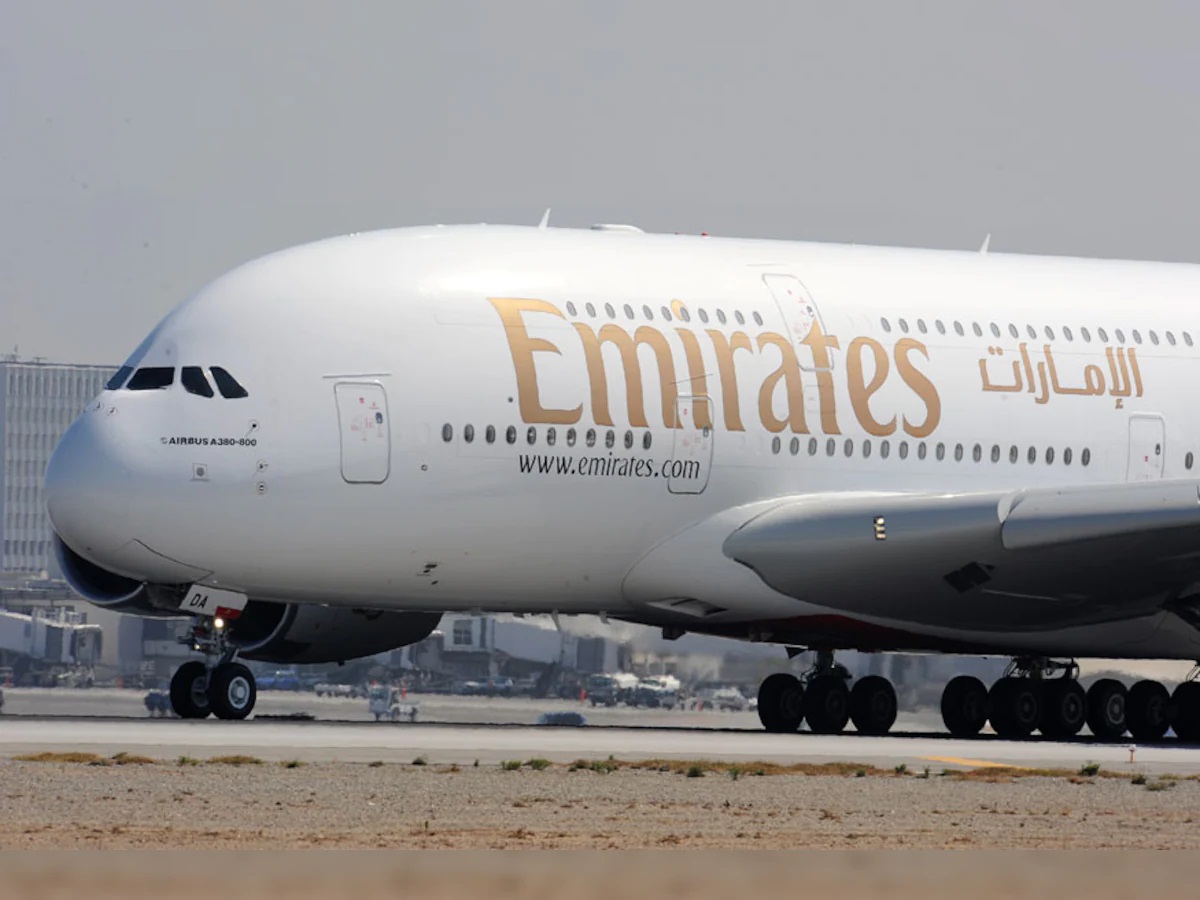
Emirates Airline announced Thursday that it has suspended operation in Nigeria, more than a month after it made public its struggles to repatriate $85 million trapped fund.

A statement issued by the airline said its inability to repatriate the fund has forced it to take the regrettable action.

“Emirates has tried every avenue to address our ongoing challenges in repatriating funds from Nigeria and have made considerable efforts to initiate dialogue with the relevant authorities for their urgent intervention to help find a viable solution. Regrettable there has been no progress,” Emirates said in a statement.

Last month, the United Arab Emirates (UAE)-based company made what seems to be a final push to get Nigerian authorities to find a solution to the problem – it set August 15 deadline to reduce its flights from Dubai to Lagos from 11 per week to 7 per week. However, Emirates said there has been no progress in reaching Nigerian authorities for a solution.

In response to the development, Nigeria’s aviation ministry says it is “working hard” to release trapped funds.

Aviation Minister Hadi Sirika told CNN that it is not the first time Nigeria was withholding funds belonging to foreign airlines but there are efforts to see that the funds are released.

“In the past, Nigeria has demonstrated the capacity and the willingness and fairness to resolve this type of issue. It happened when we took over power in 2015: There were lots of blocked funds, about $600 million at that time. It was at a time when the country was in a recession and there were dwindling revenues coming to the country, yet we honored our obligation to pay out all those blocked funds,” he said.

“Unfortunately, due to many factors and reasons, the monies piled back up. Government is working hard to ensure that these monies are released, not only for Emirates but all airlines affected,” Sirika further said, adding that “mechanisms will be put in place to ensure that this does not occur in the future.”

Emirates $85 million, which has been rising by over $10 million monthly according to a letter the company sent to Sirika, is part of the $450 million belonging to foreign airlines that has been trapped in Nigeria for long.

The International Air Transport Association (IATA) said in June that efforts to repatriate the fund for its affected members have been futile. IATA’s Vice President for Africa and the Middle East, Kamal Al Awadhi, had described talks with Nigerian officials to release the funds as a “hectic ride”.

The difficulty in repatriating the fund has been attributed to the overwhelming shortage of foreign exchange in Nigeria. Africa’s largest economy has been grappling with the effects, which have seen its currency, the naira, freefalling against the dollar.

There is concern that the situation is going to further hurt the Nigeria’s aviation sector that is currently reeling on the mercy of high cost aviation fuel which has made airline fares largely unaffordable. There is also concern that more airlines, whose funds are also being held, will tow the path of Emirates.

Al Awadhi said “this is going to damage the country down the road.”