Group Registrants/Corporate members, just to note that a new scheduling batch has been released for Tekedia Growth Hour. I hope to welcome everyone in your team; bring your CEOs, and leaders, in your firm. Let’s discuss the mechanics of business.
During Tekedia Mini-MBA, we schedule Tekedia Growth Hour with groups and corporate participants attending our program. We use the opportunity to discuss, at more specific levels, how some of the frameworks and business models we have studied could be applied in the companies. We do batch this throughout the program. I personally coordinate that via Zoom.
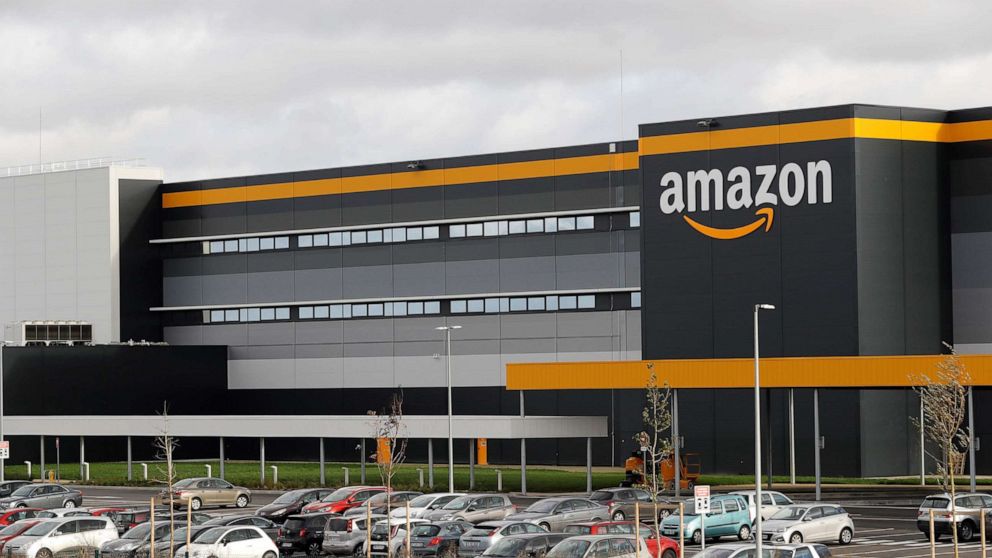
American multinational technology company, Amazon, saw its shares rise to 10% on Friday a day after the company posted stronger than expected second-quarter revenue.
Amazon sales increased 7% to $121.2 billion in the second quarter which surpassed Wall Street’s estimation of $119.3 billion, and above the high end of the company’s guidance range of $116 billion to $121 million.
This represented Amazon’s third straight quarter of single-digit annual revenue growth. The company’s third-quarter forecast suggested sales growth could re-accelerate, to between 13% and 17%. Amazon revealed its project revenue this quarter of $125 billion to $130 billion, while analysts were expecting a sales forecast of $126.4 billion.
Advertising which is a growing business for Amazon also experienced strong gains. Revenue in the segment rose to $8.76 billion, 18% higher than the previous year.
Despite the fact that this period was described as a gloomy period for tech companies, which saw a large number of them slow down their hiring process and also laying-off some staff, Amazon beat the expectations of analysts, as the company still thrived despite all odds.
Amazon did pretty well through the second quarter despite tough macro conditions. The company provided investors with very clean 2Q earnings, in the midst of extreme macro-related earnings volatility across the tech sector.
The firm provides the resilience of its business resulting from its optionally and the continuing strength of its cloud business services which brought in $5.7 billion for the company. Its digital advertising business also continued to grow up to 18%.
The rise in Amazon shares earned them a cheer from Wall Street, with one analyst calling the E-commerce giant “a port in the Macro storm”, as it so far appears to be weathering many of the headwinds challenging its tech peers.
Several analysts revealed that the positive results Amazon witnessed in their shares, signifies that the company is making progress on cost headwinds that have pressured the company in recent times. Amazon has been described by analysts as being well positioned for a strong revenue growth narrative in the second half of the year.
Amazon’s CEO Andy Jassy disclosed that despite continued inflationary pressures in fuel, energy, and transportation cost, they are making progress on the more controllable costs the company referenced last quarter, particularly improving the productivity of their fulfillment network.
it is interesting to note that Amazon provided its investors with very clean 2nd quarter earnings, in the midst of extreme macro-related earnings volatility across the tech sector. The firm has maintained a buy rating on its shares but has recently upped its price target to $175 from $155.
This rise in shares will no doubt give the Oracle of Omaha, Warren Buffet a feeling of ecstasy who has great love for the company and continues to invest heavily. One factor that has been disclosed to undoubtedly attract Buffet’s attention to the company is the firm’s impressive and sustained revenue growth.
Over the last decade, Amazon has kept a good track record of revenue growth with its overall revenue increasing from $61 billion in 2012 to more than $470 billion in 2021.
The courseware for the week, starting August 1, is live in the Board. The following faculty members will lead the live sessions. Dr Anya is an eminent HCD researcher with experiences in IBM and Google. Dr. Ezeocha, a roommate in FUTO, understands how to lead and manage teams to execute complex projects. Dr Ekekwe is a village boy from Ovim Abia State (!); he shares how to blitzscale growth.
Tue, Aug 2 – Human Centered-Design – Dr. Obinna Anya, Google
Thur, Aug 4 – Leading and Managing Teams- Dr. Chisom Ezeocha, Shell
Sat, Aug 6 – The Blitzscaling Pursuit of Growth – Dr. Ndubuisi Ekekwe, Harvard Business Review
If you are yet to experience the world-class quality of Tekedia Institute Mini-MBA, click here for the next edition which begins on Sept 12
The continent of Africa is rich in resources. The continent is advancing in a number of industries thanks to the wise use of resources where systems are permitted to function. However, in countries like Nigeria, Algeria, Libya, and Angola, where large amounts of crude oil are produced daily, there are problems and obstacles that prohibit players from reaping the full benefits of the resource.
Over the years, the governments of African oil and gas producing countries have developed policies and launched programs aimed at minimizing and eliminating supply and demand risks. Knowing the volume of liters moved from the point of production is not difficult in nations such as Nigeria. However, establishing the real volume of liters delivered to ultimate intermediaries and consumers has proven difficult over the years.
The Nigerian government has struggled recently to implement a fuel subsidy programme that benefits the intended population. This has been based in large part on dishonest business practices throughout the supply chain. Nigeria has seen and is still seeing instances where firms licensed to import refined crude oil provided consumers in the downstream sector with less than what the government had requested after receiving payment that corresponded to the number of liters the government had required.
However, statistics on the number of liters diverted to other countries before entering Nigeria and within the country are erroneous. Various figures have been provided by professionals and public affairs analysts. According to a recent market research report, “Nigeria loses N2 billion daily due to the smuggling of petrol from Nigeria to the bordering countries, like Benin, Niger, and Cameroon.”
Players in the downstream sector have also developed a variety of approaches to completely eradicate financial impropriety among employees. Owners of thousands of filling stations in Nigeria lose a significant portion of their income due to various strategies utilized by their staff, from station attendants to managers. The practice of attendants tampering with meters and the Point of Sale (POS) to prevent customers from paying into the station’s account(s) is not new. It is also nothing unusual for employees to band together to defraud business owners of their profits.
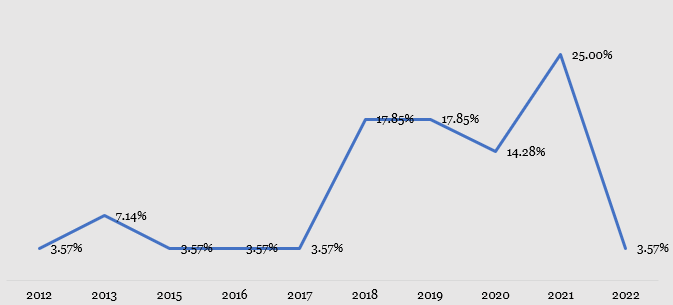
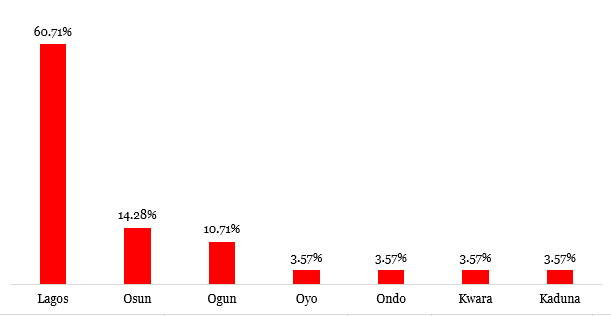
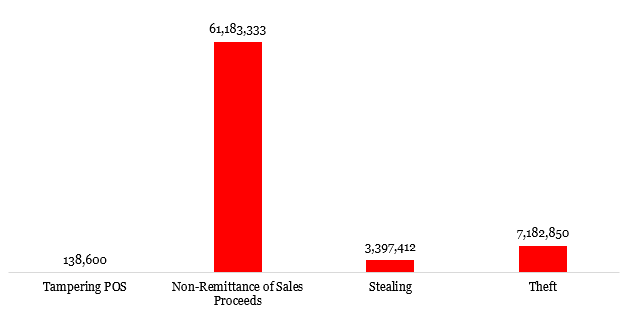
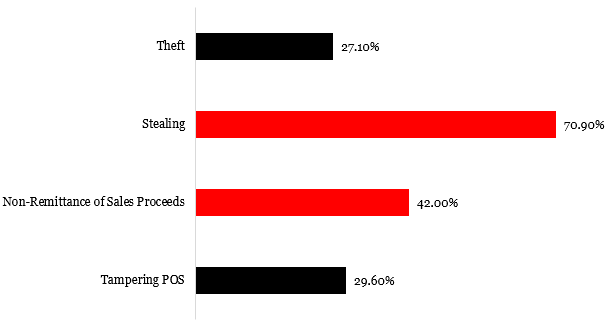
Our examination of 28 fraud incidents at various filling stations between 2012 and 2022 suggests that attendants and station managers were responsible for the majority of the fraudulent financial operations. On average, over N10 million was taken from sales revenues and/or no sales money was remitted to the stations’ accounts (s). Apart from stealing, some of the investigated cases also contained theft as the primary type of fraud at different filling stations. Theft was primarily committed in Lagos State, according to our data.
Exhibit 1: Fraud Trends at Nigerian Filling Stations
Based on the emerging findings, our analyst believes that some of them must have been considered by First Atlantic Semiconductors and Microelectronics (FASMICRO) while building its tracking system device for the industry, particularly for downstream participants. In this sense, our analyst considers the product to be a game changer in the industry, not just in Nigeria but also in other African countries.
Our analyst notes that Fasmicro’s solution debuted at a time when industry participants and customers were eager to learn about real-world applications of artificial intelligence and the Internet of Things. The system is designed to make it possible to track fuel volume effectively, identify truck locations and compare volume sales to the actual amount remitted by station managers and operators.
“With our technology, when that truck loads in the depot, and moves across your locations, to drop petrol, via your smartphone, you can see the path, the volume, where the next stop is programmed to be, and more. We’re bringing uncommon transparency in Nigeria’s downstream oil and gas sector. We do not just track trucks; we also track the liquid content,” Professor Ndubuisi Ekekwe, founder of the company, said in his recent posts.
From the government to the downstream stakeholders, it is evident that the device is critical in combating numerous systemic frauds. The device is expected to cut the amount lost to smuggling and diversion of imported gasoline based on the subsidy program in half. Station owners stand to benefit tremendously from the technology’s real-time data via its dashboard. This, if implemented correctly, would decrease the issue of non-remittance of sales revenue immediately after the conclusion of business every day. In our experience, attendants and managers commit theft since sales revenue stays longer in their personal accounts than planned. As a result, many see it as an opportunity to spend money for personal objectives, particularly investing in businesses that promise quick profits.
“If I won collect money I Dey collect better money no be small change I Dey collect. IG sef know. My former commander even tell me say if I won collect bribe make I collect big money so that I fit share with am from inside. I no Dey hide am”.
These words are from a police officer, Inspector Richard Gele (dismissed now) while he was extorting money from road users.
Bribery and corruption in the Nigerian police force have gotten to the extent that a policeman can openly boast that he does not collect “change” or small amounts from motorists if he wants to extort them. He claims he always makes sure he collects a huge amount from motorists so that after splitting it with other officers on duty he will have some reasonable amount left for him.
Nigerians keep complaining about police brutality, police extortion, bribery, and corruption amongst other ill vices amongst the Nigerian police force but it seems like the Nigerian police force is rooted deep down in evil.
This as shocking as it appears is not even a fairy tale, it happened, it’s happening and it happens on daily bases. This policeman by the name; Inspector Richard Gele was just unfortunate that he was caught on camera making this boast with so much impunity and arrogance while extorting and harassing his victims.
Every day we read stories and witness by ourselves how police officers manning different checkpoints end up extorting and harassing motorists at gunpoint for no just cause. Police officers are placed along highways and some strategic locations for the safety and security of motorists and road users but the police officers would rather abandon their duty of provision of security to be tasking and extorting road users.
For the record, a police officer or whomsoever has no authority to collect a dime from anybody or ask anybody for a dime. Any police officer that asks you for money is a criminal or better still, an armed robber. That money he collected is a bribe and you, the giver of the money, is also a party to bribery and you are an enabler of corruption.
Motorists should start standing their ground and learn to start saying no whenever a police officer asks for money from them. If you as a motorist wants to encourage a police officer by giving that officer a gift; a monetary gift or in kind, let it be that you are doing that out of your own free will and volition and not because that police officer held you at gunpoint that is you don’t “Roger” you won’t leave.
It is so pathetic that it has gotten to the level that if you are traveling by road you will see drivers splitting money into smaller currencies that they will be sharing along the road with police officers. I quizzed one of the drivers one time as to why they must share money amongst officers at every checkpoint along the road and he said if any driver dare not drop money for the police officers, the police officers won’t let that vehicle drive past that checkpoint or they will end up delaying you.
It’s more like a norm now in Nigeria that if you are traveling by road you must have money for police officers, if you don’t give them money they will detain you. The police service commission and the Inspector General of police really need to wake up and do a thorough work of purging the Nigeria police force of the crooks and the bad eggs before they drag the whole force into the gutter!