DD
MM
YYYY

PAGES

DD
MM
YYYY

spot_img

PAGES

Home Blog Page 5

US Trade Court Rules Against President Trump’s Proposed 10% Global Tariffs

0

The decision by a United States trade court to rule against President Donald Trump’s proposed 10% global tariffs marks a significant moment in the ongoing debate over protectionism, executive authority, and the future of international trade.

The ruling not only challenges a core element of Trump’s economic philosophy but also signals the limits of unilateral trade action in an interconnected global economy. At the center of the controversy is the tension between safeguarding domestic industries and maintaining the stability of global commerce.

Trump’s tariff strategy has long been rooted in the belief that the United States has been disadvantaged by globalization and unfair trade practices. During his presidency, he imposed tariffs on hundreds of billions of dollars’ worth of imports, particularly targeting China, while also threatening broader duties on allies and trading partners.

His proposed 10% universal tariff on all imports was presented as a tool to revive American manufacturing, reduce trade deficits, and pressure foreign nations into more favorable trade agreements. Supporters argued that such measures would encourage companies to produce goods domestically and create jobs for American workers.

However, critics viewed the proposal as economically risky and legally questionable. Economists warned that blanket tariffs would likely increase prices for consumers, disrupt supply chains, and provoke retaliatory measures from other countries. Businesses that rely on imported materials feared rising production costs, while exporters worried that foreign governments would respond with tariffs of their own.

In many ways, the proposal revived fears of trade wars reminiscent of earlier periods in global economic history when protectionism deepened financial instability rather than solving it. The trade court’s ruling against the tariffs therefore represents more than a technical legal decision. It reflects broader concerns about the concentration of trade powers within the executive branch.

The court reportedly determined that the legal basis for imposing such sweeping tariffs was insufficient under existing trade laws. This ruling underscores the principle that even a president cannot impose broad economic restrictions without clear statutory authority or adherence to established procedures.

The decision also highlights the evolving role of the judiciary in trade policy. Traditionally, trade matters have often been dominated by the executive branch due to their connection with foreign policy and national security. Yet courts increasingly face the challenge of balancing presidential discretion with constitutional checks and balances.

By ruling against the tariffs, the court reaffirmed that trade policy cannot be conducted entirely through executive declarations without legal scrutiny. Economically, the ruling may bring relief to businesses and investors concerned about renewed global trade tensions. Financial markets generally prefer predictability, and broad tariffs often create uncertainty across industries ranging from technology and manufacturing to agriculture and retail.

Many American companies have become deeply integrated into global supply chains, relying on components and raw materials from multiple countries. A universal tariff would likely have increased costs across the board, contributing to inflationary pressures at a time when many economies are still dealing with post-pandemic recovery challenges.

Internationally, the ruling may also reassure U.S. allies and trading partners. Trump’s aggressive tariff policies frequently strained relationships with countries that were otherwise close economic and strategic partners of the United States. Nations in Europe, Asia, and North America criticized the idea of universal tariffs as disruptive to the rules-based trading system established after World War II.

The court’s intervention may therefore be interpreted globally as evidence that American institutions can still act as a restraint on abrupt policy shifts.

Politically, the ruling is likely to deepen divisions over economic nationalism and globalization. Trump and his supporters continue to argue that traditional free trade policies weakened American industry and hollowed out manufacturing communities. They may portray the court’s decision as an example of institutional resistance to policies designed to prioritize American workers.

Opponents, meanwhile, will see the ruling as a victory for economic stability, legal process, and international cooperation. The trade court’s rejection of Trump’s proposed 10% global tariffs represents a defining moment in America’s ongoing struggle to balance national economic interests with global integration. The decision reinforces the importance of legal constraints, economic caution, and institutional oversight in trade policy.

While debates over globalization and domestic manufacturing are unlikely to disappear, the ruling demonstrates that sweeping protectionist measures face significant legal and economic obstacles in the modern era.

Coinbase Experienced Outages after an Amazon Web Services Data Data Centre Overheated

0

The modern financial system increasingly depends on digital infrastructure, and nowhere is this more visible than in the cryptocurrency industry. That dependence was highlighted dramatically when cryptocurrency exchange Coinbase reportedly experienced outages after an Amazon Web Services (AWS) data center in Virginia overheated.

The incident sparked widespread concern among traders, investors, and technology analysts, revealing how vulnerable even the largest digital asset platforms can be to infrastructure failures beneath the surface of the internet economy.

Coinbase, one of the world’s largest cryptocurrency exchanges, processes billions of dollars in trading activity and serves millions of users globally. For many retail and institutional investors, the platform represents a gateway into Bitcoin, Ethereum, stablecoins, and a growing range of blockchain-based financial products.

Because of this central role, any interruption to its services can create immediate market anxiety, particularly during periods of volatility when traders need uninterrupted access to their funds and positions. The reported outage was linked to overheating issues at an AWS data center in Virginia, one of the most important cloud-computing regions in the world.

AWS powers a massive share of the modern internet, providing infrastructure for streaming platforms, financial institutions, social media applications, and enterprise software. Many crypto exchanges and blockchain companies rely heavily on AWS because of its scalability, security tools, and global infrastructure footprint. However, the event demonstrated a critical weakness in the digital economy: concentration risk.

When a major cloud provider experiences technical problems, the consequences ripple outward across multiple industries simultaneously. In this case, Coinbase users reportedly faced login issues, delayed transactions, and interruptions in trading functionality. For crypto traders, even a few minutes of downtime can translate into significant financial losses.

Cryptocurrency markets operate twenty-four hours a day, unlike traditional stock exchanges, meaning there is no closing bell or maintenance window to shield platforms from real-time pressure. The incident also reignited debate about decentralization within the cryptocurrency industry. Blockchain technology was originally promoted as an alternative to centralized financial systems, yet many crypto businesses remain deeply dependent on centralized infrastructure providers such as AWS.

Critics argue that while cryptocurrencies themselves may be decentralized at the protocol level, the surrounding ecosystem—including exchanges, custody providers, and cloud-hosting services—often relies on a small number of corporate entities. This contradiction has become increasingly difficult to ignore. If a single overheating issue in one geographic region can disrupt access to a major crypto exchange, it raises questions about the resilience of the broader ecosystem.

Investors may begin to ask whether crypto platforms should diversify their cloud infrastructure across multiple providers or develop more distributed architectures to reduce operational risk.

At the same time, the outage highlights the growing challenge of maintaining massive data centers in an era of rising computational demand. Artificial intelligence, cloud computing, streaming services, and crypto trading all require enormous processing power and cooling systems.

Data centers generate tremendous heat, and even small failures in cooling infrastructure can trigger cascading technical problems. As digital activity expands globally, infrastructure reliability is becoming just as important as software innovation.

The event serves as both a warning and a learning opportunity. Users increasingly expect institutional-grade reliability from crypto platforms, especially as digital assets become more integrated into mainstream finance. Any disruption can damage trust, encourage users to seek alternatives, and attract regulatory scrutiny.

The Coinbase outage illustrates a broader reality of the digital age: the future of finance may run on blockchain technology, but it still depends heavily on the physical infrastructure of servers, electricity, cooling systems, and cloud networks. As crypto adoption accelerates, ensuring the resilience of that infrastructure will become one of the industry’s most important challenges.

Dollar Heads for Weekly Decline as Markets Bet Middle East War May Avoid Wider Economic Shock

0

The U.S. dollar weakened on Friday and moved toward a second consecutive weekly loss as investors cautiously increased bets that the war between the United States and Iran may not spiral into a broader regional economic crisis, even as sporadic hostilities continued across the Gulf.

Currency markets stabilized after President Donald Trump insisted the ceasefire framework with Iran remained intact following renewed exchanges of fire and drone attacks involving Gulf targets, including the United Arab Emirates.

While tensions remain elevated, traders increasingly appear to believe both Washington and Tehran are trying to avoid a full collapse of diplomatic efforts, particularly amid reports that indirect negotiations are continuing ahead of a closely watched Trump-Xi summit scheduled for May 14-15.

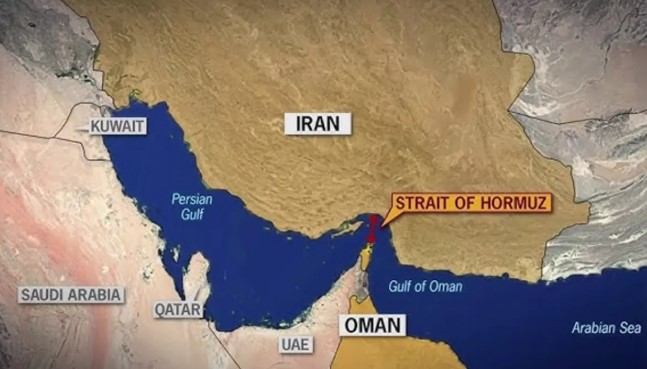
The softer tone in currency markets marked a notable reversal from the panic-driven surge into the dollar seen immediately after the Iran war erupted on February 28 and Tehran effectively tightened control over the Strait of Hormuz, one of the world’s most strategically important oil chokepoints.

At the height of those fears, investors rushed into traditional safe-haven assets while aggressively selling currencies tied to oil-importing economies such as Japan and parts of Europe.

Now, analysts say markets are recalibrating.

The dollar index, which measures the U.S. currency against major peers, fell 0.28% to 97.96 on Friday and remained close to its weakest levels since before the war began. The index is on track for a weekly decline after already falling the previous week, signaling that the initial geopolitical premium built into the dollar may be fading.

Francesco Pesole, foreign-exchange strategist at ING, said investors are increasingly focusing on whether major powers, particularly China, can pressure both sides toward de-escalation.

“The hope for risk bulls is still that China is adding pressure on the U.S. to reach some kind of deal in the Gulf before the May Trump-Xi summit,” Pesole said.

Currency strategists say the market’s behavior highlights a broader shift in sentiment across global finance, where investors are starting to treat geopolitical flare-ups as temporary disruptions unless they trigger lasting damage to energy flows, corporate earnings, or economic growth.

That shift has also been visible in equities, where technology stocks and AI-related companies have continued rallying even as military tensions persisted in the Gulf.

Analysts noted that positioning in the dollar has largely normalized after the sharp defensive buildup seen during the early phase of the conflict. Oil prices, while still elevated historically, have also pulled back from recent highs above $125 per barrel, easing fears of an immediate global energy shock.

Still, markets remain fragile.

The ceasefire has been punctuated by repeated incidents, including Iranian strikes targeting Gulf states and clashes involving U.S. naval operations near the Strait of Hormuz.

Investors remain highly sensitive to any indication that shipping lanes could face renewed disruption. Currency traders warned that another major spike in oil prices could rapidly reverse the dollar’s decline by reigniting demand for safe-haven assets.

The euro rose 0.35% to $1.1765 and appeared poised for a modest weekly gain, supported partly by improving investor confidence that Europe may avoid the worst-case economic fallout from the Gulf conflict.

However, economists continue to warn that the eurozone remains vulnerable to higher imported energy costs if tensions escalate again. Attention also remained fixed on the Japanese yen, one of the currencies most exposed to energy-market volatility because Japan imports nearly all of its oil.

The yen traded near 156.78 per dollar after Japanese officials intensified warnings against speculative attacks on the currency. Tokyo has intervened repeatedly in foreign-exchange markets in recent months as surging oil prices and widening interest-rate differentials pushed the yen toward multi-decade lows.

Japanese authorities reiterated Thursday that they remain in close coordination with U.S. officials and face no restrictions on intervention frequency.

Derek Halpenny, head of research for global markets at MUFG, said renewed instability in Hormuz could again pressure the yen sharply.

“The reports of clashes between the U.S. and Iran in the Strait of Hormuz certainly raise the risk of a renewed jump in crude oil prices that scuppers Japan’s efforts to halt a move in dollar/yen through the 160-level,” he said.

The British pound also strengthened after Prime Minister Keir Starmer signaled he would remain in office despite heavy losses for Labour in local elections.

Sterling rose 0.40% against the dollar.

Meanwhile, commodity-linked currencies such as the Australian and New Zealand dollars advanced as investor appetite for risk improved modestly.

Beyond geopolitics, markets are also awaiting the latest U.S. non-farm payrolls report, which could shape expectations for Federal Reserve policy.

Analysts say only a sharply weaker-than-expected labor report would significantly alter the current market narrative. Volkmar Baur, forex analyst at Commerzbank, said current expectations suggest little immediate change to the Federal Reserve outlook.

The broader picture emerging in global markets is one of uneasy stabilization. Investors are no longer pricing in an imminent collapse of the global economy from the Iran war, but neither are they fully convinced that the crisis has been contained. Instead, markets are increasingly trading on the assumption that diplomatic negotiations, energy volatility, and geopolitical shocks will continue to coexist for months.

Nouriel Roubini Warns Investors Are Underpricing Iran War Risks, Sees Potential for Stagflation and Bear Market

0

Nouriel Roubini, the economist famous for accurately predicting the 2008 financial crisis and known as “Dr. Doom,” is cautioning that Wall Street may be far too optimistic about a swift resolution to the U.S.-Iran conflict, leaving markets vulnerable to a painful reckoning.

In a new op-ed for Project Syndicate, Roubini argues that investors are pricing in a higher probability of a peace deal than is realistically likely. Despite the major stock indexes already recovering to fresh record highs, he believes markets are underestimating the economic and financial risks if the conflict drags on or escalates.

“If you believe that, you could be in for a rude awakening,” Roubini wrote. “If we do end up with escalation, that would lead to even more economic and market volatility and downside risks even in the best-case scenario.”

Roubini laid out four plausible scenarios for how the conflict could unfold, ranging from cautious optimism to severe global economic disruption.

Scenario 1: A Peace Deal Reopens the Strait of Hormuz

In the most benign outcome, the U.S. and Iran reach a negotiated settlement that includes reopening the Strait of Hormuz, possibly tied to compromises on Iran’s nuclear program. However, Roubini views this as “not very likely,” noting that the Iranian regime can endure economic pain far longer than the Trump administration, especially with U.S. midterm elections approaching.

“Settling even one of these would require long, complicated talks by serious, seasoned negotiators,” he said.

Even in this case, oil prices would likely remain “permanently” elevated by 15-20% above pre-war levels due to lingering fears of future disruptions.

Scenario 2: Prolonged Ceasefire with Continued Closure

This is the current path, according to Roubini. Negotiations drag on for several more months while the Strait of Hormuz stays closed. Oil prices could surge past earlier peaks, global growth would slow, and inflation would rise — creating classic stagflationary pressures.

“This is basically where things stand today, and it is far from ideal,” he wrote. Roubini believes this unstable status quo cannot persist beyond three months without serious economic consequences.

Scenario 3: Escalation Aiming for Regime Change or Surrender

In this high-stakes scenario, the U.S. and its allies escalate militarily and economically with the goal of forcing Iran to unconditionally reopen the Strait and halt nuclear enrichment — or even toppling the regime. Roubini calls this “the best outcome for the U.S., Europe, Asia (including China), and the rest of the world,” but warns of significant risks if the regime survives the pressure.

Scenario 4: Worst-Case Escalation Triggers Global Recession

If Iran retaliates aggressively by attacking regional energy infrastructure while keeping the Strait closed, oil prices could spike to $200 per barrel or higher. This, Roubini warns, would trigger 1970s-style stagflation, a global recession, and a deep bear market for equities.

Markets Pricing in Optimism

Despite no concrete peace agreement, major U.S. stock indexes have already reclaimed record territory. Roubini attributes this to investors betting that any economic damage from the war will be temporary and ultimately offset by the powerful growth impulse from artificial intelligence.

He believes this view is dangerously complacent. Recent market moves, including positive reactions to unconfirmed reports of progress toward a deal, suggest many participants are not fully pricing in the possibility of prolonged disruption or outright escalation.

The situation remains highly fluid. President Trump has alternated between optimistic comments about an imminent deal and stern warnings of military action if Iran rejects U.S. proposals. Iranian officials, meanwhile, have dismissed some reports as unrealistic “wish lists.”

With oil prices still elevated and the Strait of Hormuz closed, the global economy faces real risks. Roubini’s warning carries extra weight given his track record, though his bearish views have often been early or overly pessimistic in the past.

Odyssey Therapeutics Raises $279m in Upsized IPO, Capitalizing on Biotech Sector Revival

0

Biopharmaceutical company Odyssey Therapeutics successfully priced its initial public offering at the top of its range, raising $279 million in a strong debut that highlights the returning appetite for high-quality immunology platforms in 2026.

The Boston-based company sold 15.5 million shares at $18 each on Thursday, above its marketed range of $16 to $18. The upsized offering reflects robust demand from institutional investors for Odyssey’s focused approach to treating autoimmune and inflammatory diseases.

This marks another notable success in what has become a meaningful revival of the U.S. biotech IPO market this year, buoyed by expectations of a more predictable and innovation-friendly regulatory environment under President Donald Trump and anticipated shifts at the U.S. Food and Drug Administration.

In recent weeks, several well-funded drug developers, including Seaport Therapeutics, Hemab Therapeutics, Alamar Biosciences, and weight-loss drug developer Kailera Therapeutics, have also gone public, signaling renewed access to public capital for promising biotech platforms.

Founded in 2021 by Dr. Gary D. Glick, Odyssey has rapidly established itself as one of the most heavily backed private biotech companies, raising approximately $726.5 million from more than 30 investors prior to its IPO. Glick, who serves as chairman and chief executive officer, brings significant credibility to the venture. He previously founded Scorpion Therapeutics, which was acquired by Eli Lilly in 2025 in a deal valued at up to $2.5 billion in cash, one of the largest takeouts in the targeted oncology space in recent memory.

Odyssey is developing novel therapies for autoimmune and inflammatory conditions, an area with substantial unmet medical need and strong commercial potential. Its lead candidate, OD-001, is currently in a mid-stage clinical trial for ulcerative colitis, one of the two primary forms of inflammatory bowel disease (IBD).

The company plans to use the IPO proceeds primarily to advance clinical development of OD-001 and support other general corporate purposes. IBD affects millions of patients worldwide and represents a multi-billion-dollar market, with significant room for new therapies that offer better efficacy, safety, or convenience than existing treatments.

Glick’s track record of building scientifically rigorous companies and successfully exiting them has clearly resonated with investors. Odyssey’s ability to attract substantial private capital and command a strong IPO valuation underscores confidence in both its science and leadership team.

J.P. Morgan, TD Cowen, and Cantor served as the lead underwriters for the offering. Odyssey is expected to begin trading on Nasdaq under the ticker symbol “ODTX” on Friday.

The strength of Odyssey’s debut adds to growing optimism that the biotech financing window is reopening after several challenging years. Improved sentiment around regulatory clarity, potential policy tailwinds for innovation, and strong performance by several recent IPOs have encouraged more companies to test the public markets.

Investors appear particularly interested in platforms with experienced founders, differentiated science, and assets already in clinical development. Odyssey fits this profile well, entering the market with a lead program in mid-stage trials and a seasoned management team.

However, the broader environment remains selective. Only companies with compelling data, strong balance sheets post-IPO, and clear paths to value inflection are likely to succeed. Odyssey’s substantial pre-IPO funding gives it a solid cash runway, reducing immediate financing risk and allowing management to focus on clinical execution.

The IPO also highlights continued investor appetite for immunology and inflammation plays. With growing understanding of disease pathways and advances in precision medicine, this sector has delivered several high-profile successes in recent years, attracting both specialist healthcare investors and generalist funds seeking growth opportunities.

Odyssey’s success in the ongoing Phase 2 trial of OD-001, combined with disciplined capital allocation, is expected to position the company for further upside. The IBD space remains competitive, but meaningful innovation continues to be rewarded. However, the offering values Odyssey at a significant premium, reflecting both excitement around its pipeline and confidence in Glick’s ability to deliver.