
DD
MM
YYYY

PAGES

DD
MM
YYYY

spot_img

PAGES

Home Blog Page 5

U.S. Goods Trade Deficit Narrows In June, But Likely Remains A Drag On Second-Quarter Economic Growth

0

The U.S. trade deficit in goods narrowed in June as imports declined across most major categories, but the improvement is unlikely to prevent international trade from weighing on economic growth for a second consecutive quarter, exposing the uneven impact of shifting trade flows, lower oil prices and cautious business activity.

Data released Tuesday by the Commerce Department’s Census Bureau showed the goods trade gap narrowed 4.2% to $101.5 billion in June from the previous month. While the deficit was smaller than in May, it came in slightly wider than economists’ expectations of $100 billion in a Reuters poll.

The narrowing reflected a broad-based decline in imports, although exports also weakened, falling to their lowest level in five months as lower crude oil prices reduced the value of petroleum shipments abroad.

Economists quoted by Reuters said the latest figures suggest trade will again subtract from gross domestic product (GDP) growth in the April-to-June quarter, even as other parts of the economy continue to show resilience.

“Our model mapping the trade data onto the national accounts now points to net trade subtracting around one percentage point from second-quarter GDP growth,” said Oliver Allen, senior U.S. economist at Pantheon Macroeconomics.

The government is scheduled to publish its advance estimate of second-quarter GDP on Thursday. Economists surveyed by Reuters expect the U.S. economy to have expanded at an annualized pace of 2.1%, matching the growth rate recorded in the first quarter.

Imports Retreat After Earlier Surge

Goods imports fell $8.2 billion to $306.2 billion in June, although they remained 16.6% higher than a year earlier, highlighting that import demand remains historically strong despite the monthly decline. The slowdown likely indicates that businesses are scaling back purchases after months of front-loading imports to avoid potential supply disruptions and higher costs linked to the conflict in the Middle East.

Consumer goods imports led the decline, falling 3.8% during the month.

Imports of capital goods dropped 2.0%, though they remained 37.4% higher than a year ago, underlining sustained investment in equipment, including infrastructure supporting artificial intelligence and data center expansion.

Food imports declined 2.5%, automotive vehicle imports fell 2.5%, while industrial supplies imports slipped 1.9%, largely due to lower oil prices.

Although imports weakened in June, analysts caution that the decline could prove temporary.

Business investment remains robust, particularly in AI-related infrastructure, which depends heavily on imported semiconductors, servers and other advanced equipment. The Commerce Department reported Monday that orders and shipments of non-defense capital goods rose strongly in June, suggesting companies continue to expand productive capacity.

Exports Hit Five-Month Low

Exports of goods declined $3.8 billion to $204.7 billion, the lowest level since January. Industrial supplies exports dropped 4.4%, reflecting lower crude oil prices following a fragile ceasefire between the United States and Iran that eased concerns about global supply disruptions.

Food exports fell 3.1%, while capital goods shipments declined 1.1%.

Some sectors, however, remained resilient.

Automotive exports increased 5.1%, while consumer goods exports rose 3.2%, indicating continued overseas demand for U.S.-manufactured products outside the energy sector.

Despite June’s improvement, the average goods trade deficit during the second quarter remained wider than the average recorded in the first quarter, reinforcing expectations that net exports will again weigh on GDP.

Trade has now reduced U.S. economic growth for two consecutive quarters.

Financial markets reacted positively to the broader economic picture, with Wall Street stocks moving higher, the U.S. dollar weakening against major currencies and Treasury yields edging lower.

While trade remains a headwind, economists expect strong business investment and resilient household spending to cushion the broader economy.

Inventory levels also remain an important variable in the GDP calculation.

Wholesale inventories increased 0.3% in June, matching May’s gain. Retail inventories were unchanged overall after rising 0.5% the previous month, although inventories at motor vehicle and parts dealers increased 0.4%. Excluding automobiles, retail inventories fell 0.2%, a component closely watched because it feeds directly into GDP calculations.

The inventory data suggest businesses remain cautious about rebuilding stockpiles after drawing down inventories over the previous four quarters.

Consumer Confidence Slips As Households Remain Cautious

Separate data from the Conference Board showed U.S. consumer confidence weakened unexpectedly in July. The Conference Board’s Consumer Confidence Index fell to 90.8 from 92.2 in June, missing economists’ expectations for an increase to 92.3.

The decline was driven largely by continued concerns about the labor market, persistent inflation and the prolonged conflict in the Middle East, now entering its sixth month.

Confidence weakened among respondents identifying as Independents and Democrats, while Republicans remained relatively more optimistic.

“Consumers’ write-in responses on factors affecting the economy continued to be mostly pessimistic in July,” said Dana Peterson, chief economist at the Conference Board.

“Comments about food and grocery prices increased. Notably, references to jobs and unemployment picked up slightly.”

The share of consumers who described jobs as “plentiful” fell to its lowest level since February 2021, while fewer respondents also said jobs were “hard to get.”

The Conference Board’s labor market differential, calculated from perceptions of job availability, narrowed to 3.1 in July from 3.8 in June. The measure closely tracks changes in the national unemployment rate.

Christopher Rupkey, chief economist at FWDBONDS, said households remain weighed down by high living costs even though the economy continues to expand.

“Whatever hopes that the public had for change in Washington after the elections in November 2024 have now been replaced by the same old concerns about the future as a result of inflation’s higher prices and the ongoing affordability crisis,” he said.

“The latest reading does not herald a pullback or downturn in the economy, but economic growth is likely to remain moderate.”

Housing Affordability Remains Under Pressure

Additional data from the Federal Housing Finance Agency illustrated the continued strain on the housing market. Single-family home prices rose 2.2% year over year in May, following a 2.0% increase in April, extending the upward trend in home values.

At the same time, mortgage borrowing costs remain elevated.

The average interest rate on a 30-year fixed mortgage has climbed 60 basis points since the United States and Israel launched military operations against Iran in late February. According to Freddie Mac, the average rate reached 6.58% last week, the highest level in 11 months.

Higher borrowing costs combined with rising home prices continue to price many first-time buyers out of the market.

“Affordability and demand are still challenged,” said Michael Gapen, chief economist at Morgan Stanley.

“Housing activity is bouncing along the bottoms. Given we do not expect much more support to affordability through the price channel, we likely need lower rates to spark demand.”

Together, the latest economic data portray an economy that continues to expand at a moderate pace but faces persistent headwinds from weaker trade, elevated borrowing costs and cautious consumers. While strong business investment, particularly in AI-related infrastructure, remains a key source of support, economists say sustained growth will likely depend on an improvement in consumer confidence, easing financing conditions and a stabilization in global trade flows.
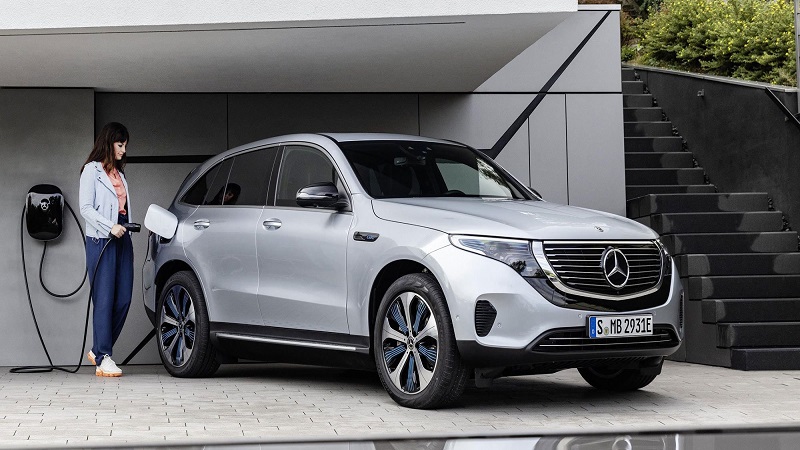

Mercedes-Benz Vows To Safeguard U.S. Business As Washington Scrutinizes Chinese Ownership Ties

0

Mercedes-Benz has pledged to protect its U.S. operations from any potential restrictions stemming from Washington’s growing scrutiny of Chinese influence in the automotive industry, as proposed legislation could complicate the German luxury carmaker’s access to one of its strongest-performing markets.

The commitment comes after the U.S. Senate Commerce Committee last week advanced legislation aimed at tightening restrictions on Chinese automakers operating in the United States. While the bill is primarily designed to curb the expansion of Chinese vehicle manufacturers, its broad language has raised questions about whether companies with significant Chinese ownership, including Mercedes-Benz, could also face heightened regulatory scrutiny.

Chief Executive Officer Ola Kaellenius said the company would take whatever steps are necessary to preserve its position in the United States.

“If we need to make adjustments to comply with anything, we will make sure that we protect our presence and our business in the U.S.,” Kaellenius said while presenting the company’s second-quarter results.

“We are not naïve about the geopolitical environment and the competition between the United States and China,” he added, noting that Mercedes is closely monitoring developments in Washington and remains “deeply involved” in discussions with relevant stakeholders.

The concerns stem from Mercedes-Benz’s shareholder structure. Chinese state-owned automaker BAIC Group and Geely founder Li Shufu together own nearly 20% of the company’s listed shares, making them its two largest shareholders. Although these holdings do not give Chinese investors operational control over Mercedes, they have become a focal point as Washington broadens efforts to limit China’s influence over strategic industries and critical technologies.

The issue underpins how geopolitical tensions are increasingly reshaping the global automotive industry, where ownership structures, supply chains and investment partnerships are receiving the same level of scrutiny once reserved for telecommunications and semiconductor companies.

The United States has become an important pillar of Mercedes’ global strategy as its business in China continues to deteriorate.

Like other German premium manufacturers including BMW and Volkswagen, Mercedes has struggled to maintain market share in China amid the country’s rapid transition to electric vehicles. Domestic manufacturers such as BYD and several emerging Chinese EV makers have gained ground with technologically advanced models, aggressive pricing and faster product development cycles, eroding the dominance long enjoyed by European luxury brands.

Against that backdrop, Mercedes has accelerated investment in the United States, where demand for its high-margin combustion-engine SUVs and luxury vehicles remains resilient. The company has committed more than $7 billion to expand its U.S. operations, including $4 billion through 2030 to increase SUV production at its Alabama manufacturing facility. The investment aligns with President Donald Trump’s broader push to encourage foreign manufacturers to expand domestic production and reduce reliance on imports.

Kaellenius also said Mercedes is evaluating the possibility of establishing engine production in the United States, depending on the outcome of ongoing negotiations to revise the North American trade agreement. Any new local-content requirements could encourage the automaker to deepen its manufacturing footprint in the country.

Building more vehicles and components in America would not only help Mercedes navigate possible regulatory changes but could also reduce its exposure to tariffs and strengthen its competitive position in one of the world’s most profitable luxury vehicle markets.

The strategy appears justified. Mercedes reported that U.S. sales rose 15% during the first six months of the year, providing an important offset to weakness in China. The company’s American business is also more profitable because consumers continue to favor larger gasoline-powered SUVs and premium vehicles that generate substantially higher margins than electric models, whose production remains more expensive.

Independent automotive analyst Matthias Schmidt said the economics strongly favor expanding U.S. production.

“If you are manufacturing locally in the U.S., it is a license to print money,” Schmidt said.

Washington has steadily expanded restrictions on Chinese participation across sectors ranging from semiconductors and artificial intelligence to connected vehicles, citing concerns over technology transfer, data security and strategic dependence.

If enacted, the proposed legislation could establish a precedent in which foreign companies with substantial Chinese ownership or investment face greater regulatory examination, even when they are headquartered in allied countries.

However, Mercedes-Benz safeguarding its U.S. business has become more important now. With China no longer delivering the growth and profitability it once did, the United States is emerging as one of the company’s most critical earnings engines. That makes preserving unrestricted access to the U.S. market a strategic priority.

Sam Altman Says AI Won’t Deliver the Four-Day Workweek and AI Data Centers Belong In Remote Deserts

0

The widespread expectation that artificial intelligence would dramatically shorten the workweek is unlikely to become reality, according to Sam Altman, who argues that advances in technology tend to create new forms of work rather than eliminate the need for it.

Speaking on the Relentless podcast hosted by Ti Morse, the OpenAI chief executive said history suggests that productivity gains have consistently led people to pursue new goals instead of working substantially fewer hours.

“Technology, for a long time, has been promising people that they’re going to work less and they’re going to have all this leisure,” Altman said.

“But somehow we never get the promise of the four-hour workweek at mass scale in society. And I don’t expect AI to change that.”

Altman’s comments come as businesses across industries rapidly deploy generative AI to automate routine tasks, assist with coding, analyze data, generate content and improve customer service. While these tools have boosted productivity in many workplaces, they have not yet produced the widespread reduction in working hours that some technology advocates predicted when the AI boom began.

Instead, many companies have used productivity gains to expand output, accelerate product development or reduce labor costs, while workers often find themselves taking on additional responsibilities rather than working fewer hours.

Altman noted that technology has already given people more leisure time and a higher standard of living than previous generations, but said human ambition tends to grow alongside technological progress.

“We always want more. We think of new things to do, to create for each other, to want for ourselves. It’s like a relative game. People are very focused on how they’re doing relative to other people,” he said.

According to Altman, technological breakthroughs increase people’s capacity to create rather than diminishing their desire to work. As AI makes existing tasks easier, individuals and businesses develop new products, services and ambitions that generate fresh demand for labor.

He also suggested that work provides more than income, arguing that many people seek purpose, creativity and a sense of contribution alongside financial rewards.

“I think we’re all going to be much busier than we thought we were supposed to be in a post-superintelligence world. We’re still going to complain about it, but secretly we’re going to be happy,” Altman said.

The remarks add to an ongoing debate over how AI will reshape labor markets. While supporters believe the technology will free workers from repetitive tasks and enable them to focus on higher-value activities, critics contend that the benefits have so far accrued more to employers through higher productivity and lower labor costs than to employees through shorter workweeks or higher wages.

Concerns have also grown over AI’s impact on employment, as companies in technology, finance, media and professional services increasingly automate functions previously performed by humans.

Not everyone shares Altman’s view of how productivity gains should be distributed.

During an appearance on The Joe Rogan Experience last year, Bernie Sanders argued that workers should directly benefit from AI-driven productivity improvements by working fewer hours without a reduction in pay, rather than using the time savings to complete additional work.

Outside the United States, governments and businesses have continued experimenting with reduced working hours. Companies and public-sector organizations in countries including the United Kingdom, France, Japan and Germany have tested four-day workweeks while maintaining full salaries.

Results from several trials have suggested that shorter workweeks do not necessarily reduce business performance. An aggregated international study found participating organizations recorded an average 8% increase in revenue during four-day workweek trials. Workers also reported lower levels of fatigue and stress, while productivity generally remained stable or improved.

One of the most widely cited examples came from Microsoft’s Japan operation, where a four-day workweek pilot reported a roughly 40% increase in productivity alongside reductions in electricity consumption and office-related costs.

However, the differing perspectives have only fueled a broader question confronting businesses and policymakers as AI adoption accelerates: whether the technology’s productivity gains will primarily translate into stronger corporate profits and economic growth, or eventually be shared with workers through shorter hours, higher wages or improved workplace flexibility.

OpenAI’s Altman Says AI Data Centers Belong In Remote Deserts As Industry Faces Growing Local Opposition

OpenAI Chief Executive Sam Altman has suggested that the next generation of artificial intelligence data centers should be built in remote desert locations rather than near residential communities, acknowledging mounting public opposition to the infrastructure underpinning the AI boom.

Speaking on the Invest Like The Best podcast released Tuesday, Altman said he understands why communities are increasingly resistant to hosting AI data centers, even as demand for computing capacity continues to surge, and technological advances are making these facilities cleaner and more efficient.

“I understand emotionally why people don’t want data centers in their backyard in the same way that I don’t really want a nuclear power plant next to my house, even though I know it’s a super safe thing,” Altman said.

Unlike factories, offices or logistics hubs that benefit from proximity to customers or workers, Altman said that AI computing facilities can operate almost anywhere with sufficient power, connectivity and cooling infrastructure.

“We should just go put it off in the desert, around no one where no one wants to be,” he said. “This is fine. The AI system is very happy to be there.”

An OpenAI spokesperson later clarified that Altman’s comments reflected the idea that AI data centers are uniquely location-flexible compared with many other forms of economic activity, provided they have access to adequate electricity, networking infrastructure and other essential utilities.

His remarks come as technology companies embark on one of the largest infrastructure buildouts in modern history. Hyperscalers, including Microsoft, Amazon, Google and Meta, alongside AI developers such as OpenAI and Anthropic, are collectively investing hundreds of billions of dollars to construct massive AI campuses filled with advanced graphics processing units (GPUs) capable of training and running increasingly sophisticated AI models.

Industry analysts expect annual AI-related capital expenditure to approach $1 trillion within the next few years, underscoring the unprecedented scale of the buildout.

That investment wave has transformed data centers into one of the most strategically important assets in the AI economy. Rather than competing solely through software, leading AI companies are increasingly competing based on access to computing power, electricity, and specialized semiconductor infrastructure.

However, the rapid expansion has also triggered growing resistance from local communities across the United States.

Residents and environmental groups have raised concerns over the enormous electricity requirements of AI facilities, increased water consumption for cooling systems, land use, construction impacts, diesel backup generators and persistent noise from cooling equipment. Utilities have also warned that the explosion in AI-related electricity demand could strain regional power grids and increase costs for other consumers if new generation capacity fails to keep pace.

Altman argued that many of these criticisms are becoming less applicable as technology evolves. He pointed to improvements in cooling systems, particularly the industry’s shift toward closed-loop liquid cooling technologies that continuously recycle water instead of relying on large-scale evaporation.

“For example, years ago, we were evaporating water to cool these systems. They did tremendous amounts of water. And now we use these closed-loop systems, and a modern data center uses only as much water as an office building would for the kitchen, the bathrooms, and whatever,” he said.

This comes amid a broader industry effort to counter criticism over AI’s environmental footprint. Data center operators are increasingly deploying direct liquid cooling, advanced heat recovery systems and water-recycling technologies as newer AI chips consume significantly more power than previous generations of processors.

Altman also argued that the industry’s energy mix is becoming cleaner as operators increasingly pair AI infrastructure with renewable energy and nuclear power rather than fossil fuel generation.

“On power, we are moving from energy sources that are burning fossil fuels to systems that are going to be powered by solar, nuclear,” he said.

Securing reliable electricity has become one of the defining challenges of the AI race. Major technology companies have signed long-term power purchase agreements, invested in renewable energy projects and, increasingly, backed nuclear power initiatives to guarantee enough electricity for future AI workloads. Several companies are also exploring small modular reactors (SMRs) as a long-term solution to meet AI’s rapidly growing energy needs.

Altman emphasized the sheer scale of modern AI infrastructure, noting that the electricity flowing through a single advanced data center can rival the power consumption of an entire small city.

“The energy that flows through one data center could power a small city,” he said.

To help the public better understand these facilities, Altman suggested organizing tours of AI data centers.

“It is one thing to say, it is another thing to see a photo or a video of, and then it’s a whole other thing to just stand up and be like, ‘Oh man, this is an unbelievable scale,'” he said.

Apple Launches Lower-Cost iPhone Leasing Program With Klarna as Higher Device Prices Loom

0

Apple customers in the United States will soon be able to lease an iPhone for as little as $17.99 per month, as the technology giant rolls out a new financing program aimed at making its devices more affordable while encouraging users to upgrade more frequently.

The new offering, called Apple Upgrade, is being launched in partnership with Klarna, one of the world’s largest buy now, pay later (BNPL) providers. The program will be available through Apple’s retail stores and online platform, giving customers an alternative to paying the full upfront cost of increasingly expensive devices.

The initiative comes as Apple prepares for another product launch cycle amid expectations that iPhone prices will rise this year because of higher component costs, particularly memory chips, and broader inflationary pressures across the consumer electronics supply chain.

Customers who pass a soft credit check can lease an iPhone for one or two years, while Apple Watches will also be available under similar terms. Macs and iPads can be leased for two or three years, broadening the company’s subscription-like approach beyond its flagship smartphone.

Unlike traditional financing, the program is structured as a lease, meaning customers must return the device after the lease expires unless they choose to purchase it through an additional payment or upgrade to a newer model. Apple said no security deposit will be required. Klarna will not charge late fees, although leases will be terminated after three consecutive months of missed payments.

The launch follows Apple’s decision last month to raise starting prices for Macs and iPads by at least $100, with some premium configurations increasing by more than $1,000, citing a global memory shortage. Industry analysts expect similar pricing pressure to extend to this year’s iPhone lineup, making monthly payment options increasingly attractive for consumers.

Rather than focusing on a higher sticker price, leasing allows Apple to market its devices through lower monthly payments, potentially reducing consumer resistance to premium-priced products.

“Most of Apple’s consumers, especially in the U.S. and other developed markets, are buying devices on installment plans or trade-ins, so we can expect to see much more aggressive offers,” Nabila Popal, senior research director at IDC, told CNBC after Apple signaled price increases in June.

The move is seen as part of Apple’s broader effort to generate more predictable revenue from its hardware business. Investors have long argued that expanding installment and leasing options could smooth Apple’s earnings by reducing the seasonality associated with annual iPhone launches and encouraging customers to upgrade on a more regular schedule.

That has become increasingly important as consumers hold onto their smartphones longer. According to Bernstein estimates, the average iPhone replacement cycle has stretched to nearly four years, reflecting both the durability of recent devices and higher upgrade costs.

Analysts say the new leasing program could shorten that replacement cycle by lowering the financial barrier to owning Apple’s latest hardware, while also creating a recurring stream of returning customers.

Monthly payments will vary depending on the model and lease duration. An unlocked iPhone 17 Pro will cost $31.99 per month on a two-year lease or $45.99 per month on a one-year agreement. Some lower-priced devices, including the iPhone 16 and MacBook Neo, are not included in the initial rollout.

The program also comes as Wall Street increasingly focuses on Apple’s ability to preserve profit margins in the face of rising manufacturing costs. Analysts at Morgan Stanley estimate Apple may need to increase the starting price of the iPhone 18 Pro by roughly $200 to maintain gross margins. Research firm TechInsights estimates that rising memory prices and other component costs could add as much as $300 to the bill of materials for a single iPhone, based on component-level teardown analysis.

At the same time, Apple continues to push its product lineup further into the premium segment. Analysts expect the company to introduce its first foldable iPhone alongside the iPhone 18 Pro lineup later this year, with some estimates placing its retail price at around $2,500, making flexible financing options increasingly important for consumers.

The new initiative also reshapes Apple’s consumer financing strategy. The company said it is discontinuing its long-running iPhone Upgrade Program in the U.S., which was financed through Citizens Bank and bundled with AppleCare coverage. Under that program, customers typically paid more than $42 per month over 24 installments.

Apple Upgrade replaces that model with lower monthly lease payments, though customers will not automatically own the device at the end of the agreement unless they make an additional purchase payment.

The move also intensifies competition with U.S. wireless carriers, which have traditionally relied on device financing, trade-in incentives and multiyear contracts to retain subscribers. Major carriers including AT&T, Verizon and T-Mobile US already offer installment plans that spread smartphone costs over several years.

Apple also continues to offer zero-interest financing through its Apple Card Monthly Installments program, while users checking out with Apple Pay can access short-term financing from Klarna or rival Affirm.

The leasing program arrives just days before Apple reports its fiscal third-quarter earnings on Thursday. Investors are expected to focus on the company’s pricing strategy, demand outlook for the upcoming iPhone lineup, the impact of rising component costs on margins, and whether expanded financing options can support hardware sales.

Hong Kong Pushes Banks Toward Post-Quantum Cryptography by 2030

0

The Hong Kong Monetary Authority has delivered a sobering assessment of the banking sector’s preparedness for one of the next major cybersecurity challenges: quantum computing.

In its latest evaluation, the regulator found that Hong Kong banks scored an average of just 2.3 out of 10 on quantum readiness, highlighting how far the financial industry still has to go before it can defend itself against the risks posed by future quantum computers.

Even more concerning, roughly half of the surveyed banks admitted they have no formal post-quantum migration strategy, leaving critical financial infrastructure vulnerable as quantum technology advances.

Quantum computing promises breakthroughs across science, healthcare, logistics, and artificial intelligence by solving problems that are impossible for today’s computers. The same computational power also threatens modern encryption standards that secure digital banking, payment networks, customer data, and financial communications.

Algorithms such as RSA and Elliptic Curve Cryptography, which underpin much of today’s internet security, could eventually be broken by sufficiently powerful quantum computers. Although experts believe practical cryptographically relevant quantum computers are still several years away, the threat is no longer considered theoretical.

Cybersecurity professionals have increasingly warned of harvest now, decrypt later attacks, in which hackers steal encrypted information today with the intention of decrypting it once quantum technology matures.

Sensitive financial records, customer identities, and confidential transactions could all become targets under such a scenario. Recognizing this growing risk, the HKMA has taken a proactive stance by introducing a comprehensive roadmap for financial institutions.

Rather than simply highlighting weaknesses, the regulator has issued a practical toolkit designed to help banks assess their existing cryptographic infrastructure, identify vulnerable systems, and develop structured migration plans toward post-quantum cryptography (PQC).

The authority has also established a clear objective: banks should reach full quantum readiness by 2030. This long-term deadline reflects the complexity of transitioning an entire financial ecosystem to new cryptographic standards.

Replacing encryption is not as simple as installing a software update.

Banks operate thousands of interconnected systems, ranging from online banking platforms and mobile applications to payment gateways, ATMs, trading infrastructure, cloud services, and third-party integrations. Every component relying on current encryption standards must eventually be upgraded without disrupting financial stability or customer services.

The HKMA’s findings reveal an uneven level of awareness across the industry. While some major institutions have already begun conducting quantum risk assessments and pilot programs, many smaller lenders remain in the early stages of understanding the problem.

The average readiness score of 2.3 out of 10 suggests that most organizations are still focused on identifying risks rather than implementing concrete solutions. Hong Kong’s initiative aligns with a broader global movement among financial regulators.

Governments and cybersecurity agencies worldwide have accelerated efforts to encourage the adoption of post-quantum cryptography following the publication of new quantum-resistant encryption standards.

Financial institutions are increasingly expected to inventory cryptographic assets, prioritize critical systems, and begin gradual migration well before quantum computers become capable of breaking existing encryption.

Strengthening quantum resilience is also a matter of maintaining its reputation as one of the world’s leading international financial centers. As digital finance, tokenized assets, and cross-border payment networks continue to expand, ensuring that banking infrastructure remains secure against emerging technological threats will become increasingly important.

The HKMA’s assessment serves as both a warning and an opportunity. A readiness score of 2.3 out of 10 underscores the magnitude of the work ahead, but the regulator’s structured toolkit and 2030 target provide a clear path forward.

Banks that begin preparing now will be better positioned to safeguard customer trust, comply with future regulations, and remain resilient in the quantum era.