DD
MM
YYYY

PAGES

DD
MM
YYYY

spot_img

PAGES

Home Blog Page 5

CEO of Dovetail Software Ran the Numbers on Australia’s CGT Changes & You Won’t Like Them

0

The pitch that built Australia’s software industry was simple, and it worked.

Join us early. Take less salary than you could earn at a multinational. If the company wins, you win too. Two founders in Sydney, bootstrapped, burning through their savings, offering a deal that required people to believe in something that did not yet exist. Not a great pitch, on paper. And yet, somehow, people said yes. Again and again and again.

That deal, backed by a capital gains tax framework that made the eventual upside real, produced some of the most consequential enterprise software companies to emerge outside the United States. The 2026 Federal Budget is about to dismantle it.

The proposed changes scrap the 50% CGT discount for future equity grants, replacing it with inflation indexation. Startup employees holding sweat equity find that distinction decisive. An employee with a zero-cost base gets no inflation relief. There is nothing to index. Rather than a roughly 23.5% effective tax rate on exit, they face the full 47% top marginal rate. The after-tax return on a meaningful equity stake roughly halves.

The government has committed to consulting on how the changes interact with employee share schemes and early-stage investment. That consultation matters enormously, because the policy currently applies equally to startup equity and residential property. That is a category error of some magnificence, and it carries consequences that will outlast any single budget cycle.

Not a Sweet Deal

The equity model in Australian tech has never been a concession. It has been the mechanism through which founders could recruit engineers, product leaders, and senior operators who had other options, often rather better-paying ones.

“When Bradley and I started Dovetail in Sydney, our pitch was to take a lower-than-market salary in exchange for equity as we couldn’t compete with the big boys on cash,” said Benjamin Humphrey, CEO and co-founder of Dovetail Software. “We told our team that if Dovetail wins, they’d win too.”

People took that bet. The companies that succeeded produced something beyond their own returns: experienced operators who understood how to build at scale, angel capital that recycled into the next generation of founders, and a growing body of institutional knowledge that a country cannot manufacture through policy alone. Knowledge earned the hard way, in small offices, at below-market salaries, on the glorious and slightly terrifying promise of equity that might one day be worth something.

That ecosystem took decades to assemble. In 2025, Australian startup funding hit $5.4 billion across 390 deals, the third-largest funding year on record, with AI and enterprise software among the highest-conviction sectors. Venture analysts attributed part of that momentum to the quality of technical talent willing to back Australian-founded companies over established alternatives. The CGT changes arrive into that momentum as a direct headwind. A rather poorly timed one, it must be said.

Capital Pains

A top-tier engineer in Australia in 2026 has genuinely global options. Remote roles at hyperscalers, well-funded US product companies, and a deepening pool of European tech employers are all within reach. The salary differential between those options and an early-stage Australian scaleup is significant.

The equity premium is what has historically closed that gap. The arithmetic Humphrey lays out is concrete: an early employee holding 1% equity in a company acquired for roughly $200 million holds around $2 million in gains. Under the current CGT framework, they pay approximately $470,000 in tax, taking home $1.53 million. Under the proposed regime, with a zero cost base and no meaningful indexation relief, the tax bill nearly doubles to $940,000. That extra $470,000 does not disappear; it transfers from the engineer who backed an Australian company at its riskiest point to consolidated revenue.

The line between “worth it” and “not worth it” has just moved considerably. Engineers are very good at finding lines.

Industry analysts now project that domestic venture investment could contract between 15% and 20% over the next two fiscal cycles if the changes proceed without startup-specific protections. That is not a projection about investor mood. It is a projection about the deals that do not get done because the people who would have made them possible chose a different path. A better-paid, less risky, thoroughly sensible path. Good for them. Terrible for everyone else.

Engineers vote with their feet. The traffic between Australian scaleups and offshore alternatives is already measurable, and tipping the financial case further against local equity will accelerate a decision many senior engineers are already quietly working through over their morning coffee.

Taxed Out of Austrlia

The government’s stated goal is a sovereign technology capability, a domestic industry able to build globally competitive products. That ambition is coherent. The policy tension, though, is rather spectacular.

Building a globally competitive software company from Sydney requires two things the equity model has historically delivered: the ability to recruit talent that could work anywhere, and the ability to retain them through periods of below-market cash compensation. Remove the financial case for the second, and the first becomes structurally harder. Not impossible. Just noticeably, depressingly harder.

Dovetail Software is a concrete example of what that model produces at its finest. Founded in Sydney, it now serves 20% of the Fortune 500, employs over 100 people locally, and brings tens of millions of dollars in revenue into the Australian economy each year. That did not happen because its founders had access to the same capital as their American counterparts. It happened because the equity proposition was credible enough, and financially attractive enough, that skilled people accepted the tradeoff.

“We cannot talk about a ‘Future Made in Australia’ while writing policy that penalises the startups and innovative companies required to build it,” Humphrey wrote in response to the proposed changes.

The downstream consequences of getting this wrong extend far beyond the companies caught in the first round. The angel capital that successful exits generate, the mentorship networks they create, the willingness of the next generation of founders to believe the risk is worth taking: all of it compounds from the same starting condition. The return on early-stage risk has to be proportionate, in some delectable and meaningful way, to the risk itself.

Index This

The government acknowledged in supplementary budget materials that the tech and startup sector has unique characteristics warranting specific consideration. That acknowledgment is the right instinct. Whether the consultation produces a durable carve-out or a softer version of the same problem remains, at time of writing, an open and rather pressing question.

The minimum required outcome is legible. Employee equity granted in lieu of market-rate compensation cannot be taxed identically to passive property investment. One involves accepting personal risk, lower cash returns, longer hours, and a 90% chance of company failure in exchange for a potential future payout. The other is a capital allocation decision made from a position of financial comfort. Treating them at the same effective rate is a policy design error, and the ecosystem will price that error into every hiring conversation from July 2027 onward.

A functional carve-out for early-stage employee share schemes, preserving something close to the current effective rate for equity earned through below-market compensation, is what the sector needs from consultation. Not a symbolic acknowledgment of complexity.

Australia generates more unicorns per venture dollar than anywhere else in the world. That record was not built on favourable geography or abundant capital. It was built on conditions that made early-stage risk worth taking: a room full of people who looked at an uncertain future, did the maths, and said yes anyway. The consultation’s job is to make sure the maths still adds up.


How Ojebuyi’s Communication Research Strengthens Governance, Institutional Processes and Organisational Effectiveness

0

There is no doubt that we are in an era in which everyone must consider communication an essential ingredient for navigating life. This is premised on the fact that technology, in its various forms, has continued to shape the actual outcome of every human activity. In addition, communication is a strategic tool, as our lives and businesses are now increasingly defined by polluted messages, fractured public trust, and institutional uncertainty. 

In this piece, our analyst offers insights that stakeholders in the public and private sectors need to leverage to address critical issues in the processes employed for creating and executing communication-related projects and activities. These issues have contributed, and continue to contribute, to a poor information ecosystem, fractured public trust, and institutional uncertainty. After examining more than 10 studies by Professor Ojebuyi, our analyst notes that communication is a decisive factor in determining whether Nigerian institutions function effectively, democratic systems retain legitimacy, and organisations maintain public confidence 

Our analysis shows that Professor Ojebuyi goes beyond the mere description of issues in the process component of Nigerian society. His studies offer solution-oriented insights that align with the identified communication failures across governance, media systems, electoral processes, crisis management, and public engagement. Similar to the previous articles, our analyst discovered in this piece some practical frameworks that institutions can adopt to improve effectiveness, transparency, and social outcomes. 

Turning Research into Institutional Problem-Solving

One of the strongest contributions of Ojebuyi’s research is its challenge to the long-standing disconnect between scholarship and policymaking. Traditional communication research often relies on narrow methodologies and limited engagement with policymakers, resulting in findings that rarely influence institutional reform.

In response, the research advances an evidence-to-policy communication framework, which positions academic inquiry as an institutional problem-solving mechanism. Rather than treating research as an abstract exercise, this framework encourages interdisciplinary approaches, mixed methods and stronger collaboration between scholars and policymakers.

According to our analyst, this framework is significant and ideological for universities, governments, and research institutions because communication scholarship becomes actionable intelligence capable of shaping governance systems, organisational performance, and policy effectiveness when both researchers and uptake stakeholders work collectively. 

Improving Information Integrity in Media Systems

Institutions depend on credible information to function. Yet media audiences frequently encounter filtered, distorted or sensationalised content due to editorial bottlenecks and framing practices.

Research into newsroom dynamics found that radio stations and media organisations often engage in “secondary gatekeeping,” where editorial decisions shape not only what people know but how they interpret issues. This influences democratic accountability, public understanding and trust.

To address this challenge, the information quality control framework establishes practical mechanisms for stronger editorial transparency, ethical newsroom standards and improved verification systems. The framework recognises that organisational effectiveness depends partly on communication integrity. When institutions communicate responsibly, citizens make better decisions and governance becomes more accountable.

Complementing this is an ethical information framing model, developed from findings that rhetorical choices and media framing significantly shape audience interpretation. Poor framing can distort political understanding, intensify fear or fuel misinformation. The model promotes clarity, responsible language and reduced sensationalism, particularly in politically sensitive and crisis contexts.

Strengthening Democracy Through Communication Accountability

Electoral communication remains one of the most consequential domains where communication practices influence governance outcomes. Ojebuyi’s research demonstrates that partisan reporting and selective media coverage shape voter perceptions and can weaken democratic legitimacy.

The practical response is a communication accountability framework for democracy, which advocates stronger journalistic neutrality, electoral media accountability and independent monitoring systems. The framework emphasises that democratic institutions perform better when communication systems are transparent, fair and publicly trusted.

This work also extends to representation in political communication. Research revealed persistent gender imbalance and stereotyping in media portrayals of women, limiting inclusive participation and reinforcing structural inequities.

An inclusive communication framework emerges as a practical solution, promoting balanced representation, gender-sensitive reporting and equitable communication practices. Institutional fairness, the research suggests, is inseparable from communication equity.

Communication as a Tool for Peace and Reputation Management

Communication does not merely reflect social tensions, it can intensify or de-escalate them. Studies on communal conflict reporting found that media framing strongly influences public understanding, with biased or inflammatory reporting increasing risks of polarisation, misinformation and violence escalation.

The conflict-sensitive communication model therefore reframes journalism as a peacebuilding instrument. Through balanced narratives and conflict-sensitive reporting, institutions and media organisations can reduce tensions and support social cohesion.

Similarly, Ojebuyi’s research on international media narratives found that foreign reporting often amplifies negative portrayals of countries and crises, shaping harmful global perceptions and weakening institutional legitimacy.

To counter this, the narrative correction framework emphasises stronger local storytelling, contextual journalism and responsible international reporting. Reputation, the research demonstrates, is increasingly governed by communication quality. Nations and institutions that fail to shape their narratives risk losing legitimacy in the global public sphere.

Rethinking Crisis Communication

Perhaps nowhere is communication more consequential than during crises. Research into security reporting found that euphemistic language can obscure realities, reducing public understanding of serious threats. During health emergencies, media framing significantly shaped risk perceptions, trust and behavioural responses.

These findings informed the clarity-centred crisis communication model, which advocates transparent reporting, clearer language and responsible messaging during emergencies. Alongside this, the crisis communication effectiveness model supports evidence-based communication strategies that reduce misinformation, strengthen compliance and improve institutional credibility.

The practical value became particularly evident in public health communication, where poor messaging often heightened fear and public confusion. Effective crisis communication, the research shows, can determine whether institutions maintain trust or lose public confidence.

Confronting Misinformation in the Digital Era

No contemporary governance challenge illustrates the power of communication more than misinformation. Ojebuyi’s research found that fake news spreads rapidly where institutional communication is weak, fragmented or inconsistent. Traditional fact-checking mechanisms also struggle to keep pace with digital misinformation ecosystems.

The response combines human judgment with technological capability. The anti-misinformation communication framework promotes media literacy, stronger verification systems and institutional transparency, while the AI-supported communication governance framework introduces responsible, ethically guided AI-assisted misinformation detection.

Importantly, the research cautions against technological overreach. AI offers promise, but only when integrated into hybrid human-AI verification systems that preserve accountability and ethical standards.

Communication as Institutional Infrastructure

The enduring contribution of Ojebuyi’s communication research lies in its insistence that communication should be understood as institutional infrastructure—not an afterthought. Effective governance, stronger organisations and resilient democracies depend on how information is framed, verified, distributed and understood.

Across media systems, elections, crisis response, peacebuilding and misinformation management, the research offers more than diagnosis. It establishes practical, implementable solutions capable of improving institutional processes and organisational effectiveness.

In a world where public trust is increasingly fragile, institutions that communicate clearly, ethically and strategically are more likely to govern effectively, maintain legitimacy and achieve meaningful impact.

Rising Jet Fuel Shortage in Germany Causing Flight Disruption

0

The debate over potential jet fuel shortages in Germany has become an unexpected source of anxiety for travelers, exposing broader concerns about Europe’s aviation sector, energy security, and economic resilience.

A recent survey suggests that many German travelers are increasingly unsettled by discussions surrounding fuel supply disruptions, especially as the summer travel season approaches. While aviation authorities and energy providers insist that major disruptions remain unlikely, the public reaction reflects how fragile confidence has become in a world still dealing with geopolitical uncertainty, inflationary pressure, and supply chain vulnerabilities.

Germany, long regarded as Europe’s industrial backbone, is particularly sensitive to energy-related concerns.

Since the outbreak of geopolitical tensions in recent years, especially those affecting global oil and gas markets, Germans have become more aware of how quickly supply shocks can ripple through daily life. The memory of soaring energy prices, disrupted transportation networks, and broader inflation remains fresh.

As a result, even discussions about possible shortages in jet fuel can trigger concerns far beyond the aviation industry itself. For travelers, the fear is not simply about fuel availability. It is about uncertainty. Many passengers worry that shortages could lead to delayed flights, higher ticket prices, reduced schedules, or last-minute cancellations.

Families planning holidays, business travelers arranging important meetings, and students returning abroad all face the possibility of disrupted plans. In an industry where reliability is crucial, even speculation can damage confidence.

Airlines operating in Germany have attempted to reassure customers by emphasizing contingency planning and diversified fuel sourcing.

Major airports such as those in Frankfurt and Munich continue to function normally, and aviation authorities maintain that supply chains remain operational. However, aviation is deeply dependent on global oil logistics, refining capacity, and transportation infrastructure. Any disruption at one stage can create ripple effects across multiple countries.

The survey findings also highlight a broader psychological shift among consumers. Travelers today are more cautious and more reactive to economic news than they were before the pandemic. COVID-19 fundamentally changed public expectations around travel stability. Years of lockdowns, canceled flights, labor strikes, and sudden border restrictions taught consumers that international travel can quickly become unpredictable.

As a result, reports of fuel shortages, even if largely precautionary, are taken seriously by the public. Another important dimension of the debate involves sustainability and Europe’s energy transition. Germany has aggressively pushed toward greener energy policies and carbon reduction targets. In aviation, this has included discussions around sustainable aviation fuel, emissions regulations, and environmental taxes.

Critics argue that the transition away from traditional fossil fuel systems has created additional pressure on supply chains before adequate alternatives are fully scaled. Supporters counter that the long-term solution to fuel insecurity lies precisely in accelerating renewable energy investments and reducing dependence on volatile global oil markets.

The aviation industry itself faces a difficult balancing act. Airlines are already contending with higher operating costs, staffing shortages, environmental scrutiny, and fluctuating consumer demand. Fuel is one of the largest expenses for carriers, meaning that any uncertainty around supply or pricing directly impacts profitability.

If jet fuel prices rise significantly, airlines may pass costs onto passengers through more expensive fares, potentially weakening travel demand during a period many hoped would mark a full recovery for tourism. The debate over jet fuel shortages in Germany reflects more than concerns about airplanes or airports.

It reveals how interconnected modern economies have become and how quickly public confidence can be shaken by fears of disruption. Even if shortages never fully materialize, the anxiety surrounding the issue demonstrates that travelers are increasingly aware of the vulnerabilities underlying global transportation systems.

Retail Investors’ Panic Is One of the Characteristics Determining Crypto Market Cycle

0

Bitcoin’s market structure has once again revealed a familiar pattern: while retail investors panic during periods of volatility, large holders—commonly referred to as whales—continue to accumulate aggressively. This divergence between institutional-scale conviction and retail fear has become one of the defining characteristics of the modern crypto cycle.

As prices fluctuate sharply and headlines amplify uncertainty, blockchain data increasingly suggests that deep-pocketed investors are positioning for the next major move upward. Retail sentiment across the cryptocurrency market has deteriorated significantly in recent weeks. Sharp liquidations, macroeconomic uncertainty, geopolitical tensions, and fears surrounding interest rates have pushed many smaller investors into defensive behavior.

Social media platforms are flooded with anxiety, with traders debating whether the current correction signals the end of the bull market or merely another temporary shakeout. Moments like these have often coincided with substantial accumulation from sophisticated market participants.

On-chain metrics paint a striking picture. Wallets holding large amounts of Bitcoin have steadily increased their balances despite price weakness. Exchange outflows from whale wallets continue to rise, indicating that major holders are moving Bitcoin into cold storage rather than preparing to sell. This behavior typically reflects long-term conviction rather than short-term speculation. In contrast, retail traders tend to move coins onto exchanges during periods of fear, often signaling intent to exit positions.

The psychology behind this divergence is not new. Retail investors frequently react emotionally to volatility, while whales often view corrections as opportunities to acquire discounted assets. Large investors understand that Bitcoin’s cyclical nature has historically rewarded patience. Previous bear markets and corrections have repeatedly transferred coins from weak hands to strong hands before new all-time highs emerged.

Institutional participation has also transformed the dynamics of Bitcoin accumulation. The rise of spot Bitcoin ETFs, corporate treasury strategies, sovereign interest, and hedge fund participation has created an entirely different buyer profile compared to earlier cycles. These entities operate with multi-year investment horizons and often see temporary downturns as favorable entry points rather than existential threats.

Their strategies are rooted in macroeconomic expectations surrounding inflation, monetary debasement, and the long-term digitization of global finance. Another important factor driving whale accumulation is Bitcoin’s supply structure. With each halving cycle, the amount of new Bitcoin entering circulation declines significantly. As available supply tightens, large buyers compete more aggressively for existing liquidity.

When retail investors panic sell into the market, whales can absorb supply at favorable prices. This dynamic has historically contributed to supply squeezes that later fuel explosive rallies.

At the same time, macroeconomic uncertainty continues to strengthen Bitcoin’s narrative as a strategic asset. Concerns over sovereign debt, persistent inflationary pressures, currency devaluation, and geopolitical instability have reinforced the appeal of scarce digital assets.

For many large investors, Bitcoin is no longer viewed purely as a speculative technology trade. Instead, it is increasingly treated as a form of digital hard money with asymmetric upside potential. The contrast between retail fear and whale confidence often marks critical turning points in market cycles. Data repeatedly shows that the best accumulation periods emerge when sentiment is at its weakest.

Fear creates inefficiencies, and sophisticated capital tends to exploit them. While retail investors focus on short-term price candles, whales frequently concentrate on long-term structural trends. None of this guarantees immediate upside. Bitcoin remains a volatile asset capable of experiencing further corrections. However, the ongoing accumulation by whales suggests that large investors continue to view current prices as attractive relative to future expectations.

If history serves as any guide, periods of maximum fear have often laid the foundation for the next phase of expansion.

In many ways, the current market reflects a classic transfer of conviction. Retail panic may dominate headlines today, but beneath the surface, Bitcoin’s largest players appear to be preparing for what they believe comes next.

Majority of Policymakers Signal Further Interest Rate Hike Could still be Warranted

0

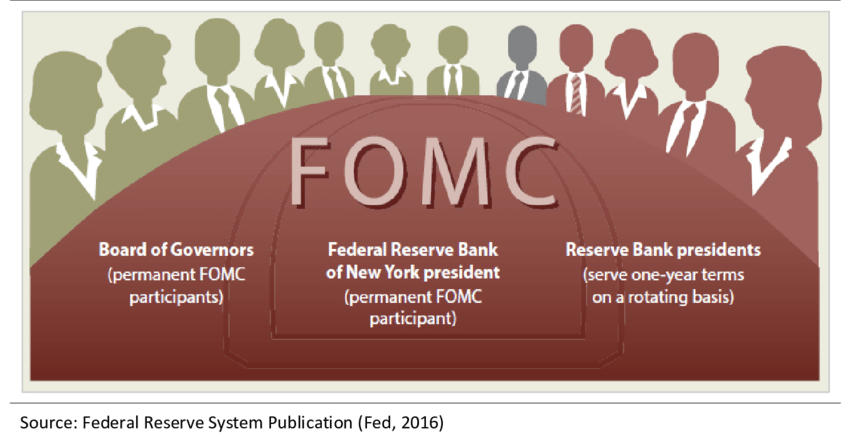
In the latest Federal Open Market Committee minutes, a majority of policymakers signaled that a further interest rate hike could still be warranted, underscoring the persistence of inflationary pressures and the central bank’s reluctance to declare victory too early.

The discussion revealed a committee still grappling with uneven progress on disinflation, particularly in services inflation and wage growth, even as headline CPI has moderated from previous peaks. Policymakers emphasized that the current policy stance, while restrictive, may not yet be sufficiently tight to ensure a durable return to the 2 percent target.

Members noted that financial conditions have loosened in recent months, driven by resilient equity markets, narrowing credit spreads, and expectations of eventual policy easing.

Several participants argued that such easing could undermine the disinflation process by stimulating demand at a time when supply-side normalization remains incomplete. As a result, the possibility of one additional hike remains on the table, particularly if upcoming inflation data or labor market indicators fail to show meaningful cooling.

Market reactions were cautious, with bond yields edging higher and rate-sensitive equities experiencing mild volatility as traders reassessed the probability distribution of future policy moves. The United States dollar retained support against major peers, reflecting expectations that the Federal Reserve will maintain a comparatively tighter stance than other major central banks.

In fixed income markets, the repricing of the terminal rate suggests investors are increasingly aligned with the idea that restrictive policy may persist longer than previously anticipated.

Going forward, the policy debate is expected to remain finely balanced, with incoming data on inflation, employment, and credit conditions determining whether the Federal Reserve proceeds with further tightening or maintains rates at current levels for an extended period.

While the bar for additional hikes is higher than in earlier cycles, the minutes suggest it has not been eliminated. This leaves markets in a state of heightened sensitivity to macroeconomic releases, as even marginal deviations from expectations could materially shift rate expectations and asset pricing dynamics.

The minutes reinforce a central tension facing the Federal Reserve’s dual mandate: the need to restore price stability without triggering an unnecessary contraction in economic activity. While inflation has eased from its peak, it remains above target in several key components, suggesting that the final mile of disinflation may be more persistent than earlier stages.

At the same time, the resilience of the US labor market complicates the policy calculus, as strong employment growth continues to support consumer demand and reduce slack in the economy. This combination keeps the door open to further tightening, even if it is not the base case for all participants.

For financial markets, the implication is clear: policy uncertainty remains elevated, and the path of least resistance for rates will continue to be data-dependent rather than pre-committed.

Investors and policymakers therefore expected to remain highly responsive to each inflation print, labor report, and policy speech, as the balance between growth resilience and price stability continues to define the Federal Reserve’s reaction function in the months ahead forward.