DD
MM
YYYY

PAGES

DD
MM
YYYY

spot_img

PAGES

Home Blog Page 5

Navigating the Claims Process for Extended Car Warranties

0

Submitting a claim on an extended warranty on your car is no picnic…

Vehicle owners rarely understand the ins and outs of the claims process. They purchase the coverage, pay their premiums, and cross their fingers…

Until they actually need to make a claim.

Suddenly, they’re floundering…

The paperwork! Coordinating with the repair facility! Following up to see what’s going on!

But here’s the thing…

Preparing for a claim before it happens makes everything a whole lot easier. Following the prescribed process cuts down on time and frustration and greatly increases the likelihood that repairs will be approved.

Here’s What You Should Know:

  • How Extended Warranty Claims Work
  • The Step-By-Step Claims Process
  • The Top Reasons For Claim Denials
  • Avoiding Claim Rejections

How Extended Warranty Claims Work

A claim on an extended car warranty is a formal request to have repairs covered by the warranty provider.

When a covered part fails, the warranty should take care of it. But there’s a certain process involved. Purchasing subscription cover for extended car warranties is becoming more popular as drivers try to protect themselves from unexpected repair costs. Purchasing proper cover ensures that your car is protected after the manufacturer’s warranty has expired.

Simple enough, right?

Well, different providers work differently. Some pay the repair facility directly. Some require the policyholder to pay for the repairs out of pocket and then get reimbursed.

Knowing exactly what kind of cover is in place before you need to use it is essential.

The Step-By-Step Claims Process

Submitting a claim doesn’t have to be a headache. Here’s how the process works…

Step 1: Detect the Problem

Once something isn’t working right with the vehicle, stop driving it. Continuing to drive it will just make the problem worse.

And here’s the kicker…

The additional damage from not stopping could be denied by the warranty provider.

Step 2: Contact The Warranty Provider

Call the warranty company before doing anything else. They will tell you what to do next.

Most providers have a claims line that can be reached 24 hours a day, 7 days a week.

Step 3: Take The Vehicle To An Approved Facility

A lot of warranty providers have a network of repair facilities they have vetted. Failing to use one of those shops can lead to a denial.

Always call the warranty provider and confirm which repair facilities are approved.

Step 4: Get Authorisation

The shop will diagnose the problem and contact the warranty provider. According to Motor1, an extended warranty provider should take anywhere from 3 to 5 days to authorize the repairs after a claim has been filed.

Once approved, the repairs can be started.

Step 5: Pay The Deductible

Extended car warranty plans usually come with a deductible. The deductible is the amount paid out of pocket before the policy takes over.

Deductibles on extended warranties usually range from $0 to $250.

Step 6: Collect The Vehicle

When the repairs are complete, pick up the vehicle. Be sure to keep all the documentation. Repair orders, invoices, receipts.

You never know when you might need them in the future.

The Top Reasons For Claim Denials

Not all claims get approved. Understanding the most common reasons for failure helps to avoid them.

According to a MarketWatch survey, 18% of respondents who own a car warranty said that their provider failed to cover the damaged part. That’s nearly 1 in 5 claims that come up against coverage issues.

Here are the most common reasons for claim denials:

  • The repair isn’t covered. Warranties have lists of covered components. If the broken part isn’t on that list, the claim will be rejected. Reading the contract carefully before signing up is always a good idea.
  • Missing maintenance records. Warranty providers need to see proof the vehicle has been properly maintained. No proof? No approval. Maintain digital copies of oil changes, tire rotations, and all scheduled services.
  • Pre-existing conditions. If a problem existed prior to the start of the warranty, it will not be covered. Some providers have a waiting period, usually 30 days, before the start of coverage.
  • Unauthorised modifications. Aftermarket parts and performance upgrades can void coverage. This can include lifted suspensions, oversized wheels, and upgraded exhaust systems.
  • Repair by an unauthorised facility. Taking the vehicle to a repair shop outside of the provider’s network is usually grounds for a claim denial. Always double check authorised facilities before having any work done.
  • Neglect or abuse. Misuse such as racing, off-roading in a vehicle not designed for it, or overloading a vehicle beyond manufacturer recommendations can all void a warranty.

Avoiding Claim Rejections

Nobody likes dealing with a denied claim. Following these steps can greatly improve the odds of approval…

  • Read the contract carefully. Before signing on the dotted line, make sure you are clear on exactly what is and isn’t covered. Look for exclusions, waiting periods, and deductible amounts.
  • Keep excellent maintenance records. Document everything. Oil changes, brake checks, fluid top-offs, everything. Store digital copies in the cloud so you have backups.
  • Use authorised repair facilities. Even if there’s a trusted mechanic around the corner, use repair facilities approved by the warranty provider.
  • Report issues promptly. Don’t wait until the problem gets worse. As soon as something doesn’t feel right, contact the warranty company and get the vehicle inspected.
  • Avoid modifications. As much fun as it might be to put a cool exhaust system on your vehicle, modifications make headaches during the claims process.

What To Do If A Claim Gets Denied

If you receive a denial letter from the warranty company, don’t freak out.

The first step is to request a written explanation from the company. Knowing exactly why the claim was denied makes it easier to appeal.

Gather all relevant documentation. Maintenance records, repair invoices, any correspondence with the warranty company.

If you still think the denial was unjustified, file a formal appeal. Present the supporting documentation clearly and reference the contract terms which back up the claim.

Still coming up empty handed? Contacting consumer protection agencies or getting legal advice may be warranted. Some warranty disputes fall under the Magnuson-Moss Warranty Act.

Pulling It All Together

The claims process for extended car warranties comes down to one thing.

Preparation.

Knowing what is covered, what the process involves, and keeping proper records makes the claims process easy. Saves:

  • Time – no unnecessary back and forth with the provider
  • Money – repairs that should be covered actually get paid
  • Stress – no surprises

The claims process itself follows a logical progression. Detect the problem, contact the warranty provider, use an approved repair facility, get authorisation, pay the deductible, and collect the vehicle.

The most common claim denials are the result of missing documentation, uncovered components, or unauthorised repairs. Steering clear of those three things goes a long way in improving approval odds.

Extended car warranty subscriptions are an excellent way to protect yourself and your wallet. Just make sure to read the fine print, maintain the vehicle as recommended, and follow the process precisely.

That’s all there is to it.

Future Security Innovations at Pinco Casino: What Awaits Players

0

Online protection is no longer optional, and that’s exactly why the next step for Pinco deserves a closer look. Digital safety is becoming a signature topic for modern platforms, yet few brands treat it as seriously as Pinko casino, which quietly invests in tools designed to reduce friction and strengthen trust. Somewhere between updated interfaces and smarter login flows, the brand keeps expanding its approach to security without turning it into a flashy marketing move. Instead, the platform adapts its ecosystem so it feels steady, predictable, and—most importantly—transparent for players in Turkey.

New Protective Technologies in Online Casino Ecosystem

While many online services rely on generic security add-ons, Pinco builds its system around adaptive tools created specifically for its structure. This helps the brand react to unusual activity faster and keep access consistent across versions like Pinco giris or the mobile-oriented Pinco APK.

How the platform’s tools evolve

The platform’s team focuses on technology that learns over time. It measures context, not just static entries, and adjusts thresholds automatically. This makes the protective system quieter, less intrusive, and more flexible.

A simplified look at the platform’s security layers:

Pinco Component Purpose Innovation Direction
Access control Secure giri? Adaptive identity checks
Data encryption Information safety Multi-layer encoding
Monitoring tools Activity oversight Pattern-based alerts
Mobile security App protection Device-aware filters


Why this matters

Instead of forcing players through endless checks, the platform uses behind-the-scenes processes that activate only when necessary. This balance helps the platform stay protective without interrupting the overall experience.

Enhanced Giri?: The Core of Security Model

In Turkey, giri? has become a kind of trust indicator, and Pinco takes this seriously. Its updated access system, known under options like Pinco casino güncel giri?, keeps evolving in response to real behavior patterns rather than theoretical risks.

What the platform changes in the giri? flow

Small upgrades accumulate into noticeable improvements:

  • Temporary session tokens for safer logins.
  • Device-based checks that run silently.
  • Minimal data collection, focused on essentials.
  • Clear prompts that avoid overwhelming users.

Every part of this architecture aims to make entry smooth but controlled.

Human-Centered Security Culture

Even with strong technology, Pinco emphasizes clarity. The brand avoids burying explanations under jargon, instead offering short guides, simple visuals, and contextual notifications that appear only when needed.

Features shaping the experience

The platform pays special attention to how people actually navigate. This creates an environment where protection tools feel natural rather than restrictive—something especially noticeable on versions like Pinco oyun sitesi or when using features tied to Pinco promosyon kodu.

These changes might seem subtle, but they build a consistent atmosphere: stable, predictable, and easy to follow.

What’s Next for Pinco

Looking ahead, the platform’s development strategy focuses on refining what already works: faster reactions, clearer dashboards, and increasingly flexible protection layers. Nothing loud or dramatic—just steady improvements that help the brand remain one of the more forward-thinking names in Turkey’s online entertainment space.

As the online casino brand continues refining its systems, the direction stays unchanged: less noise, more clarity, and a safer environment for anyone who enters the platform through Pinco casino giri?.

Visa Launches Global Stablecoins Advisory Practice

0

Visa officially announced the launch of its Stablecoins Advisory Practice, a new service under Visa Consulting & Analytics (VCA). This initiative helps banks, fintechs, merchants, and businesses of all sizes evaluate, strategize, and implement stablecoin solutions.

The practice provides guidance on market fit, strategy development, technical and operational readiness, use-case analysis like cross-border payments, B2B transactions, remittances in volatile currencies, and integration support. It includes training programs and market-entry planning.

Already serving dozens of clients, including Navy Federal Credit Union, VyStar Credit Union, and Pathward. Visa expects growth to hundreds of clients, though some may conclude stablecoins don’t fit their needs after assessment.

Global stablecoin market capitalization exceeds $250–300 billion. Visa’s own stablecoin settlement volume has reached a $3.5 billion annualized run rate as of November 30, 2025. Builds on Visa’s existing efforts, such as over 130 stablecoin-linked card programs in 40+ countries, USDC settlements since 2023, and recent pilots for stablecoin payouts via Visa Direct.

Carl Rutstein, Global Head of Visa Consulting & Analytics, emphasized: “Having a comprehensive stablecoins strategy is critical in today’s digital landscape… Helping our clients grow is the reason we exist in stablecoins.”

This move positions Visa as a bridge between traditional payments and blockchain-based digital currencies, capitalizing on growing institutional demand amid evolving regulations.

This service targets banks, fintechs, merchants, and enterprises, offering guidance on strategy, market fit, technical integration, operational readiness, and implementation—without aggressively pushing adoption.

Visa’s involvement signals that stablecoins are transitioning from experimental crypto assets to core financial infrastructure. With the global stablecoin market exceeding $300 billion and Visa’s own settlement volume at a $3.5 billion annualized run rate, this advisory practice validates stablecoins as practical tools for payments, rather than speculative vehicles.

Early clients via Navy Federal Credit Union, VyStar Credit Union, Pathward are exploring real-world use cases like cross-border payments, B2B transactions, and remittances in volatile currencies. Visa expects the practice to scale to hundreds of clients, accelerating cautious but widespread institutional entry.

This lowers barriers for traditional institutions lacking in-house blockchain expertise, positioning Visa as a trusted intermediary between fiat rails and on-chain systems. Stablecoins enable faster, lower-cost transfers compared to traditional networks.

Visa’s advisory could drive broader integration, challenging incumbents while complementing Visa’s network through hybrid models. Competitors like Mastercard, PayPal with PYUSD, Stripe, and banks like JPMorgan, Citi are already active in stablecoins/tokenized assets.

Visa’s move intensifies the race, potentially leading to more efficient cross-border flows and reduced fees for end-users. Analysts project stablecoin market growth to $2–4 trillion by 2030, with Visa potentially benefiting as a central hub for multi-stablecoin interoperability.

The launch aligns with improving U.S. regulatory clarity, reducing “debanking” fears and encouraging TradFi participation. Visa emphasizes neutral assessment—some clients may conclude stablecoins don’t fit their needs—promoting responsible adoption focused on compliance, risk frameworks, and customer demand.

Positive for major stablecoins like USDC and others like EURC, PYUSD, boosting liquidity and utility. Reinforces stablecoins as crypto’s “killer app” for real-world payments, shifting focus from volatility to practical on-chain value transfer.

Positions Visa to capture revenue from consulting while defending its core business against pure blockchain disruptors. This isn’t just a consulting service—it’s Visa proactively shaping the future of digital payments, where stablecoins complement rather than replace traditional rails.

It underscores growing confidence in blockchain for enterprise use, likely driving faster adoption in 2026 and beyond amid evolving regulations.

Implications of Bitcoin Hashrate Dropping 8% from Xinjiang Shutdowns

1

Bitcoin’s network hashrate dropped sharply by approximately 8% around 100 EH/s in a single day, attributed to the shutdown of roughly 400,000 mining rigs in China’s Xinjiang region. Industry insiders, including Nano Labs CEO Jack Kong (former Canaan co-chairman), linked the decline to coordinated closures of mining farms in Xinjiang.

Hashrate fell from peaks around 1,124–1,200 EH/s to as low as 1,078 EH/s per HashrateIndex or even lower in some metrics ~876 EH/s per CoinWarz. China had quietly regained ~14% of global Bitcoin mining share post-2021 bans, often in gray-area operations relying on cheap coal/solar power in regions like Xinjiang.

Reasons for the shutdown remain unclear possibly local enforcement, power inspections, or compliance checks, but it’s not a new nationwide ban. Temporarily higher profitability for remaining miners less competition and slower block times, but Bitcoin’s difficulty adjustment next expected soon will rebalance the network.

Bitcoin price hovered around $86,000–$90,000 amid this, with no immediate crash. This event highlights ongoing geopolitical risks in mining centralization, despite shifts to the US and other regions.

BitMine Immersion Technologies (NYSE: BMNR), chaired by Fundstrat’s Tom Lee, has been aggressively accumulating Ethereum as a corporate treasury strategy, aiming for 5% of total ETH supply dubbed “Alchemy of 5%”. Recent announcements (December 15, 2025).

BitMine added 102,259 ETH in the past week, bringing holdings to 3.97 million ETH valued at ~$12–13 billion at ~$3,100–$3,200/ETH. This represents over 3.2% of Ethereum’s ~120–121 million circulating supply—not quite 4% yet, though some reports describe it as “nearly” or “approaching” 4%.

No specific mention of a single $73M purchase; recent buys were larger (e.g., 102K ETH ~$320M+ at current prices). Earlier reports referenced varying weekly amounts. BitMine holds the largest corporate ETH treasury globally and #2 overall crypto treasury behind MicroStrategy’s BTC holdings.

Long-term HODL, no plans to sell; planning MAVAN staking network in 2026 for yields ~$1M+/day projected at scale. Backed by investors like ARK Invest, Pantera, Galaxy Digital. This accumulation reflects strong institutional bullishness on ETH amid 2025’s regulatory tailwinds, upgrades, and tokenization trends.

Both stories are legitimate developments in the crypto space as of mid-December 2025. The Bitcoin event underscores mining fragility, while BitMine’s moves signal deepening corporate adoption of ETH.

The sudden offline of ~400,000 mining rigs in China’s Xinjiang region, removing ~100 EH/s, has several short- and long-term effects on the Bitcoin network and market.

Block times have temporarily slowed from ~10 minutes target, potentially increasing transaction confirmation delays and mempool congestion. This could raise fees slightly until the next difficulty adjustment which will lower difficulty by ~8-10% to rebalance. Remaining miners enjoy higher immediate profitability due to reduced competition.

No immediate risk of 51% attacks—the network remains highly secure with hashrate still above 1,000 EH/s in most metrics post-drop. However, it exposes lingering centralization risks: China quietly held ~14% of global hashrate despite 2021 bans, via gray-area operations.

This event accelerates redistribution to US, Kazakhstan, Canada, and others, improving long-term decentralization and resilience against single-region disruptions. Minor downward pressure on BTC price, partly from fears of affected miners selling BTC holdings to cover costs/relocations.

No crash observed; historical parallels (e.g., 2021 China ban) show quick recovery as hashrate migrates. Reinforces Bitcoin’s antifragility—network absorbs shocks without fundamental changes. Overall, a reminder of geopolitical vulnerabilities in mining, but bullish for non-China miners and network evolution.

Implications of BitMine’s ETH Accumulation

Removing millions of ETH from circulation creates a supply shock, reducing available liquidity. This tightens supply amid growing demand from staking, DeFi, tokenization, and upgrades—potentially bullish for ETH price. Analysts cite it as a catalyst for $9k-$12k by end-2025 or higher in supercycle scenarios.

Staking plans (MAVAN network in 2026) could yield ~$1M+/day, further locking supply. Mirrors MicroStrategy’s BTC playbook but for ETH—positions BitMine as #1 corporate ETH holder (#2 overall crypto treasury). Backed by ARK, Pantera, etc., it normalizes corporate treasuries holding ETH, encouraging others amid 2025’s pro-crypto US regulations.

Highlights ETH’s edge in real-world utilityHigh concentration ~aiming for 5% raises questions on influence over network decisions via staking votes. If ETH price rises sharply, amplifies gains; downturns could pressure BMNR stock. Market impact from buys has been absorptive so far.

In summary, underscores deepening corporate bullishness on ETH as “future of finance,” potentially driving scarcity-driven rallies while spotlighting centralization trade-offs. Both events highlight crypto’s maturing yet still volatile landscape in late 2025.

JPMorgan Tokenized Money Market on Ethereum is a Massive Boost for RWAs

0
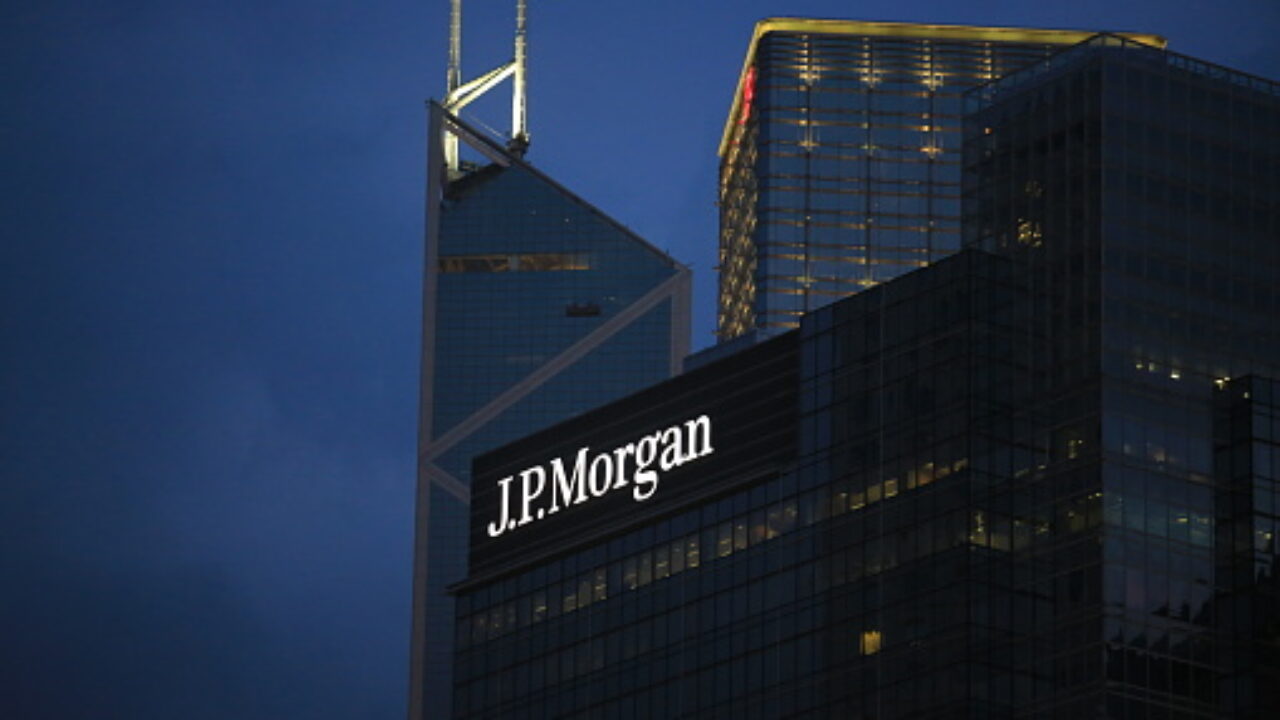
Hong Kong, October 08 2017: JPMorgan Chase & Co. building in Central, Hong Kong . JPMorgan is a Swiss global financial services company, One of big financial company in the world

J.P. Morgan Asset Management officially launched its first tokenized money market fund on the public Ethereum blockchain. The fund, named My OnChain Net Yield Fund (MONY), is a private placement (506(c)) available only to qualified investors through the bank’s Morgan Money platform.

It was seeded with $100 million from JPMorgan itself and invests in short-term U.S. Treasury-backed instruments and repos, offering daily yields similar to traditional money market funds. Powered by JPMorgan’s Kinexys Digital Assets tokenization platform.

Investors subscribe/redeem using cash or USDC stablecoin and receive ERC-20 tokens representing shares directly in their wallets. Minimum investment: $1 million. Qualified investors: Individuals with ?$5M in assets or institutions with ?$25M.

This makes JPMorgan the largest global systemically important bank (GSIB) to issue a tokenized money market fund on a public blockchain, following peers like BlackRock (BUIDL fund) and Franklin Templeton.

The launch reflects surging institutional demand for blockchain-enabled liquidity products, with faster settlement and on-chain interoperability.

Tokenized real-world assets (RWAs) represent traditional assets like bonds, treasuries, credit, real estate, and commodities brought on-chain as digital tokens. This enables fractional ownership, 24/7 liquidity, faster settlement, and DeFi integration while maintaining regulatory compliance.

2025 has been a breakout year for institutional adoption, driven by major players entering the space. The on-chain RWA market excluding stablecoins has exploded in 2025: Reached $30–36 billion by late 2025, up from ~$5–8 billion at the end of 2024.

Private credit dominates ($17–19 billion), followed by U.S. Treasuries ($7–8 billion) and institutional/money market funds. Holder base expanded significantly, with over 571,000 wallets across categories.

Projections vary widely: Some forecasts see $50–600 billion by end-2025, with long-term estimates of $10–30 trillion by 2030–2034. This growth reflects a shift from pilots to scaled operations, with slower but sustainable inflows in Q4 2025 focused on yield-bearing products.

U.S. Treasuries and Tokenized Money Market Funds — Safest and fastest-growing segment ~$7–8 billion on-chain. Offers ~4–5% yields with blockchain efficiency. Private Credit — Largest category (~$17–19 billion), appealing for higher yields (9–10%) in short-duration financing.

Commodities like gold via tokens like XAUm/PAXG— ~$3–4 billion, providing inflation hedges. Real Estate, Equities, and Others — Smaller but emerging ~$150–200 million for real estate, enabling fractional ownership.

Major traditional finance institutions are leading: BlackRock’s BUIDL is the largest tokenized fund ~$2.5–2.9 billion AUM, backed by U.S. Treasuries; expanded multi-chain like Ethereum, Solana, BNB Chain, etc. and accepted as collateral on Binance.

J.P. Morgan’s MONY

Newly launched on Ethereum seeded with $100 million. Franklin Templeton (BENJI/FOBXX), Ondo Finance (OUSG/USDY), Hashnote/Circle (USYC), Centrifuge, and Apollo. These funds target qualified institutional investors, often with high minimums, but provide daily yields and on-chain interoperability.

JPMorgan’s public Ethereum launch marks the largest GSIB entering public-blockchain RWAs. BlackRock BUIDL integrated with Binance for collateral and BNB Chain expansion.

Tokenized commodities/stocks hit all-time highs ~$3.7 billion for commodities. Regulatory progress: Clearer frameworks in U.S., Singapore, Hong Kong, and Europe boosting confidence.

Multi-chain adoption: Ethereum dominates, but Solana, Base, and others gaining for scalability. Institutional Demand — For efficient treasury management, collateral in DeFi/trading, and yield on idle capital. Reduced intermediaries, transparency via immutable ledgers, global access, and programmability.

Tokenized products serve as compliant on-ramps, with oracles via Chainlink ensuring real-world backing. Challenges remain, including liquidity in secondary markets, interoperability, and regulatory nuances.

But 2025 data shows RWAs maturing into a core financial infrastructure. With projections pointing to trillions long-term, tokenization is reshaping ownership and liquidity in global markets.