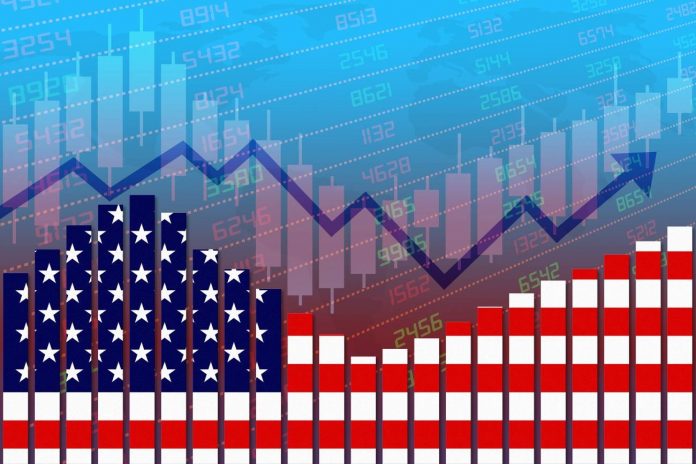
Inflation is more than a number reported in an economic release. It is a quiet force that changes what people can afford, how businesses plan, and how families think about the future.
When prices rise faster than incomes, money sitting still gradually loses its purchasing power. The amount that once covered a basket of goods, a monthly bill, or an investment becomes less valuable over time.
That reality makes economic awareness increasingly important. When inflation persists, doing nothing is not necessarily a neutral decision. Holding all of one’s wealth in cash can mean accepting a gradual decline in its real value.
Particularly when the return on savings remains below the rate at which prices are rising. This does not mean people should rush into risky investments or assume that every asset will protect them from inflation. Markets can fall, businesses can fail, and investments can lose value.
The important distinction is between informed financial planning and simply ignoring the erosion of purchasing power. The phrase “power-hungry bureaucrats” reflects a broader concern about government spending, taxation, regulation and the expansion of institutional power.
Such claims should be examined through evidence rather than political rhetoric. Governments have legitimate responsibilities, including providing public services, maintaining infrastructure and responding to economic crises.
At the same time, citizens have a legitimate interest in understanding how fiscal and monetary decisions affect their savings, wages and living standards. The answer is therefore not panic, but participation.
People can begin by understanding inflation and its impact on their personal finances. They can examine whether their income is keeping pace with living costs, maintain appropriate emergency savings, reduce unnecessary debt and learn how different assets behave during inflationary periods.
Depending on individual circumstances, diversified investments in productive assets may provide a way to pursue long-term growth, although none offers a guaranteed shield against rising prices. Businesses face a similar challenge.
A company that fails to account for inflation in wages, raw materials, energy, transportation and financing costs can quickly see its margins disappear. Entrepreneurs therefore have to think beyond revenue growth.
They must understand purchasing power, interest rates, currency movements and the broader economic environment in which their businesses operate. For citizens, economic literacy is increasingly a form of self-defense.
Understanding how money is created, how government budgets work, how interest rates influence borrowing and saving, and how inflation affects investments gives people greater ability to evaluate competing claims.
The goal should not be to live in permanent fear of inflation or government policy. It should be to avoid financial passivity. A changing economy rewards people who pay attention. Saving, investing, building skills, starting businesses and diversifying income are all decisions that can strengthen financial resilience.
None eliminates risk, but each can reduce dependence on a single source of economic security. Inflation reminds us that money is not static. Its purchasing power changes with time. That makes financial education, civic awareness and long-term planning more important than ever.
The most constructive response to economic uncertainty is not outrage alone. It is understanding, preparation and informed action. When people understand the forces shaping their purchasing power.
They are better positioned to protect their financial choices and participate meaningfully in the economic decisions that affect their future.
Investment Returns After Inflation, Taxes and Fees
A 15% investment return sounds attractive. But without considering inflation, that figure can create a misleading picture of whether your wealth is actually growing.
Financial literacy requires investors to look beyond the percentage displayed on an investment statement. What matters is not simply how much money an investment generates, but how much that money can buy after prices have risen.
Suppose you invest $1 million and earn a 15% return in one year. At the end of the year, you would have $1.15 million before taxes, fees and other costs. On the surface, that appears to be a $150,000 gain. Now suppose inflation during the same period is 20%.
The prices of goods and services have increased faster than your investment. The money in your account has grown, but your purchasing power has fallen. The same $1 million that once bought a particular basket of goods may require $1.2 million a year later.
This is why investors need to understand the difference between nominal returns and real returns. A nominal return is the stated percentage increase in an investment before accounting for inflation. A real return measures the investment’s performance after inflation has been considered.
The approximate calculation is simple: Real return ? investment return ? inflation. Using the example above, a 15% return against 20% inflation produces an approximate real return of -5%. The more precise formula is: Real return = [(1 + nominal return) ÷ (1 + inflation)] ? 1. With a 15% return and 20% inflation, the real return is approximately -4.17%.
That difference is financially significant. It means that although the investor has more naira than before, the purchasing power represented by that money has declined. Wealth is therefore not simply about accumulating a larger balance. It is about preserving or increasing what that balance can actually purchase.
This distinction becomes particularly important in high-inflation economies. Investors can easily be attracted to double-digit yields because the nominal number appears impressive. But a high interest rate does not automatically translate into wealth creation.
Taxes and fees can make the situation even more challenging. If a 15% investment return is reduced by taxes and investment costs, the effective return may be significantly lower. If inflation remains above that adjusted return, the investor could experience an even larger decline in real purchasing power.
This does not mean every investment must outperform inflation every year. Different assets have different objectives, risks and time horizons. Cash may provide liquidity, bonds may provide income, equities may offer long-term growth, while other assets may behave differently during periods of rising prices.
The important lesson is to evaluate investments in context. Before investing, ask: What is the expected nominal return? What is the current and expected inflation rate? What will remain after taxes and fees? And what level of risk is required to achieve the return?
These questions turn a headline percentage into a more meaningful financial calculation. Financial literacy is not about chasing the highest number. It is about understanding what that number represents. A 15% return can be excellent in one economic environment and inadequate in another.
If inflation is rising faster than your investment, your account balance may be increasing while your purchasing power is quietly shrinking. For long-term investors, that distinction can determine whether money merely grows on paper or actually creates greater financial security.
Like this:
Like Loading...