DD
MM
YYYY

PAGES

DD
MM
YYYY

spot_img

PAGES

Home Blog Page 50

Global Central Bankers Rally Behind Fed Chair Jerome Powell Amid Criminal Probe

0

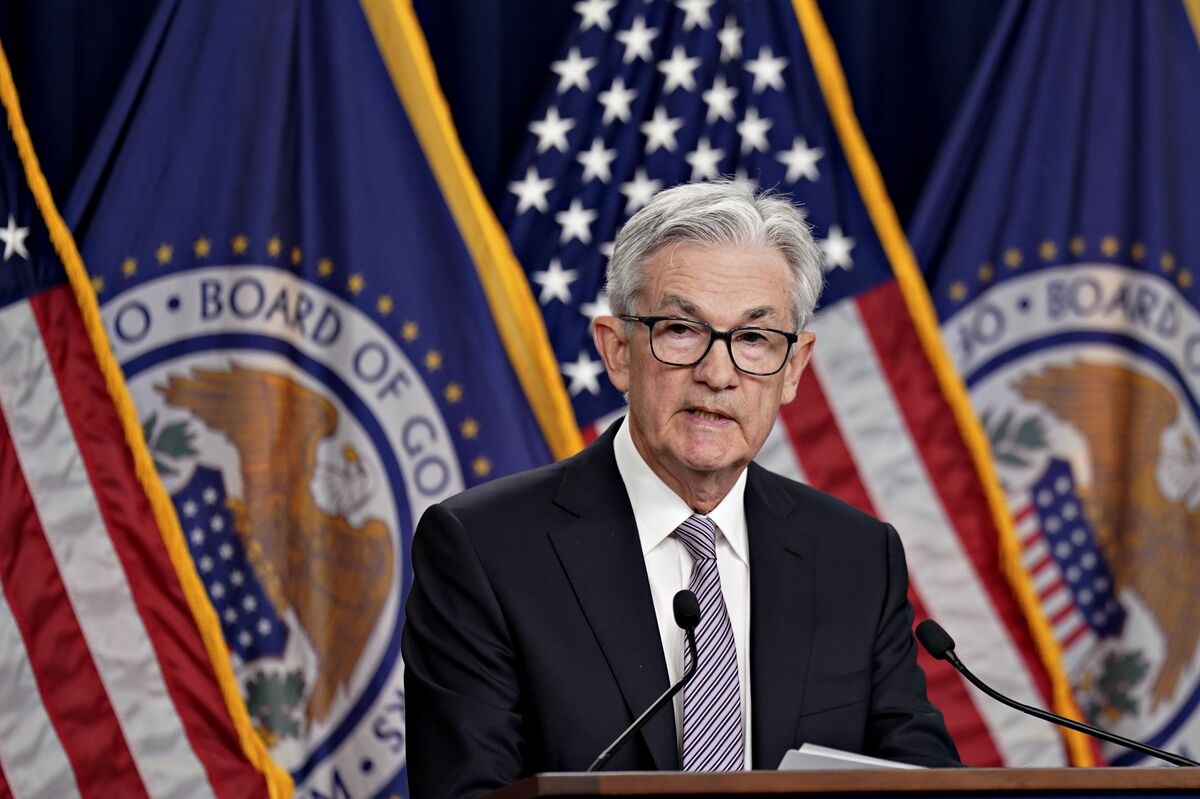
Global central bankers have issued a striking and unusual public statement defending U.S. Federal Reserve Chair Jerome Powell following the launch of a criminal investigation into the Fed chief over the $2.5 billion renovation of the central bank’s Washington, D.C., headquarters and his related testimony to Congress.

The move has sent ripples through financial markets and underscored the ongoing tension between monetary policy independence and political pressures in the United States.

In the joint statement, central bank leaders, including European Central Bank President Christine Lagarde and Bank of England Governor Andrew Bailey, said, “We stand in full solidarity with the Federal Reserve System and its Chair Jerome H. Powell.”

The statement emphasized that the independence of central banks is “a cornerstone of price, financial and economic stability in the interest of the citizens that we serve,” adding that preserving that independence is essential “with full respect for the rule of law and democratic accountability.”

Powell was personally lauded for his integrity, focus, and “unwavering commitment to the public interest.” The statement noted, “To us, he is a respected colleague who is held in the highest regard by all who have worked with him.”

Other signatories included central bank leaders from Brazil, Switzerland, Sweden, Denmark, South Korea, Australia, and Canada, signaling broad international support for the U.S. Fed chief at a time when his leadership is under scrutiny domestically.

The investigation follows Powell’s testimony to Congress on the Fed’s interest rate decisions, amid sustained pressure from President Donald Trump to cut rates more aggressively to stimulate the economy.

In a video statement posted on the Fed’s X account, Powell framed the investigation as politically motivated, warning that it could have lasting implications for the independence of the Federal Reserve.

“The threat of criminal charges is a consequence of the Federal Reserve setting interest rates based on our best assessment of what will serve the public, rather than following the preferences of the President. This is about whether the Fed will be able to continue to set interest rates based on evidence and economic conditions — or whether instead monetary policy will be directed by political pressure or intimidation,” he said.

Economists noted that a criminal probe into a sitting central bank chair is highly unusual, raising questions about how monetary policy decisions may be influenced by political interference. Markets have responded cautiously, given that any perceived compromise of Fed independence could alter investor expectations for interest rates, inflation, and U.S. financial stability.

The international backing of Powell is also symbolically significant. Anna Müller, senior economist at the Institute for Global Finance, said, “Central banks around the world rarely comment on domestic political matters in another country. The statement sends a strong signal that the independence of central banks is not just a U.S. concern — it is a global priority. Undermining this principle in a major economy could have ripple effects across global financial markets.”

The Fed is scheduled to hold several rate-setting meetings in the coming months, and Powell’s guidance is closely watched by markets navigating ongoing inflationary pressures and geopolitical risks. Analysts warn that if political interference begins to shape monetary policy, it could undermine investor confidence in the Fed’s ability to act as an impartial arbiter of U.S. economic stability.

Some experts highlight that this situation could embolden political actors in other countries to challenge central bank independence, potentially destabilizing global financial norms.

“This is not just about Jerome Powell. It’s about precedent. Central bank independence is critical for global markets. If it is perceived as vulnerable to political attacks in the U.S., it could lead to pressure on central banks elsewhere, creating broader financial instability,” Professor Michael Carstens, a monetary policy specialist at Georgetown University, commented.

The criminal investigation itself is still in the early stages, and no charges have been filed. Powell continues to carry out his duties, including overseeing monetary policy and interest rate decisions, while under intense scrutiny. Analysts note that the resolution of this investigation will likely influence how central bank leaders around the world approach politically sensitive policy decisions.

Beyond its immediate impact, the case is being watched as a potential test of the resilience of institutional norms in the U.S. Financial markets, policymakers, and economists are all weighing the possibility that political motivations could shape not only domestic monetary policy but also investor confidence and the broader perception of U.S. financial governance on the global stage.
Court Ruling Revives Ørsted’s Revolution Wind Project, but Political Risk Still Looms Over U.S. Offshore Wind

0

Shares of Danish offshore wind developer Ørsted surged 6% on Tuesday after a U.S. federal court cleared the company to resume work on its nearly completed Revolution Wind project, delivering a crucial legal victory that eases fears of multibillion-dollar losses and offers a reprieve to an industry under growing political and financial strain.

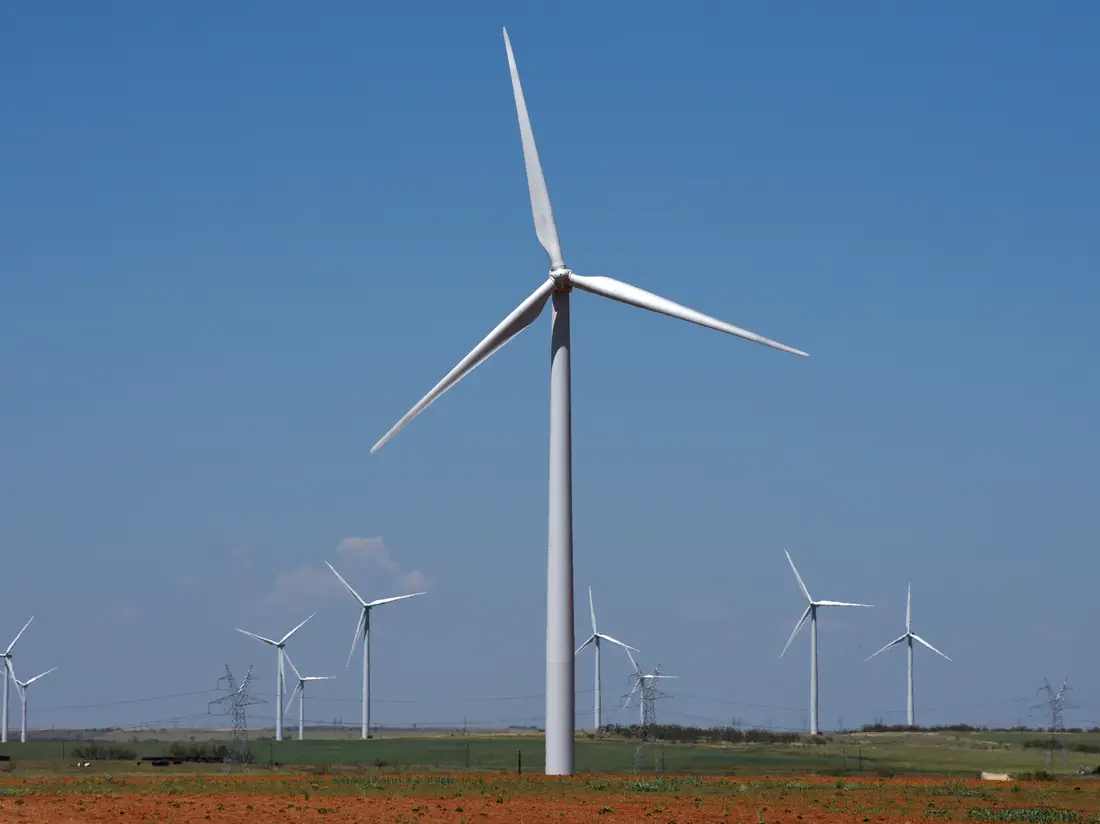
The ruling allows construction to restart on the 704-megawatt offshore wind farm, which is designed to supply electricity to Rhode Island and Connecticut and power about 350,000 homes. Built with Siemens Gamesa turbines, Revolution Wind had been halted following a December 22 decision by the U.S. Interior Department to suspend five offshore wind leases, citing national security concerns.

Judges rejected those arguments, echoing a September court decision that had also blocked an earlier attempt by the administration of U.S. President Donald Trump to stop the project. In both cases, the courts found that the government failed to provide sufficient justification for disrupting projects that were already far advanced.

“Now our focus is on safely resuming construction work as soon as possible and moving towards delivering reliable and affordable electricity to 350,000 homes,” Ørsted CEO Rasmus Errboe said in a statement late Monday, underlining the company’s urgency to contain further delays and cost overruns.

A broader test case for U.S. offshore wind

The Ørsted ruling has implications far beyond a single project. It is one of several lawsuits brought by offshore wind developers and U.S. states seeking to overturn the Interior Department’s suspension of leases, a move that rattled investors and highlighted the growing policy risks facing renewable energy in the United States.

The suspension also hit Equinor’s Empire Wind project off New York and Dominion Energy’s Coastal Virginia Offshore Wind facility. Following the Ørsted decision, Equinor shares rose about 3%, reflecting market hopes that the legal reasoning could extend to other cases.

An Equinor spokesperson said the company was taking note of the ruling and awaiting a court decision expected later this week on Empire Wind. That 810-megawatt project was more than 60% complete when it was halted in late December. Equinor has warned that any delay beyond January 16 could force termination of the project, potentially triggering losses of $5.3 billion.

Analysts say the Ørsted ruling significantly reduces the risk of Revolution Wind being cancelled, an outcome that would have cost the company around 20 billion Danish crowns ($3.12 billion), according to Sydbank analyst Jacob Pedersen. The decision has also raised expectations of a favorable outcome for Ørsted’s larger Sunrise Wind project, with JP Morgan noting that investors were likely already pricing in a positive ruling.

Financial pressure and credit risk remain

Even with the legal win, Ørsted’s challenges are far from over. The company has been grappling with inflation, higher interest rates, and supply chain disruptions that have pushed up project costs across the offshore wind sector. These pressures have strained balance sheets and forced developers globally to renegotiate power purchase agreements or pause investments.

Last autumn, Ørsted raised $9.4 billion through a rights issue to bolster liquidity and protect its credit profile. Despite that move, it has struggled to attract co-investors for Sunrise Wind, a difficulty analysts link to regulatory uncertainty and political resistance in the United States.

Credit rating agencies have responded cautiously. S&P Global downgraded Ørsted to BBB, the lowest investment-grade rating, in August. On Monday, Moody’s cut its outlook on the company to negative from stable, citing heightened risk that U.S. political opposition could delay or derail offshore wind projects, including Sunrise Wind.

Analysts warn that a further downgrade would increase borrowing costs and weigh on earnings, compounding the financial strain at a time when Ørsted is already navigating a challenging operating environment.

President Trump has been openly hostile to wind power, frequently attacking turbines as unattractive and inefficient, and his administration’s actions have added a layer of uncertainty to long-term renewable investments.

Thus, the offshore wind industry episode reinforces concerns that policy support can no longer be taken for granted, even for projects nearing completion. While the legal system has, for now, acted as a backstop against abrupt regulatory reversals, developers and investors remain exposed to shifting political winds.

In the near term, the decision restores momentum to Revolution Wind and offers a boost to sector sentiment. Over the longer term, however, Ørsted’s experience highlights a deeper challenge: offshore wind in the United States is no longer just a question of engineering and financing, but a test of how resilient climate and energy policy remains in an increasingly polarized political landscape.

NALA Partners Noah, Unveils Stablecoin Settlement Network to Power Instant Payments Across Africa And Asia

0

NALA, a pan-African payments company operating in 18 countries, has teamed up with UK-based payments infrastructure provider Noah to launch a new cross-border settlement network linking Africa and Asia.

The network will allow businesses in emerging markets to accept payments in stablecoins and convert them instantly into local currencies, cutting down the time and cost of moving money across borders.

Noah, a payment infrastructure for global money movement is dedicated to revolutionizing International money transfers and catalyzing the widespread adoption of Stablecoins.

With Noah’s global USD collection and NALA’s licensed stablecoin on- and off-ramps, companies can:

• Collect USD anywhere

• Settle instantly in stablecoins

• Pay out locally in minutes

• Run 24/7 cross-border treasury — fully compliant.

No more trapped liquidity. No more slow correspondent banks.

Commenting on the partnership via a post on linkedin, NALA CEO and Founder Benjamin Fernandes said,

“We continue going all-in on stablecoins for real-world payments. Today, NALA + Noah are launching an instant stablecoin settlement network for emerging markets. For too long, stablecoins promised speed but real businesses were still stuck waiting days to move money because the infrastructure wasn’t there.

“With Noah’s global USD collection and NALA’s licensed stablecoin on- and off-ramps, companies can Collect USD anywhere, Settle instantly in stablecoins, Pay out locally in minutes, Run 24/7 cross-border treasury fully compliant. This is what happens when stablecoins meet real regulation, real liquidity, and real distribution across Africa and Asia.”

Also speaking on the partnership, Shah Ramezani, Founder and CEO of Noah said,

“For years, emerging markets have been underserved by global payment infrastructure that was never designed for its scale, speed, or realities. This partnership with NALA is about building a new payment network that removes structural friction, restores trust in settlement, and gives businesses and consumers reliable access to global money movement. Stablecoins are not the story on their own – they are the rail that finally makes instant, compliant USD settlement possible at scale.”

Building on debut of its B2B payments platform, Rafiki, NALA is deepening its stablecoin payment rails, aiming to speed up dollar flows into emerging markets where SMEs face delays and high costs moving money.

The new network, integrated into Rafiki, will allow global firms operating in Africa and Asia to collect funds in US dollars and pay out local currencies within minutes, using stablecoins as a settlement layer.

For decades, cross-border payments into Africa and Asia have been fundamentally broken and the impact has been massive.

Some of these include;

1. Slow settlement (3–5 days or more)

Money moves through multiple correspondent banks, each adding friction, manual checks, and delays. For businesses, this kills cash flow. For families relying on remittances, it creates uncertainty and hardship.

2. High remittance costs (~9%)

Sending $100 can cost $7–$9 in fees. That’s not just expensive, it’s extractive. Billions of dollars are lost every year by people who can least afford it, simply because of outdated rails and lack of competition.

3. Trapped liquidity

Banks and payment providers must pre-fund accounts in multiple countries to enable transactions. This locks up capital that could otherwise be invested, lent, or used to grow businesses.

4. FX leakage everywhere

Opaque exchange rates, hidden markups, and multiple conversions mean users rarely get the real value of their money. This silent tax compounds across borders.

With Noah and NALA partnership, Global businesses across Africa and Asia can now collect USD and pay out local currency in minutes, not days, without relying on correspondent banking rails built for another era.

This partnership brings together global USD collection, instant settlement, and licensed local payouts to unlock real access to dollars at scale.

Notably, as stablecoins become more regulated and widely adopted, they are increasingly being positioned not as speculative assets but as neutral settlement layers for global commerce.

Markets Signal a Fresh Growth Cycle as Morgan Stanley Sees U.S. Stocks Running Hotter Before Cooling

0

After three years of relentless gains that have pushed U.S. equities to record territory, Wall Street is once again confronting an uncomfortable question: how much further can this rally realistically go?

Morgan Stanley’s answer is unambiguous. The market, in its view, is not nearing exhaustion but entering a fresh phase of expansion, one defined by stronger cyclical activity, resilient earnings, and a global economic backdrop that is quietly improving.

Andrew Sheets, Morgan Stanley’s global head of fixed income research, says recent market turbulence should not distract investors from what he describes as a broader and more durable signal. Speaking on the bank’s Thoughts on the Market podcast, Sheets said the early weeks of the year have been noisy, but the underlying evidence continues to support a view that growth assets still have room to run.

“We think the core message remains in place,” he said, adding that the current cycle may yet “burn hotter before it burns out.”

That outlook underpins one of the most optimistic forecasts on Wall Street. Morgan Stanley expects the S&P 500 to rise 13% in 2026, a projection that places it at the upper end of bank estimates. The thesis rests on earnings momentum and what the firm has long described as a rolling recovery in the U.S. economy. Instead of a synchronized downturn, weakness has appeared in isolated sectors at different times, from housing to manufacturing to technology spending, without tipping the broader economy into contraction. As those pressures ease in sequence, growth reasserts itself.

One of the clearest signals, Sheets argues, is coming from commodities, particularly copper. Prices for the metal surged about 44% in 2025, marking their strongest annual performance since the global financial crisis. Copper demand is tightly linked to industrial production, construction, and manufacturing, making it a long-standing proxy for economic momentum.

This rally has been driven not only by supply constraints but also by structural demand tied to data centers, power infrastructure, and electrification, all of which sit at the center of the AI-driven investment boom. For Morgan Stanley, copper’s strength suggests that the global industry is preparing for expansion rather than retrenchment.

Equity markets outside the United States are telling a similar story. South Korea’s stock market delivered a standout performance last year, with the Korea Composite Stock Price Index soaring 75%, far exceeding gains in most major markets and comfortably outpacing the S&P 500’s 17% rise. Sheets points out that Korean equities are heavily skewed toward cyclical sectors such as semiconductors, autos, and industrial manufacturing.

These stocks tend to perform well when global growth expectations improve. The outperformance of Korean small-cap stocks, which are especially sensitive to economic conditions, further strengthens that signal.

Financial stocks add another layer of confirmation. In both the U.S. and Europe, banks and other financial firms have been among the strongest performers. In the U.S., financial stocks in the S&P 500 rose about 14% over the past year, according to State Street Investment Management. Historically, the sector benefits from expanding credit demand, stable loan performance, and improving business confidence. Their gains suggest investors are positioning for sustained economic activity rather than bracing for widespread stress in the financial system.

Taken together, these indicators span regions, asset classes, and sectors, yet they appear to be pointing in the same direction. Sheets acknowledges that any single signal can fail, but argues that the consistency across markets deserves attention.

“These are different assets in different regions that all appear to be saying the same thing,” he said, noting that global cyclical activity has been improving for some time.

The broader Wall Street consensus is also tilting in that direction. Major banks expect equities to post another strong year, supported by anticipated interest rate cuts, steady corporate earnings, and an economy that continues to show resilience. Morgan Stanley, RBC, and Deutsche Bank all forecast gains of at least 10% for the S&P 500, a pace that would exceed the index’s long-term average return.

Still, the optimism is not built on the idea of unlimited upside. Morgan Stanley’s framework suggests a cycle that intensifies before it ultimately cools, rather than one that collapses abruptly. That distinction matters for investors navigating stretched valuations and rising geopolitical risks.

For now, the bank’s message is that the signals flashing across markets are consistent with acceleration, not decline, and that the next phase of the rally may be driven less by speculative enthusiasm and more by a synchronized pickup in global economic activity. In that sense, the current moment looks less like the end of a long journey and more like a second wind.

Why Smart Founders Build Legal Relationships Before They Need Them

0

Want to protect your business before disaster strikes?

Most founders wait until they’re knee-deep in a lawsuit to think about legal assistance. By that point, it’s already too late. The money’s been lost, clients are filing lawsuits, and stress levels are high.

But here’s the thing…

70% of all businesses will face some form of a lawsuit at one point or another. Not if, but when. And most founders that weather the storm do so because they built their legal relationships well before they actually needed them.

Building strong relationships with personal injury attorneys and business lawyers before you’re faced with a crisis is what sets the most successful founders apart. When you work with experienced injury attorneys before things go wrong, you’ll save time, money, and learn how to avoid major panic if/when the situation actually happens.

Let me explain…

Table of Contents

  1. Why Proactive Legal Relationships Are Important
  2. The Real Expense of Waiting
  3. How To Build Your Legal Network Correctly
  4. When Do Founders Need Injury Attorneys?
  5. How To Create a Legal Safety Net

Why Proactive Legal Relationships Are Important

Think of building legal relationships as you would insurance. Nobody wants to pay for insurance until they need it. But having the proper coverage beforehand can save your business if/when disaster strikes.

The stats:

About 45% of small businesses are involved in litigation at any given time. That means nearly HALF of ALL small businesses have some kind of lawsuit going on right now. And those that are better equipped to handle these situations? They have their attorneys on call.

When you build a relationship with a lawyer beforehand, you get three benefits:

  • Faster response time (your attorney will prioritize you over new clients)
  • More knowledgeable about your business
  • Typically lower cost

If an employee gets injured on the job or someone files a claim against your company, those that have existing legal relationships will be able to react much faster. They won’t have to waste precious time googling “best employment lawyer near me” or making awkward initial phone calls.

Getting sued is bad enough. Dealing with it alone is what truly hurts most founders.

The Real Expense of Waiting

The mistake most entrepreneurs make is that they think they’re saving money by not using attorneys.

Think again.

Workplace injuries alone cost $167 billion in 2022. That’s BILLION with a “B”. And if you don’t have the correct legal relationships in place, your business will pay more in legal fees, settlements, penalties, and lost work hours.

Here’s what happens when you wait too long:

It’s Monday and you just got sued.

You spend Tuesday researching for lawyers. Wednesday and Thursday you meet with attorneys to discuss your options. By Friday your attorney is still trying to gather information while your lawsuit has Monday deadlines.

Had you built a legal relationship beforehand, your attorney could have been notified within hours, not days.

When it comes to legal matters, time is often of the essence.

How To Build Your Legal Network Correctly

You may be wondering…

How do I build these “legal relationships”

First you need to understand what types of lawyers you should build relationships with. While every business is different, there are three types of lawyers every firm should consider connecting with:

  • Business/Corporate Lawyers – For contracts, partnerships, company structure, etc
  • Employment Lawyers – For hiring/firing employees, any workplace disputes, etc
  • Personal Injury Lawyers – If there are any accidents on your business’s property

Once you have identified the types of legal help your business relationships should have, it’s time to start building those relationships before you NEED them.

Set up consultations. Learn about their process. What’s their response time? How much do they charge? Most importantly, get to know them.

You’re not trying to spend money you don’t have.

You’re trying to build relationships so you have those people on speed dial when you do need them.

When Do Founders Need Injury Attorneys?

Here’s another fun fact…

Workplace injuries happen more frequently than you might think. In 2023, Employers reported 2.6 million workplace injuries and illnesses. That’s MILLION with an “M”.

Specific instances where you will need an injury attorney:

  • An employee gets hurt at work
  • Customer slips and falls on your business’s property
  • A product of your business injures someone
  • Someone is involved in a vehicle accident on behalf of your company
  • You’re faced with third-party liability questions

These situations require specialized skill sets that not all lawyers offer. Make sure you have a general business lawyer and dig deeper when you know you need injury-specific legal help.

Personal injuries can also happen to the founders themselves. If something happens to you that affects your ability to run your company, you’ll want to already have a relationship with an injury lawyer.

Business accidents don’t solely affect employees and customers.

Founders can get hurt too.

How To Create a Legal Safety Net

Building your legal safety net takes time. But building it isn’t as difficult as you think.

Start by creating a list. What areas of your business could potentially need legal help? Write them down.

Next, research attorneys that specialize in those fields. Find qualified candidates that have the experience and knowledge to back up their service.

Reach out to their offices and set up consultations. A lot of attorneys will offer free half-hour consultations to potential clients.

Store their contact information somewhere you can easily access. When the time comes, you’ll want to be able to quickly get in touch with them.

Send them updates about your business. Stay fresh in their minds so they remember you when you actually need their service.

It won’t happen overnight, but if you start building these relationships today, you’ll be set up for success down the road.

The best time to start building these relationships was yesterday. The next best time is right now.

The Bottom Line

Building your legal safety net won’t solve all of your business problems and prevent future issues from occurring. But having the right people on your side can give you an advantage when you’re faced with a disaster.

When you take the time to build these relationships today, you’ll thank yourself later.

It allows you to:

  • Respond faster to lawsuits and incidents
  • Have someone that already knows your business
  • Create strategies to help you WIN
  • Remain calm during stressful situations

Business isn’t about never facing problems.

It’s about being prepared when they come your way.