DD
MM
YYYY

PAGES

DD
MM
YYYY

spot_img

PAGES

Home Blog Page 5007

The Knowledge Show Begins on Sept 12 2022; Pick a Seat Now

0

We invite you to a new 12-week show beginning on Sept 12 2022 at Tekedia Institute.  Titled “Knowledge – a factor of production”, it will help you to discover Knowledge as a factor of production and why it is critical in modern companies. We have many group/bulk registration benefits. Pick your seat in the next Tekedia Mini-MBA here

5-star show and rated “E” for everyone. (Beat the early bird registration and get extra benefits.)

Welcome to Tekedia Institute. We run an amazing business school which has attracted professionals and students from 39 countries. Our Faculty members come from Microsoft, Shell, Flutterwave, Nigerian Breweries, Jobberman, Coca Cola, and other great organizations. Thrice weekly, I personally coordinate live Zoom sessions on the mechanics of business systems. We bring our Faculty and Guests on those sessions, covering industries and business domains. REGISTER today and join us! – Prof Ndubuisi Ekekwe, Lead Faculty.

Comment on FB Feed

Comment: Its always been CELL – Capital, Entrepreneurship, Land and Labour! 

Definitely, Knowledge was always in the mix but not conspicuously spelt out. Because to get capital to fund production, you need knowledge. You need labourers with knowledge (technical know-how) too. You need knowledge for the best location (land) to situate your products, business etc. And you need knowledge for risk taking, for prudential distribution of finance, management, hiring the right people (all these and more are the Entrepreneurial touchpoints). It would be nice to see the direction this new professorial thought will lead. Keep making us proud sir!

My Response: Yes indeed, it is now “conspicuously spelt out” because it is the foundation of all the factors.

Meta Warns Users Against Organized Cybercrime Syndicates from India and Pakistan

0

Much of the data from the dark web which is usually described as the hive of illegal activities come from the activities of the black hat hackers who siphon these data from the surface web. Sometimes when you want to surf the internet or access some websites, you may be hounded by notifications or pop-up ads requesting you to download suggested device cleaner or anti-virus software so that you could have a nice surfing experience. These are usually the activities of hackers attempting to siphon data from your device. The surface web platforms notably Google, Facebook, etc have been held responsible for the nefarious activities of these hackers.

Recently, Meta-owned Social media giant, Facebook has declared that a Cybersecurity espionage group known as Bitter APT has been spying on thousands of people by using malware that masquerades as popular secure social media and messaging apps such as WhatsApp, Facebook Messenger, WeChat, Instagram etc. Bitter APT which is believed to be operating out of India and Pakistan symbolizes Advanced Persistent Threat and is a designation typically given to state-sponsored hacking groups.

According to Facebook’s report cited in a Forbes’ cybersecurity article by Thomas Brewster, Bitter APT which has become common among the Ukrainians as a tool for communicating information about the Russian invasion is dubbed “Dracarys” a name found in the malware code and a possible reference to the popular HBO series, Game of Thrones. The malware can siphon off all kinds of information from Android devices, including call logs, contacts, files, text messages and geolocation data, and it can also access a device’s camera and microphone. The group has been running attacks on energy, engineering and government entities in China, Pakistan and Saudi Arabia, according to a recent report by Cisco’s Talos cybersecurity research unit.

Forbes’ in-house analyst, Thomas Brewster, reported that Dracarys has been propagated on Facebook and Instagram by hackers posting as attractive women, journalists or activists who convince their targets to download the bogus app, and once they have done that, Dracarys abuses the accessibility features intended to assist users with disability to automatically click through and grant broad device permissions such as the ability to access the camera. The malware appears as legitimate and harvests data on the phones without being detected by anti-virus systems. According to Facebook, this shows that Bitter has managed to reimplement common malicious functionality in a way that went undetected by the security communities.

Another threat from a Pakistan-based government hacking unit known as APT36, a modified version of XplitSPY which was originally developed by a group of self-reported ethical hackers in India, has been uncovered by Facebook. APT36 had been spotted targeting people in Afghanistan, India, Pakistan, UAE and Saudi Arabia including military personnel, Government officials, employees of human rights and other nonprofit organisations and students.

Mike Dvilyanski, Facebook’s head of Cyber espionage investigations was reported to have said Meta has identified 10,000 users across at least nine countries that may have been targeted by Bitter APT and APT36 and it is in the process of warning users directly over Facebook and Instagram. He told Forbes that Meta intends to alert users that might have come in contact with these groups and inform them of the tools that they can use to secure their online presence.

Massive Tech Layoffs: More Than 30,000 Tech Workers Lost Their Jobs As Of July

0

As inflation continues to bite hard, ravaging the global economy, job cuts and hiring slowdowns were big talking points in the tech sector as of July last month. According to the latest data from the U.S department of labor, unemployment claims hit an unexpected 8-month high.

Big tech companies like Microsoft, Tesla, Twitter, and the likes, as well as several cryptocurrency exchanges and lending platforms, were not left out as there have been mass layoffs of employees, coupled with a freeze in hiring.

In India, more than 11,500 employees in the tech sector have been laid off this year. The layoffs were dominated by edtech platforms, ride-hailing platforms, and pre-owned car platforms.

As the economy slows down, a large percentage of tech companies have warned their employees of corporate downsizing and possible layoffs. Several executives have been reported to have sent memos to their employees warning of job cuts ahead.

On Wall Street, stocks from tech companies fell as there are still predictions of more falls as inflation worsens. Employers in the tech sector in the United States cut nearly nine times more jobs in May than in the first four months of the year.

The significant growth witnessed in these companies in 2020, is beginning to see a decrease in revenue due to a slowdown of users caused by inflation. In the mass layoff of workers in the tech sector, fintech companies announced 268% more job cuts in May than in the first four months.

Recall that earlier this year, there was a bloodbath in the crypto market as cryptocurrencies crashed in one of the coldest dips the asset class has experienced in years.

The crash triggered American cryptocurrency company Coinbase to lay off nearly 20% of its employers. Last month, multinational automobile and clean energy company, Tesla laid off more than 200 of its employees. Micro-blogging platform Twitter, also laid off 30% of its acquisition team.

With the mass layoffs and a hiring freeze, tech workers have reported huge drops in confidence in job security. According to a June survey from Blind, it disclosed that just 9% of tech workers are feeling confident in their job security.

Mass layoffs are making tech workers panic, especially those in e-commerce, real estate, and businesses tied closely to the stock market. This rise in inflation has brought about wage inflation in the tech sector, which is putting pressure on tech companies to boost compensation for key roles by 20% or more as they compete for a limited pool of workers.

Big Tech companies are poaching one another’s workers, allowing people with in-demand skills like programming and data science to offer their talent for a premium.

In fact, even laid-off workers from top companies are quickly snatched by rival firms. The number of technologists who feel more confident about job security is notably low.

Italy, Intel Near A $5 Billion Deal for Chips Factory

0
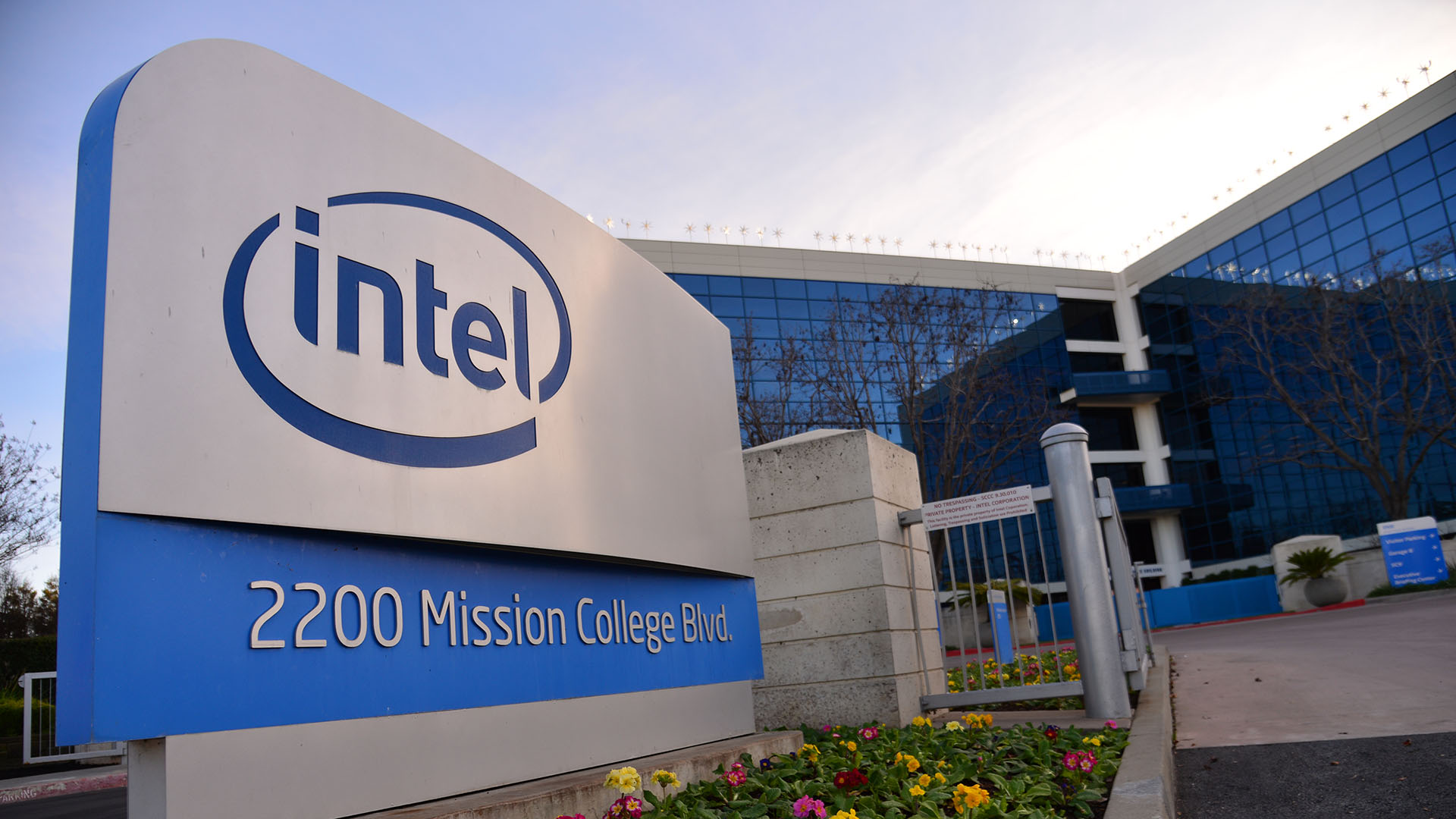
The Robert Noyce Building in Santa Clara, California, is the world headquarters for Intel Corporation. This photo is from Jan. 23, 2019. (Credit: Walden Kirsch/Intel Corporation)

Intel has continued its push to establish plants across Europe, in the face of declining revenue growth that has seen the chipmaker lose its market position to rival AMD. It has since recovered though.

Reuters reports, citing sources, that the company is close to clinching a $5 billion deal with Italy to build an advanced semiconductor packaging and assembly plant in the country.

Last year, Intel announced a plan to increase chip production by building more factories. It’s part of the CEO Pat Gelsinger’s strategy to revamp the company. The plan, which came with an $88 billion investment fund, has Europe as a top choice destination.

Having been heavily impacted by the global chip shortage, Europe is trying to cut reliance on Asian chips. The European Union had last year unveiled the European Chip Act, in a push for greater resilience and sovereignty in regional semiconductor supply chains.

Reuters reported that the two sources who spoke on anonymity, said the government of outgoing Prime Minister Mario Draghi was working to have an agreement with Intel in place by the end of August, ahead of a snap national election scheduled on Sept. 25.

Per the report, sources have previously told Reuters that Rome is ready to fund as much as 40% of Intel’s total investment in Italy, which is expected to rise over time from the initial $5 billion. It also noted that the factory would use new technologies to weave together full chips out of tiles.

The global chip shortage created a huge vacuum in production around the world and presented the need for more semiconductor companies. But for Intel, it also served as an opportunity to regain its market leadership position.

The Italian deal has the potential to give Intel its biggest production sites in Europe. The sources said the company and the government have shortlisted possible sites in two Italian regions with one of them adding they are located in the northern regions of Piedmont and Veneto.

A final decision on where to build the facility is yet to be made, both the sources said. The Lombardy, Apulia and Sicily regions had also been considered initially, the report said.

The total size of Intel’s investment and how Italy plans to fund its share of it is not yet clear, it added.

The deal will likely form a large part of Italy’s plan to build semiconductor facilities. Under the European Chips Act, the EU Commission said it had made 15 billion euros in additional public and private investment by 2030.

Besides the fund, members of the bloc are individually setting up funds to facilitate chip investments. Rome so far has set aside 4.15 billion euros until 2030 to attract chipmakers and invest in new industrial applications of innovative technologies.

Reuters noted that the government is also in talks with French-Italian STMicroelectronics, Taiwan chipmakers MEMC Electronic Materials Inc and TSMC, and Israeli Tower Semiconductor, which Intel bought earlier this year. Last month, STMicroelectronics signed a pact with GlobalFoundries to build a $5.7 billion chip factory in France.

This means that Intel will have to face familiar competitors in Europe.

Kenyan Insurtech Startup, Lami, Raises $3.7m Seed Extension

0

Kenya-based startup Lami Technologies has raised $ 3.7 million seed extension in its latest investment round to expand its insurtech product across Africa.

The extension was led by Harlem Capital, an early-stage venture firm that invests in seed-stage tech-enabled startups, focused on minority and women founders.

Participating in the round were early-stage venture capital firm, Newtown Partners; Peter Bruce-Clark, a partner at New York’s research-driven venture capital company Social Impact Capital; Caribou Honig and Jay Weintraub of InsureTech Connect, a networking platform for insurtech innovators, and senior members from Exotix Advisory, a corporate finance and M&A boutique focused on emerging and developing markets.

Lami launched its first product in 2020, and has been building and distributing an end-to-end digital insurance platform and API that allows businesses in different sectors to create tailored insurance solutions for their customers.

The extension follows the $1.8 million round it secured last year. The round was led by seed-stage investment firm Accion Venture Lab, and had the participation of AAIC, Consonance, P1 Ventures, Acuity Ventures, The Continent Venture Partners, and Future Africa.

Lami technologies was founded in 2018 by its CEO Jihan Abass to take on the challenge of low insurance uptake in Africa. The insurance sector in Africa has been held back due to poor innovation, which has resulted in the sector’s backward operation that depends mainly on the traditional paper-based systems.

Abass told TechCrunch that the newly raised fund will be used to offer additional insurance product lines, while also revealing that the startup has made an entry into Egypt and Nigeria. All this against the backdrop of a $3.7 million seed extension raised in a round led by Harlem Capital — which invests in minority and women founders.

“Lami is pioneering innovation in the insurance sector, and we are glad to have secured the right partners to help drive insurance uptake across Africa. We are looking to make insurance easily accessible to everyone on the continent, and we will continually be unveiling more products that confirm this resolve,” she said.

Speaking about using strategy to drive growth, Abass said that Lami plans to continuously innovate as they explore new ways of increasing insurance penetration across the continent — which currently stands at below 3%.

“On the technology side we want to cater to the entire insurance ecosystem. So, it’s not only the digital platforms that want to sell insurance products, but also to help existing players be more efficient in their distribution of products, allowing them to play a role in increasing the insurance penetration level. This includes agents and brokers — we are looking into how we can empower them to sell more policies,” she said.

The company said that the total insurance penetration in Africa stands at 2.78 percent, far below the global average of 7.23 percent, according to the African Insurance Organisation. This is despite research showing that expanding Africa’s lucrative insurance market could fast-track inclusive prosperity in the region.

As part of its efforts and strategy to bridge the gap, Lami seeks to use technologies that make insurance affordable through ‘bite-sized’ premiums. For example, the company’s partnership with logistics startup Sendy led to the development of a cover that insures goods per trip with premiums starting at US$ 0.21 for goods valued at US$85. The product covers goods worth up to US$ 7,600. Claims through Lami are also processed in record time — under one week — against the 90-day average across the industry.

Another move by Lami is to work with underwriters in different markets to create an all-risk cover for buy now pay later (BNPL) transactions. The cover, which was necessitated by the rising popularity of BNPL products in sub-Saharan Africa, insures against payment default through death, disability, job loss and many other circumstances.

In addition, the startup is making leadership changes that it believes will help to achieve its goals. It has appointed its current CFO, Roy Perlot, as a co-founder. Perlot has been with the company since 2020 and has contributed to its growth having brought extensive strategic leadership with his in-depth experience across Africa.

Also, Lami is investing in research for innovation development that will spur growth. By doing so, the firm has developed an insurance cover for consumer products like mobile phones, which can now be insured at the point of purchase through Lami’s e-commerce partners. This has been fast-tracked by the startup’s mission of developing efficient strategies for its partners to offer seamless and affordable insurance products to their people through its API platform.

The startup is also an onboarding partnership as a strategy for growth. Earlier this year, Lami integrated Bluewave’s micro-insurance partnerships into its portfolio further enhancing its B2B2C capabilities through diverse channels as it expanded into Malawi and the Democratic Republic of Congo. As a result, in the last three months, Lami has closed over 15 B2B2C partners split across human resource management, logistics and BNPL, with a combined reach of 3 million people.

Lami has a growing number of partners and clients across the African market. Sendy, which enables freight carriers in East Africa (Kenya, Uganda and Tanzania) to access transit insurance on a per-trip basis, and also Kwara, to make insurance products accessible to the over 60,000 SACCO (credit union) members. Other clients are e-commerce platform Jumia, retail B2B and end-to-end distribution platform MarketForce and Stanbic Bank Insurance — which uses Lami’s technology to power bancassurance products.

Harlem Capital said they were attracted to Lami by its use of innovation to solve modern day financial problems, thus driving growth.

“We believe the next wave of fintech will embed financial products and services like insurance into a customer’s purchase experience. Lami’s approach to serving people through strategic partners in eCommerce and finance is the best way to build trust with users and deliver insurance in a seamless, accessible way to Africans across the continent. Lami’s impressive growth to date shows that this resonates with customers and have a strong trajectory as they expand across the continent,” Harlem Capital Principal Gabby Cazeau said.