DD
MM
YYYY

PAGES

DD
MM
YYYY

spot_img

PAGES

Home Blog Page 5018

Buhari Weighs Nationwide Ban on Okada Over Insecurity

0
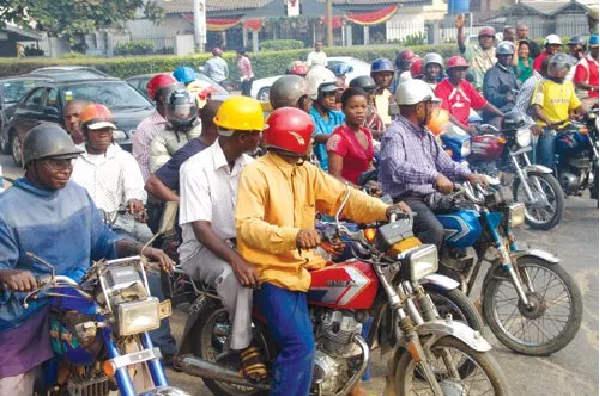
Okada driver

For years now, the Nigerian security architecture has been overwhelmed by the raging insecurity in the country. With terrorism, banditry and kidnapping flourishing unabated, the government appears to have exhausted every plan to quell the unrest – now it is thinking of adopting the most common solution to challenges in Nigeria.

On Thursday, the Attorney-General of the Federation, Abubakar Malami, said President Muhammadu Buhari is weighing the possibility of imposing a nationwide ban on the sale and use of okada (motorcycles) by Nigerians.

Per Peoples Gazette, Malami said the administration is considering the wholesale ban due to insecurity that has refused to be contained even though the security agents are giving it their best.

“The government would look into that possibility with particular regard to restriction on use and distribution of motorcycles which is the most conventional logistical means being deployed by terrorists,” Mr Malami said at the State House shortly after a meeting of the National Security Council.

Malami acknowledged that the move will exacerbate Nigeria’s poor economic situation, but said the decision wasn’t easily taken by the administration.

He said federal authorities have been able to find a connection between motorcycles, mining operations and insecurity across the country. But he didn’t explain why the decision will affect nationwide operation of okada when the affected places are mainly the northeast and the northwest.

As the PG noted, Boko Haram insurgents have operated predominantly in the country’s northeastern flank since 2009, while bandits terrorize northwest communities. Among the measures taken by the affected states in the regions is okada ban and cutting off telephone networks. The measures have however, failed to yield favorable results as both banditry and terrorism have continued to flourish in those regions.

In Southern Nigeria, particularly the southwest and southeast, separatist agitation reigns, though it bears lesser weight of insecurity compared to the north.

Malami said the decision was informed by an intelligence report that the administration could not disregard even though it will bring about harsh economic realities. He did not say when the ban will be announced.

The implication

Apart from the mobility crisis that will result from the decision to ban okada, the economic implication will likely outweigh the gain. Millions of Nigerians rely on okada for last mile mobility while hundreds earn a living selling motorcycles and its spare parts.

Revenue in the Motorcycles market is projected to reach $0.92bn in 2022, showing an annual growth rate (CAGR 2022-2026) of 8.68%, resulting in a projected market volume of US$1.29bn by 2026, according to market data firm Statista.

The market’s largest segment is On-road Motorcycles with a projected market volume of $0.55bn in 2022. Motorcycles market unit sales are expected to reach 680.65K motorcycles in 2026, the firm said.

This means that a ban on commercial motorcycles will cut over $100 billion off Nigeria’s economy in the near term, putting thousands of people out of business particularly in states like Anambra and Lagos where the business is predominant.

Security experts have said that the poor economic situation of the country is contributing largely to its insecurity, warning that lack of job has the tendency to push people into violent crimes.
Debt Servicing Gulped N310bn More Than Revenue Generated by Nigeria in First Four Months of 2022

1

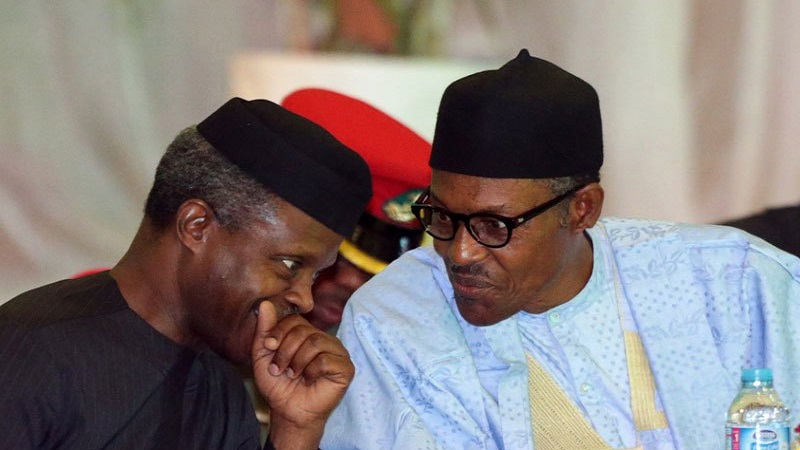
Nigeria’s public debt, which has increased significantly over the past seven years, reaching a mammoth height of N61 trillion, is increasingly eclipsing the nation’s revenue generation.

According to the 2022 fiscal performance report released on Thursday, the cost of servicing debt surpassed the federal government’s retained revenue by N310 billion in the first four months of 2022, which means, the government borrowed to pay debt.

The report said debt servicing gulped N1.9 trillion in the first four months of the year, whereas the government generated a total of N1.6 trillion during that period.

Though the development sends a rattling signal, analysts say it was long expected considering that Nigeria has been borrowing mainly for consumption.

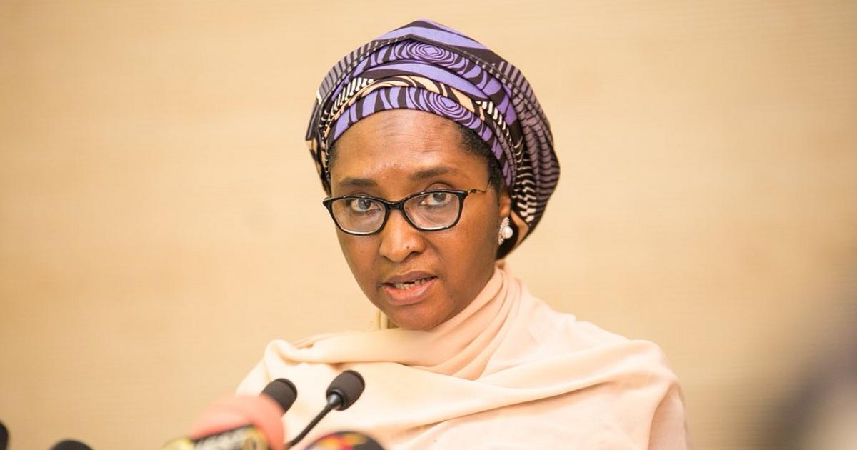
Minister of Finance, Budget and National Planning, Mrs. Zainab Ahmed, said in Abuja, while addressing the situation, that urgent action is needed to address revenue underperformance and expenditure efficiency at national and sub-national levels.

The report indicated that there is an alarming gap between revenue generated by the government and debt servicing, and it will require drastic measures to upset it.

“The aggregate expenditure for 2022 is estimated at N17.32 trillion, with a pro-rata spending target of N5.77 at end of April,” the report reads.

“The actual spending as of April 31st (sic) was N4.72 trillion. Of this amount, N1.94 trillion was for debt service, and N1.26 trillion was for personnel costs, including pensions.

“As at April, N773.63 billion has been spent on capital expenditure.

“As of April 2022, FGN’s retained revenue was only N1.63 trillion, 49 percent of the pro-rata target of N3.32 trillion.”

The report noted that the federal government’s performance, based on its N285.38 billion oil revenue for the referenced period, amounts only to 39%, although it generated a total of N632.56 billion, which amounts to 84%, from non-oil tax revenue.

“CIT and VAT collections were N298.83 billion and N102.97 billion, representing 99 percent and 98 percent of their respective targets,” the report added.

“Customs collections (made up of import duties, excise and fees, as well as federation account special levies) trailed target by N76.77 billion (25.42 percent).

“Other revenues amounted to N664.64 billion, of which independent revenue was N394.09 billion.”

Against this backdrop, there is growing concern that the revenue challenge will deteriorate at the end of the Q3, as oil revenue decreases further due to insufficient oil output and petroleum subsidy payments.

The federal government is yet to find a way to address the debt – revenue disparity as its previous attempts to remove the subsidy were fiercely resisted because of concern that it will compound the already bad economic situation of the people.

The government plans to borrow additional N4 trillion to fill the budget deficit emanating from subsidy payments.

The Nigeria’s Inflection Point: Debt Servicing Repayment Exceeds Revenue

2
Finance Minister, Nigeria

The IMF predicted that it would happen in 2026 but their model is really off by years. Yes, Nigeria has entered a new chapter in its reckless economic shipwrecking: “Nigeria’s fiscal position worsened in the first four months of the year as the cost of repaying debt surpassed the government’s revenue in the first quarter of 2022.” Simply, we as a people work for servicing debts. 

The International Monetary Fund (IMF) has warned that debt servicing may gulp 100 percent of Nigeria’s revenue by 2026, if the government fails to implement adequate measures to improve revenue generation.

The IMF’s Resident Representative for Nigeria, Ari Aisen, disclosed this while presenting the Sub-Saharan Africa Regional Economic Outlook report on Monday, 30th May 2022 in Abuja.

According to him, based on a macro-fiscal stress test that was conducted on Nigeria, interest payments on debts may wipe up the country’s entire earnings in the next four years.

(IMF predicted a full year in 2026, this is a quarter and that means that IMF is technically correct since Nigeria can recover next quarter and have the revenue receipts exceeding debts servicing obligations.)

I do not know what to write other than to point out that Naira will experience more pressure. I had noted that N700/$ by Dec 2022 is a possibility if we do not try new ideas since whatever we are doing now is not working. This is not a political statement; this is a statement from a concerned  citizen.

Nigeria has a quagmire: crude oil price cannot go sideways – it can only move up or down. The problem for Nigeria is that when the price goes up, it makes more money in the international market but also spends more to subsidize petrol since it has to import the by-product. And when the price drops, Nigeria does not make as much money internationally, affecting many things. But since prices can only go up or down, NOT sideways, we are in a mess. Interestingly, we do not have a solution on how to fix that problem.

Nigeria’s fiscal position worsened in the first four months of the year as the cost of repaying debt surpassed the government’s revenue in the first quarter of 2022.

According to details of the 2022 fiscal performance report for January through April, Nigeria’s total revenue stood at N1.63 trillion while debt servicing stood at N1.94 trillion, showing a variance of over N300 billion.

Nigeria’s Minister of Finance, Budget and National Planning, Zainab Ahmed, on Thursday warned that urgent action is needed to address the nation’s revenue challenge and expenditure efficiency at both the national and sub-national levels.

The report showed that gross oil and gas federation revenue for the first four months of the year was projected at N3.12 trillion but as at April 30, only N1.23 trillion was realised, representing a mere 39% performance.

Get your PVC – 2023 is becoming exceedingly important for the future of Nigeria. 

Tekedia has more reports on this here.

Comment on LinkedIn Feed

Comment: Subsidy is not the problem. Excess spending on Subsidy is the problem. The other issue is the lack of think thank group designing operations model for the country. The executive are there to execute, judiciary to interpret law, legislation for policy. Who is designing how they along with other apparatus in the country blends in? This is where the issue lies!

My Response: “The other issue is the lack of think thank group designing operations model for the country. ” – I actually think we have many think tanks. What we do not have is DO tanks.

Comment follow: ok sir, but a think thank will control, influence and enforce things at all levels.

My response: ” but a think thank will control, influence and enforce things at all levels.” – Only in America, Europe, etc. In Nigeria, who cares when universities can be on strikes for months. The biggest think tank in a nation is the university system. If you can shut it down for months, you get the idea that no one cares….

Debt Servicing Gulped N310bn More Than Revenue Generated by Nigeria in First Four Months of 2022

Certificate of Return: What the law says

0

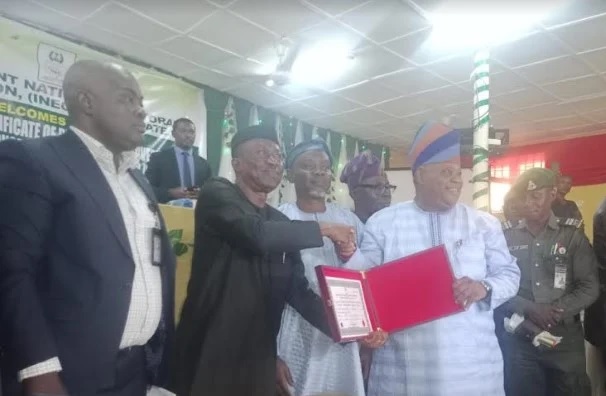
Congratulations to Senator Ademola Adeleke as INEC finally issued him the certificate of return on Wednesday, the 20th of July as the winner of the Osun state governorship election held over the weekend; the certificate of return was issued to him four days after the election was conducted.

A certificate of return is an electoral document issued to the winner of an election, declaring the candidate the rightfully elected candidate of the election.

Mr. Adeleke, who contested the July 16 election on the ticket of the Peoples Democratic Party (PDP), polled 403,371 votes to defeat the incumbent governor, Gboyega Oyetola, of the All Progressives Congress (APC), who scored 375,027 votes, and 13 other candidates.

Before the certificate of return was finally issued, the camp of Senator Adeleke was already agitating about why after days the election was concluded INEC is yet to issue the certificate of return, the camp of the election winner was already clamoring that INEC is breaking the law for not to have issued the certificate of return days after the election. The most vocal about the issue was David Adeleke, the megastar musician who is also the nephew of Senator Adeleke, the winner of the election. In his tweet on Tuesday, the 19th of July while poking INEC on their reason for not having issued the certificate of return to his uncle he posted this: “@inecnigeria should we send you fuel money? LOL

“Please no one should tamper with the will of the Osun People!

“Issue the certificate as required by Law!”.

This tweet gained multiple retweets and comments as numerous other online activists joined the star musician and his family in calling out INEC and its officials, accusing INEC of breaking the law for not having issued the certificate of return to the winner of the election 3 days after the election. Unfortunately, this agitation was clothed in so much ignorance and lack of knowledge of the laws of Nigeria, specifically the electoral laws.

For the sake of legal knowledge and because we are in the election period in Nigeria we will be taking a look at what the law says about issuing the certificate of return to winners of elections and what is the number of days INEC has to issue the certificate of return and if INEC fails to issue a certificate of return to the winner of the election what should the winner do and what document can be used in the place of the certificate of return for the swearing-in ceremony of the winner of the election.

The latest electoral act of 2022 provides answers to these issues. It is provided in Section 72 of the act that a (sealed) certificate of return at an election shall be issued within “14 days” to every candidate who has been returned as the winner of the election by the Returning Officer in an election.

The implication of this provision is that INEC has up to 14 days to issue a certificate of return to any winner of an election and only after 14 days have passed without INEC issuing the certificate of return to the winner can we then say that INEC is breaking the law but anything less than 14 days after the election was held, INEC is still acting within the confines of the law.

But when the court in an election petition nullifies the certificate of return issued to a previous candidate, INEC has just 48 hours to issue a fresh certificate of return to the candidate the court has held to be the rightful winner of the election.

If for any reason INEC fails, refuses, or neglects to issue a certificate of return to the winner of an election, the candidate will obtain a certified true copy of the order of the court declaring him the winner of the election; rightfully elected and order of the court is enough and sufficient for the purpose of swearing in of the candidate into the office he/she was elected for.

In summary, INEC has the window of 14 days to issue a certificate of return to the winner of an election and no law is broken if the certificate is issued within that time frame but when the court nullifies a previous certificate of return issued to another candidate, then INEC has just 48 hours to issue a fresh certificate of return to the candidate the court has held to be the rightful winner of the election.

The Atiku Abubakar’s Proposal to Fix Electricity in Nigeria

1

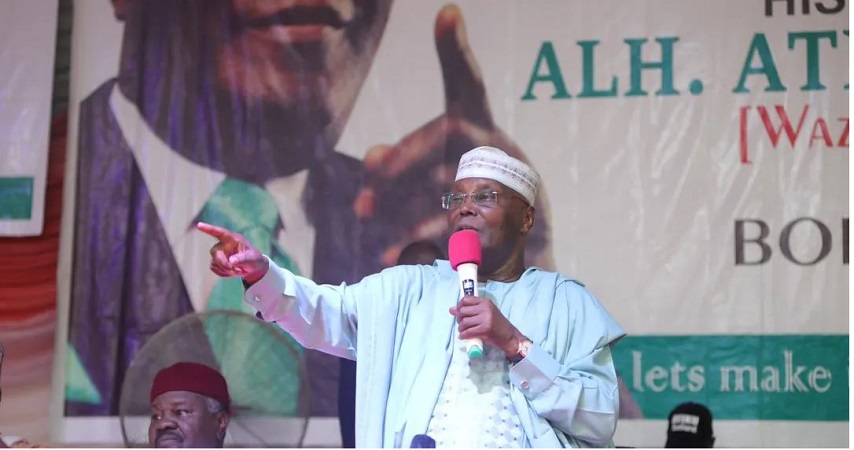
Nigeria’s national grid has been collapsing with reckless abandon. Of course, we know that if that trajectory does not change,  the harmattan season may come earlier, economically. So, there are many ideas on how to fix it; one is coming from the nation’s former Vice President and PDP presidential flagbearer, Atiku Abubakar: “The IDF [infrastructure debt fund ]  will have an initial investment capacity of approximately $20 billion. In addition, I’ll cause the creation of an infrastructure development credit guarantee agency to complement the operation of the IDF by de-risking investments in infrastructure to build investor confidence in taking risks and investing capital”. 

In their words,” Dear customers, we regret to inform you of a system collapse on the national grid at precisely 11:27 a.m today July 20. We are in talks with the transmission company of Nigeria to ascertain the cause of the collapse and a possible restoration timeline. We will keep you updated on the situation”.

Also displeased with the constant national grid collapse is People Democratic Party (PDP) Presidential aspirant Atiku Abubakar who via a series of tweets on Twitter proposed a solution to put a stop to the incessant collapse of the national grid.

See what he said, “I am reliably informed that there was a total national grid collapse at precisely 12:23 pm today. This is one collapse too many. It is the 6th time this is happening in this year alone. Due to the priority that I place on the power sector upon which the successes of other sectors are hinged, I am proposing infrastructure that will involve the facilitation of a review of financial, legal, and regulatory environment to promote private investment in power among the sectors.

”I’ll promote the identification, with tax breaks, a consortium of private sector institutions to establish an infrastructure debt fund (IDF) to primarily mobilize domestic and international private resources for the financing and delivery of large infrastructure projects across all sectors of the economy.

“The IDF will have an initial investment capacity of approximately $20 billion. In addition, I’ll cause the creation of an infrastructure development credit guarantee agency to complement the operation of the IDF by de-risking investments in infrastructure to build investor confidence in taking risks and investing capital”. 

I commend Mr. Abubakar for coming up with a solution; we need just that as the campaign season picks up. This proposal is not novel; Nigeria has tried it in many forms and it has one big problem: “credit guarantee” does not scale. 

In a 2018 presentation in Washington DC, at Ronald Reagan International Trade Center (see link here),  I made a case that credit guarantees cannot help Africa. My thesis was based on this: if you want someone to invest $1 million and guarantee $1m, when that person finishes investing that $1m, he will expect you to guarantee more funds, to unlock new investments.  If you do not have more capacity to guarantee more, scaling that project will stall. That is what has happened in most parts of Africa: credit guarantees work but are also limited once the guarantor cannot expand them.

What was my proposal in Washington DC? Go back to the root cause why a guarantee was even necessary? If you remove those impediments, investors will come and if they find opportunities, they can scale that mission, not just in the small pilots for guarantees, but for every part of the nation.

My suggestion to the nation is simple: credit guarantee is not scalable since it is bounded. However, we need to address the reasons why people see opportunities in the energy sector and yet refuse to invest. Interestingly, we know the #1 reason: a court now determines how much producers of power can charge their customers, irrespective if that will bankrupt the sector.

Sure, price ceilings are necessary for products produced by utilities but what is happening in Nigeria goes beyond managing oligopolies in municipalities. What we have is simple: many Nigerians believe that power has to be free and the court has blessed that thinking, making it hard to price energy reflectively.  The result is evident: many players in the energy sector are collapsing.

Yes, someone has to fight for investors so that investing in Nigeria’s energy sector does not translate to burying cash. We need to tell the court that while it can fix the prices customers pay for DStv and Zee World, when it comes to electricity, we need to modulate.

How do you reconcile a scenario where investors see HUGE opportunities in Nigeria’s electricity sector and yet few want to invest in the sector? Focusing on credit guarantees will not help. In my opinion, we need to focus on removing the bottlenecks and whatever makes it necessary to even guarantee people to come and make money!

Comment on LinkedIn Feed

Comment: I think a bigger question is where are they going to get the funds to guarantee investments made through the IDF in the first place. After all, the country is practically broke. The only possibility I see to guarantee such funds is to borrow again, and we all know how that goes in Nigeria with corruption?

My response: a great point. That is like 50% of the nation’s budget depending on the exchange rate of choice.