
DD
MM
YYYY

PAGES

DD
MM
YYYY

spot_img

PAGES

Home Blog Page 5042

Moove Secures $20m From Absa to Expand Operation

1

The mobility sector of the African fintech industry is creating a huge market that investors can’t resist. From Nigeria to Kenya, Egypt and South Africa, mobility startups are increasingly raking in millions of dollars in investment funds.

In 2021, ride-hailing & taxis generated some 3.1 billion dollars in revenue, while car rentals generated roughly 1.4 billion dollars, per Satista. The industry is projected to generate more than four billion dollars in revenue by 2026.

With its untapped market, more startups are springing up and investors are betting huge sums on them. The latest among them is Moove.

The world’s first mobility fintech, has secured R300 million (US$20 million) in financing from Absa Corporate and Investment Banking (CIB). This comes a few weeks after the company also secured $20 million from BII, bringing its total funding to-date to over $200 million since its launch in 2020.

The startup’s latest funding will be used for its South Africa operations to strengthen its expanding vehicle financing offering to more customers.

Launched in 2020 by Ladi Delano and Jide Odunsi, Moove is democratising vehicle ownership across Africa by providing mobility entrepreneurs access to revenue-based financing in markets with low access to credit. Using its alternative credit scoring technology, Moove provides vehicle financing to its customers to purchase brand new vehicles using a percentage of their weekly revenue. Having experienced overwhelming demand and exponential growth across its six sub-Saharan African markets, Moove-financed vehicles have completed over 5 million trips to date.

The mobility space in Africa is highly fragmented and informal, and the sector represents an opportunity in a continent where high unemployment is rife. According to Statistics South Africa, over a third of South Africans were reported as unemployed during the first quarter of 2022, reaching a record 35.3% in Q4 2021. Moove will continue to scale its revenue-based vehicle financing model in South Africa, creating more jobs for mobility entrepreneurs to earn a living and own their vehicle.

Moove’s CEO and Co-founder, Ladi Delano, says, “At Moove, we pride ourselves on being a mission-led company that empowers its customers to earn their way to asset ownership through a sustainable source of employment. In Absa, we’re delighted to have the funding which will enable us to serve more Africans looking for a path to economic prosperity.”

“For decades, they’ve transformed the livelihoods of millions through access to financial services, making them an ideal partner for Moove to tackle this same mission in South Africa. With this new funding we’re strongly positioned to unlock new opportunities for mobility entrepreneurs across South Africa helping them generate income and ultimately driving the economy forward.”

Despite Africa’s status as the world’s fastest-growing continent, it has the lowest per capita car ownership rate, with over 1 billion Africans having limited or no access to vehicle financing. Moove has emerged as part of a new generation of African-born fintechs to lead the charge in the “mobility fintech” sector. This white space addresses the continent’s acute vehicle financing problem and empowers mobility entrepreneurs to become more productive and successful.

Morne Visagie, Head of Structured Asset Finance at Absa CIB says, “We are delighted to close this complex transaction with Moove, which has been an exciting journey over 18 months. This transaction enables the conventionally unbanked to gain access to finance, enjoy the benefits of their efforts and build a brighter future in a sustainable way”

Moove is Uber’s largest fleet vehicle supply partner in EMEA and has partnerships with several other mobility marketplaces, including Glovo, Swvl, Sendy, and Kobo360 across ride-hailing, trucking & logistics, last-mile delivery and mass transit. Since its initial launch in 2020, Moove has rapidly expanded to 13 cities across three continents.

The Youth’s Amazing Playbook in Osun State

0

It is too early as we wait for the final results in Osun state. But I want to commend the Nigerian youth. What an exceptional operational execution. Did you see the playbook? They picked someone they believe will anchor their future and they went into markets, communities, etc with loudspeakers and recruited their parents.

Who would you believe? Your son/daughter or one strange politician on whom to vote? That is how you win your future – devise a strategy that connects the power of mobile energy with get-out the votes and spread the vision. #respect to young people.

And did you see how they organized? They are not picking parties – they are picking candidates? If they like a PDP guy, they ask others to bulk-vote for that person. If they like an APC, the same happens.  What this means is simple: irrespective of your party, if you have good records, you will keep your job as they are not after parties.  It is too bad that our political science professors are on strike but this is amazing. In Osun, they connected the cyberspace and meatspace.

And did you see what happened in Sokoto today? That procession? #believe . We simply want the right person, irrespective of the party!

Comment on Social Media Feed

My Response to a comment: Actually, LP Youth endorsed the candidate for PDP Youth in Osun. They did not like the LP candidate in Osun and asked everyone to support PDP. As I noted, our political science professors are on strike. If not, they could have explained what is happening. I am an engineer and have no good understanding of this. But I can tell you this – look beyond party. If you see this as APC vs PDP vs LP, you will be tripped.

Comment: ….this made the south west a unique set of people in Nigeria Politics. No religion or Party sentiments. Since 1999, South west has produced Governors across different Political parties (AD, ANPP, PDP, APC and Labour Party) and religion lines. Yoruba tenet of ‘Omoluabi’ (Good Character) which reflect in their political activities must be emulated by other regions of the County to produce credible candidate in respective of Political or religion affiliations.

My Response:  It has nothing to do with tribe, I will say. If you are counting party, no single state in Nigeria has produced more governors from more parties than Imo State. They have PDP, APC, PPA, APGA. What is happening in SW is that it has become a huge lab with two of its 6 states outside the general election day (Ekiti and Osun); no other region has that.

Abians, Get Your PVCs and Vote in the 2023 Elections

0

If you live in Abia State, I urge you to get your PVC before INEC concludes the issuance of new PVCs. The next Abia state election is very important. We must vote. The electoral umpire, INEC,  had extended the date for the registration process, and no one should expect INEC to extend it beyond the July 31st deadline. Many of us want Abia State to work and run better. We need growth in Aba, Umuahia, Ohafia, Bende, Isuikwuato, Ngwa, Arochukwu, Ugwa, etc. We must vote smartly.

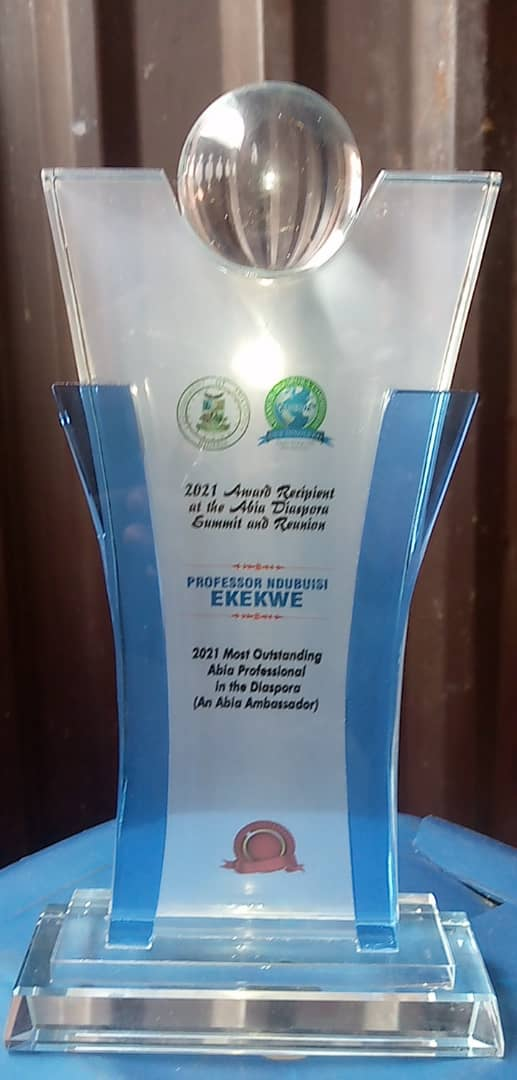
The elders of Abia state honoured me as the Abian of the year in diaspora. We have provided opportunities in Abia, building companies. We have invested in real estate and provided jobs in our state. But we can do more if we have more confidence that our state is growing.

I call all qualified ABIANS to get his or her PVC and on the election date, VOTE. I am speaking with some of the gubernatorial (governor) aspirants; many are great. And I want you to become engaged. Forget the party, vote for the best person to make the God’s Own State the paradise in the world. God bless Abia State.

Ndubuisi Ekekwe

2021 Most Outstanding Abia Professional in the Diaspora

2021 Abia Ambassador

U.S Governors Vow To Boost Computer Science Education At Schools

0

Governors from all 50 states in the United States have committed to funding a computer science curriculum at more schools after hundreds of executives such as the likes of Jeff Bezos and Bill Gates sent a letter to them urging them to take action.

The effort, announced on July 14 at the National Governors Association, was organized by the state-based non-profit code.org, which aims to provide computer science to students and help them seek careers in technology.

The executives in a letter, therefore, urged the governors to update the school curriculum in each state to give students in every school access to computer science education. According to Microsoft founder Bill Gates, he revealed how computer science was pivotal to his success in life after being introduced to it at an early age.

In his words, “When I was 13, computer science changed the course of my life. I was really lucky to have access to a computer that early on. I hope this initiative will give every student the same opportunity”.

It is interesting to note that Governors in the U.S are already walking the talk, as they already have signed the ‘compact to expand k-12 computer science Education’ committing to expanding access to computer science education through various strategies including funding and increasing participation from traditionally underserved populations.

Despite the fact that computer science learning opportunities are not universally accessible, they are increasing specifically with schools now including it in their curriculum. There is no disputing the fact that the world has significantly advanced as we are currently in the digital age, therefore there is a strong need for school students to learn computer skills at an early stage.

The computer science field has no doubt been described as one of the fastest growing and highest paying career paths in the world. With the evolving digital age, there is a strong need for students, regardless of whatever field, to have an avid knowledge in the usage of computers.

Currently, a lot of job openings with knowledge of computer science are growing in almost every industry, and such job openings are projected to grow at twice the rate of any job. To keep up with these latest career opportunities, young people need to be taught computer science in schools.

Despite the current digital age that the world has evolved into, I am still perplexed why only a few schools have included it in their curriculum with so many others still reluctant to do so. A close observation of most innovation in the world today, one will observe that such was driven by computer science.

A case study of Microsoft founder Bill Gates who attributed his success to being exposed to computer science courses at an early age. Imagine a lot of innovations the world would have witnessed if about 90% of schools in the world included computer science in their school curriculum.

One crucial factor in building capacity for computer science is to provide professional development and support for teachers who teach it. To effectively build these students on computer science courses, teachers must have an extensive knowledge and practice with computer science to properly engage these students.

Because a lot of teachers are only used to the basics and traditional instruction method which is not effective in today’s digital world. Students need to learn beyond the basics and delve into skills like coding, Web Designing, Software Developing, etc. In today’s world, having a beyond-basic knowledge of computers connects people to a grid of opportunities.

African Development Bank (AFDB) Coding For Employment Program Selects 500 Digital Ambassadors To Pilot The Program

0

The African Development Bank (AFDB) through its coding for employment program, has picked 500 change makers, 45% of whom are women, from four countries for the pilot digital ambassadors program.

These selected digital ambassadors will be put through a three-month course, in which they will be trained to acquire digital skills, such as software development, as well as soft skills, such as problem-solving, project management, and communication.

They will then lead a peer-to-peer training model that seeks to expand digital skills to more African youths, especially those in rural communities with limited internet connectivity.

In 2018, the bank in collaboration with the Rockefeller Foundation, Microsoft, and Facebook launched a coding for employment program. The program which was launched was aimed at preparing Africa’s youth for future jobs as well as equipping the next generation of young digital innovators from Africa by training them in demand-driven information and communications technology (ICT) as well as matching graduates directly with ICT employers.

This program was set up by the African Development Bank to equip youths in Africa with the necessary in-demand skills which will no doubt create a positive impact on the African workforce, thereby leading to the region’s economic transformation.

The coding for employment program which is at the center of AFDB jobs for Africa youths strategy, has predicted that by 2025, the program will equip about 50 million more youths with employable skills.

This will create about 25 million jobs in the ICT sector, agriculture, and other key industries across Africa. It is indeed highly commendable for the good work African Development Bank (AfDB) has been constantly doing towards equipping youths in Africa with on-demand skills.

Over the last 15 years, it might interest you to know that the African development bank has invested $1.64 billion in programs to prepare youths in Africa for technology, innovation, and careers in science.

As the world evolves into a fourth industrial revolution, the demand for digitization in almost every sector is on the rise. These digital innovations have been pivotal to solving some countries’ myriad problems as well as generating new job opportunities.

Unfortunately, in Africa, the digital gap is very wide which poses a serious challenge to the youths in the region from securing on-demand jobs which leaves the region underdeveloped.

This is why the African Development Bank through its constant skill acquisition program seeks to reduce the digital gap in Africa as well as equip the youth with relevant skills to also develop the region.

Through these skills, youths in Africa will become innovative by developing innovative solutions that will boost the economy of the region and also make it compete among developed regions.

With the high unemployment rate of youths in Africa, these programs will drastically reduce the number of unemployed people in the region.

It is pertinent to note that a highly skilled labor force in a thriving digital ecosystem will increase the ability of African countries to compete on a global scale, by attracting investments; promoting innovation in service delivery and value-addition to natural resources, as well as generating knowledge-intensive activities.