DD
MM
YYYY

PAGES

DD
MM
YYYY

spot_img

PAGES

Home Blog Page 5043

ASUU, Besides Strikes, Provide A Roadmap for Financial Reform of Nigeria’s University System

2

I write to support ASUU as it continues to battle for the future of Nigerian youth. Yet, I want to also tell ASUU that Nigeria is not financially capable to accept some of its demands because Nigeria does not have the funds. We all want our professors, teachers, etc to earn decent wages. We also want the funding of our universities. But the fact is this: Nigeria does not have the funds. And even strikes will not change that state in the short-term.

University strikes decimate local economies. My local government has two universities; we know the contributions those schools provide to the local economy. When students are in town, okada boys have jobs, mama put has buyers, etc. In short, every student could be contributing at least N1,000 to the local economy (food – N800, transport – N200, etc). Multiply this conservative N1,000 by tens of thousands of students, workers and associates, you will see why every community wants a university. With strikes, those opportunities dry up.

ASUU will likely return in weeks since the government understands the political risk as national election arrives. Also, the labour union is planning to join in solidarity. Yet, that return is nothing but a pause of a deep problem which must be fixed.

The current structure we have in the Nigerian university system is not viable. A major tax reform can help so that the private sector and individuals can help support the schools. And besides any tax reform to boost funding, the organization of our school system must evolve. The Ivy League club could soon hit $1 trillion; Nigerian schools can at least hit $50 billion.

The Ivies added $48.6 billion to their endowments this year, and new estimates show their collective endowment could exceed $1 trillion by 2048. Organized as charitable non-profits, the Ivy League is a cash generation machine. Their collective endowment now stands at approximately $192.6 billion, which is up from $144 billion in 2020.

I do believe and continue to posit that Nigeria should thrive to consolidate many federal universities. In Southeast, we can have UNN with many federal universities in Southeast as campuses. For example, Michael Okpara University of Agriculture, Umuahia can be the agriculture school of this new UNN. You do the same across the nation.

Sure, I know that it would not happen because no one would like his or her alma mater to disappear. But one day, whether we like it or not, poor funding will force most schools to collapse and they will now beg some bigger ones to absorb them!

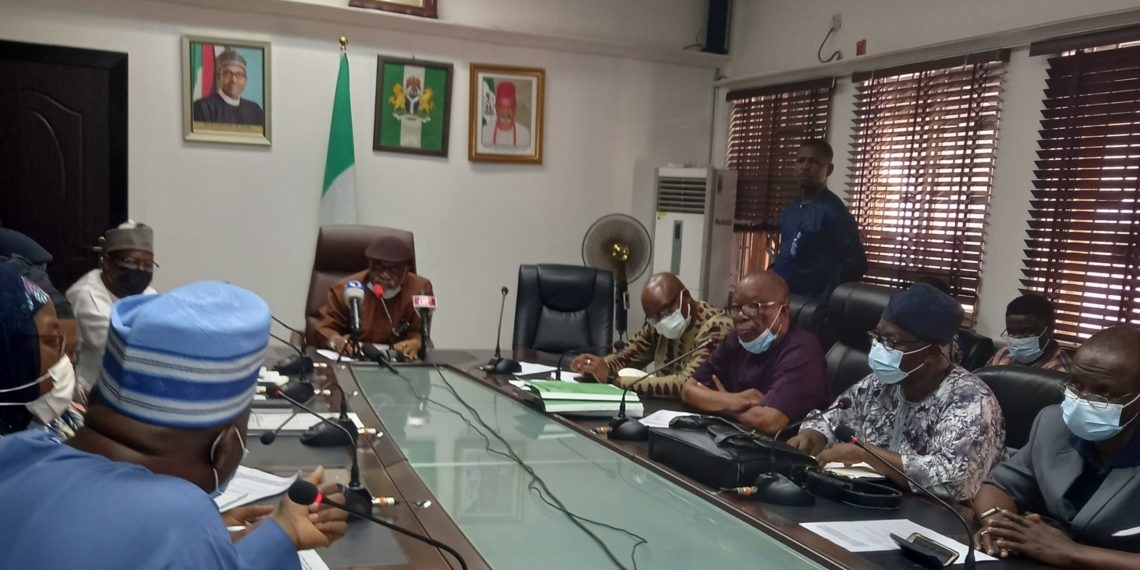
The Nigeria Union of Petroleum and Natural Gas Workers (NUPENG) has thrown its weight behind a planned protest by the Nigerian Labour Congress (NLC) over the ongoing strike by university lecturers under the Academic Staff Union of Universities (ASUU).

NLC President, Ayuba Wabba, had, on July 1, said that the NLC would embark on a nationwide protest if the strike persists.

The strike by ASUU has been on for almost five months since it began on February 14.

Other workers’ unions across the nation’s universities hav also embarked on similar industrial actions, grounding completely both academic and non-academic activities across public ivory towers nationwide.

Comment on Social Feeds

Comment : Cutting down on what the government spends on itself can fund ASUU many times over in my opinion. The problem seems to be how the government places education on the lower rungs of the ladder.

My Response: “Cutting down on what the government spends on itself can fund ASUU many times over in my opinion. ” – it can go both ways. Nigeria needs to trim dozens of our federal universities and cut the number of VCs, provosts, etc. The same problem you saw in government is also in schools. UNN can operate MOUA Umuahia as a campus for agriculture, etc. By the time you are done, Southeast will have only 2 federal universities under two VCs, etc. 

The cost you will save from official cars, duplication of registrars, etc can go into learning, research, etc. I worked on that for Rwanda and converted most of the universities into one leadership, saving $millions. Me with one of the ministers here . Today, most of their funds go into learning and research and not buying official cars for VCs, provosts, etc.

Comment 2: TETF was originally Nigeria University system idea ?. What’s happened to it?

My Response 2: The problem is not just having more money. It is having a reformed structure to make use of money. Nigeria has created more than 20 new federal universities since 2010 when it could have expanded the existing ones. Doing that would have saved more VCs, provosts, official cars, etc. That saved funds would go into learning, research, etc. That is the problem. Today, you have a federal university with 1,700 students with all the officers in a university. The ROC (return of capital) is poor for the Nigerian people.

Comment 3: Sorry sir but you are wrong….DEAD WRONG! Nigeria has the funds

My Response 3: life is at levels. South Africa’s budget is close to $152 billion for 59 million people; Nigeria’s budget is $42 billion for 210 million people. I know that Chinedu will not understand but when you look at things at bigger angle, even if Nigeria is super-prudent, it cannot support 210m with $42b at the same level SA can support 59m with $152B.

But I do not blame your comment “dead wrong” – you have been reading that as a kid and it is hard to think otherwise. But get this from me, your nation is one of the poorest per capita in the world.

Fixing Nigeria’s University Funding Paralysis

Tesla is Laying Off 229 Staff, Shuttering San Mateo, California Office

0

In June, Tesla CEO Elon Musk sent an email to the automaker’s executives, informing them that due to overstaffing, Tesla will be reducing salaried headcount by 10%, and that worldwide hiring should be paused.

Though the email was debated and Musk did not openly admit it, the decision to lay off some employees is materializing.

Now, TechCrunch reports below that Tesla is laying off 229 data annotation employees who are part of the company’s larger Autopilot team and is shuttering the San Mateo, California office where they worked, according to a California regulatory filing.

TechCrunch previously reported that nearly 200 employees were being laid off, according to sources who talked to TechCrunch on condition of anonymity. Bloomberg was the first to report the layoffs, which have now been confirmed via a Worker Adjustment and Retraining Notification Act notice. The WARN ACT requires employers conducting mass layoffs to issue a 60-day notice for affected workers.

The San Mateo office employed 276 workers. The remaining 47 employees may be sent to work in Tesla’s Buffalo Autopilot office, according to sources familiar with the matter. Most of the workers were in moderately low-skilled, low-wage jobs, such as Autopilot data labeling, which involves determining if Tesla’s algorithm identified an object well or poorly, according to one source.

The source noted layoffs of this team were rumored to be on the table for months, and that the work would be offloaded to Buffalo.

The layoffs are part of the 10% reduction in workforce that Tesla CEO Elon Musk announced last month.

The failure to issue a WARN notification has already led to at least one lawsuit. Lawyers representing two former Tesla employees who were terminated in mid-June filed in June a lawsuit in the U.S. District Court for the Western District of Texas that alleges the company did not provide the 60 days of advance notice required by federal law during a recent round of layoffs.

Last week, the plaintiffs’ lawyers filed an emergency motion asking a judge to prohibit the electric vehicle maker from forcing workers to sign releases in exchange for less severance than federal law provides.

Russia’s Invasion, Ukrainian Wheat Export Shortfall and Panic over Global Food Security

0

Amidst panic over the Ukrainian wheat export shortfall and its likely disruptive effect on the global food supply due to Russia’s alleged deliberate attack and burnings of Ukraine’s wheat fields, analysts estimate that the territorial warfare plot, though not a small fry, may not be as economically downtrodden as it is currently being conceived. According to Forbes, Russia’s torching of wheat fields in Ukraine may not be inflicting the market disruption and food insecurity that Moscow desires.

Forbes’s reporter, Eric Tegla, reported that Russia’s naval control of the black sea and its off-again and on-again grip on the snake island has thwarted Ukrainian wheat exports. This is corroborated by a statement made by the United State’s secretary of State, Anthony Blinken, who was reported to have estimated that 20 million tons of Ukrainian grain is sitting in the locked Silos outside the Black Sea port of Odesa, and more is waiting on ships blocked from leaving Ukraine’s key strategic Port. The American diplomat was reported to have expressed his belief that Russian President, Vladimir Putin’s deliberate aggressive control of grain shipment is political blackmail to deflect responsibility and get the world to cow to his threats and end the sanctions on Russia.

According to the United Nations Food and Agriculture Organisation’s wheat price index, wheat prices have increased by 45 percent in the first 3 months of 2022 compared with the previous year. The Global production of wheat, rice, and other grains is forecast to reach 2.78 billion tons in 2022 from 2.94 billion produced in 2021.

According to a 2022 United States Department of Agriculture report, Russia and Ukraine are the first and seventh largest exporters of wheat in the world respectively, and both countries account for nearly one-third of the world’s wheat and barley export. However, ‘’since the beginning of the war, Ukraine has only been able to export 1.5 million to 2 million tons of grains a month down from more than 6 million tons a month previously’’ Joseph Glauber, senior researcher at the International Food Policy Research Institute in Washington was cited by Forbes.

Reuters News reporter, Pavel Polityuk, cited the Ukrainian agriculture ministry as saying Ukraine’s grain export in the first seven days of July was down by 30 percent year on year at 402,000 tonnes. The reporter added that the government remarks Ukraine can expect to harvest 50 million tonnes of grains this year compared with a record of 86 million tonnes in 2021 because of the loss of land to Russian forces and lower grain yield

Since Russia’s attack, some Ukraine grains are being rerouted through Europe by rail, road, and rivers but it’s a small quality compared with the Sea route. However, the Russian Foreign Minister, Sergey Lavrov, has noted that Ukraine’s wheat exports could restart if the country removes mines in the Black sea and agrees that arriving ships can be checked for weapons by the Russian authorities.

According to Forbes’ Tegla, the blockade goes on as does the apparent burning of Ukrainian wheat. But if this year’s Russian and Western harvests prove to be bountiful, Putin’s leverage using food supplies may not be as strong as he’s hoped and the global backlash will surely be stronger

The Foundation for Investigative Journalism (FIJ) Nigeria raised a concern that the increasing price of bread in Nigeria could be adduced to the current political tension between Russia and Ukraine. According to FIJ Nigeria, food security remains under threat due to Russia’s invasion of Ukraine, and Nigeria has been hit hard as a result. Citing April 2022 report by Statista, FIJ reporter, Joseph Adeiye, states that the price of bread in Nigeria is currently pegged at $1.14 compared to other African countries where a loaf of bread is sold for less than $1. The reporter fears that the cost of bread, wheat flour, pasta, maize, barley, and other derivatives will continue to rise and supplies will dwindle.

Turkey has been the mediating country between Russia and Ukraine since the former sent its armed forces into the latter on February 24. The last peace talks between representatives of Russia and Ukraine were held in March ending 2022. However, according to Reuters News, a fresh round of negotiation between Russia, Ukraine, Turkey, and the United Nations over grain exports from Ukraine would take place on Wednesday, 13 July 2022 in Istanbul.

Power of Bread (Sudan) and Fuel (Sri Lanka), and Nigeria’s Crossroad with Sovereign Debt

3
Nigerian leaders

I beg all qualified Nigerians to get their PVCs and vote in 2023. If you do not vote, the nation may enter a phase that would become irreversible. Sudan went down on bread: “Sudan’s fallen ruler, Omar al-Bashir, won many fights for three decades. He mastered the politics of UN. He overcame America and South Sudan. He triumphed over IMF and World Bank. He fought rebels, friends and enemies – and won. But at the end, he fell because of BREAD. Yes, bread – so simple and harmless- brought down one of the last surviving yoyo men of Africa.”

In Sri Lanka, Gotabaya Rajapaksa ruled but in the end, lack of fuel, even for people to drive their cars, brought the mess home. He fell. 

In Nigeria, sovereign debt is loading: “The World Bank said Monday that Nigeria has failed to meet full disclosure rating conditions on debt reporting for three consecutive years, adding an ugly remark to the nation’s unpleasant debt story.

Nigeria’s public debt stock has risen significantly in the last five years as the country battles economic headwinds emanating from covid-19 and poor fiscal policies. Nigeria’s total public debt stock stood at N41.60 trillion or $100.07 billion as at March 31, 2022, according to data from Debt Management Office (DMO).

The report said the World Bank has in the last three years been monitoring how transparent Nigeria is in its debt reporting practices and found that it did not meet “full disclosure” policy it set for International Development Association (IDA) countries.”

2023 is our last chance to reverse the miry clay- trajectory. If we do not get it right, sovereign debt will force Nigeria to enter into severe paralysis. IMF projects that by 2026, 100% of the national revenue will go into servicing debt. In short, the money we spend on servicing  debts in Nigeria, every year, can fund 100% of our education and healthcare sectors as they exist. People, we can suddenly have zero money for anything but servicing debts in Nigeria! Have you got your PVC, yet?

The International Monetary Fund (IMF) has warned that debt servicing may gulp 100 percent of Nigeria’s revenue by 2026, if the government fails to implement adequate measures to improve revenue generation.

The IMF’s Resident Representative for Nigeria, Ari Aisen, disclosed this while presenting the Sub-Saharan Africa Regional Economic Outlook report on Monday, 30th May 2022 in Abuja.

Comment on LinkedIn Feed

Comment: “If we do not vote, the nation may enter a phase that would become irreversible.”
But we have always voted, prof. What’s the difference this time?

My Response: You have not voted actually. Lagos registers 5m out of 10m qualified and only 1m vote on election day. Is that voting using 1/10 to decide the future?

Nigeria Fails World Bank’s Debt Disclosure Rating

Nigeria Fails World Bank’s Debt Disclosure Rating

1

The World Bank said Monday that Nigeria has failed to meet full disclosure rating conditions on debt reporting for three consecutive years, adding an ugly remark to the nation’s unpleasant debt story.

Nigeria’s public debt stock has risen significantly in the last five years as the country battles economic headwinds emanating from covid-19 and poor fiscal policies. Nigeria’s total public debt stock stood at N41.60 trillion or $100.07 billion as at March 31, 2022, according to data from Debt Management Office (DMO).

The report said the World Bank has in the last three years been monitoring how transparent Nigeria is in its debt reporting practices and found that it did not meet “full disclosure” policy it set for International Development Association (IDA) countries.

“Global studies indicate that debt transparency directly contributes to higher credit ratings, lower borrowing costs, and foreign direct investment (FDI) inflows. Hence, the debt management office took the strategic stance to focus on debt transparency efforts and took several actions to improve public debt reporting and disclosure,” it said.

The Washington-based financial body said that Nigeria failed to publish Annual Borrowing Plans (ABP), adding that guaranteed and non-guaranteed debts were not reported while information on recently contracted loans was also not provided.

The World Bank said these are indicators that Nigeria did not meet the “full disclosure” rating for every single one of the nine categories on the debt transparency Heat Map.

According to the financial organization, debt transparency Heat Map involves data accessibility; instrument coverage, sectoral coverage, information on the contracted loans, periodicity, time range, debt management strategy, annual borrowing plan and other debt statistics/ contingent liabilities (CLs).

Nigeria has been borrowing internally to meet its budget shortfalls. Domestic borrowing accounts for more than 70% of the country’s total debt, including the central bank’s Ways and Means Advances that has topped N19 trillion, according to data from the DMO.

Ways and Means Advances is a loan facility through which the Central Bank of Nigeria finances the government’s budget’s shortfalls.

While there is growing concern over Nigeria’s rising public debt, whose servicing is currently taking about 95% of the country’s revenue, the Ways and Means Advances has become another cause for alarm.

The CBN admitted that the Federal Government’s borrowing from it through the Ways and Means Advances could have adverse effects on the bank’s monetary policy to the detriment of domestic prices and exchange rates.

“The direct consequence of central banks’ financing of deficits are distortions or surges in monetary base leading to adverse effect on domestic prices and exchange rates i.e. macroeconomic instability because of excess liquidity that has been injected into the economy,” it said on its website.

Last November, the World Bank also warned the Nigerian government against borrowing from the CBN to finance budget deficits, saying it puts fiscal pressures on the country’s expenditures. In addition, borrowing from the CBN through the Ways and Means Advances will increase the cost of debt in Nigeria, the World Bank said.