DD
MM
YYYY

PAGES

DD
MM
YYYY

spot_img

PAGES

Home Blog Page 5054

Website Development in 2022: Basic Things to Consider

0

You don’t have to write code to create a website! You just need to have the desire, a computer with an Internet connection and take the first step.

Why You Need a Website

A company without a website loses potential customers and profits. It won’t be able to find new customers and sell to people from all over the world.

Agree, for answers we all run to the Internet. Order a pizza? Buy a course? Gamble at the PlayAmo casino? Sign up for French school? Two clicks, and we’re at the right site. We unconsciously evaluate the quality of the site and decide: buy the product or close the page.

If the site is convenient, beautiful, and has answers to our questions, we trust the company and click on the “order” button.

Which Website Builder to Choose

You can create a site in two ways: write the code yourself or build the site on a website builder. The main difference is the functions and features.

Programs that will need to create a site using code:

  • Code Editor. It is in it that the work on the site takes place. Try and choose any of the 6 best code editors: Sublime, Notepadd++, NetBeans, Visual Studio Code, Brackets.
  • Browsers: Chrome, Safari, Mozilla Firefox. You can use them to check how the site is displayed and loaded on different browsers.
  • Graphic editor to create the layout of the site: Photoshop or Figma.
  • Constructors are programs that generate code themselves.

You just insert photos, text and buttons. With their help, it’s easier to create a site by yourself, but you will only have access to basic functions.

The last difference between constructors and programs for writing code is the types of sites you can create. It’s easy to put together a landing page on constructors, but you can’t make multi-page sites.

Top 3 Website Builder Tools

Tilda

Tilda is a website builder that will help you create a website. The main plus is the ease of use. Even if you open the designer for the first time, you will be able to immediately assemble your design for a landing page. It already has both templates and ready-made blocks, and the ability to start the site from scratch.

Wix

Wix is a platform for creating and publishing websites. Bright templates, interactive elements, animations, survey and countdown forms – all this is on Wix. However, it’s not as easy to learn as Tilda. You’ll need a little more patience and time.

LPgenerator

LPgenerator is the most powerful designer for creating landing pages. It has additional features, such as promotion tools, connecting scripts, and integration with other applications. All this will help to make the site even better.

However, for beginners, it’s better to start with a simpler builder – there is a risk of getting lost in the multitude of functions. But if you are already “advanced” in website creation, LPgenerator will be a great option.

It’s easier and faster to create a site on constructors than to write code. This method is perfect for beginners! But if you’ve decided to get serious about websites, don’t be afraid to learn new things. Writing code is a skill you can easily master if you want to.

How to Create a Website by Yourself

1. Draw a Portrait of the Potential Client

A web developer should step into the shoes of a customer and learn to think like one.

Imagine that you are the customer. What are you like? What age are you? How much can you pay? The brighter you present the customer, the better your chances of hitting the bull’s-eye! Ask yourself questions on behalf of the customer to put the most important things on the site:

  • What is the customer afraid of?
  • What questions might come up about the product or service?
  • How do you build trust?
  • What terms will the potential customer understand?

2. Analyze Your Competitors

Competitor analysis will help you understand the structure of your branding, take into account all the strengths and weaknesses of other sites and create the best site in the subject matter.

Open Google and look at the top 5 sites from each search engine that fit your theme. Then analyze your competitors’ sites based on 5 criteria:

  • What blocks do competitors use?
  • In what order are the blocks placed and what does it accomplish?
  • How does the call to action sound?
  • Is the site user-friendly? What makes it convenient and what makes it difficult?
  • What cool tricks do your competitors use?

3. Write Briefly, but Strongly

If you open your site and it’s an endless canvas of text, you’ll close it immediately. The client will not strain to read the text. First, he has little time. Secondly, he can just go to another site in 2 seconds – a competitor.

4. Focus Attention in One Point

The goal of a landing page is to convince the customer to take action. Remember? The key word: action.

To do this, follow 3 main rules:

  • To keep the customer focused on the site, don’t link to other products.
  • Remind the customer of the action. Insert call-to-action buttons not only on the first screen, but also between site blocks.
  • Don’t place buttons with different calls to action so the customer doesn’t get confused.

5. The First Screen Is the Face of the Site

After seeing the first screen, the customer decides whether or not to stay on the site, so you need to work especially hard over the first screen.

“Where am I? What should I do?” – are the customer’s first questions when they open the site. They should be answered by the first screen. The store name, address, specific offer and call to action should all be placed on the first screen.

6. Fill the Site With Tasteful Content

The site should be one piece. Buttons, photos, fonts, colors, shapes – all should blend and complement each other. The elements of the site, like notes, which together become a beautiful melody, only if they are in the right place. People like the eyes, so pick up the quality pictures in the same style.

Watch good sites, analyze the colors and elements, remember the chips. Believe me, taste in websites is a matter of observation. Sign up for Behance or Pinterest and get inspired!

Free stock photos on various subjects can help make your site look stylish – use Depositphotos. This way you won’t violate anyone’s copyright and you’ll get great shots to fill your site.

Why Tesla Is Winning Markets – The Lessons on Operational Execution

0

I admire Tesla as a company. If you focus on what Elon Musk does as a businessman and work hard to recreate some of them, you will find success in markets. Musk provides orthogonal competitive positioning where what you think that makes his companies great is not just the full story.

Case 1: How can someone sell you a car, and then tell you that if you resell it, the next person must still come back and pay license fees to use it legally?

Case 2: If you buy his car, it does not end there – you need to be sending small fees once in a while for updates. If you check carefully, Tesla is a “software company” even though it sells mainly cars.

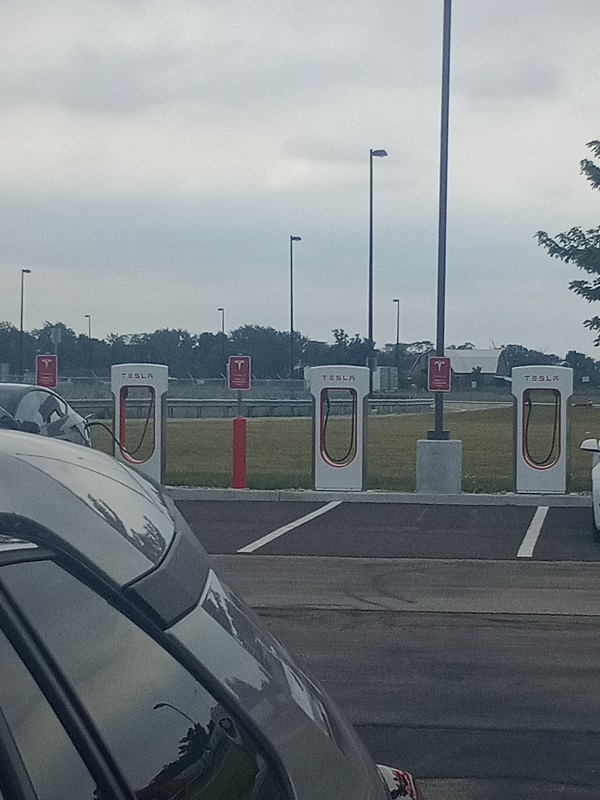
I drove through Ohio yesterday and in one of the service areas (where you rest on the highways), I saw one of the key reasons why Tesla is the king of cars (not just electric vehicles) in the world. Its market valuation can compete with the top 20 leading car companies combined.

In all the leading service centers, you will see Tesla charging stations. I did not see any other car company. What that means is, as you drive across America, you are sure that Tesla charging stations are available to ensure you never run out of electrons. That is exponential execution as Tesla is even faster than the US government there!

Yet, I also noticed one big challenge ahead: the world needs to harmonize the standards for charging stations so that Tesla charging stations can support Toyota, Ford, etc. If we do not do that, we will be in a mess. We cannot afford to have ten brands in that service when one can do. The universal charger model for mobile phones may be in play here.

Feedback on Feed

Comment: Sir, I saw a documentary of a newly launched Mercedes-Benz electric car, Mission xxx, yesterday. I was blown away. In 1 full charge that car will go over 1100Km. The best electric car ever. And I see it a big threat to Tesla…. While watching it Tesla was the first thing that came to my mind…

Tesla has finally seen a worthy competitor

My Response: Concorde Airline did not kill all airlines. In this business, the one with optimized pricing will win. EV will have luxury brands like Mercedes but I am not sure that will do it. It is not really about technology in totality, it is about the pocket of buyers. Mercedes Missionxxx is not reducing cost but increasing it. Would you like to save 20 mins per charge but pay extra $30,000 to buy the car?

Chief Justice of Nigeria Tanko Muhammad Resigns

1

The  Chief Justice of Nigeria (CJN), Tanko Muhammad, has resigned, Premium Times reports. According to the paper, he resigned over poor health. I must commend Justice Muhammad for opening that lexicon in the Nigerian politics and governance system (you resign when you are unable to serve). I hope Justice recovers fully. We thank him for his service to the nation.

Justice Olukayode Ariwoola, the second in line, would be expected to be sworn in, in an acting capacity by the president, until a substantive CJN is confirmed by the Senate.

The next most senior Justice of the Supreme Court, Olukayode Ariwoola, who hails from Oyo State, is expected to be sworn in in acting capacity, sources at the Supreme Court who confirmed Mr Muhammad’s resignation, say.

The resignation by Mr Muhammad, 68, comes about 18 months ahead of his official retirement in December 2024, when he will clock 70.

Mr Muhammad’s abrupt exit comes at a time when his colleagues on the Supreme Court bench accused him of hampering the operations of the Supreme Court by failing to fund judges’ welfare as well as fueling of generators among others.

Recently, other justices in the Supreme Court accused Justice Muhammad of sub-par leadership.

Do We Crowdfund for Justices of the Supreme Court of Nigeria?

PiggyVest Bought Abeg, the BBNaija Sponsor, and Just Renamed it Pocket; BIG Lessons

14

We missed it; it turns out that Abeg which sponsored BBNaija had been acquired by PiggyVest parent company, PiggyTech, according to dnbstories: “Abeg was acquired (very secretly) by its older and richer industry peer – Piggytech, the parent company of PiggyVest. Unlike Abeg, PiggyVest is doing well and is actually one of Nigeria’s most popular savings app. In fact, PiggVest easily makes the list of Nigeria’s most valued fintech startups.” They just renamed Abeg to Pocket. I think that is a more respectable name.

Pocket (formerly Abeg) is a social commerce and payments app from Piggyvest. The company was launched officially in 2021 as a payments platform for sending and receiving money and has now evolved into a full social commerce app with payments embedded. Micro-entrepreneurs can upload items directly from their Instagram with one click, add delivery options and rates, set price, and quantity, add pictures, and videos, escrow funds and can even allow for negotiation within one secure app.

Big lesson: until you have a great product-market fit, spending $$millions on advertising will not help you.  Great companies attain that product market fit first before they begin to blitzscale. That is the only way you can retain customers and get the best investors (the customers) to support your mission. Otherwise, you can spend $$millions on BBNaija and still struggle.

Abeg spent heavily on promotion but it struggled to have a great product market fit at a point it could make money. Of course, great companies could be sold, and that does mean that even extremely amazing companies can decide to exit the market. It could be that Abeg has generated great value and wants to cash out! But I will not vote on that, at this phase of its growth.

We wish Pocket open markets.

E-commerce Growth In Africa Remains Relatively Low; Lagos Tops Africa on E-commerce Order

0

No doubt the e-commerce sector is significantly evolving to become a major driver of global economic transformation, although its growth in Africa has remained relatively low when compared to other regions.

According to a survey, consumers in Kenya, South Africa, Nigeria, and Egypt were 40 percent more likely to either maintain the same shopping levels they had before the pandemic or increase them.

The growth has been low, which has seen the percentage of online shopping traffic in Africa, still represented at less than two percent of the total number of e-commerce users globally.

The number of internet users globally has drastically increased over the last five years, showing that one-third of the world’s population is now online. Although the African continent lagged from the rest of the world in its internet usage due to poor infrastructures.

However, today the African continent has gradually increased in the number of users of the Internet. In the African region, internet use increased from 120 million in 2014 to 270 million in 2019.

Despite the huge benefits e-commerce has to offer, it has not really dominated the African economy like the western world. A lot of businesses in Africa, most especially small and medium-scale enterprises in Africa are yet to take their business online, while many consumers in the region seem to be wary about online purchases.

One major barrier that is hindering e-commerce in Africa is related to the lack of infrastructure. This problem is particularly associated with internet-related technologies. Unfortunately, the African continent has been playing catch-up with the adoption of latest technological trends.

Internet services in most countries in Africa are abysmally poor, which often affects connection. Africa has the lowest number of internet users compared to the number of internet users in Europe.

Another factor that has been proven to hinder e-commerce growth in Africa is the lack of ICT knowledge. In Africa, there is a low rate of ICT knowledge, especially in rural areas where people would rather opt for face-to-face transactions than use electronic medium.

It is argued that a lot of transactions in Africa have remained paper-based as businesses and consumers appear to be content with the traditional methods of transacting and lack knowledge of the benefits of e-commerce.

Therefore, it is not far-fetched to say that ICT illiteracy which is high in the African region has contributed majorly to the low number of internet users in Africa, which explains why small and medium-scale businesses remain unaware of e-commerce and also do not see the need to take their businesses online.

Lagos Top Among Cities In Africa

Lagos state emerges top among cities in Africa with the highest volume of electronic commerce orders in Africa. The commercial city ranked first, with Cairo, Egypt in the second position, followed by Nairobi Kenya in the third position.

A whitepaper titled “Towards a flourishing digital economy for all- a spotlight on Africa” revealed that the e-commerce status in Lagos already has lots of businesses that are already creating a vibrant e-commerce market.

It further reveals that the city has developed innovative ideas/solutions to Africa’s plethora of challenges around payment, identity, and delivery addresses. Fashion products are said to record the highest sales with 21 percent order volume, making them the highest purchase on the continent.

In the second position is beauty products at 15 percent, home and living at 12 percent, food delivery at 12 percent, digital services at 12 percent, fast-moving consumer goods at 10 percent, phones at 8 percent, electronics at 7 percent, and others 3 percent.

With the world rapidly evolving, technological advancements have no doubt enhanced the standard and process of business operations across the globe. It comes as no surprise at all that the city of Lagos ranks top in Africa in e-commerce order volumes.

All thanks to the massively high population in the city with a population of 15,388,000 million people. It has been predicted that by 2030, the city would have a population of 20 million people.

There is also a phenomenal increase in the number of internet users in the region. In a report published by the National Bureau of Statistics, Lagos recorded the highest number of internet users with an estimated number of 16.4 million subscribers.

In the state, MTN had 5.38 million subscribers, Airtel had 4.8 million, 9 mobile had 2.7 million and others accounted for 184,117 internet subscribers. A large percentage of the growing adult in the city, are more inclined to shop online as they prefer to use their smartphones at the comfort of their homes/offices.

Cash on delivery used to be the most preferred payment method among shoppers in the region, but it has drastically reduced, as there is an increase in the number of stores enabling digital e-commerce services.

Lagos state has a GDP of an estimated $91bn which is currently Africa’s 5th largest economy. It is Nigeria’s financial nerve which is currently home to 65 percent of businesses in Nigeria with one of the largest collections of small and medium-sized enterprises in Africa.

It is well known that ICT and e-commerce are inseparable because e-commerce businesses require the application of ICT. One of the reasons why Lagos continues to rank top in Africa in the e-commerce sector is that the city is the major ICT hub of West Africa and potentially the biggest ICT market in the continent.