DD
MM
YYYY

PAGES

DD
MM
YYYY

spot_img

PAGES

Home Blog Page 5070

Join these Tekedia Mini-MBA Special Sessions in the Ongoing Edition

0

Tekedia Mini-MBA has started. To our Learners, the experience has been impactful. The final day to register for this edition is June 24. Besides all in the syllabus, we have added more special sessions to be delivered by experts in the domains. How do you protect that saving in Naira? What are your options? What can you do for the emerging satellite internet economy in Nigeria and Africa? Register today  and join Tekedia Mini-MBA here

Some of the special session dates:

  • July 2: Personal Economy Scenario Mapping

  • July 9: Planning a Career in a New Country

  • July 16: Satellite Internet Business in Nigeria: Careers and Business Opportunities

  • July 23: Understanding Investment Options

Do We Crowdfund for Justices of the Supreme Court of Nigeria?

1

When I read it, I did not want to write about it because one would have expected it to be fake news. But it has turned out to be hard news. Yes, ‘fourteen Justices of the Supreme Court have written to the Chief Justice of Nigeria (CJN), Tanko Muhammad, lamenting the parlous state of affairs in the court…Following the complaints that were raised at a March 2022 meeting “after several persistent requests to hold the meeting,” a “welfare committee” was set up to aggregate the issues. But the justices said, “Your Lordship (the CJN) received and ignored these demands since 24th March 2022.’ Premium Times reports

Simply, the Justices need help and a big one: ““At the Justices meeting, we intimated your Lordship that some Justices sworn on the 6th day of November 2020 were yet to be accommodated by the Court.” So, Justices are “living” with families and friends!

Then the warning: “We DEMAND to know what has become of our training funds, have they been diverted, or is it a plain denial?…we find it strange that despite the upward review of our budgetary allocation, the court cannot cater for our legitimate entitlements. This is unacceptable!” .

People, do we do crowdfunding for the Supreme Court Justices? They can go on strike: ‘They added that should Mr Muhammad fail to address their concerns, “we will be compelled to (take) further steps immediately. May this day never come.”’ Sure, this has nothing to do with money since they have fatter budgets. 

O di egwu: confusion everywhere, and the once vibrant and dynamic nation continues to fade.

The CJN has responded.

PRESS STATEMENT 20/6/2022

Re: State Of Affairs In The Supreme Court And Demand By Justices Of The Supreme Court

The Chief Justice of Nigeria, Hon Justice Ibrahim Tanko Mohammad would wish to confirm receipt of letter written and addressed to him by his brother Justices of the Supreme Court Bench.

Judges in all climes are to be seen and not heard, and that informed why the CJN refrained from joining issues until a letter, said to be personal, is spreading across the length and breadth of the society. This was akin to dancing naked at the market square by us with the ripple effect of the said letter

The Supreme Court definitely does not exist outside its environment, it is also affected by the economic and socio-political climate prevailing in the country. Besides that, the Apex Court has to a larger extent, been living to its constitutional responsibility.

When a budget is made, it contains two sides, that’s the recurrent and the capital, yet all the two are broken down into items. The Federal Government releases the budget based on the budget components. And it’s an offence to spend the money meant for one item for another.

Take for instance, the Supreme Court budgeted this year to re-roof and rehabilitate its complex built over 30 years ago and that is being done. The work on the extension of the complex is near completion, the esthetic lawns and cleanness of the perimeters are being well kept, and security and water supply are adequately provided for his brother Justices in their offices and residences. During the period of pandemic, a profound and extra-care was maintained to avoid causalities among them as well as the staff generally. It would have amounted to an act of irresponsibility to divert money meant for the above for otherwise.

The accusation so far, in summary is that more or all ought to have been done and not that nothing has been done; which is utopian in the contemporary condition of our country.

Before eight new Justices were appointed in 2020 onto the Apex Court bench, there was no additional budget to provide new chambers with equipped library, legal assistance, residential accommodations and logistics for them. The Apex Court has to make do with the resources at its disposal to meet their needs over time. All the Justices of this Court has at least a legal assistance, except some may opt for more. One of the CJN’s legal assistance (now Justice Aina) was appointed to Abuja FCT High Court last month, while another (Barr Ramatu) died three months back. Generally the Judiciary is looking up to recruitment of more legal assistance and other supporting staff this year.

Besides, two Supreme Court Justices died within the period under consideration. Both the four retirees and the two departed cost the court some funds in the forms of gratuities and allowances.

Two weeks ago, eight Supreme Court Justices were nominated for a workshop in London as the court cannot take all of them there at once otherwise the job would suffer. They would be going in batches. Accommodations are being gradually provided for the few that are yet to get. There is none of the Apex Court Justices without SUV and back up cars. If any of them were purchased but refurbished, the external and internal auditors are here in the court to take those that bought them up over it.

The high cost of electricity tariff and diesel are national problem. The Chief Registrar might have budgeted for N300 per litre but diesel is now selling for over N700 per litre and therefore has to find a way around it without even bringing it to the attention of the CJN. But there is no way the generator would be put off if the Court is sitting.

The amendment of court rules is on the process, it has to be critically reviewed to avoid conflict with the constitution and other extant laws. Not all the CJN has reviewed the rules in the past. Within the three years his brother Justices mentioned came the pandemic and the judiciary workers’ strike.

The internet services have been restored to Justices’ residences and chambers, just as some allowances have been paid to them. The CJN held a meeting with his brother Justices last Thursday and another one is due to hold this week.

The general public should be rest assured that there’s no hostility or adverse feelings amongst the Justices of the Supreme Court, as everyone is going about his normal duty.

Ahuraka Yusuf Isah, Senior Special Assistant (on Media} to the CJN

Afropolitan Raises $2.1 Million to Build A Digital Nation

0

In the era of metaverse, an internet version of real life, companies are in a race to create a digital version of environments and cultures. The new digital era has seen the emergence of many startups with an increasing number of investors backing them.

Following this trend, Afropolitan, a community-as-a-service startup that wants to build a digital nation for Africans, announced that it has raised $2.1 million to build an Afro Digital Nation.

The investment is backed by over 25 Angel investors: Balaji Srinivasan, a high-profile figure in the crypto space and the ex-CTO of Coinbase, Elizabeth Yin of Hustle Fund, Shola Akinlade of Paystack, Ian Lee of SyndicateDAO, Iyinoluwa Aboyeji of Future Africa, Olugbenga Agboola of Flutterwave, Walter Baddoo of 4DX Ventures, Jason Njoku of IROKO, Tobenna Arodiogbu of Cloudtrucks, Ngozi Dozie of Carbon and Dare Obasanjo, senior product manager at Meta.

Also participating are Venture Capital firms: Hashed, Atlantica Ventures, Microtraction, Cultur3 Capital, Shima Capital, Savannah Fund, Ingressive Capital, Audacity Fund and RallyCap Ventures.

Afropolitan was founded by Eche Emole and Chika Uwazie to create a Digital Nation that will enable all Africans to build abundant lives. According to its manifesto, building a network comprising the best that Africa and the diaspora offer across art, finance, tech, health, sports, and media. Afropolitan wants to be the first-ever internet country in the future.

Afropolitan’s strategy of building a Digital Nation

Afropolitan, in a manifesto highlighting its strategy of building the Digital Nation, referenced Facebook as a proof that a nation made up of common interest could be built online.

“Human beings are social animals. All that is good and noble about us stems from the fact that we need each other. In the most basic sense, building a new country is a process of scaling a social network around a shared mission and principles. Social networks are formed online and tend to stay there in our time. But what if we built a new network and migrated it into the real world via a city (or Network of cities)?

“The internet enables people to organize around shared values at scales that were previously unthinkable before the current century. If it were a country, Facebook would be the largest one globally. With the advent of cryptocurrency, the next Facebook will not be a social network with a passive online community but rather a full-blown digital republic coordinated by its native currency and a unifying mission,” it said.

The startup touts Balaji Srinivasan’s Network State strategy as the most viable strategy to build such a country — in the 21st Century. The Network State is a digital nation launched first as an online community before materializing physically on land after reaching critical mass.

Afropolitan’s Master Plan,  per its manifesto

The best way to reform an obsolete system is by building a newer, more straightforward system. Afropolitan’s objective is to solve the Crisis of Legitimacy experienced by Africans worldwide by building a new source of Legitimacy embodied in our Digital Nation.

We will do so in four phases:

Phase 1: Network

In Phase 1, we seed our Network by communicating a clear and energetic vision for the world we want to build. We will drop an NFT campaign outlining mythology for our new nation. Afropolitan NFTs will also grant members a digital passport, alongside access to events and future value-added services.

Phase 2: Come for the Network, Stay for the Tool

Speaking of value-added services: Beyond the diaspora, scaling the Afropolitan Network will require providing maximal utility to our members. In Phase 2, we will launch the Afropolitan Super App to bring together all the utilities within the Afropolitan ecosystem under one roof. Members will be able to monitor their holdings, send money to anyone across borders, earn by contributing to the DAO, and buy goods and services. Most importantly, they will be able to watch the Network as it grows around the world, thanks to a native media feed. The whole thing will feel like a movement.

Phase 3: Minimum Viable State

Phase 3 is about preparing for our transition from the digital to the virtual. Our goal at this stage is to build up legitimacy through state capacity. We will create a network of seed institutions to govern our Network, including subsidiary funds, organizations, and a developing internal economy.

Phase 4: Foundation

Finally, in Phase 4, we leverage the Network, capital, and legitimacy accrued over the last 3 Phases to acquire land in negotiation with partner governments. The land piece will look like a “Chinatown/Afropolitan Town” where our members can establish a physical presence and create economic opportunities. At this stage, the Network State will serve as the “digital capital” which governs our physical Districts. Eventually, we will build a more extensive network of Charter Cities akin to Singapore and Hong Kong.

The High Priest of Bitcoin, MicroStrategy’s Michael Saylor, Calls Government to Save Bitcoin

2

I wrote here that the best future for bitcoin and crypto will come when the government pays attention, and helps them, by regulating the sector. Bitcoin and cousins are software-currencies – and humans make software. Because humans are centralized in the formation and utilization of factors of production, within the ordinances set by governments, Bitcoin cannot operate on the illusion of technical decentralization. 

Yes, when inflation hits or recession is loading, Bitcoin feels the pain because some cryptos would need to be saved. Most crypto “investors” typically use Bitcoin (BTC) for collateralization when they design those nonsensical margin plays. So, if one low-quality crypto begins to struggle, they need to release their BTCs to cover their margins. And just like that, BTC will get into the mix. BTC can also be saved by USD!

And do you know the most troubling part? In those cryptos, some privileged investors do wash trades (illegal in regulated assets), and get away with them because the assets are not regulated. In other words, no one is watching those trades (using multiple brokers to inflate and dump)!

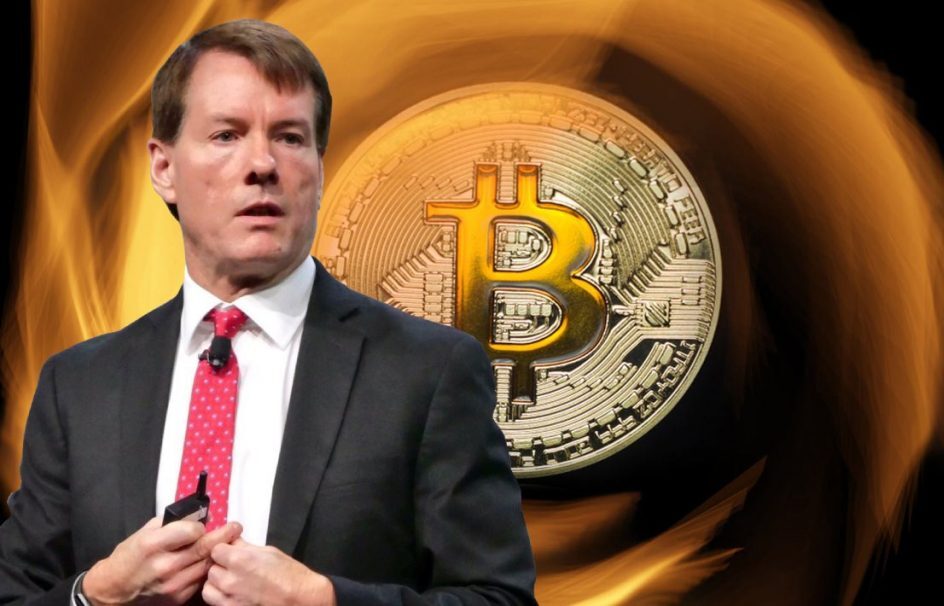
Microstrategy has become well known in the world of corporate finance for its monster holdings of Bitcoin. With crypto in free-fall, however, BTC has become quite the liability for shareholders. Now, CEO Michael Saylor wants the government to step in, most likely to preserve the firm’s bottom line. His plea to regulators: Crack down on crypto industry’s shaky practices—the “parade of horribles” as he describes it—that are dragging down the price of Bitcoin (Fortune).

The CEO of MicroStrategy, Michael Saylor, has seen enough and is asking the government to come and help the sector: ‘His plea to regulators: Crack down on crypto industry’s shaky practices—the “parade of horribles” as he describes it—that are dragging down the price of Bitcoin’.

MicroStrategy invests in Bitcoin; due to the paralysis in Bitcoin, its shares have fallen from a 12-month high of $891 to $184.

What an irony – the world of decentralized crypto now needs a centralized government to help.

Speaking in a webcast with NorthmanTrader founder Sven Henrich, Saylor said Bitcoin was being caught in the crossfire of a collapsing crypto market since it often served as collateral on margin loans for less proven tokens.

“What you have is a $400 billion cloud of opaque, unregistered securities trading without full and fair disclosure, and they are all cross-collateralized with Bitcoin,” he argued


The Biggest Irony in Bitcoin: It Needs Government Protection To Thrive

IPMAN Approves N180 Per Liter Fuel Price, Setting Nigerians Up for Further Economic Hardship

1

As the ripple effects of Russia-Ukraine war cut through economies, exposing many to inflation as the cost of living rockets, Nigeria, Africa’s largest economy that has helplessly watched the economic spikes take a toll on its people, is about to see its situation exacerbated.

On Monday, the Independent Petroleum Marketers Association of Nigeria (IPMAN) asked marketers across the country to begin dispensing petrol at N180 per liter and above, as it’s no longer possible to sell at the government’s approved price of N165 per liter.

“The chairman and executives, in conjunction with some senior members of our unit, organised a press conference today, 20th June 2022, at IPMAN HOUSE Ejigbo Lagos, where we explained our predicament with the current price of PMS at the private depot.

“We explained that with the current price, there is no way we can sell less than N180 per litre. On this note, members are hereby advised to sell at a sustainable price within their environment.

“Just make sure that the price is on your pump. Kindly contact the secretariat should you have any authority challenging your operations,” IPMAN spokesman Akeem Balogun said in a statement to Peoples Gazette.

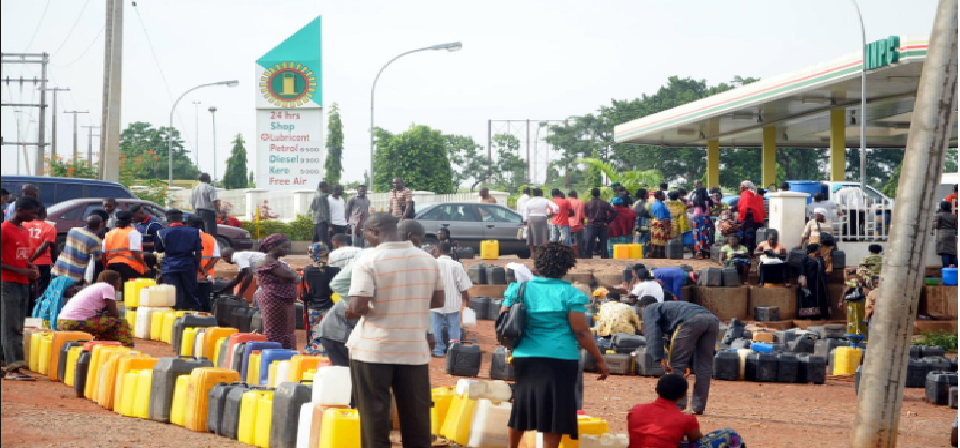
Recently, there has been an uptick in queues at petrol stations, signaling imminent scarcity of petroleum products once again.

Earlier, petrol distributors and the Nigerian Association of Road Transport Owners (NARTO), had cried out to the federal government, asking for permission to increase freight rate as the price of diesel, which has risen as much as N800 per liter, is making their business unsustainable.

In response to their outcry, President Buhari, last week, approved the upward review in freight rate for transporters. This was disclosed by the Nigerian Midstream and Downstream Petroleum Regulatory Authority (NMDPRA).

“The review was necessitated by the upswing in the global price of petroleum products especially automotive gas oil (diesel) and its implication on the cost of transporting premium motor spirit (PMS) nationwide,” NMDPRA said, adding that the transporters’ freight rate has been reviewed to reflect current market realities.

Nigeria is facing a serious challenge in its downstream sector that has been compounded by rising oil prices.  Fuel subsidy, which is gulping nearly 30% of Nigeria’s 2022 budget, has put the government in a difficult situation. The government has repeatedly failed to remove the subsidy due to opposition from the Nigerian Labour Congress and civil rights groups, who fear that its removal would deteriorate the already bad economic situation of the country.

However, without a choice, the government is succumbing to the harsh realities of the oil market.  With crude oil selling above $100, Nigeria needs to double its $62 budget’s oil benchmark to sustain the subsidy payment and keep pump price at the N165 per liter cap, which it has been borrowing to maintain.

The Finance Minister said Nigeria will need further N4 trillion if the subsidy is to be maintained in the next six months. But selling fuel at N180 per liter means Nigerians will experience a new height of economic hardship. For a country where businesses depend mainly on power generators for electricity, the already high cost of goods services is expected to see further spike. This will push inflation, which is currently at above 17%, further up.