DD
MM
YYYY

PAGES

DD
MM
YYYY

spot_img

PAGES

Home Blog Page 5094

The Big Global Discovery – Everyone has a role in this world.

0

It is really interesting that the world is learning that Russia and Ukraine do actually contribute so much to this world. With these countries cut-out due to sanctions or conflict, we’re learning that it is not just those with the big media that are powering the world economy.

The Igbo Nation captured it clearly:  the ant-hills are not built by the elephants but by collective efforts of the little neglected ants. Indeed, everyone is contributing something in this world despite what the global media networks will tell you. So, we need to push for the rise of all, not just a few because everyone has a role in this world.

The EU is having real changes due to this conflict: “The European Central Bank (ECB) plans to raise interest rates from historic lows in order to counter record high inflation fueled by the war in Ukraine. ECB kept rates unchanged in today’s meeting but confirmed plans to hike rates when it next meets in July. It said today it is looking at a 0.25% increase next month.”

“The Governing Council intends to raise the key ECB interest rates by 25 basis points at its July monetary policy meeting. In the meantime, the Governing Council decided to leave the interest rate on the main refinancing operations and the interest rates on the marginal lending facility and the deposit facility unchanged at 0.00%, 0.25% and -0.50% respectively. Looking further ahead, the Governing Council expects to raise the key ECB interest rates again in September,” ECB said in an announcement Thursday adding that “beyond September, based on its current assessment, the Governing Council anticipates that a gradual but sustained path of further increases in interest rates will be appropriate.”

Indeed, if Russia and Ukraine conflict can trigger global recession, that is a clear validation that they have real and evidential impacts (energy supplies, food supplies, etc) on the world economy. Even my dear Nigeria does contribute something. We just need to reject some of these global postulations that “others” offer nothing of value!

As the Russia-Ukraine war enters its fourth month, the impact has continued to be felt around the world as economies battle to tame inflation emanating from it.

Food shortage and high cost of oil prices have characterized the global economy since Russia invaded Ukraine on February 24 2022. Now the war is widening its impact on economies that the fear of global recession can no longer be excused.

On Tuesday, the World Bank slashed its global growth forecast by nearly a third to 2.9% for 2022, warning that Russia’s invasion of Ukraine has compounded the damage from the COVID-19 pandemic, and many countries now face recession.

Comment on LinkedIn Feed

As long as we keep calling people who cannot manage their own individual lives ‘world leaders’, expect more surprises.

We have an interesting scenario, which our obviously confused leaders didn’t correctly predict, and neither do they know where to go from here; maybe some miracles will need to happen.

Putin and Russia cannot back down and leave Ukraine, because that would look like a defeat, and no one enjoys being humiliated.

Zelensky and Ukraine cannot surrender, because it means that they just wasted everyone’s time, allowed their cities and economy to be destroyed, only for them to surrender.

The guys hammering sanctions on Russia cannot stop, because it will portray them as being weak, ineffective and immoral; so as they contemplate more sanctions they also need to ratchet up weapons supply to Ukraine, to keep things going.

Who did the scenario modelling and were convinced that the world was ready for all the confusions? We thought that real economies are measured by capital markets and GDP size, now you know that the things are not that straightforward, only that we never learn.

This is just Russia, and we are shaking like this, what happens if China goes to war and sanctions are hammered? It’s rest in peace then.

World Bank Warns of Global Recession, Slashes 2022 Economy Growth Forecast to 2.9%
World Bank Warns of Global Recession, Slashes 2022 Economy Growth Forecast to 2.9%
1

As the Russia-Ukraine war enters its fourth month, the impact has continued to be felt around the world as economies battle to tame inflation emanating from it.

Food shortage and high cost of oil prices have characterized the global economy since Russia invaded Ukraine on February 24 2022. Now the war is widening its impact on economies that the fear of global recession can no longer be excused.

On Tuesday, the World Bank slashed its global growth forecast by nearly a third to 2.9% for 2022, warning that Russia’s invasion of Ukraine has compounded the damage from the COVID-19 pandemic, and many countries now face recession.

Reuters reports below on the World Bank’s global economy forecast, what it will mean for each region, and what policymakers need to do to curtail it.

The war in Ukraine had magnified the slowdown in the global economy, which was now entering what could become “a protracted period of feeble growth and elevated inflation,” the World Bank said in its Global Economic Prospects report, warning that the outlook could still grow worse.

In a news conference, World Bank President David Malpass said global growth could fall to 2.1% in 2022 and 1.5% in 2023, driving per capita growth close to zero, if downside risks materialized.

Malpass said global growth was being hammered by the war, fresh COVID lockdowns in China, supply-chain disruptions and the rising risk of stagflation — a period of weak growth and high inflation last seen in the 1970s.

“The danger of stagflation is considerable today,” Malpass wrote in the foreword to the report. “Subdued growth will likely persist throughout the decade because of weak investment in most of the world. With inflation now running at multi-decade highs in many countries and supply expected to grow slowly, there is a risk that inflation will remain higher for longer.”

Between 2021 and 2024, the pace of global growth is projected to slow by 2.7 percentage points, Malpass said, more than twice the deceleration seen between 1976 and 1979.

The report warned that interest rate increases required to control inflation at the end of the 1970s were so steep that they touched off a global recession in 1982, and a string of financial crises in emerging markets and developing economies.

Ayhan Kose, director of the World Bank unit that prepares the forecast, told reporters there was “a real threat” that faster than expected tightening of financial conditions could push some countries into the kind of debt crisis seen in the 1980s.

While there were similarities to conditions back then, there were also important differences, including the strength of the U.S. dollar and generally lower oil prices, as well as generally strong balance sheets at major financial institutions.

To reduce the risks, Malpass said, policymakers should work to coordinate aid for Ukraine, boost production of food and energy, and avoid export and import restrictions that could lead to further spikes in oil and food prices.

He also called for efforts to step up debt relief, warning that some middle-income countries were potentially at risk; strengthen efforts to contain COVID; and speed the transition to a low-carbon economy.

The bank forecast a slump in global growth to 2.9% in 2022 from 5.7 percent in 2021, a drop of 1.2 percentage points from its January forecast, and said growth was likely to hover near that level in 2023 and 2024.

It said global inflation should moderate next year but would likely remain above targets in many economies.

Growth in advanced economies was projected to decelerate sharply to 2.6% in 2022 and 2.2% in 2023 after hitting 5.1% in 2021.

U.S. growth was seen dropping to 2.5% in 2022, down from 5.7% in 2021, with the euro zone to see growth of 2.5% after 5.4%.

Emerging market and developing economies were seen achieving growth of just 3.4% in 2022, down from 6.6% in 2021, and well below the annual average of 4.8% seen in 2011-2019.

China’s economy was seen expanding by just 4.3% in 2022 after growth of 8.1% in 2021.

Negative spillovers from the war in Ukraine would more than offset any near-term boost reaped by commodity exporters from higher energy prices, with 2022 growth forecasts revised down in nearly 70% of emerging markets and developing economies.

The regional European and Central Asian economy, which does not include Western Europe, was expected to contract by 2.9% after growth of 6.5% in 2021, rebounding slightly to growth of 1.5% in 2023. Ukraine’s economy was expected to contract by 45.1% and Russia’s by 8.9%.

Growth was expected to decelerate sharply in Latin America and the Caribbean, reaching just 2.5% this year and slowing further to 1.9% in 2023, the bank said.

The Middle East and North Africa would benefit from rising oil prices, with growth seen reaching 5.3% in 2022 before slowing to 3.6% in 2023, while South Asia would see growth of 6.8% this year and 5.8% in 2023.

Sub-Saharan Africa’s growth is expected to slow somewhat to 3.7% in 2022 from 4.2% in 2021, the bank said.

Why Managers Should Pay Employees Competitive Wages

0
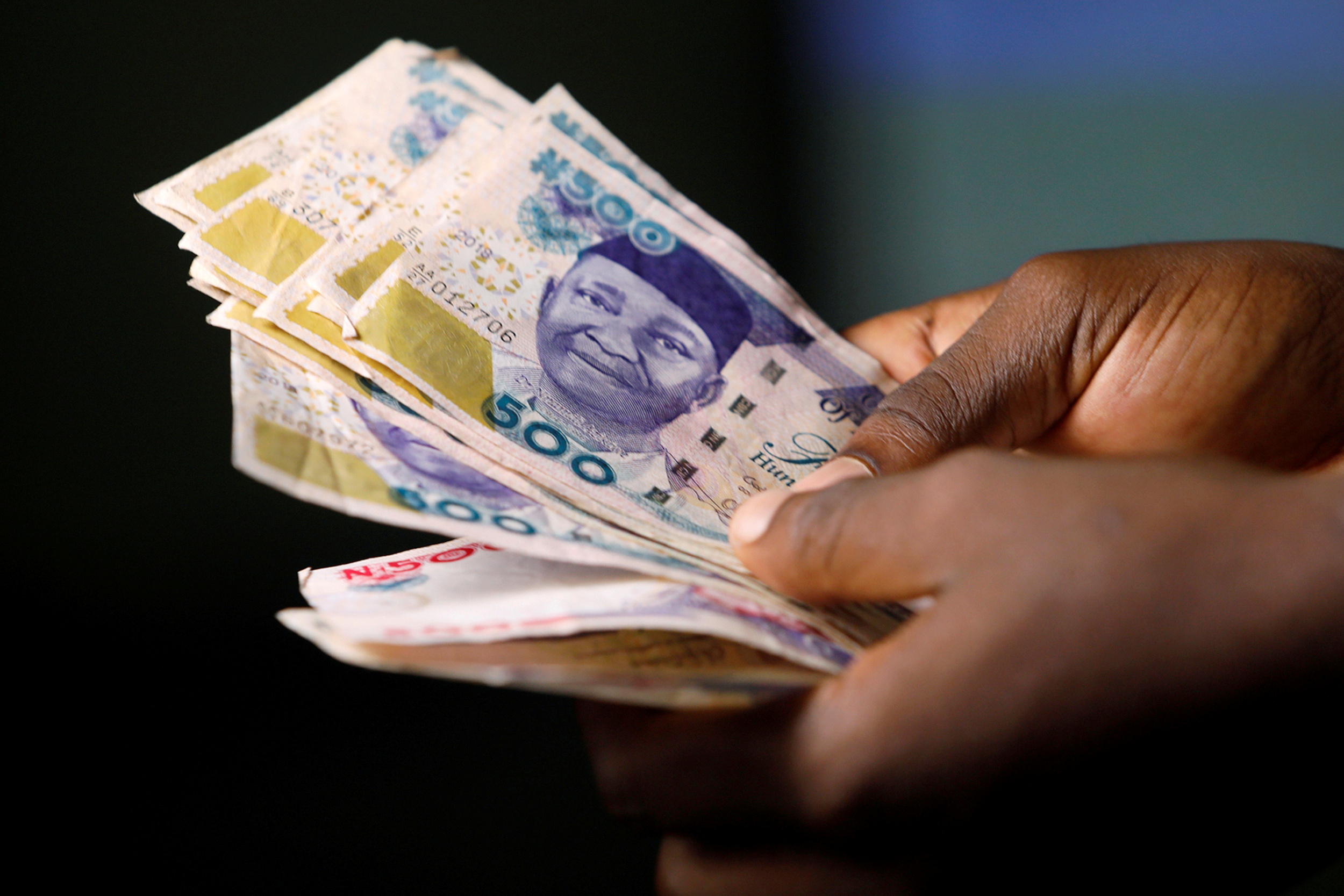
Nigerian naira banknotes are seen in this picture illustration, September 10, 2018. REUTERS/Afolabi Sotunde/File Photo

No employee will be happy to continue to work in an organization where they are not valued or paid well enough for their effort and contribution. Often, they do not hesitate to quit working in such an organization. Of course, everyone in an organization might likely not be paid the same amount, probably due to the difference  in ranks and qualifications. However, a competitive salary for the team members is necessary, as it can deliver healthy returns for the company.

The true strength of a firm lies within the employees, which is the reason why they deserve to be well remunerated to spur them to deliver quality work in the workplace. Aside from the fact that a competitive salary leads to high productivity and retention of employees, it also attracts top talent.

Imagine a company that has top talents working for them, such a company will definitely thrive and generate more revenue because they have got the best team members. That is to say, companies that do not offer competitive salaries to their workers, automatically put themselves out of contention when it comes to sourcing top talents.

Before I go into reasons why managers should offer their employees a competitive salary, I will explain what a competitive salary is. A competitive salary means that what is being offered is equal or more than the industry average. I.e, What the employee will receive from the job is comparable to the amount other people receive from similar companies with the same job title.

Here are three (3) reasons why Managers should pay employees a competitive salary

1.) Improves Staff Productivity: One mistake organizations should not make is to see their employees as an expense. Employees are the greatest assets of companies who understand and know the worth of their team members. When employees are well paid, they will be much more invested in their jobs which can even see them go out of their way to accomplish any given task. Often, companies who pay their staff well do not necessarily need to demand high quality of work from the team members because it mostly comes naturally. A well-paid employee is usually highly motivated.

2.) Shows That They Are Valued: When employees are well paid in an organization they automatically come to the understanding that they are valued. Nothing builds an employee morale and work ethic like feeling truly valued and appreciated by their employers. Once employees feel valued in their place of work it leads to staff retention which automatically makes the company witness less turnover. On the other hand, employees will not hesitate to leave an organization that doesn’t properly compensate and value their efforts which can lead to high staff turnover. High staff turnover can negatively affect a company’s revenue because replacing and training new staff is an expensive process for businesses.

3.) Improves Profitability: Companies’ profits improve alongside employee morale. When employees are paid competitive salaries, it boosts a company’s profit in the process. Highly-paid teams are more engaged than those underpaid. When employers are well paid, they become fully invested in the work that no doubt boosts the revenue of the organization.

Conclusion

Organizations must understand that employees are not liabilities but assets. How well they are paid will determine their output which can positively or negatively affect the organization. Not paying staff competitively is not saving money, rather It will cost the company in so many ways. Therefore employers must see the need to pay their team members well so that they can give their best to the organization, which will definitely increase the company’s revenue.

EU Parliament and Council Agree on A Common Charger for All Devices by 2024

0

The EU parliament and Council agreed on Tuesday to adopt the USB Type-C as the common charger for the block by autumn 2024, concluding the long deliberation geared toward reducing electronic waste in Europe.

The new rules, which establishes a single charging solution for certain electronics devices, means that consumers will no longer need a different charging device and cable every time they purchase a new device, and can use one single charger for all of their small and medium-sized portable electronic devices, according to a press release by the European Parliament’s Committee on Internal Market and Consumer Protection on Tuesday.

Mobile phones, tablets, e-readers, earbuds, digital cameras, headphones and headsets, handheld video game consoles and portable speakers that are rechargeable via a wired cable will have to be equipped with a USB Type-C port, regardless of their manufacturer. Laptops will also have to be adapted to the requirements by 40 months after the entry into force.

“Today we have made the common charger a reality in Europe! European consumers were frustrated long with multiple chargers piling up with every new device. Now they will be able to use a single charger for all their portable electronics,” Parliament’s rapporteur Alex Agius Saliba said.

The charging speed is also harmonized for devices that support fast charging, allowing users to charge their devices at the same speed with any compatible charger.

Since 2018, the European Commission has been trying to reach a consensus with other relevant European authorities on the use of the same charging port in Europe. But device producers such as Apple were worried that the rules would create electronic waste as companies and consumers transit to the USB Type-C, and it will also stifle innovation.

However, the European authorities, besides curbing electronic waste, believe the new rules will make products in the EU more sustainable and make consumers’ lives easier. These new obligations will lead to more re-use of chargers and will help consumers save up to 250 million euro a year on unnecessary charger purchases, the Commission said.

Apple and others now have less than two years to adapt, changing their charging ports to the recommended USB Type-C. Disposed of and unused chargers are estimated to represent about 11,000 tonnes of e-waste annually.

Alex Agius Saliba said laptops, e-readers, earbuds, keyboards, computer mice, and portable navigation devices are also included in addition to smartphones, tablets, digital cameras, headphones and headsets, handheld videogame consoles and portable speakers.

The legislation still needs to be formally approved by the European Parliament and European Council later this year. It will come into force 20 days after publication in the EU Official Journal and its provisions will start to apply to new devices after 24 months.

Peter Obi’s Presidential Candidacy Suffers Glitch As A Faction in Labour Party Unveils Ezenwafor AS A Flagbearer

0

Peter Obi’s presidential candidacy has suffered a glitch following the factional emergence of ambassador Jude Ezenwafor as Labour Party’s presidential flag bearer for the 2023 election.

Ezenwafor, who was the former Anambra State Chairman of Labour Party, was declared the presidential candidate by the party’s acting chairman, Calistus Uju Okafor, on Tuesday in Abuja.

Okafor said Ezenwafor emerged as a candidate through affirmation during the party’s primary that was graced by members from across the country, describing the new flag bearer as “a man of integrity.”

“Having met all the requirements of the party, we hereby affirm you to be the presidential candidate of the Labour Party come 2023,” Okafor said.

Ezenwafor said his candidacy is to rescue Nigeria from its present predicament using the LP as a vehicle.

“Nigeria needs to be rescued. Labour is leading a revolutionary course, Labour party will win the general election.

“Our party is going to take over Nigeria and bring back the glory Nigeria needs.

“I have been in the corridors of government for the past 20 years. We are here on a rescue mission,” he said.

The development has thrown the momentum that is gathering around Obi, into disarray as the LP has two presidential candidates now and no one is sure of who will get a legal backing.

Ezenwafor had served the Anambra State government under different governors including Chinwoke Mbadinuju, Chris Ngige and Peter Obi, who he served for four months. His emergence as the candidate of the LP faction backed by the Acting National Chairman, thus stirs concern that they could be working for other political parties to thwart Obi’s chances.

Obi has enjoyed a huge followership, especially by Nigerian youths, since he declared his intention to run for president – mainly due to his issues-based campaign.

But Okafor said contrary to what many may believe, he was not fighting the former Anambra State governor, and his “doors are open” to discussion.

“I am fighting for what is my right. I am not fighting my brother. Those who think I’m being used should have a rethink,” he said.

Doyin Okupe, the director of Obi’s presidential campaign, had on Monday allayed fears of a leadership crisis rocking the Labour Party.

“I wish to reassure members of the Labour Party and the teeming supporters of HE Peter Obi nationwide and in the diaspora, that the leadership legal tussle in the party is no cause for alarm. It is just like a storm in a tea cup,” he said.

“We have had reasonable discussions wt Mr Calustus Okafor today, & I can categorically say that he is a patriotic Nigerian & a man of peace who will not engage in any act that will hurt an Igbo brother. I assure our Party members that these issues will be resolved amicably shortly,” he added.

But in response to the leadership crisis, Okafor said his fight is all about equity and justice, insisting that he remained the acting national chairman of the LP following the sacking of its late chairman, Abdulkadir Abdulsalam. He also said that no agreement has been reached yet between him and Okupe.

“I am fighting for Justice. There’s nowhere in any political party that an acting national secretary can take over the national chairmanship position. We have the deputy vice-chairman and the zonal vice Chairmen.

“There is nowhere in the constitution that says an acting national secretary could take over the leadership of a political party when the deputy national chairman and zonal vice chairmen. I am not witch-hunting Peter Obi.

“When Okupe called me, I told him that I was open for discussion. I was now surprised when he went to the media and said a different thing from what I told him.

“It is clear that he wanted to take me for granted. The leadership of the other faction is going about that I’m looking for recognition. It is an insult to me as a person.

“They should know that their leader is an acting national secretary while, I Calistus Uju Okafor is the acting national chairman. The court will soon remove them. I am very open to any discussion for the right thing to be done.

“The leader of the other faction should remain as the acting national secretary while I play my role as the acting national chairman. Every other positions in the Labour Party remain the same until we all obey the consent judgment that says an all-inclusive and expansive convention be held.”

On Tuesday, former Lagos State governor Bola Ahmed Tinubu, emerged as the presidential flag bearer of All Progressive Congress. This puts him up against the People’s Democratic Party’s candidate, Atiku Abubakar, who emerged the opposition’s flag bearer last month.

Nigerian youths, who are tired of bad leadership and are disappointed in the major parties’ choices of candidacy, have opted for Obi under the Labour Party. But the party’s leadership crisis has become a new challenge that will dampen their enthusiasm.