DD
MM
YYYY

PAGES

DD
MM
YYYY

spot_img

PAGES

Home Blog Page 5098

The 5G Network And The Possible Impact On The Nigerian Economy

0

With the creation of the fifth-generation technology network, standard for broadband cellular networks, which is a new global wireless standard after the 1G, 2G, 3G, 4G, networks, the 5G network will no doubt transform so many sectors in the world.

It is currently one of the fastest and most robust technologies the world has ever seen. What this means is that there will be greater speed in transmission, remote execution and more adjusted connectivity to concrete needs.

A lot of countries are not slacking in the use of the 5G network due to it’s transformative capabilities. As of October 2021, commercial 5G networks have been deployed in 176 countries around the globe, serving more than 500 million subscribers.

Countries that have adopted the use of the 5G network are attesting to the fact that it has provided a considerable upgrade in mobile experience for consumers, and it is already empowering different industries around the globe.

No doubt, the deployment of the 5G network in countries will transform life and businesses. Let’s look at the possible impact of the 5G network on the Nigerian economy.

Possible Impact Of The 5G Network On The Nigerian Economy

After the federal government handed over the spectrum allocation for 5G deployment in the country, to the Nigerian Communications Commission (NCC), the commission disclosed that the 5G network will provide a lot of benefits and opportunities that will accelerate growth and smart living in the country.

The network known for its high connection speed, low-latency capabilities will no doubt bring about substantial network improvements. The e-commerce platforms and fintechs in Nigeria would benefit immensely from the 5G network, because even before the deployment of the 5G network these industries have recorded some groundbreaking achievements.

Deploying the 5G network in Nigeria will definitely contribute to the transformation of the economy into a digital economy through investments in digital infrastructure, particularly broadband which is a key driver for digital economy growth.

The digital industry in the country is one sector that has been performing well regardless of the myriad of problems that the country is faced with. The deployment of the technology will therefore improve and strengthen the already thriving digital economy.

The ICT sector in the country has continued to maintain its position as the sector with the highest growth rate out of all major sectors of the Nigerian economy. The digital economy is said to have a direct impact on almost every sector in the country .

The 5G network has been predicted to tackle insecurity, which is a serious issue in Nigeria currently. For example through the use of the 5G network, it can be used to operate drones that will survey dangerous areas in the country which will then send a signal to security operatives about the hideout of armed bandits and terrorist. This will no doubt aid the security operatives to easily defeat these armed men that have been causing chaos in the country.

Countries are currently evolving, using the advancement of technology to improve their economy, and also improving the standard of living of it’s citizens. The race to keep pace with the rest of the globe demands urgent policy actions.

It is no doubt a laudable achievement for the deployment of the 5G network by the federal government, after it handed over the spectrum allocation to the Nigerian communications commission (NCC), as this high technology network will improve almost every sector in the country.

The tech infrastructure according to the report has the potential to create millions of jobs across all sectors, which will also lead to the creation of industries. What this implies is that the deployment of the 5G network will reduce the high rate of unemployment in the country.
It’s Over – Titan Trust Bank Officially Swallows Union Bank of Nigeria

1

Union-Titan deal, the acquisition of Union Bank of Nigeria by TGI Group, parent of Titan Trust Bank, has now been completed: “In the spirit of the change of ownership, ten of the thirteen members of Union Bank’s board have exited the bank…” 

There is a big lesson here and we will be discussing this in Tekedia Mini-MBA Live session. I have written extensively that this acquisition was intriguing since Union Bank was actually doing just “fine”. The biggest challenge is this: “Union Bank has lost control of itself when it had more than 51% of its shares out there. That three of its shareholders banded together and sold to a 4th investor, giving it supermajority, is part of market systems. If you do not want that, never allow 51% to be floating as those external players can team together and change the equation.”

Union Bank’s only option was bidding higher than Titan Trust Bank on whatever those investors were asking for.” But it did not have the money, making the management bystanders in the whole deal! Nigeria does not allow different classes of shares where you can own say 20% and control 90% of the voting power like they do in companies like Meta (Facebook) and Alphabet (Google).

The only solution is to follow Aliko Dangote’s formula: never list more than 49%. Dangote controls about 85% of Dangote Cement’s available shares and what that means is this: even if all you thousands team together, you can only get to 15%, and that means he remains the boss. Of course, Dangote Cement was not established in 1917 with the heritage of the former Barclays Bank branch which evolved to become a leading Nigerian bank. So, for Dangote Cement, time will tell if the 85-15 model can last.

In Sun Tzu’s The Art of War, this is called flanking attack; we’re used to frontal attack. Union Bank’s liquidity position was its weakest point, making its executives bystanders as the ownership changed hands!

In Defense of Union Bank On Titan Trust Acquisition And Lessons from Aliko Dangote

Meta’s COO, Sheryl Sandberg, is Stepping Down

0

Sheryl Sandberg, the trail-blazing chief operating officer (COO) of Meta, is stepping down. She announced the development on her Facebook page Wednesday, after 14 years of thrilling career at the world’s largest social media platform.

Sandberg joined Facebook in 2008 when it was a startup and helped build it to the conglomerate it has become. Her role as the COO came with a mammoth of responsibilities that put her leadership and motherhood capabilities to the test.

“When I joined Facebook, I had a two-year-old son and a six-month-old daughter. I did not know if this was the right time for a new and demanding role. The messages were everywhere that women – and I – could not be both a leader and a good mother, but I wanted to give it a try,” she said.

Besides the challenge of combining leading at work and being a mother, Sandberg was up against managing the chaos of running a huge social media startup idea that has not been largely tested before.

“When I was considering joining Facebook, my late husband, Dave, counseled me not to jump in and immediately try to resolve every substantive issue with Mark, as we would face so many over time. Instead, I should set up the right process with him.

“So, on the way in, I asked Mark for three things – that we would sit next to each other, that he would meet with me one-on-one every week, and that in those meetings he would give me honest feedback when he thought I messed something up. Mark said yes to all three but added that the feedback would have to be mutual. To this day, he has kept those promises,” she said.

After more than a decade of massive ups and downs of running Facebook, coupled with family challenges, the company has given birth to subsidiaries commanding more than two billion users worldwide and Sheryl Sandberg has become one of the biggest names in Silicon Valley.

But leaving Meta at this point where it has fresh serious challenges brings the why question. Sandberg’s era at Facebook was also marked by scandals. The social media giant came under the heat for spearheading disinformation, hate and conspiracy theories post 2016 election that ushered in former President Donald Trump to power.

Facebook was fingered as the paramount platform that enabled Russia to meddle with the US election, prompting backlash and criticism that spilled over to 2020. After Trump lost his reelection bid, Facebook again became the center of the chaos that ensued as it was accused of giving the organizers of post-election violence the platform to plan the January 6 insurrection at the US Capitol.

In her response, Sandberg falsely claimed that the day’s events were “largely organized on platforms that don’t have our abilities to stop hate.” This is contrary to investigation which found that Facebook played a central role in the “Stop the Steal” movement following the 2020 election after fostering far right groups like QAnon and the Proud Boys for years before taking action.

As noted by TechCrunch, that unforced error was just one of Sandberg’s recent PR blunders. But others bear heavy weight as well. They include her involvement in contracting the Republican opposition research firm Definers Public Affairs to plant negative stories about liberal billionaire George Soros and a more recent report that Sandberg leveraged the Meta communications team to kill a story about Activision Blizzard CEO Bobby Kotick, her former boyfriend who is now accused of fostering a culture of sexual harassment at the gaming company.

The discovery of her involvement in the attempt to bury Kotick’s sexual harassment story appears to be the last straw for Meta. The WSJ reported also that due to the discovery, she’s facing “internal scrutiny” and an internal review at Meta.

However, it is not clear the real reason why Sandberg is stepping down. She said she will be focusing on her foundation and philanthropic works for now.

Though Meta CEO Mark Zuckerberg described her exit of the COO as “the end of an era,” heaping praises on her for helping him build Facebook, recent events and reports suggest that ‘Facebook’s growing political tensions and Sandberg’s handful of high profile missteps have strained the relationship between them.’

However, Sandberg will remain in Meta’s board. Zuckerberg said “I don’t plan to replace Sheryl’s role in our existing structure. I’m not sure that would be possible since she’s a superstar who defined the COO role in her own unique way.” But he added that Javier Olivan will become the next Chief Operating Officer since he will now lead Meta’s integrated ads and business products in addition to continuing to lead its infrastructure, integrity, analytics, marketing, corporate development and growth teams. But this role will be different from what Sheryl has done.

Having described her as “my good friend and partner,” Zuckerberg didn’t hold back from attributing Meta’s success to Sandberg’s prodigy.

“When Sheryl joined me in 2008, I was only 23 years old and I barely knew anything about running a company. We’d built a great product — the Facebook website — but we didn’t yet have a profitable business and we were struggling to transition from a small startup to a real organization.

“Sheryl architected our ads business, hired great people, forged our management culture, and taught me how to run a company. She created opportunities for millions of people around the world, and she deserves the credit for so much of what Meta is today,” he said.

Ahmad Isah, A Nigerian Radio TV Host, Starts Crowdfunding to End ASUU Strike

0

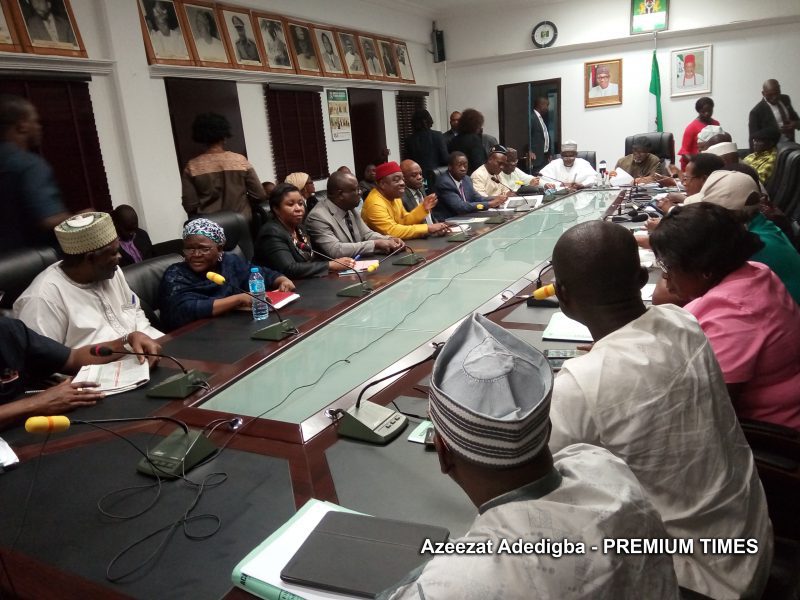
A  Nigerian has embarked on a crowdfunding mission to get university students back to school. Ordinary President, Ahmad Isah, who hosts the popular TV and Radio program, Berekete Family, has opened a bank account, soliciting for funds from Nigerians to settle the financial scuffle between the Nigerian government and the Nigerian universities’ union.

The Academic Staff Union of Universities (ASUU) has been on strike for nearly four months now, resulting in the closure of public universities across the country. ASUU is asking for N18 billion to clear the salary backlog and improve public university education.

The Nigerian government has reneged on agreement it previously reached with the Union, and has shown no sign of readiness to yield to its demands. This has made it difficult for the union to call off the strike on account of the government’s promises.

The government also appears more focused on the polity as the 2023 elections draw close. This has left the students to atrophy at home. With both the government and ASUU not ready to yield, Nigerians are now taking the matter into their own hands.

“No be shameful thing to support your mama and papa. We go support the Federal Government of Nigeria. Let us intervene and raise N18 billion to support and end ASUU strike,” Isah said in a post on Twitter.

“This #ASUU intervention donation shall determine how can turn things around in this country. Your N50, N100, N200, N300, N400, or N500 – N1 billion will make a difference. What are you waiting for? Please Nigerians, shout it out and make sure you donate,” he added after sharing the designated bank account details for the crowdfunding, where he has reportedly made a N10 million donation.

Signatories to the account are the Acting Accountant General of the federation, ASUU president and Secretary.

Besides Isah, students have also called on presidential aspirants to make donations to send students back to school. Last month, the Progressive Students Movement (PSM), a nationwide students’ movement, urged political parties to consider donating 40 percent of proceeds from sale of forms to ASUU.

The idea is becoming popular due to the recent happenings in Nigeria’s political space, where presidential aspirants under the ruling All Progressive Congress (APC) are paying a whopping N100 million for a nomination form.

“In the interest of national development, we strongly believe that donating 40 percent of proceeds from the sale of nomination and expression of interest forms to ASUU will immediately see schools reopening.

“This call follows the continued ASUU strike and the failure of the government to yield to its demands as signed in a 2009 agreement, by the then administration even as we understand government is a continuum.

We wish to urge political parties to consider donating 40 per cent of the total proceeds from the sale of forms to ASUU in the best interest of Nigerian students and youths,National President of PSM, Mr Bestman Okereafor, told NAN.

The leader of the movement said political parties should see the donation as an opportunity to attract student voters.

“Such political party or parties will tend to enjoy the massive support and votes of Nigerian students.

“We are aware that some political parties have so far generated over N19 billion from the sale of nomination and expression of interest forms.

“We are optimistic that should such a gesture be offered by political parties, the government will be left with no option other than settling the remaining balance of ASUU demands,” he said.

Since the political actors have failed to heed this call, Isah’s crowdfunding move has become the closest solution to the lingering ASUU’s industrial action that has paralyzed academic activities in government universities.

Join Tekedia Capital And Own A Piece of Great Startups of the Future

0

Five factors – knowledge, capital, land, labour and entrepreneur. How you combine and recombine them defines the wealth of nations and the capabilities of a people. The knowledge of a people is the wealth of a people. Unleashing that knowledge through risk takers (the entrepreneurs) have defined the progress of men and women.

But what do entrepreneurs really do? They bring all these factors together; that togetherness is seen via people, processes and tools, which are then used to create products and services to fix market frictions.

Tekedia Capital makes friends with these entrepreneurs, providing them with capital to go into markets and solve problems. If you want to own a small piece of the leading companies of the future, join Tekedia Capital syndicate and co-invest with us in the empires of the future.

Learn more, become a member, and be part of our next investment cycle here . We just fired a rocket; the target is a #Unicorn at New York Stock Exchange, London Stock Exchange, Lagos Stock Exchange, etc. Come along and let us improve our scale and precision with your partnership. Building #NextAfrica.


Comment on LinkedIn Feed

Comment: But Prof, I thought entrepreneur and knowledge is still the same e.g. a knowledge entrepreneur – so I can simply follow that it’s a matter of quality of entrepreneur. Another way, knowledge and labour – but mostly entrepreneur and knowledge.

My Response : You can have knowledge without being an entrepreneur. You can also have knowledge without being a labourer. Unlike Adam Smith’s mercantilist system upon which the old classical economics was formed, elevating knowledge as a factor of production is essentially saying that in modern markets we have x-factors. And those x-factors are not linear or even quadratic in impact; they deliver exponential impacts in changing basis of competition.

Think of it this way: you have 10 bank staff that reconcile books manually; it takes them 6 hours to do the job. You can get a better 10 staff who can give you a factor of 2 improvement (3 hours). You are operating in the realm of labour. But someone can make a software that does the same thing in a second. In that case, you are dealing with a new element which is possible because of new knowledge, not bound by improving “labour” as a factor of production. Now, that knowledge can be dynamic such that you can eliminate that labour (talk of AI, chatbook, etc). 

During the invention society era (up to AD 1500), the world had “knowledgeable inventors” but limited innovators. In other words, they had knowledge but they could not build products and services. Entrepreneur is different from knowledge because Entrepreneur makes things that solve problems. Tesla (the inventor) had knowledge but he possibly died “poor” like many in his time (inventors with knowledge); Elon Musk is an entrepreneur (innovator), he used that knowledge to build a product (a car) which solves a real problem.

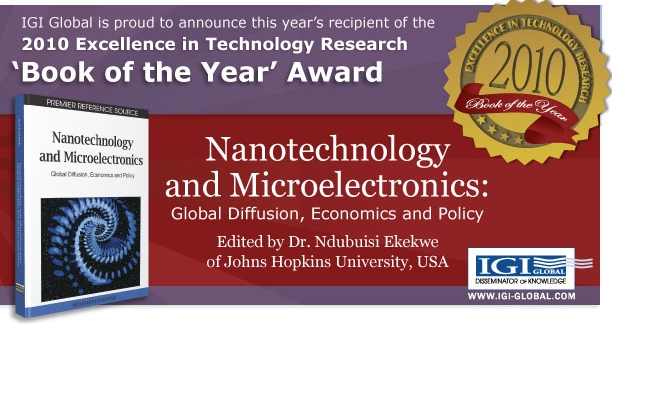
 I explained this process in my book which received the IGI Global Book of the Year Award.