DD
MM
YYYY

PAGES

DD
MM
YYYY

spot_img

PAGES

Home Blog Page 5113

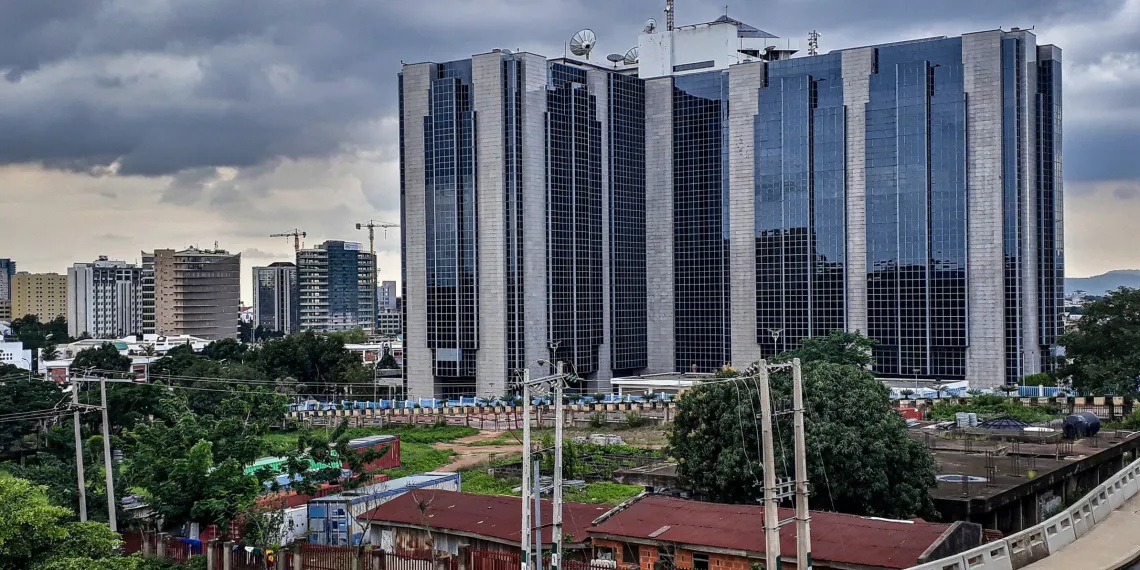
Nigeria’s Central Bank Hikes Interest Rate; We Must Focus More On Supply To Push Price Equilibrium and Tame Inflation

1

The Central Bank of Nigeria’s Monetary Policy Committee has hiked benchmark interest to 13%. What CBN did is the right thing: Nigeria needs to fight inflation which was 16.8% in April. By hiking the rate, it could reduce demand, theoretically. However, it does not work that way in Nigeria, practically, as we’re never in any pricing equilibrium with demand and supply. Why? Most of our market systems are informal and inherently imperfect, making some of these tools muted.

Yet, in the formal market, the CBN call is on the money. I expect stocks to fall as capital becomes more expensive with speculators out of the way. Industrial output will likely drop since the cost of borrowing will rise and investments will be paused. (If companies cannot expand, expect employment to be affected).

I am in the school of economics that believes that the best way to manage inflation in a country like Nigeria will be increasing supply (hard in short-term). . If you do that, the price points will move, ceteris paribus.  The The United States is taming demand by increasing interest rate. They have better tools to achieve that since the system is already credit-based. 

Yes, the US has tons of consumer credits which can be affected as credit card companies and banks raise interest rates. Nigeria does not have that exposure as our credit systems are largely corporate-anchored.

So, in Nigeria, when you raise interests, you are not shaping consumer purchase that much. Rather, you are influencing corporate investments and that will then negatively affect supply which you need to shift the equilibrium point to bring prices down.

(I acknowledge that CBN did try to manage this conundrum by keeping the development finance interest rate flat at 5%. But that is textbook as it is very limited to the size of the total credit in the economy.)

Of course, the apex bank has looked at these factors and decided to pursue this path. It has better data. Using rates is a short-term fix; we need to ramp up supply to provide a long-term solution to inflation in our largely imperfect market system with many informal components.

The Central Bank of Nigeria’s Monetary Policy Committee has jacked up benchmark interest to 13 per cent, 150 basis points above the previous rate.

It is the first change since September 2020 and the fist hike in six years.

The Governor of the Central Bank, Godwin Emefiele, made this known while reading the communique of the MPC’s 142nd meeting.

Mr Emefiele said the action was to tame the rising inflation rate in the country.

The CBN governor, however, said the rate on development finance loans will remain at 5 percent till 2023.

A 0.5 percentage points interest rate hike announced by the United States’ Federal Reserve earlier in the month reverberated around the globe, spurring other economies to hike rates.

LinkedIn Comment on Feed

Comment 1:  I quite agree with you sir. I however think this is a very wrong move that can further create more inflationary problems… Nigeria’s economy is quite peculiar and economic theories do not always go well over here. However, the intention is to understand theories and then modify to suit our economy. Inflation in Nigeria is a supply side phenomenon emanating from increased cost of production as a result of consistent currency depreciation in the parallel market, increasing energy cost, decline in agricultural productivity as a result of insecurity, the border closure which has just been reopened, and exogenous factors such as the disruption in global supply chain as a result of the pandemic and the Ukraine war which has seen wheat prices increase. These factors are independent of monetary policy. The CBN increasing interest rate might just push up the cost of production which further feeds into inflation.

At the best, there won’t be a change in the rate of inflation, but there definitely will be a decline in output which constrains employment. The move by the CBN is counterproductive. We cannot use demand pull measures to curb a cost push inflation.

Comment 2: Yes! An increase in interest rate does regulate inflation if the inflation was caused by too much money in the circulation – Money market disequilibrium. Which is a half of a whole.

The other half is in the good market; to ensure an equilibrium, the issue of scarcity must also be addressed by ensuring a parallel stand for supply and demand in this segment of the economy also. What about policies that facilitates industrialization and the likes? We don’t seem to be ready yet…

I assume that the federal government’s intention is to overlook the effect of of the latter, that of which will worsen the former in the not-so-long run.

This is like taking pain reliever for cancer: one may mitigate the pain for a while but…

My Response: “issue of scarcity must also be addressed” – that is the key factor but it is a PhD thesis in Nigeria.

Comment 3: Our economy doesn’t respond to some of these moves, because Nigeria runs a parallel economy: corporate and street, with the latter being hugely dominant, and that is the one most people relate with.

We don’t run a credit-based economy, most people that need money for business don’t go to the banks, they simply meet those who can lend at much higher rate, as long as you don’t stress the borrowers with filling of plenty paperwork.

The interest rate hike is not different from the way the CBN declares the official rate for naira against dollar, but we see what obtains in the real market, and we know that the items we purchase are never calibrated on the official rate but rather what the street sets the price to be.

To get a handle on this economy requires native intelligence and street credibility, the typical economic models they fall over themselves to acquire the degree from the other side don’t move mountains here. They will deploy all the tools in their kitty, yet the economy is dancing to a different tune; the managers still don’t know all the moving parts in the very monster they are trying to tame.

There’s a mental fatigue among the managers, they don’t really have any fresh idea to bring, just trudging to the finish line.

Comment 4: The US is a credit based economy. Credit to cash ratio will be like 10:1..Nigeria has no credit economy. Our credit system and economy has to attract Dollars,Pounds and Yuan (via exports ,remittances,factories ,production,tech etc).

Increasing the MPR is not an isolated solution.The way out of our inflation is to export more,or simply supply more Dollars to the Forex exchanges.The cost of producing goods and cost of importation is what is driving our price inflations. CBN needs to pour in more Dollars while allowing huge borrowing for people who produce food and consumer goods. We also subsidize direct public transportion for workers, goods and services.

We need to stop trying to carbon-copy what the Chairman of the US Federal Reserve does every time. The US and Nigerian economy are two completely different economies. The US has too much money ,$26T GDP for 350M people. We have 0.5T for 200M people. Our MPR is 13%.Theirs is 1%, (usually at 0%). What we need to do is strengthen our currency against the Dollar. The exact reason US interest rates was increased to 1% (as other currencies were gaining on the Dollar. Same reason oil prices haven’t gone higher to $140/ barell, despite a huge strain in global supply.)

Comment 5: Since the definition of inflation is much money chasing few goods. The antidote to inflation ought to be things that supports production, so that we would return to the equilibrium but the challenge in Nigeria are many. The CBN governor supporting the government in power through “ways and means” definitely cannot help inflation. It seems like governance is off the table and politics have taken over but really when has governance been on the table? We will keep struggling if we keep on with this constitution. We need to decentralise the things that helps factors of production. Looking up to the price of oil won’t help. A country with our population must focus on production, anything short of that would spell doom.
New Exciting Features Of The Updated Microsoft’s Windows 11

0

After the difficult situation that heralded the January update, which saw Microsoft advising teeming users of the Windows 11 to uninstall, the company penultimate week graciously released a new update that not only fixed the bugs in its last update but added new exciting features for users.

The Windows 11 build 22000.706 was released to the Windows Insider Program, a community of millions of Windows’ biggest fans who get to be the first to see what is next in Windows. It is expected to be released to the public in the coming weeks.

It’s noteworthy Windows 11 is the latest major release of Microsoft’s Windows NT Operating system, released in October 2021. It is a free upgrade to its predecessor, Windows 10 released in 2015, available for any Windows 10 devices that meet the new Windows 11 system requirements.

In the said report, Microsoft disclosed that it had improved the Family Safety verification experience for child accounts when they request additional screen time. More importantly, the company had reportedly added support for its Windows Spotlight feature on the desktop.

The Windows Spotlight feature was introduced with Windows 10 and leveraged Microsoft’s Bing search engine to add new background images and additional info about them to the lock screen on Windows 10 and 11 daily.

Now, with the latest update, Windows 11 users will be able to enable the feature on the home screen of their laptop or desktop to get new background images daily.

Following the update, users could simply go to the “Personalize your background” section under the Personalization settings to enable Windows spotlight.

With the feature enabled, the home screen wallpapers on Windows 11 would be able to cycle through new, high-res wallpapers every day automatically.

Aside from these new features, Microsoft equally fixed numerous bugs with the last KB5014019 update, which forced some apps to stop working.

Other bugs fixed in the new update include:

  • Issues in searchindexer.exe that affect the search for shapes in Microsoft Visio.
  • Issues that might run an AnyCPU application as a 32-bit process.
  • Issues that prevent Azure Desired State Configuration (DSC) scenarios that have multiple partial configurations from working as expected.
  • Issues that fail to display the Application Counters section in the performance reports of the Performance Monitor tool.
  • Issues that fail to maintain the display brightness after changing the display mode.
  • Issue that might affect some apps that use d3d9.dll with certain graphics cards and might cause those apps to close unexpectedly.
  • Issue that prevents internet shortcuts from updating.
  • Issue causes some users to see a black screen when they sign in and out of Windows.

Apart from the ones listed above, several other issues with the last Windows 11 update were also fixed, which brings a whole new experience for the entire users.

With the spotlight feature, according to Microsoft, using Windows 11 would now be more exciting and professional , to the delight of the users.

In view of this expected update, owners of computers that meet the Windows 11 requirements, are enjoined to leverage the latest features as they carry out their daily activity with the devices.

They are also required to ask pertinent questions on issues seeking further clarifications, engage services of experts, as well as endeavour to consult a nearby professional when necessary in the process of using the updated operating system, to avert any situation that might endanger or crash the device.

Lagos Records Four Building Collapse In 6 Months, As Four Dead And Five People Rescued In Recent Building Collapse

0

With a widespread disregard for regulations and agencies, building collapse has become a common occurrence in Nigeria with most of the collapses happening in Lagos state. Between 2011 and 2019 a total of 84 buildings collapsed across Nigeria. 21 collapses out of the 84 happened in Lagos state.

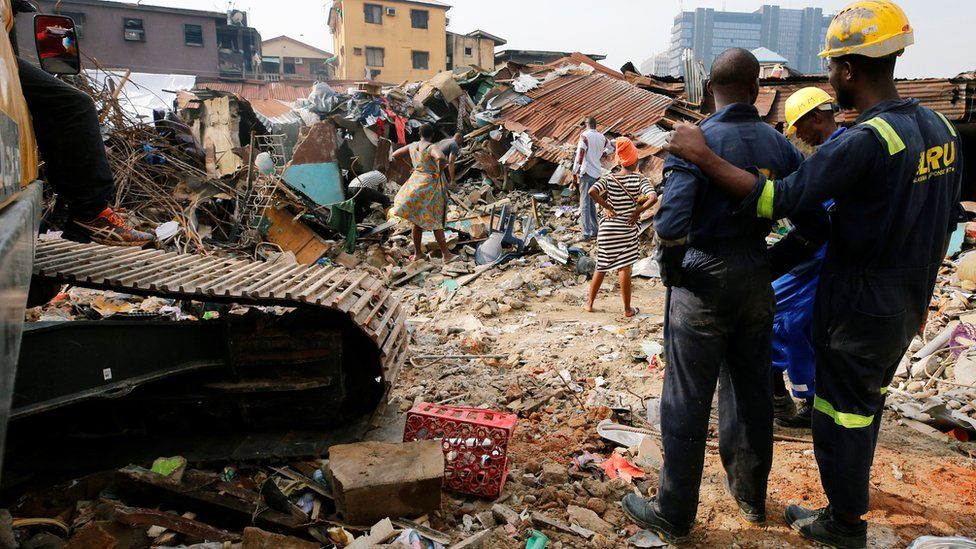
Just recently, a total number of four persons have been rescued dead, while five others were rescued alive by rescue operation at Freeman Street, Lagos Island. It was disclosed that the building which was under construction collapsed during a heavy downpour in the afternoon, which led to the swift response of the rescue operations to evacuate people from the collapsed building.

Four bodies were brought out dead, while two bodies were recovered at 9.22 pm. As the rescue operation intensified their search, another body was rescued at midnight, and two more bodies were later recovered which put the figure of those recovered alive at five persons, while four were confirmed dead.

In November 2021, recall the 21-story building that was still under construction at Gerald road, ikoyi, which belonged to Mr. Femi Osibona otherwise known as Femi Fourscore who also died in the collapsed building. After the fatal collapse in Ikoyi, three other collapses followed suit.

With the latest collapse of a three-story building at No 4 Alayaki Lane in Lagos Island. These incessant collapses occurring in the nation, most especially in Lagos state, has raised so many questions as regards the quality of building materials during construction, as well as the disregard for regulations.

There are countless numbers of dilapidated houses in Lagos state that should have long been evacuated by occupants, yet they still live there unbothered. Most of those buildings are dangers waiting to happen. According to experts, the most popular cause of this collapse was attributed to poor construction, which accounted for 36 percent of the collapses.

Old buildings also accounted for the second-highest reason for collapse at 20 percent. With building collapse happening almost every year in the country, it calls for serious concerns and the need for the federal government to address the menace of building collapse happening across the country.

There is a need to instill a safe building culture, evacuate occupants of old and dilapidated buildings, ensure that builders comply with regulations, and also fight sub-standard construction works across the country.

With almost every collapse happening in Lagos state, there is a strong need for the state government to ensure that necessary building regulatory bodies permit only certified buildings to be constructed. In order to reduce these incessant collapses, they should carry out a post-occupancy evaluation on buildings and ultimately ensure that professional institutes have oversight function on every building construction in the state.

The Lagos state government must also ensure to properly fund all agencies in charge of building inspections in the state. Unlike the Ikoyi building that was later reopened after it was initially sealed due to some building defects, strict punishment such as demolition, a heavy fine, jail terms, forfeiture of properties, etc, should be meted out to any property owner who contravenes building control regulations regardless of how connected such a person is.

A Look At Uber’s Expansion In Africa, And The Capitilization Of The African Market

0

Global ride-hailing taxi app firm, Uber recently disclosed that it has facilitated 1 billion trips in Africa, since entering the market less than 10 years ago. Over 10 billion kilometers of trips have been completed, which is equivalent to traveling to the moon and back over 5,500 times.

During the same period, Uber and Uber Eats have collectively reached over 30 million riders and Eaters in Sub-Saharan Africa.

While celebrating the milestone, the head of communications for East and West Africa, Lorraine Ondur, had this to say; “Since entering the market in 2013, we have created over 6 million economic opportunities in over 50 cities across SSA that we are present in. We pride ourselves on building locally and using global expertise. Each country’s needs are unique, so we take the time to understand each of the market’s needs so we can be responsive and adapt accordingly”.

This is indeed a great milestone for Uber worth celebrating, with the Company’s valuation weighing at $18bn in 2015, and a market cap of $42.31 billion making Uber the world’s 390th most valuable company, Uber is gaining a reputation not only for its popularity among investors but also for its aggressive expansion strategy.

The company officially launched its services in Africa in 2013, operating first in Johannesburg, and other cities in South Africa, before it officially launched its services in one of the world’s most populous cities in the world, Lagos state Nigeria.

The company has also spread to other African cities, connecting passengers to uber-registered drivers. Uber no doubt capitalized on the big opportunity in the African region for its flexible and reliable service, also offering multiple price points.

Since its launch in Africa, Uber’s uptake has been incredible in all cities where they currently operate. Within a short space of time, the company has been doing thousands of trips per week, with hundreds of drivers on the system.

One fantastic thing Uber did was to capitalize on large markets in Africa, as well as the region’s population’s openness to testing and adopting new technologies. For example, after it researched the African market, the company deemed it fit to launch its services in Lagos state Nigeria, because of its large population(5,195m) and its size (999.6km).

The company also found out that aside from the fact that businesses thrive in Lagos state, Lagosians are also forward-thinking people and tech-savvy, who would want to adopt any products that they find interesting, and Uber has been doing just that since it’s entry into the state.

With 2.7m active monthly riders and over 59,000 drivers, the firm states that its commitment to expansion in the African region remains undimmed. It is interesting to note that Uber’s role in Africa is not only to improve the transportation ecosystem but to also support economic growth, particularly small businesses as well as to tackle the high unemployment rate in the country.

The company has already partnered with a significant number of drivers and provided them with the tools to build their businesses. The company’s mission is to provide safe and reliable transportation to passengers, as well as creating greater economic opportunities for drivers. No doubt, Uber is enjoying the African market, which has seen its rapid expansion to vast amounts of African regions.

Egyptian Used Car Startup, Sylndr, Raises $12.6m in Pre-seed Fund

0

The African car market has one of the highest growth prospects in the world with a current capitalization of about $35 billion and expected increase to about $45 billion by 2027. In this multi-billion dollar market, used cars dealerships are taking a larger share.

Spurred by rising investors’ interest, countries like Nigeria and Egypt with huge markets are grabbing the lion’s share with established used cars companies like Cars45 and Jiji. However, startups using digital strategies are revving up the competition with lucrative fund-raising from investors around the world.

Egypt’s online used-car retailer Sylndr has raised $12.6M for its pre-seed round led by RAED Ventures, with participation from Algebra Ventures, Nuwa Capital, 1984 Ventures, Global Founders Capital, and a number of prominent regional and global angel investors. The pre-seed round is the largest of its kind in MENA and sub-Saharan Africa.

Sylndr is set to build trust in the used-car market by providing customers with a hassle-free experience to buy, sell and finance their cars transparently and reliably.

Sylndr, which was founded by Omar El Defrawy and Amr Mazen, prides itself on its “driving engine”; a strong team of 40+ highly experienced individuals keen on making a positive impact on the lives of many. The company is looking to more than double the size of the team by the end of year.

“We aim to become the most trusted used cars retailer in the region. Our customers will be able to sell their cars directly in as little as 24 hours, with free collection and fast payment.” Omar El Defrawy, Sylndr’s Chief Executive Officer, said.

“Sylndr will be the go-to place for customers seeking affordable cars, featuring an extensive range of high-quality used vehicles accessible through a diverse set of financing solutions.

“We are privileged to have earned the trust of such a distinct group of regional and global investors; a testament to the immense potential of the opportunity, and the breadth of our founding team.

“If we do our job right, our impact will be felt by so many Egyptians across different market segments, as we empower them to own their dream cars,” he said.

The capital raised will be allocated to building Sylndr’s operational capabilities, technology infrastructure, brand awareness and – most importantly – developing a superstar team able to actualize the company’s ambitious vision.

One of the obstacles to the used cars market’s growth that Sylndr is trying to solve is lack of trust. With the rate of risks involved in buying a reliable used vehicle, investors are backing the startup to build a company that consumers can count on.

“The secondary car market is highly fragmented and more often than not, consumers do not have a trusted counterpart,” Omar A. Almajdouie, Managing Partner at RAED Ventures said. “The market is massive, ripe for disruption and we’re excited to be part of Sylndr’s journey as they transform and set an entirely new standard for the used car market. Given the unique background and experience of this team, we believe in their ability to crack this business model.”

Popular car models in Egypt cost about $15,000 on average, posing a huge challenge to car ownership as only about 5% is financed.

Per TechCruch, Sylndr is yet to launch to the public. However, it is tailoring its model after India’s Cars24: Obtaining cars from individuals that want to sell, buying them up for an agreed price, reconditioning them and then reselling them to new owners.

The founders said Sylndr also plans on providing seven-day money back guarantee, warranty and flexible financing options to users. Mazen said Sylndr plans to open up to buyers in Q4 this year or Q1 2023. But the car retailer will first update its car listings by launching to customers who want to sell their cars.