DD
MM
YYYY

PAGES

DD
MM
YYYY

spot_img

PAGES

Home Blog Page 5136

Coca-Cola Expands ‘Coke Studio’ Globally

0

Coca-Cola is expanding its music platform “Coke Studio” to a global stage. Originally launched in Pakistan in 2008, the Coke Studio program is digital-first, always-on and provides an opportunity for emerging talent to partner, create and deliver moments of musical magic to new audiences.

The first moment is the introduction of a 90-second film titled “The Conductor” featuring Nigerian singer songwriter and producer Tems and six other global superstars namely Grammy nominated American R&B sensation Ari Lennox; British singer songwriter Griff; Turkish electro-pop producer Ekin Beril; Latin urban pop powerhouse Mariah Angeliq; Canadian-Indian rapper and producer Tesher; and colourful, multilingual K-Pop girl band TRI.BE.

‘The Conductor’ pays homage to the legendary rock band Queen through a unique collaboration that encapsulates the multicultural magic at the core of the Coke Studio platform. The 90-second film centers on a re-recording of Queen’s iconic ‘A Kind of Magic’ melody, produced in an extraordinary collaboration with global breakthrough artists who each bring their own unique style to the music, reimagining the track for a new generation.

According to Pratik Thakar, Head of Global Creative Strategy and Content, Coca?Cola, “Coke Studio is a direct extension of Coca?Cola’s Real Magic philosophy. It celebrates the unique ability of music to unite and uplift and provides a connection point for fans around the world to come together and enjoy a new experience.”

“The Coke Studio platform was born in Pakistan and has gone on to have great success there as well as in Africa and the Philippines, including 11 million YouTube subscribers. We believe it has the potential for exponential growth, and today we’re excited to introduce it to a wider global audience, using the reach of our iconic brand to help bring new audiences to some extraordinary artists,” Pratik Thakar adds.

In Africa, Coke Studio was hitherto known as “Coke Studio Africa“, a non-competitive music reality show organised by the Coca-Cola company where Africa’s biggest Musicians are paired to perform life. It featured top musicians like King Sunny Ade, M.I., Waje, Bez and Salif Keita.

“We set out to do something different with Coke Studio,” said Joshua Burke, Head of Global Music & Culture Marketing, The CocaCola Company. “Coca?Cola has always had a strong connection with music, working with stand-out emerging talent in different communities in all corners of the world, as well as a strong heritage in connecting people across borders and cultures. Coke Studio brings these two things together in a way that’s powerful and future-facing, supporting the development of talent in the music industry, while also connecting new audiences to new music – and to each other.”

Burke also said that “We see ‘The Conductor’ as both a homage to the legendary Queen and an opportunity to refresh and reinterpret one of their greatest tracks in different ways across cultures and musical genres, for a new generation. There’s magic in that too.”

The launch of Coke Studio and ‘The Conductor’ has been curated in partnership with Universal Music Group, the world leader in music-based entertainment, with five of the participating breakthrough artists signed to the company’s iconic record labels, and a sixth with its Universal Music Publishing Group (UMPG) division. ‘The Conductor’ was created with creative agency, BETC London and produced with Iconoclast’s director Pierre Dupaquier (WAFLA).

“Collaborating with these incredible artists and the Coca?Cola team on both the music and creative vision for this launch was magic,” said Richard Yaffa, EVP, Global Brands, Universal Music Group. “Our companies are aligned in our deep commitment to showcasing phenomenal talent, to partnering with artists from all over the globe and to supporting them in sharing their music while creating opportunities to expand their fanbase.”

‘The Conductor’ and Coke Studio™ global platform is live now.

Though the Coke Studio started earlier, Coca Cola was lenient in making it a global platform that will compete in the music industry. Apple Music which started in 2015, has become a global music force and a huge source of revenue for the iPhone maker.

This move by Coca Cola to expand the Coke Studio is also a strategy of diversification – divesting from consumables to multi-billion dollar music industry.
Microsoft Announces Plan To Support 10,000 Start-Ups In Africa

0

Under the aegis of its recently established Africa Transformation Office (ATO), the global Information Technology (IT) giant, Microsoft, in March 2022, graciously announced new initiatives to accelerate the growth of 10,000 African start-ups and fast-track investment on the continent’s ecosystem over the next five years.

Microsoft’s recently launched global Founders Hub will now be available to African start-ups through the ATO.

It’s noteworthy the Founders Hub is a self-service venture that provides start-ups with a wide range of resources, including access to mentors, skilling content, tools like Microsoft Azure and GitHub, and go-to-market and business support.

Microsoft is also creating new partnerships with accelerators and incubators across Africa, including Grindstone, Greenhouse, FlapMax and Seedstars to provide industry-based start-ups with access to markets, technical skills and funding opportunities.

These partnerships would provide African start-ups with access to skilling programs and markets, including opportunities to co-sell with Microsoft, as well as access to technology, with support from Microsoft’s engineering and product teams for co-innovation opportunities.

To enable start-ups to rapidly scale through using investment funding, Microsoft is establishing industry alliances and partnerships with venture capital investors that would facilitate access to $500 million in potential funding for African start-ups.

This funding would reportedly come from a network of venture capital investors, who would dedicate a portion of their financial support to start-ups in the Microsoft network.

It would interest us to note that Microsoft had already established partnerships with several key venture capital investors, including Banque Misr, Global Venture Capital and Get Funded Africa, and the intention was to grow this network of venture capital investors in the next five years to increase funding and enable them to scale up and drive economic growth.

Microsoft believes the vibrant African start-up market is well placed to become a cornerstone of the continent’s digital economy, supporting local innovation through relevant solutions to societal challenges.

The Managing Director of the Microsoft ATO, Wael Elkabbany said, “Investments into Africa’s start-up ecosystem are growing at an exciting pace. According to the Organisation for Economic Co-operation and Development (OECD), there are more than 640 active tech hubs across Africa, accelerating innovation and creating employment, particularly among the youth.”

“However, currently the African start-up market represents less than one per cent of total investments worldwide. This needs to change.”

He reveals that Microsoft’s endeavour to dramatically scale its impact would be driven by an overarching strategy with three key focus areas.

Elkabbany concludes, “There is huge potential for Africa to become a thriving hub of digital innovation on the global start-up landscape. Our ambition is to see an explosion of local inventions that will contribute positively, not just to Africa’s digital economy, but to global society.”

On his part, the Start-ups Lead of the Microsoft ATO, Gerald Maithya further disclosed that Microsoft was establishing partnerships with venture capital investors, primarily those with global reach and regional bases, who are interested in one or more regions within Africa.

He said, “Our goal in establishing these partnerships with venture capital investors is to extend the network of potential partnerships between Microsoft, venture capital investors and start-ups, thereby increasing the funding made available to eligible start-ups.”

“We understand that each start-up is unique and exists beyond the limitations of a one-size-fits-all partnership model. This is why Microsoft will tailor each partnership to the needs of individual start-ups, providing support and access – whether to technology, markets and co-sell opportunities, funding or digital skills – to enable them to grow and contribute to the wider economic growth of Africa.”

What was more of interest in Microsoft’s report, where it mentioned that ‘currently the African start-up market represents less than one per cent of total investments worldwide’ having acknowledged that the continent could boast of more than 640 active tech hubs.

This is to say that the concerned authorities on the African continent aren’t doing enough as expected of them, hence the compelling need to expedite actions in a bid keying into the needful.

Eight Months After AbokiFX Forex Shut Down, Naira Hits N610/$1

2
Nigeria Naira US Dollar

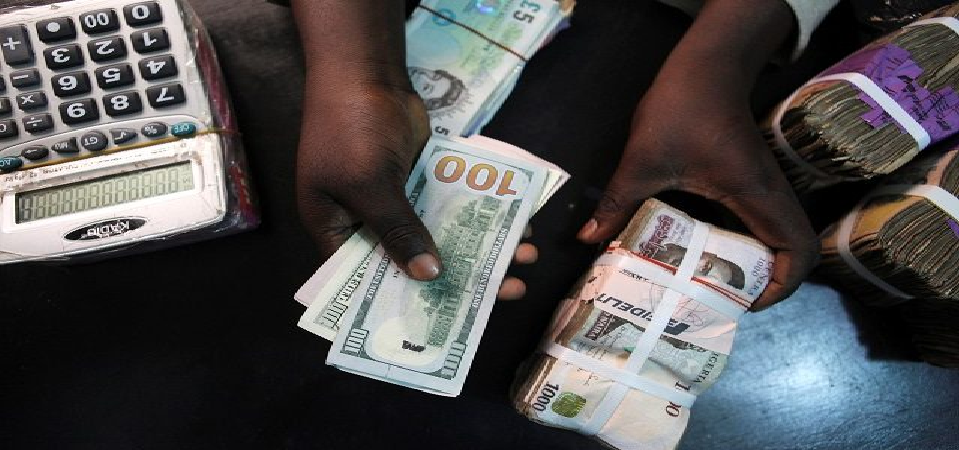
Naira has hit its lowest rate in history at N610/$1 in the parallel market, stoking fresh concern that Nigeria may be heading toward another recession as inflation has begun to increase its numbers again.

Since about seven years ago, the Central Bank of Nigeria (CBN), has been pointing accusing fingers at many factors for naira’s free fall. Among the factors that the apex bank has blamed as the naira nosedives are Bureau de Change (BDCs) and the most controversial, AbokiFX – an online exchange aggregator that publishes daily exchange rates and has become popular among Nigerians.

The CBN governor Godwin Emefiele had accused the outlet of manipulating the foreign exchange market, thereby undermining Nigeria’s economy. That was in September last year. AbokiFX was forced to shut down operation as Emefiele unsubstantially made his claims and vowed to go after the aggregator. The naira was exchanging around N570/$1 then.

It has been eight months since then and Nigerians eagerly want to know why the naira has further fallen N40 below its then position against the dollar.

“$1 is truly N610? I thought since Aboki Fx has been banned, $ should be trading at N100 or less,” Wale Adetona tweeted.

The CBN also stopped forex supply to BDCs, accusing them of inflating exchange rates and stirring dollar scarcity. The launch of eNaira weeks after AbokiFX was shut down was touted by the central bank as a panacea to the naira’s ordeal. But these measures taken by the apex bank have fallen short of the solution to naira’s weakness.

”$1 is officially N610 in Nigeria. So was Aboki Fx the problem? Godwin Emefiele connived with President Buhari. Both men destroyed the Naira. CBN Governor’s E-Naira was another Air Nigeria Scam,” Nefertiti, another Nigerian Twitter user wrote.

The resulting consequence of naira’s free fall – inflation, is pushing Nigerians to the edge. As of March, inflation rate has risen to 15.92%, a five-month high that has further shot up the cost of living in Nigeria.

As lack of dollar liquidity, which experts have rightly blamed for naira’s downfall, persists due to economic headwinds emanating from oil market’s crisis and recently, Russia-Ukraine war, the call for Nigeria to diversify its economy from oil hasn’t been louder. The CBN governor Godwin Emefiele admitted last year that Nigeria is spending about 40% of its forex on petroleum import due to lack of functioning refineries in the country.

Though recently, crude oil price has risen above $100, Nigeria’s foreign reserve has yet to increase its volume to retain sustainable forex liquidity that will upset the current status of the naira against the dollar. This is because the Nigerian government is paying fuel subsidies that have gulped up to N7.5 trillion of the 2022 budget.

While the current situation of Nigeria’s FX market has exonerated AbokiFX, Nigerians are worried that Emefiele’s blame game and other inconsistencies will further harm the naira and Nigeria’s economy before 2023. The CBN governor has been politically active, instigating calls for his resignation.

Early this month, Emefiele made a baffling move to run for president, defying the CBN act that prohibits its officers from being political. Though he has withdrawn his interest, including the lawsuit he filed seeking a legal backing to presidential aspiration, the development has added to the concern that the naira in the care of Emefiele, will see more dips.

Experts Advocate The Use Of Technology To Curb Post-Harvest Issues

0
Commercialize Agriculture Ideas

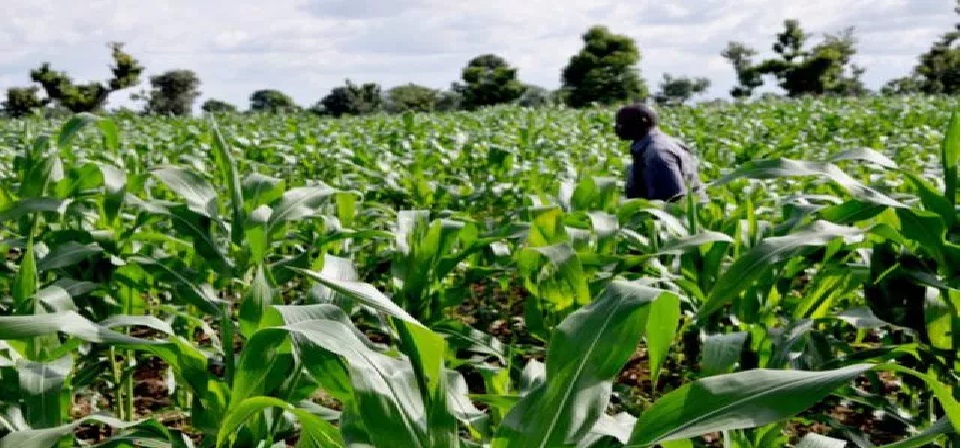
Agricultural experts in the country have called for the use of the right policy and technology to curb post-harvest issues to boost food production and lower the prices of foodstuffs in Nigeria. The experts made this statement at a seminar on ‘Feed Up Africa’ which was held in Ibadan, Oyo state.

Having observed the wastages on farmlands and those wasted after production, which has greatly contributed to increasing prices of Agricultural produce and food shortage in the country, these experts, therefore, advocated for the use of technology to reduce these losses.

With the use of technology in the Agricultural sector, it will encourage food processing as these wastages on farmlands rather than being thrown away, will be processed into other products. It is therefore pertinent to say that one of the effective ways of ensuring food security in Nigeria, is for effective implementation of technological facilities, which will ensure that there is a drastic reduction of post-harvest losses.

According to statistics, Nigeria loses N3.5 trillion to post-harvest losses annually which is not good for the country’s economy. Some analysts have disclosed that problems such as inadequate storage facilities for harvest exist in the Nigerian agricultural sector because it has failed to evolve.

The problem of post-harvest losses poses serious implications for food security in Nigeria. In order to curb such losses, the government must ensure the establishment of farm produce processing industries and standard equipment which will ensure that there is efficient harvesting, handling, and sorting, application of non-toxic chemicals, improved storage systems, etc.

Also, cost-effective technologies can be invented as they will go a long way to stem the tide of available losses in the agricultural sector. One beautiful aspect of the use of technology is that it can efficiently preserve vegetables, grains, seeds, and other farms’ produce for a long duration, without damage.

For instance, countries in Southern Africa use maize as their staple food, and post-harvest maize losses significantly contribute to the region’s food insecurity. Therefore, to address the issue, some farmers in the region used “Purdue Improved Crop Storage” (PICS) bags to properly store their maize grain. This bag enabled the maize grains to have a longer shelf-life.

It is therefore pertinent for the government to properly introduce technological equipment that will aid farmers to limit post-harvest losses because such technologies can enhance the country’s food security.

Asides from the implementation of technologies, the government should also ensure to build standard roads, because due to inappropriately built roads, the process of transporting these farms’ produce becomes very long as some crops will begin to spoil before it gets to the market.

One negative impact of food security on the nation is that it causes malnutrition, especially in rural communities, and also leads to a huge loss of revenue which affects the country’s economy. Therefore the government must ensure the mobilization of human, technical and financial resources to enhance post-harvest losses management.

Tekedia Mini-MBA Introduces A Course On Open Banking

0

Open Banking Nigeria, the key organization which has championed the open banking initiative in Nigeria, will lead a session on Open Banking during the next edition of Tekedia Institute Mini-MBA which begins June 6th. The Central Bank of Nigeria (CBN) recently published operational guidelines for open banking in the country; you can read the guidelines here.

Nigeria’s Big OPEN: The Age of Open Banking Is Here and New Opportunities Await