DD
MM
YYYY

PAGES

DD
MM
YYYY

spot_img

PAGES

Home Blog Page 5138

A Look At Uber’s Expansion In Africa, And The Capitilization Of The African Market

0

Global ride-hailing taxi app firm, Uber recently disclosed that it has facilitated 1 billion trips in Africa, since entering the market less than 10 years ago. Over 10 billion kilometers of trips have been completed, which is equivalent to traveling to the moon and back over 5,500 times.

During the same period, Uber and Uber Eats have collectively reached over 30 million riders and Eaters in Sub-Saharan Africa.

While celebrating the milestone, the head of communications for East and West Africa, Lorraine Ondur, had this to say; “Since entering the market in 2013, we have created over 6 million economic opportunities in over 50 cities across SSA that we are present in. We pride ourselves on building locally and using global expertise. Each country’s needs are unique, so we take the time to understand each of the market’s needs so we can be responsive and adapt accordingly”.

This is indeed a great milestone for Uber worth celebrating, with the Company’s valuation weighing at $18bn in 2015, and a market cap of $42.31 billion making Uber the world’s 390th most valuable company, Uber is gaining a reputation not only for its popularity among investors but also for its aggressive expansion strategy.

The company officially launched its services in Africa in 2013, operating first in Johannesburg, and other cities in South Africa, before it officially launched its services in one of the world’s most populous cities in the world, Lagos state Nigeria.

The company has also spread to other African cities, connecting passengers to uber-registered drivers. Uber no doubt capitalized on the big opportunity in the African region for its flexible and reliable service, also offering multiple price points.

Since its launch in Africa, Uber’s uptake has been incredible in all cities where they currently operate. Within a short space of time, the company has been doing thousands of trips per week, with hundreds of drivers on the system.

One fantastic thing Uber did was to capitalize on large markets in Africa, as well as the region’s population’s openness to testing and adopting new technologies. For example, after it researched the African market, the company deemed it fit to launch its services in Lagos state Nigeria, because of its large population(5,195m) and its size (999.6km).

The company also found out that aside from the fact that businesses thrive in Lagos state, Lagosians are also forward-thinking people and tech-savvy, who would want to adopt any products that they find interesting, and Uber has been doing just that since it’s entry into the state.

With 2.7m active monthly riders and over 59,000 drivers, the firm states that its commitment to expansion in the African region remains undimmed. It is interesting to note that Uber’s role in Africa is not only to improve the transportation ecosystem but to also support economic growth, particularly small businesses as well as to tackle the high unemployment rate in the country.

The company has already partnered with a significant number of drivers and provided them with the tools to build their businesses. The company’s mission is to provide safe and reliable transportation to passengers, as well as creating greater economic opportunities for drivers. No doubt, Uber is enjoying the African market, which has seen its rapid expansion to vast amounts of African regions.

Egyptian Used Car Startup, Sylndr, Raises $12.6m in Pre-seed Fund

0

The African car market has one of the highest growth prospects in the world with a current capitalization of about $35 billion and expected increase to about $45 billion by 2027. In this multi-billion dollar market, used cars dealerships are taking a larger share.

Spurred by rising investors’ interest, countries like Nigeria and Egypt with huge markets are grabbing the lion’s share with established used cars companies like Cars45 and Jiji. However, startups using digital strategies are revving up the competition with lucrative fund-raising from investors around the world.

Egypt’s online used-car retailer Sylndr has raised $12.6M for its pre-seed round led by RAED Ventures, with participation from Algebra Ventures, Nuwa Capital, 1984 Ventures, Global Founders Capital, and a number of prominent regional and global angel investors. The pre-seed round is the largest of its kind in MENA and sub-Saharan Africa.

Sylndr is set to build trust in the used-car market by providing customers with a hassle-free experience to buy, sell and finance their cars transparently and reliably.

Sylndr, which was founded by Omar El Defrawy and Amr Mazen, prides itself on its “driving engine”; a strong team of 40+ highly experienced individuals keen on making a positive impact on the lives of many. The company is looking to more than double the size of the team by the end of year.

“We aim to become the most trusted used cars retailer in the region. Our customers will be able to sell their cars directly in as little as 24 hours, with free collection and fast payment.” Omar El Defrawy, Sylndr’s Chief Executive Officer, said.

“Sylndr will be the go-to place for customers seeking affordable cars, featuring an extensive range of high-quality used vehicles accessible through a diverse set of financing solutions.

“We are privileged to have earned the trust of such a distinct group of regional and global investors; a testament to the immense potential of the opportunity, and the breadth of our founding team.

“If we do our job right, our impact will be felt by so many Egyptians across different market segments, as we empower them to own their dream cars,” he said.

The capital raised will be allocated to building Sylndr’s operational capabilities, technology infrastructure, brand awareness and – most importantly – developing a superstar team able to actualize the company’s ambitious vision.

One of the obstacles to the used cars market’s growth that Sylndr is trying to solve is lack of trust. With the rate of risks involved in buying a reliable used vehicle, investors are backing the startup to build a company that consumers can count on.

“The secondary car market is highly fragmented and more often than not, consumers do not have a trusted counterpart,” Omar A. Almajdouie, Managing Partner at RAED Ventures said. “The market is massive, ripe for disruption and we’re excited to be part of Sylndr’s journey as they transform and set an entirely new standard for the used car market. Given the unique background and experience of this team, we believe in their ability to crack this business model.”

Popular car models in Egypt cost about $15,000 on average, posing a huge challenge to car ownership as only about 5% is financed.

Per TechCruch, Sylndr is yet to launch to the public. However, it is tailoring its model after India’s Cars24: Obtaining cars from individuals that want to sell, buying them up for an agreed price, reconditioning them and then reselling them to new owners.

The founders said Sylndr also plans on providing seven-day money back guarantee, warranty and flexible financing options to users. Mazen said Sylndr plans to open up to buyers in Q4 this year or Q1 2023. But the car retailer will first update its car listings by launching to customers who want to sell their cars.

The Mistake of a Nation As Nigeria Hires A Foreign Firm to Develop National Wallet

1

Interesting that Nigeria will contract a foreign company on these critical infrastructures of the future: “@koibanx and @developingafro to develop #Nigeria’s official platform for commercialization of all IP in the country, on #Algorand”. Like I have noted,  Nigeria would have developed a semi-defense industry if we have a regulation that says that 20% of our defense expenditure (non-emolument)  must be spent on local suppliers.

A few days after the Nigerian Securities and Exchange Commission (SEC) released new regulations that will guide the Nigerian crypto market and the entire digital industry, the federal government has made a move suggesting that it may back it up.

On Tuesday, Koinbanx announced during Twitter Spaces session it co-hosted with Fred Estante that the federal government has entered a three-year exclusive IPR (intellectual property right) agreement with Developing Africa Group to launch a national wallet for Nigeria.

Per People Gazette, the agreement grants Developing Africa Group, a regional software development company, the right to create an official platform for Nigerians to upload any form of IP rights and trade, sell or exchange them abroad while collecting the royalties and proceeds of these operations on their wallets.

If that happens, many startups will mushroom to serve the military, and the paralysis of fighting Boko Haram, and other mayhem, would have created an industry that could possibly serve other African countries. We did not do that.

And on blockchain, cryptocurrency, e-naira, etc, we have decided that hiring foreign firms is the way to go: that has to change. I mean we have to believe in these young people and give them the opportunities to fail or thrive. What is really wrong with the men making these decisions? Must everything be done by foreigners in Nigeria? Why can’t the government task its young people as India, Brazil, South Africa, and other at par countries are doing?

Nigerian Contracts Algorand to Develop National Wallet, Signaling Intent to Unban Crypto

Nigerian Contracts Algorand to Develop National Wallet, Signaling Intent to Unban Crypto

0

A few days after the Nigerian Securities and Exchange Commission (SEC) released new regulations that will guide the Nigerian crypto market and the entire digital industry, the federal government has made a move suggesting that it may back it up.

On Tuesday, Koinbanx announced during Twitter Spaces session it co-hosted with Fred Estante that the federal government has entered a three-year exclusive IPR (intellectual property right) agreement with Developing Africa Group to launch a national wallet for Nigeria.

Per People Gazette, the agreement grants Developing Africa Group, a regional software development company, the right to create an official platform for Nigerians to upload any form of IP rights and trade, sell or exchange them abroad while collecting the royalties and proceeds of these operations on their wallets.

The Developing Africa Group has selected Koibanx and Algorand Blockchain as the payment platform and protocol it will be built on.

Koibanx, a Latin American asset tokenization and Blockchain financial infrastructure company, will be in charge of implementing the wallet.

“BREAKING: @koibanx and @developingafro to develop #Nigeria’s official platform for commercialization of all IP in the country, on #Algorand. As announced by @leoelduayen and @developingafro earlier today on a #TwitterSpace. Replay,” Algorand said on Twitter on Tuesday.

At this time, there has not been an official announcement by the federal government.

“Algorand’s protocol not only provides the performance, scalability, security and functionality required to implement such a large scale project but is also environment-friendly which is important for the Government and has a huge philosophical match with the ‘creators economy industry’ we’re targeting here,” said Ben Oguntala, CEO of Developing Africa Group.

This development, though not yet confirmed by the federal government, offers hope that the Central Bank of Nigeria (CBN), may support SEC’s guidelines this time unlike before.

The CBN prohibited crypto transactions in Nigeria last year, even after SEC had made moves to regulate the asset. The apex bank’s decision forced the Commission to rescind its early stand on cryptocurrency. However, measures, like the creation of the digital fiat app, eNaira, taken by the CBN, has failed to dampen the involvement of Nigerians in the emerging digital market that has metamorphosed to include non-fungible token (NFT).

Experts’ call on Nigerian authorities to reconsider their approach to cryptocurrency and regulate it instead of banning it appears to be finally being heeded.

The illegality or otherwise of the manner in which Rochas Okorocha was arrested

0

“A law enforcement agent can resort to the use of force where and when necessary to effect an arrest or conduct a search on a suspect (paraphrased)~ S.149(2) of the Administration of the Criminal Justice Act, 2015”. 

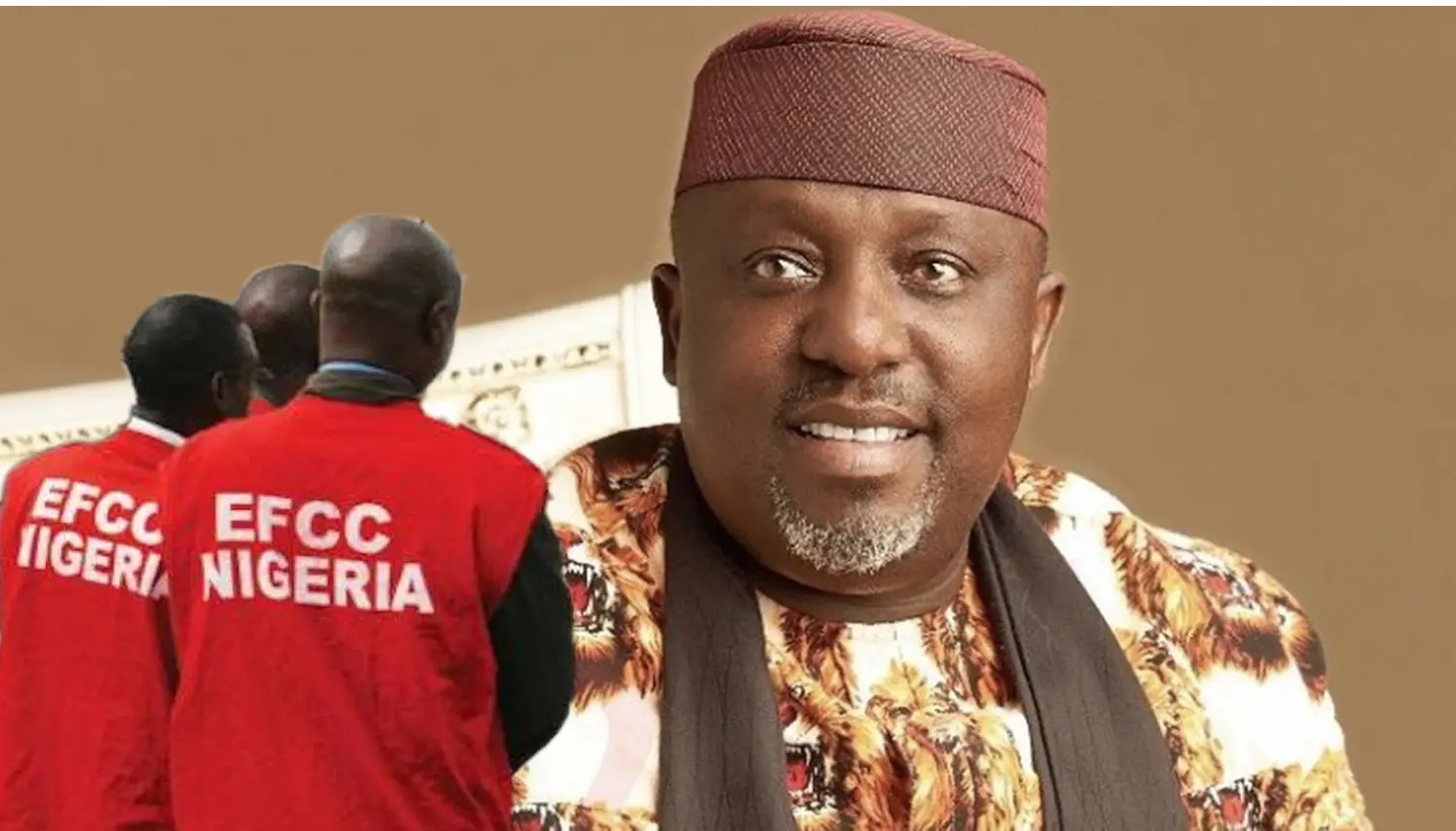
Yesterday evening the operatives of the Economic and Financial Crimes Commission (EFCC) teamed up with the Nigerian police force to storm the Abuja residence of the past Imo State Governor and the current senator representing  Imo West Senatorial District to effect an arrest on him.

The manner in which the joint operatives of the EFCC and the NPF laid siege in his house, attacked and broke down the door of the federal lawmaker for the purpose of arresting him have raised debates and people arguing on the legality or illegality of that style of the arrest.

Everybody’s question is whether the EFCC has the right to lay siege and break into the home of anybody, at any time of the day for the purpose of arresting a suspect?

The reason why this Gestapo style of arrest applied by the EFCC in arresting the presidential hopeful is disturbing to all and sundry is because of the status of the suspect in the society; a past Governor and a serving federal lawmaker; if this forceful manner can be applied in effecting an arrest on a person like Rochas Okorocha you never can tell the extent a law enforcement agent can go in their use of force on the common man on the street. 

The subject of debate has been; can the EFCC or any other law enforcement agency lay a siege and break into any of their suspects’ homes to effect an arrest; is this lawful? Secondly, can the EFCC or any other law enforcement agency effect an arrest on an individual without a warrant properly issued by a court of competent jurisdiction? 

Addressing these issues, we would make recourse to the administration of the criminal justice act 2015, christened ACJA which is the extant law in this regard. 

According to s.149(2) of the ACJA; a law enforcement agent is permitted to resort to the use of force where and when necessary to effect an arrest on a suspect or conduct a search on a suspect or a suspect’s property or home. This section of the law simply implies that a law enforcement agent is at liberty or lawfully permitted to make use of whatever force necessary like breaking into the house of a suspect to conduct a search on the premises or the property or to effect an arrest on any person when the person is resisting arrest or resisting search or the right of ingress or egress of the law enforcement agent(s) has been denied or restricted. 

By the provision of this law, the operatives of the EFCC haven’t broken any law by forcing their way into the house of Rochas Okorocha to arrest him since the suspect refused to let them in and has been resisting arrest. They have been permitted by the law to break down whatever obstacle obstructing their way or stopping them from carrying out their lawful duties.

Secondly, addressing the succeeding issue; “whether the EFCC or any other law enforcement agency can carry out an arrest or search without a warrant”? 

It is the law that a warrant must properly be issued, duly signed by a judge or magistrate of a court of competent jurisdiction or a justice of peace bearing the right details of the suspect before any law enforcement agent can accost any person for the purpose of arrest or conducting a search on the property of that person. But there are exceptions to this law. There are instances when a law enforcement agent does not need a warrant to enforce an arrest or conduct a search on a suspect. These instances include when a crime is committed in the presence of a law enforcement agent or the officer of the law caught a suspect red-handed committing a crime. The law enforcement agent is at liberty to immediately arrest the suspect without first going through the rigorous process of obtaining a warrant. Also,  a law enforcement agent can arrest a person without a warrant when the suspect has been evasive or has jumped bail, or when the suspect was granted bail but absconded or refused to show up when he was needed. A judge may also order a law enforcement agent to arrest a suspect who is supposed to appear before the court but has been unnecessarily absent from the court for no valid reasons. 

In the case of the past Imo Governor, according to the EFCC, jumped bail and has refused to honor their invitations,  he has been evading court process and refused to appear in court so the EFCC had no choice but to carry out a forceful arrest on him.

In conclusion, while we can all condemn this manner of arrest and the disrespect melted on the federal lawmaker; it is morally wrong but it is lawfully justifiable. People of high status in society should learn to respect themselves and respect the courts and honor any invitations from the law enforcement agencies. If the past Governor honored the invitations of the EFCC there wouldn’t have been any cause for what happened yesterday evening.