DD
MM
YYYY

PAGES

DD
MM
YYYY

spot_img

PAGES

Home Blog Page 5157

As YouTube, Sarz Make Move To Train Upcoming Nigeria’s Producers, Songwriters

1

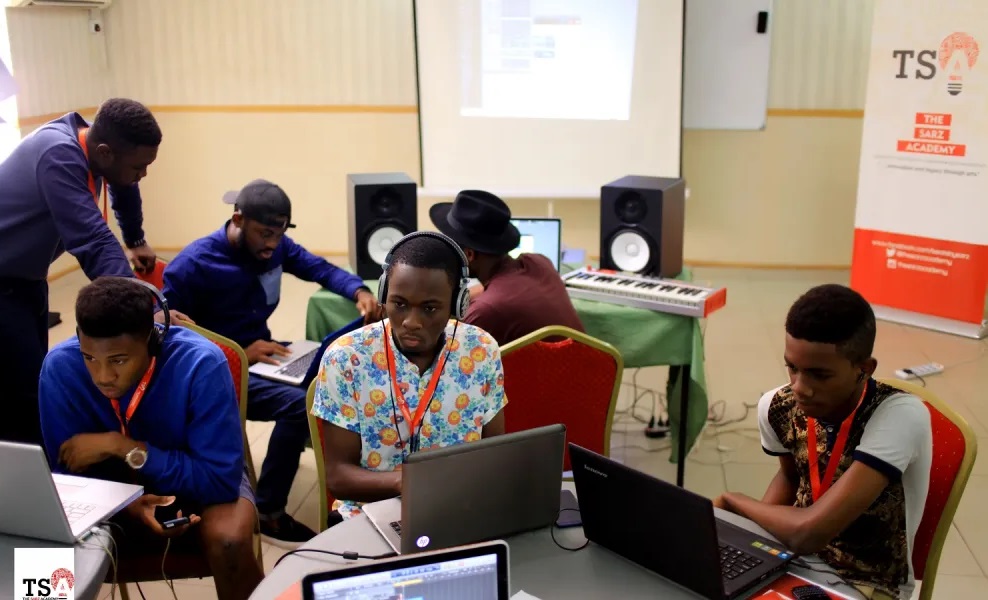
Sarz Academy has collaborated with YouTube Music to train emerging producers and songwriters in Nigeria in the 2022 Future Insiders programme.

The three-day training series included in YouTube’s Future Insiders programme will help up-and-coming producers and songwriters build their skills and abilities through hands-on training from famous music and industry leaders.

The Founder and Leader of the Sarz Academy, Osabuohien Osaretin explained the motive behind the academy while briefing newsmen.

He said, “We founded the Sarz Academy in 2015 to help creatives thrive in the creative and business of entertainment.”

“Our objective has always been to help turn the enormous potential that exists in the music creative space into genuine accomplishments. We recognize that, although many young Nigerians possess the necessary abilities for the industry, many are unable to create a successful music career owing to a lack of grasp of the business and production foundations.”

It could be recalled YouTube had earlier announced that a series of activities commemorating Africa Month would take place throughout the month of May, 2022.

The initiatives, including the Future Insiders’ workshop, are meant to bring attention to and show appreciation for the artists and other creative individuals who are moving Africa’s music business forward.

The YouTube’s Head of Music in Sub-Saharan Africa, Addy Awofisayo said, “We are delighted to be working with the Sarz Academy to present the Future Insiders programme.”

“At YouTube, we have always been committed to supporting the next generation of music creatives out of Africa, and we are thrilled at the opportunity to connect the impactful work of the YouTubeBlackVoices Fund with The Sarz Academy’s efforts to support the artistic aspirations of Nigerian music creatives.”

It’s noteworthy Future Insiders is a component of the Black Voices Fund’s Music Community Pillar, which provides possibilities for exposure and learning for young people all across the world.

Future Insiders has collaborated with community-oriented groups in New York, Los Angeles, the Bay Area, Rio de Janeiro, Houston, Atlanta, London, Lagos, Accra, and now Memphis.

In addition to technical production and business sessions, selected participants will access one-on-one sessions with YouTube to learn how to connect and use the platform to drive the best engagement, as well as learn about all the essential tips such as creating and developing their brands, self-marketing, building positive artist and producer relationships, and revenue streams to consider.

The #YouTubeBlack Voices Fund is a multi-year $100 million fund dedicated to amplifying and developing the voices of Black creators and artists and their stories.

Upcoming Nigeria’s artist, particularly songwriters, musicians and producers, are required to leverage this opportunity towards ensuring their respective talents are fully and duly showcased to the world.

The emerging artists of today’s world, or contemporary global society, are presently faced with much opportunities that could enable them to excel with ease even from the comfort of their bedrooms, unlike what the situation used to be in the past years when individuals in the creative industry had to go extra mile before their talents could be felt by their immediate society let alone the globe.

This is to say that any creative person, who truly desires to make an impact with his/her talent, will surely find a way without indulging in much strenuous activity. This is the reason it’s currently observed that talented young ones of tender age bracket in Nigeria and beyond are easily attaining to stardom on a daily basis, contrary to the past experience when most of them got frustrated in the long run, hence would be compelled to fade out of the pathway to success.

Hence, the Nigeria’s young talent are enjoined to make good use of their Android/Smart phones, rather than deploy it for useless and fraudulent acts. They ought to equally be well orientated by the concerned authorities towards making them key into the needful. Also, massive awareness should be created.


Deborah Yakubu’s killers are charged with incitement instead of murder

0

It should be placed as one of the wonders of the Nigerian government how the killers of Miss Deborah Yakubu Samuel were charged with incitement and disturbance of public peace instead of charging them for murder and culpable homicide as expected.

There is clear evidence that Deborah was murdered by the mob and some even boldly said in the video recording that they were the ones who set Deborah ablaze after she was killed; charging her killers with just incitement and disturbance of public peace and not murder and culpable homicide is spit on Deborah’s grave, it is a slap to the parents, family, and friends of the deceased who are hoping that Deborah gets justice and her killers faced the law, it is also an insult to the collective intelligence of Nigerians.

It is the law provided in both the criminal code (applicable in the south) and the penal code which is applicable to the Northern Nigeria that when a person kills another the killer has committed an offense known as murder and culpable homicide and this offense attracts capital punishment which is a death sentence and when it has to do with a capital offense like murder, it is above the jurisdictional clearance of the magistrate court or any other lower court of record, it is to he tried at High court of the state but to our utmost surprise, Deborah’s killers were brought before the magistrate court and they were charged with incitement and disturbance of public peace which attract a meager punishment and option of fine.

This is highly disappointing, disappointing of the Sokoto state government and the judiciary to have let religious sentiment blur the line between justice and public administration. It is even better that the killers of Deborah are never charged and they are “left for God” instead of this judicial gimmick that is currently going on now in Sokoto state in the guise of trial.

Why Strict Punishment Should Be Meted Out To Those Responsible For Deborah’s Death

Join Tekedia Mini-MBA On “Planning a Career in a New Country”; Register Today

0

At Tekedia Institute, we educate with the mindset that your career can take you to another country. And before you leave that home base, there are things you must do, if you want that translation to be seamless. For instance, how do you warehouse all your academic credentials so that as you leave the home base, you never have to ask your schools for those, again?

Many years ago, after reading on Yahoo Groups (those days!) how Nigerians were frustrated on delayed transcripts, I applied for all my academic transcripts and sent them to World Education Services.  Magically, if I need to send a transcript, I just go to WES, pay and send it to the institution, with no need to deal with any Nigerian school!

In this special session, we will discuss how you can become “richer” through better credit management. Many will tell you: “never take a credit card”. They are wrong. The problem is not the credit card but how you manage your credit. You need those credits to “extend” your financial positioning. Trust me, I was a good banker before I got out.

This is my message: the key to financial ascension is bumping how much you make an hour and not working all hours in America. If you get a certification, you can double your pay, saving you precious time. Working all hours is a bad strategy: boost how much you earn per hour. We will discuss how certifications, licenses, etc can put you on a great path. Register today for Tekedia Mini-MBA; we’re transforming lives . Begin here 

Nigeria’s Freight Forwarding Startup, Topship, Raises $2.5m Seed Round

0

The Nigerian logistics sector has seen tremendous growth in recent time. Spurred by technology adoption and uptick in export of goods and services from the West African country, the emerging market has risen to become one of the fastest growing industries in Nigeria. As of 2018, the value of Nigeria’s logistics sector was estimated to be 250 billion naira ($696 million), a rise of 50 billion naira ($140 million) from 2017 figures, according to data from the US Department of Commerce.

This has inspired the inflow of investors to the sector and many startups are grabbing huge sums of the investments’ flow. The latest among them is Topship – a Nigerian-based digital freight forwarding startup.

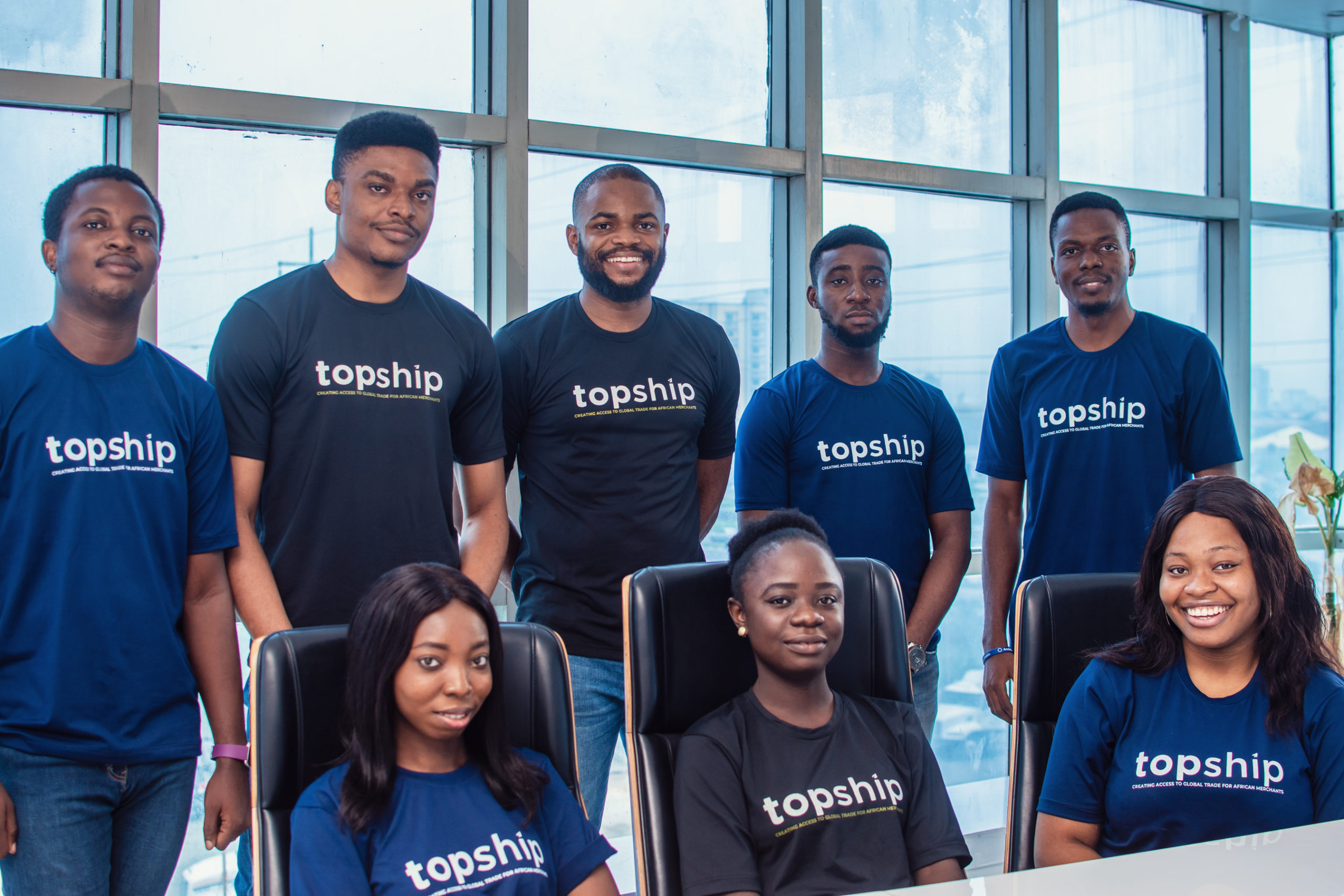
The company announced that it has raised $2.5 million in a seed round led by Flexport. The recent YCcombinator alumnus has other investors in this round including Soma Capital, Starling Ventures, Olive Tree Capital, Capital X and True Capital. Individual investors such as Immad Akhund, Mercury CEO and Arash Ferdowsi, co-founder of Dropbox were also involved in this round.

Founded in 2020 during the pandemic, Topship helps African businesses ship their goods to any destination in the world. CEO and co-founder Moses Enenwali says that it helps about 1,500 merchants move cargo and parcels from Nigeria to more than 150 countries. For now, it only receives cargo deliveries from the U.S., the U.K and China for Nigerian merchants.

Topship earns revenue by selling shipping insurance and taking a margin on transactions. Enewali however said the company is exploring other revenue streams, including trade financing and customs clearance charges. The company claims it has recorded ~50% month-on-month revenue growth since getting into YC.

Enewali told TechCrunch in a discussion about Topship’s revenue growth after YC: “I think what YC does more than anything is just push you to dive as deep as possible in understanding your users.”

“Looking into the future, a lot of it’s coming from that ethos of the user being the most important piece of the puzzle, and we have to be obsessive about it. We’re taking all the learnings and insights that we’ve learned from our users over the past five months or six months and building it into the product in a way that is merchants-focus,” he adds.

Topship’s business model focuses rather on air cargo even as others explore a mix of air, ocean and truck haulage pioneered by Flexport. Enewali says that he does not think that the Flexport model will work in Africa because it is heavily dependent on ocean cargo movement

“The reason why the Flexport model wouldn’t work here is it’s heavily invested in ocean freight and we don’t have enough ports on the continent. For example, in Nigeria, we have one function port, and for ocean freight to work, we need ports, railways and roads for trucking. But we don’t have the roads, and we don’t have the railways,” said the CEO.

“It’s difficult to connect the continent with ocean freight. Flexport’s business model makes a lot of sense even with how they attack problems aggressively, and I love that. But for Africa, we need to tweak it to fit the use case here. So what we’ve seen is the way to connect the continent is via air. Every country and major city on the continent has a functioning airport, and airlines are flying to all those airports daily.”

Topship says that it is considering invitations from merchant groups to start operations in Ghana, Kenya and Tanzania. So this new funding will help it analyse the possibility of starting operations in these countries. Some of the funding will also be used to improve its asset-light technology and build out a proprietary global shipping infrastructure to make imports and exports significantly faster and easier.

Other African competitors in this business include Sote, SEND and OnePort365 who just secured $5 million in a seed funding round last month.

Following covid-induced shift to digital life which has seen Nigerians increase their e-commerce activities, the market revenue is expected to reach a CAGR of 20.5% in 2023, resulting in a market volume of around US$ 10,290.6 million by 2023, according to data from Mordor Intelligence, a market intelligence firm.

In 2019, the market’s largest segment was Fashion with a market volume of US$ 1,761.9 million and User penetration was 52.2% and is expected to reach 75.2% by 2023, the data said.

Nigeria’s ‘energy transition pathway’ includes technology, investment, business strategies and policy.

0

The Federal Government (FG) of Nigeria has disclosed it was following an ‘energy transition pathway’ that combines technology, investment, business strategies and policy.

The Minister of State for Petroleum Resources, Timipre Sylva made this known on Tuesday, 17th May 2022 at the virtual Society of Petroleum Engineers (SPE), Lagos Annual Technical Symposium and Exhibition, with the theme, ‘‘Energy Transition In Africa: A Strategic Pathway To Net Zero”.

According to the Petroleum boss, the aforementioned plan would enable Nigeria transition from its current energy system to a low-carbon energy system with natural gas playing a pivotal role over the next generation, between now and 2060.

Sylva opined that natural gas was a key resource for energy transition and had all the credentials to support Nigeria and indeed Africa meet up with her commitment with the United Nations (UN) 17 Sustainable Development Goals (SDGs).

He stated that as a major source of wealth and energy in Africa, the development of oil and gas resources proved critical for the continent’s economic growth and revenue expansion, saying fossil fuels would remain relevant in the energy mix despite ongoing campaigns and global energy transition.

He said, “First off, Africa and the world need oil, and gas for that matter. The world needs oil and gas because it is what the world relies on for its most basic needs. And that will not change overnight.

“Therefore, African governments and leaders should continue to invest in oil and gas, even as we work to help speed progress to a lower-carbon future. The International Energy Agency, on its part, has reversed its calls for lower oil and gas spending.

“In just a few months, the industry think tank group has changed its tune and is now urging oil and gas companies to increase production. Multiple pathways to the energy transition should and must exist in order to ensure that no country is left behind in the process of achieving net-zero by 2060.”

The Petroleum minister further stated that as a continent, Africa needed to be intentional and recognize the need to develop hydrocarbon resources in environmentally and socially responsible ways.

“And as alluded to by the African Union, we need to be realistic in choosing the energy transition pathways which addresses our unique requirements and circumstances.

“We need to enhance policy, legislation and implementation approaches across national, regional, and continental levels, to enable a favourable environment for development. We need to develop bankable projects to scale up access to funding and investment.

“We need to adopt a mix of energy solutions to address the needs of each country including solutions to high tariffs and accessibility to sustainable energy options.

“We need to promote energy efficiency which is necessary for energy transition and focus on building energy infrastructure and strengthening transmission corridors.”  he said.

Sylva lauded the Memorandum of Understanding (MOU) signed on Monday 16th May 2022 between the African Export-Import Bank (Afreximbank) and the African Petroleum Producers Organisation (APPO) for the creation of a multi-billion-dollar African Energy Bank.

He disclosed the energy bank would provide vital financing for new and existing oil and gas projects, as well as energy advancements across the whole value chain, with the goal of increasing private sector investment in African oil and gas projects, noting that the bank was arriving at a critical time for Africa’s energy sector, following major oil company divestment and a shift in global investment trends.

The problem with Nigeria remains that her various leaders would make brilliant speeches at events, but would fail to subsequently act in line with what they preach at the public sphere. Hence, they are double-mouthed.

Leveraging on technology to create Nigeria’s ‘energy transition pathway’, as pointed out by Sylva, cannot be feasible if formidable policies aren’t put in place and duly implemented.

This is one of the areas borrowing becomes imperative, especially as Afreximbank and APPO sign MOU for creation of African Energy Bank. But it’s pathetic that it’s only in this part of the world that funds borrowed by the government are eventually channeled into recurrent expenditure.