DD
MM
YYYY

PAGES

DD
MM
YYYY

spot_img

PAGES

Home Blog Page 5174

Find your path

0
Fasmicro Consulting

Begin the new month with the unbounded possibilities of the future. Be like the dragonfly which even though enjoying the mild water current defines its path. Do not allow the chatter of the paralysis of the Nigerian state to define your state of mind.

Find confidence in the resilience of the Nigerian people. Yes, “surviving” with $42 billion for 210 million citizens when South Africa uses $152 billion for 60 million people. Indeed, the nation would be unstoppable if more resources (and accountability) are possible.

Yes, never be fooled: the national budget of South Africa is controlled by the government, but in Nigeria, the citizens hold the ace. That is why your local government area headquarters may not afford a stamp pad, or the police station cannot afford an electric bulb, even in a place where men and women have all types of mansions.

So, no matter what they have there as the national budget, understand one thing: Nigerians have multiples they control by themselves. Our yearly flows from consumers to businesses in Nigeria is close to $350 billion; that is a lot!

Nigeria runs the largest “national budget” in Africa even though the official numbers may not show so. Sure, South Africa has $152 billion while Nigeria has $42 billion. But do not be  fooled: the national budget of South Africa is controlled by the government, but in Nigeria, the citizens hold the ace. That is why your local government area headquarters may not afford a stamp pad in a place where men and women have all types of mansions, untaxed. In South Africa, they would have brought some of those private wealth into the public coffers.

Fixing Nigeria’s Lackluster Venture Capital Funding

Online Sports Betting – Requirements for Securing A Digital Sports Betting License in Nigeria

0

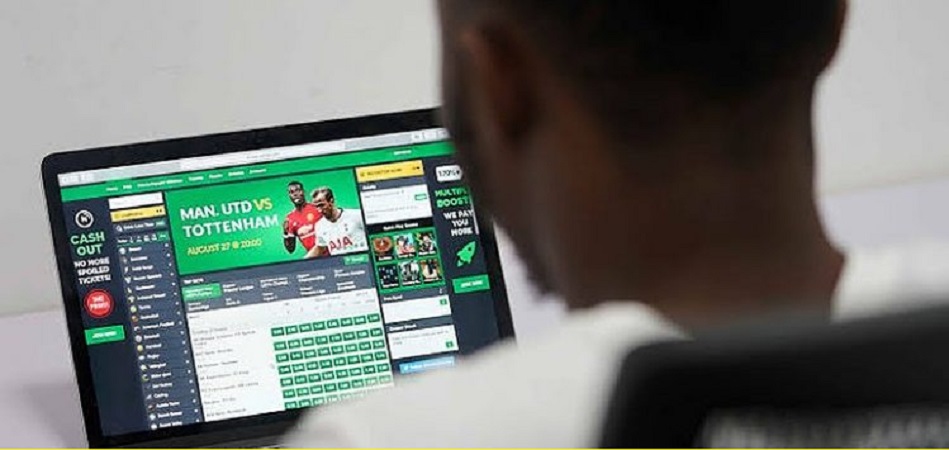
Online betting is currently witnessing a huge boom as a major Fintech opportunity in Nigeria, partly motivated by the current economic situation leading to increased efforts on the art of many Nigerians to seek passive income, and the attractive idea of making money from truly legitimate passion for sports like Football shared by an overwhelming majority of people in the country.

Sport betting itself is the activity of predicting sports results and placing a wager on the outcome. In Nigeria, sports betting has been described alongside betting businesses like Land-based Casinos as legal under Nigerian Law which on the other hand describes as illegal betting games of chance which usually by deliberate design are not favorable to the player, which can be described as plain racketeering.

Digital Sports betting which is the core focus of this article is regulated at the Federal level by the National Lottery Regulatory Commission (NLRC) established through the National Lottery Act and is charged with administering the provisions of the National Lottery Regulations 2007 while at the state level in places like Lagos state Online Sports betting is governed by the Lagos State Lotteries and Gaming Authority (LSLGA) established by the Lagos State Lottery Law (as amended).

This article aims to shed more light in a most summarized and basic manner on what you really need to know about getting a Digital Sports Betting license.

Due to disputes between the Federal and State governments over whether the Federal government has jurisdiction over betting licenses, it is very advisable to seek Digital Betting licenses from the NLRC as well as the LSLGA. 

The NLRC usually issues 3 classes of licenses which are Lottery licenses, Sports Betting licenses, and Promotional licenses.

To secure a Federal Digital Sports Betting license from the NLRC, you need to have the following:-

– Preferably, an Online Betting company registered with the Corporate Affairs Commission. The minimum share capital requirement for Sports Betting companies is 30 Million Naira while the minimum share capital requirement for a lottery betting company is 5million Naira (you cannot engage in Online Sports Betting as a lottery company);

– While at the point of applying for a Federal/National Sports Betting license grants from the NLRC, you must not have a registered company, you must attach to your application a copy of your Company name reservation approval by the Corporate Affairs Commission and evidence of the payment of a sum of 10,000.00 Naira to the NLRC;

– Applying for a National license is broken down into an Application stage, a Provisional Approval (Approval-in-Principle ) stage, and a Post-licensing stage;

– An NLRC  non-refundable application fee of 2million Naira payable to the NLRC;

– A one-time license fee of 100 million Naira(a 50% concession on this fee is possible where the company is a member of the Association of Nigerian Bookmakers);

–  A completed NLRC application form;

– Evidence of Domain name registration with a country code top level Domain label for Nigeria;

– Evidence of Trademark Registration ( Trademarks are the company’s brand symbols that include logos, slogans, catchphrases etc.);

– Evidence of SCUML registration as well as a set-up AML/CFT compliance framework. SCUML stands for the Special Control Unit on Money-laundering and is the government agency tasked with receiving compliance returns from Financial Institutions (FIs) and Designated Non-Financial Institutions (DNFIs) which includes Fintech players like Online Sports Betting companies;

– Particulars of directors and key personnel of the betting company (please note that people under the age of 18 are not allowed to be directors in Betting companies);

– A 5 year financial projection and Organization progression/growth plan for the Betting company;

– Details of the company’s planned Sports Betting games along details of the company’s participation terms and conditions for bettors, its marketing and distribution plans and a demonstration of Sports Betting Industry analysis capabilities;

– A detailed profile of the company’s Technical Service Providers/Partners and Telecommunications partners as well as copies of all JV agreements and/or SLAs signed with Technical partners and proof of software certification from recognized Tech testing labs;

– Where the company has foreign participation/ownership, there must be presented relevant immigration documents and a Certificate of Capital Importation from the Nigerian Investment Promotion Council;

– A Bank guarantee of 25 Million Naira valid for 1 year(at the temporary licensing stage);

– Connection of the Betting platform to the NLRC monitoring and reporting framework.

Temporary license grants last 90 days and at the Post-licensing stage or in the course of business operations, Betting companies are required to remit along with monthly update returns before the 10th of the next month a 3% tax on monthly sales turnover to the NLRC, 2% of this going to the National Lottery Trust fund .

NLRC licenses are valid for 10 years and do not have renewal fees, but renewal is at the discretion of the presidency subject to the recommendation of the NLRC.

Also, National Sports Betting companies are expected to establish a Prize Fund Account which will hold at least 50% of the proceeds from any lottery strictly for the payment of prizes.

STATE SPORT BETTING LICENSES :- For the purpose of this article we’ll be dealing with the procedure and requirements involved in getting an Online Sports Betting (OSB) license from the state agency regulating the business of Sports Betting, in this case the Lagos State Lotteries and Gaming Authority(LSLGA) which is a creation of the Lagos State Lottery Law (as amended). LSLGA licenses do not come with Bank guarantee requirements unlike NLRC license applications.

The requirements for an OSB license from the LSLGA are :-

– Application letters with attached Letters of Intent sent to the LSLGA which are usually reviewed in 10-15 working days;

– A minimum share capital of 20 million Naira;

– Incorporation documents of the applicant company;

– A non-refundable application fee of 500,000.00 Naira payable to the LSLGA;

– A license fee of 50 million Naira, with a renewal fee (renewal itself bring at the discretion of the LSLGA) of 10 million Naira payable annually along with a 2.5% monthly tax on sales revenue;

– Details of its proposed platform (if it is self-hosted or cloud-based and details of its hosting company of its the latter);

– A detailed proposal on the Online Betting scheme revealing vital particulars of the company’s key personnel(with 3-year Tax receipts where applicable) and its Business plan along with its financial projections;

– Detailed information about the company’s Technical operation flow and Technical partners.

Please note that Sports Betting companies in Nigeria CANNOT be 100% Foreign-owned, as a result at least 15% of the company’s controlling participation must be owned by Nigerians. Also, another way of going round the rather heavy capital requirements of getting a Digital Betting license is to simply set up an Online Betting Shop or a chain of Online Betting Agency shops by virtue of a franchise agreement.

SPORTS BETTING COMPLIANCE REQUIREMENTS :- Online Sports Betting companies have an extended Regulatory Compliance framework covering them that includes :-

  1. The NLRC/LSLGA;
  1. AML/CFT/KYC compliance filings to The Special Control Unit on Money-laundering as well as the Nigerian Financial Intelligence Unit (NFIU) among others;
  1. The National Office for Technology Acquisition and Promotion (NOTAP);
  1. The Nigerian Investment Promotion Commission (NIPC);
  1. Betting advertisement compliance with the Advertising Practitioners Council of Nigeria (APCON);
  1. The National Information Technology Development Agency (NITDA);
  1. The Federal and State Inland Revenue Services.

Consequently, it’s very advisable when setting up a licensed Digital Betting platform to have efficient Legal services by your side at every step of Licensing and post-licensing.

It is hoped that a basic understanding of how to participate in the Nigerian Online Betting Industry will be acquired from a proper processing of this article. 

The Nigeria’s Big Oil Price Crossroads

0

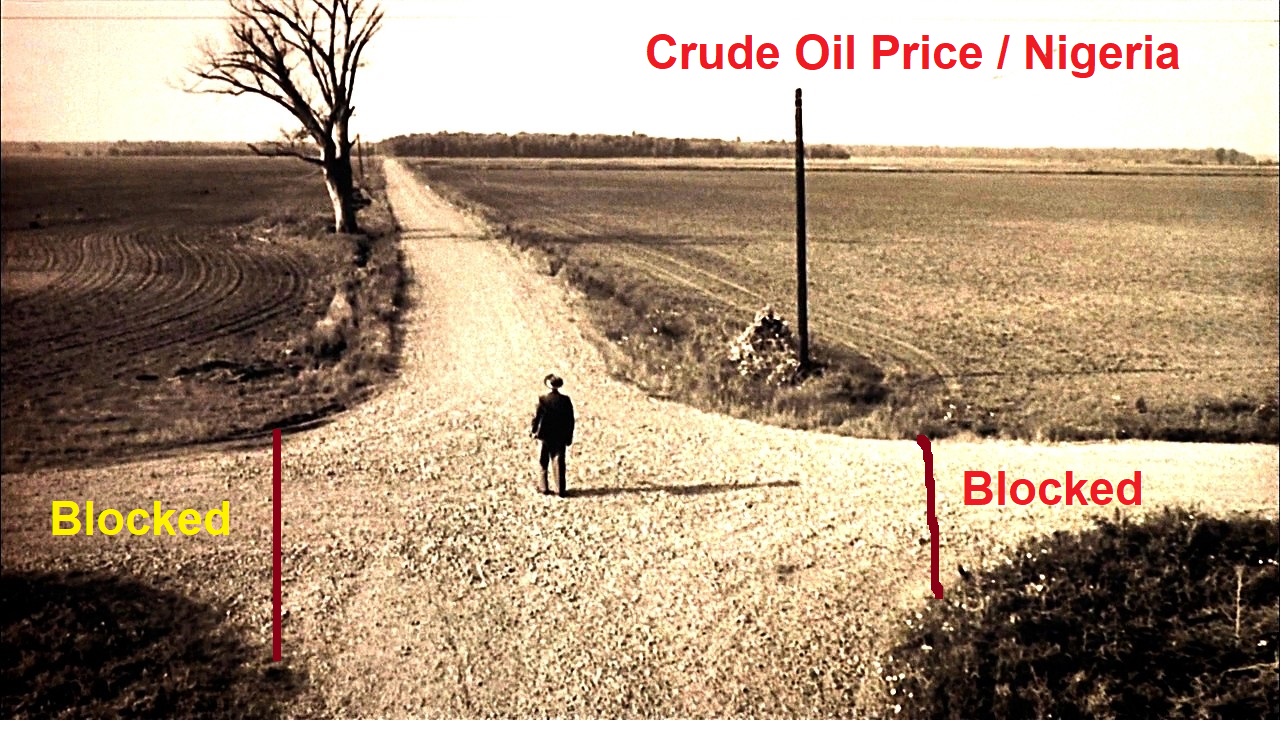
It is magical: Nigeria struggles when crude oil price goes south (its foreign earning drops). It also cries when the price of crude oil goes north (importing gasoline becomes more expensive since its refineries are museums). I have a question: since oil prices cannot go sideways, what do we want as a nation?

(NB: the price of oil will likely  keep going up now that the EU has “banned” Russian oil. What that means is that supply has been limited. From Econ 101, prices will go up, ceteris paribus. Largely, Nigeria would have cleaned up during this moment.

Of course, that may not be the only story. If Russian oil becomes very cheap, India can buy more, and resell to Germany. Magically, Nigeria may even lose some key markets like India, depressing our earnings from oil.

For instance, since Poland and Bulgaria lost access to Russian gas, Germany is consuming more gas which is then channeled to these countries, says Russia.)

The Agreement Between Nigeria And Cuba On Vaccine Production, Others

0

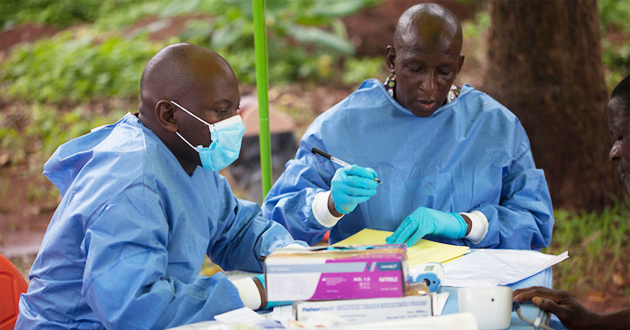
Nigeria has reportedly signed a Memorandum of Agreement (MOA) with Cuba to implement actions on contract manufacturing, technology transfer, vaccine production and commercialisation of the Cuban biopharmaceutical products in Nigeria.

Nigeria’s Ambassador to Cuba, Benaoyagha Okoyen, in a statement made available to newsmen in New York, said the two countries also agreed to partner in other areas.

He disclosed that both countries expressed interest to implement actions for the development of partnership, particularly in projects for scientific cooperation, academic collaboration, co-development agreements and licensing of innovative products.

Mr. Okoyen and the President of the Cuban Group of Biotechnological and Pharmaceutical Industries (BIOCUBAFARMA), Eduardo Diaz, who represented the Republic of Cuba, signed the Expression of Interest Document.

According to the envoy, Nigeria signed the document with Cuba at the just concluded 2022 BIOHAVANA International Conference held from April 25 to 29 in Havana.

“The Embassy of Nigeria in Havana, through the leadership of the Ambassador played a significant role in taking the Nigerian delegation through the different stages of their participation in the conference, including the coordination of several relevant side meetings.

“The delegation included participants from the Ministry of Health; National Agency for Food, Drug Administration and Control (NAFDAC); Federal Ministry of Science and Innovation; Sheda Science and Technology Complex; National Biotechnology Development Agency; Nnamdi Azikiwe University, Awka; and the West African Health Organisation (WAHO).”

The BIOCUBAFARMA, the organizer of the conference, is the Cuban Government business organization that produces drugs, equipment, and services through scientific and technical development to improve the health of the population and the production of exportable goods and services and advanced technologies in food production.

Delegates from over 50 countries witnessed the signing of 18 agreements by 12 countries, including Nigeria, Australia, Russia, Germany, Japan, Canada, South Korea and Turkey.

It’s a right and great move as was taken by Nigeria’s Ambassador to Cuba, Mr. Okoyen. This is one of the lofty activities expected of a high commissioner serving in any country across the globe.

As an incumbent ambassador, you are required to look inwards to discover the areas the country you are serving in, is into and known for, with a view to working out modalities on how best they could be of benefit to Nigeria, or your country of origin, as the case may be.

Anybody who truly intends to grow, or become greater, in a certain area, must be ready to leverage on the activity of other people who have gone beyond them in the areas in question.

However, the move shouldn’t stop at that juncture. The concerned authorities, on the part of Nigeria, must endeavour to put the talk into actions, to ensure the needed growth and development is actualized soonest without further ado.

The EU Makes Move To Depend On Nigeria, Others For Oil Supply

0

Indications emerged Friday, 29th April 2022 that the European Union (EU) may turn to Nigeria and other oil-producing countries for oil supply amid moves to approve an embargo on Russian oil.

The report had it that the proposed oil embargo would be phased in over a period of some months, saying the new resolution was expected to be approved by the EU ambassadors ‘next week’ as part of plans to avoid delays.

The EU resolution comes against the background of new assessments that the Russian military’s eastern offensive was faltering amid plans to provide Ukraine with more weapons and support.

With about one quarter of Europe’s yearly oil needs coming from Russia, European countries rely heavily on the country for supply. But the EU officials disclosed the Union is looking elsewhere for oil supply.

According to the report, as the oil embargo is phased in, officials said the bloc would seek to make up the shortfall by increasing imports from other sources, like Persian Gulf countries, Nigeria, Kazakhstan and Azerbaijan.

Since the invasion of Ukraine earlier in the year by the Russian government, the EU embargo, if enacted, will be the biggest and most important new step in the Union’s sixth package of sanctions against Russia, as the awaited sanctions will also be directed at Russia’s biggest bank, Sberbank.

It’s noteworthy that Nigeria, Africa’s largest oil producer, has faced challenges with oil production in recent months. The nation has had to close a number of its oil wells to keep criminals at bay. This was disclosed by the country’s Finance Minister, Zainab Ahmed in one of her recent interviews.

Mrs. Ahmed stated that upon opening the wells, Nigeria would meet its quota of producing 1.6 million barrels of crude oil per day (bpd), disclosing that for many months, Nigeria had produced 20 per cent less than capacity due to oil bunkering and other criminal activities.

Amid oil price rally as a result of Russia’s invasion of Ukraine, Nigeria has struggled to meet its Organization of Petroleum Exporting Countries (OPEC) quota of 1.73 million bpd.

The OPEC monthly oil market report (MOMR) for April 2022 showed that the country’s oil production fell by 20,000 barrels per day (b/d) in March, which yielded barely 1.24 million bpd, as against its previous 1.26 million bpd in February, 2022.

The nation also recorded a 24000 b/d decrease in oil output to 1.35 million bpd in March, down from 1.38 million bpd the previous month being February, 2022.

As the EU reportedly turns to Nigeria and others for supply, expectations are high that production would improve across the nation’s oil wells.

Nigeria relies heavily on crude oil sales to fix infrastructure, meet debt obligations and earn foreign exchange that would enable her monetary policy decision makers to address inflation.

This implies that Nigeria’s concerned authorities are expected to, at this juncture, expedite actions towards ensuring modalities are worked out in regard to eradicating all odds posing a barrier to the country’s crude oil production.

As the country continues to witness unabated practice of oil bunkering and other related oil thefts, time has obviously come to deploy a new measure of putting a stop to the deadly societal menace.

So, as dependency pertaining to oil supply is expected to be high in the nearest future, Nigeria has no option than to swing into action without further ado.