

Join us at Tekedia Mini-MBA, Tekedia Startup Masterclass, Tekedia Practice or Tekedia Industries, and learn from these “25 Startup Innovation Cases (10 Africa, 5 USA, 5 India, 5 China)”. Click here and see all our courses at Tekedia Institute.
The ASUU Strike and the Cost of Producing Graduates in Nigeria
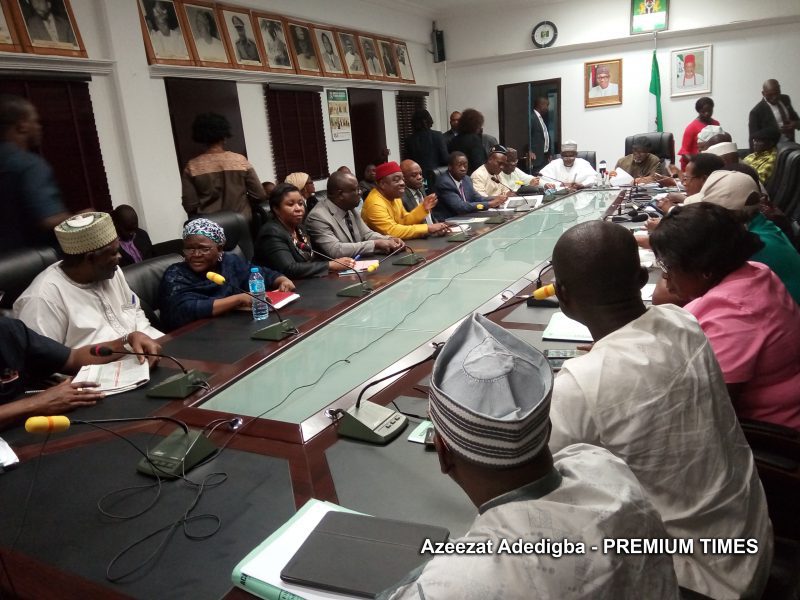
Apart from primary schools, where citizens are expected to acquire basic knowledge and skills for the nation’s benefit in all ramifications, higher educational institutions are other places where citizens are expected to acquire advanced knowledge and skills for the nation’s benefit. Throughout history, unions and pressure groups in the global north and south have put pressure on political leaders and those in charge of providing the correct processes for citizens’ development and acquisition of advanced and basic knowledge and skills. The argument was that a nation cannot progress if education is treated in a terse manner.
Various university unions used strike as a key instrument of calling government’s attention to age-long decay in the university system from the administration of Military President Ibrahim Babangida to the short civilian interim government headed by Late Earnest Shonekan and the civilian administration of Chief Olusegun Obasanjo, including his military rule. This device was not only employed throughout the administrations mentioned, but it is also in use today.
However, our analysis reveals that unions have utilised the device more frequently after 1999, the year the country reverted to democratic governance. All of the unions, particularly the Academic Staff Union of Universities, desire a better teaching, learning, and research environment in public universities across the country. In addition to these, academics should be highly compensated in comparison to what is available in other African countries, if not in the global north.
While this piece recognizes the importance of addressing the issues presented by unions over time, it is also important to note that the cost structure of training and graduating students should be reconsidered. This is necessary as public universities continue to offer courses at costs that are not commensurate with amount being paid by the students. It is important to stress that the suggestion does not imply that institutions should charge expensive tuition fees or other fees without taking into account the socioeconomic circumstances of parents, guardians, and students. Recalculating the costs of training, according to our analysis, would assist interested stakeholders in the system in appropriately remunerating academics and other employees.
According to Statista, using various sources, “the most expensive federal university for undergraduate programmes in Nigeria is the Nigeria Maritime University. In 2019, the average annual tuition fee for its bachelor programmes was N81,050, around $198. The Federal University Oye-Ekiti followed with N69, 000, some $167.”
Examining these rates against those charged by other institutions reveals no discernible difference, even with the 2021 fees, in terms of charging fees that provide the necessary value to students, academics, and the government. When academics are paid pitiful salaries and receive meagre supervision fees, producing quality graduates and postgraduates will remain elusive. Our analyst discovered that PhD supervisors at one of the federal universities are paid less than N10,000 per year, while supervisors of undergraduate students are paid much less.
Central African Republic Goes Cryptocurrency As A Legal Tender

Cryptocurrency has continued to witness institutional adoption even though the market’s frenzy seems to have died down since last year. Besides financial institutions adding cryptocurrency to their payment structure, governments around the world are seriously considering how to onboard cryptocurrency or adopt it as a legal tender.
Last year, El Salvador became the first country in the world to adopt bitcoin as a legal tender, setting the pace that other countries are now following or considering.
On Monday, the National Assembly of The Central African Republic (CAR) voted on the Draft Law Governing Cryptocurrency, which was adopted favorably by acclamation and unanimity, FX Empire reported. The CAR thus becomes the first African country to adopt crypto as a legal tender.
The legislation was introduced into the Assembly by the minister of finance and budget, Calixte Nganongo, and the minister of the digital economy, postal services, and telecommunications, Gourna Zacko.
This would establish the legal framework for cryptocurrency regulation in the country while also establishing Bitcoin as an officially accepted currency.
The purpose behind the approval of the legislation was twofold. One was to introduce and create a legal framework governing cryptocurrency and the establishments handling these currencies (ex. – exchanges, lending and borrowing platforms, etc.).
And secondly, through the bill, a favorable environment for the financial sector will be established that will be set to meet the needs of the profession in this sector and all economic actors.
Commenting on the reason behind introducing the bill, Gourna Zacko said: “With crypto-currency, there is no more control of the Central Bank. You have your money, you send it to an investor for a business, you receive it in any currency, you can dispose of it in Dollar, Euro, CFA, or Naira”.
The effect that El Salvador had on the world and the crypto world with the adoption of Bitcoin as legal tender and the policies introduced favorable to the same is visible in this decision as well.
Other Governments Accept Crypto Too
While the Biden administration of the United States of America is yet to give a concrete status to cryptocurrencies, many leaders of the States have already implemented changes in their power.
Recently as reported by FXEmpire, the Governor of Colorado, Jared Polis, announced that the state would begin accepting payments of taxes in cryptocurrency by this summer.
And following him, the State Senator of California Sydney Kamlager laid down a proposal for accepting cryptocurrencies for payments for the provision of government services.
Unlike the CAR, other African countries are yet to create a policy framework on crypto. Some like Nigeria have made crypto transactions illegal even though the West African country is one of its biggest markets.
Although the global crypto market continues to trend downwards, the expanding adoption of cryptocurrencies is expected to help in recovery, boosting economies along the way.
Tekedia Capital Invests in Byte

Tekedia Capital makes an investment in Byte. They’re building Mint, CreditKarma and Venmo for Africa with a new growth layer for SMEs. We see an unbounded future in Africa and we will continue to support entrepreneurial capitalism by investing in young people. To KHALID ISMAIL and team, welcome.
In 2022, Tekedia Capital will invest $millions in startups and companies around the world. We believe that the best companies have not been started and based on that construct, improving the efficiency and the utilization of factors of production will require new business models.
We’re always looking for innovators. If you are building something amazing, let us know here
The Lessons from the Sacked Chicken Republic Security Men

Earlier this year, there was a video that trended on the internet where two security guards of chicken republic were seen dancing while on duty. This act put up by these guys earned them the admiration of many Nigerians who stated that they should be happy regardless of whatever situation they find themselves in.
Although very few Nigerians condemned their actions, stating that such an act was a case of negligence of duty and gross misconduct in the workplace. Also displeased with their actions, the management of Chicken Republic did not hesitate to sack the two security guards, citing improper behavior at work.
This however infuriated a lot of Nigerians who stated that chicken republic was so insensitive, with some of them stating that the company could have done better by utilizing such a moment to promote and market the company’s brand. After their sack, these guys were presented with tons of job offers from some Nigerians.
They were later reached out to by a clergyman in Nigeria, by the name Apostle Chibuzor who is the general overseer of Omega Power Ministries (OPM). He promised to give the security operatives scholarships to study abroad, following the sack from their workplace.
Just recently, pictures of the security guards surfaced online where they were seen in a foreign country. According to information obtained, it was disclosed that the clergymen offered the security guards scholarships to study in Cyprus. These pictures however spurred me to write this article. On seeing how transformed they looked, I was ecstatic that their lives have been made better compared to their former.
Although there is one thing I have to say in all of this, which is how most Nigerians now reward indiscipline in the society. I will state my personal opinion on this matter not minding whose ox is gored. First of all, I was bewildered by how so many Nigerians condemned Chicken republic for sacking the security guards.
Of course, Chicken republic might have properly gone too far by sacking them, they could have cautioned them as well, but who knows if they had earlier been warned. If we are to analyze this issue without being biased, we will realize that Chicken Republic’s action was also justifiable.
A lot of Nigerians went ahead to make rash comments calling out the company, rather than calling a spade a spade. The ideal thing any reasonable person would do was to analyze the issue properly, then afterward condemn the actions of the security guards. Rather most people were celebrating these guards who they should have reprimanded for improper behavior at work and negligence of duty. Indeed, “misery loves company”.
I am not saying that these security guards should be crucified or not given another opportunity/offer for their misconduct, all I am saying is that the ideal thing any reasonable Nigerian ought to do was to, first of all, agree that the actions put up by the security guards was unprofessional, but they never did.
They got overwhelmed with their emotions following the news of their sack, forgetting that the security guards erred in the first place. Also, I commend the clergyman for giving these young men a better future, but he ought to have openly condemned their actions which wouldn’t in any way deter him from still offering them scholarships. Such reprimand will serve as a deterrent to anyone who wants to replicate such an act. He could have also possibly stated that he was offering assistance to these guards out of his benevolence and not necessarily as a reward for misconduct.
It is very important that we must be honest with ourselves and do the right thing to reprimand and condemn bad behavior in society. We must note that whatever is tolerated in society is automatically accepted and allowed. One funny thing that happens in Nigeria, is that once there is an occurrence of something, other people want to follow suit.
Some workers who are not well-grounded would also want to replicate such acts by the security guards, forgetting that a workplace has etiquette, and going contrary to it is termed improper behavior at work. It is high time the society and leaders in different positions in the country become careful about what we celebrate and reward so that there won’t be a breed of lawless people in the society and place of work.
https://youtu.be/9rVfQhn_0RA