DD
MM
YYYY

PAGES

DD
MM
YYYY

spot_img

PAGES

Home Blog Page 5182

Tekedia Capital Invests in Edekee

0

Tekedia Capital Syndicate has invested in this amazing company. We took a very significant position. We’re proud of the United States patent-pending technology the young innovators in Lagos have developed.  Edekee is a category-king. We bought all available shares in the pre-seed. If you are a Tekedia Capital syndicate member, connect with Nnamdi Odumody, Edekee team wants to showcase amazing things before the upcoming launch.

Also, we will have a special Demo Day next week. This company processes N4 billion transactions per month in Nigeria and is one of the fastest growing companies in Africa. We made friends with the company when it was processing N5 million a month (you can see how early we go in). It would be joined by another one, already a portfolio firm, which since it launched in Sept 2021, has processed $11 million GTV.

I invite you to check out Tekedia Capital and why the best startups come to us. We offer more than money. We make them better because we understand business with global connections. Join Tekedia Capital today  and co-own Africa’s empires of the future.

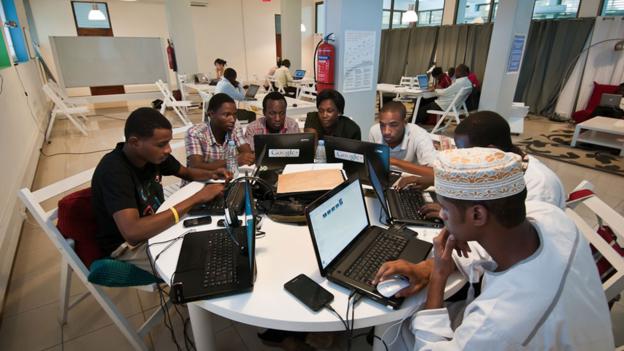
This is Edekee, one of the 7 seven startups currently raising funds in Tekedia Capital Syndicate. It is a very amazing company when you see what young people in Nigeria have built. They brought a fusion of computer vision, calculus, and series (yes, all the nice mathematics) with top-grade machine learning to produce something amazing. I am so honoured to have been a technical and business mentor to these young people in their US-patent (pending) technology.

ASUU Strike Is Destroying Nigeria’s Future

1
FILE PHOTO: (L-R) Solomon Islands Prime Minister Manasseh Sogavare, Solomon Islands Foreign Minister Jeremiah Manele, Chinese Premier Li Keqiang and Chinese State Councillor and Foreign Minister Wang Yi attend a signing ceremony at the Great Hall of the People in Beijing, China October 9, 2019. REUTERS/Thomas Peter/File Photo

Nigeria: do not normalize that your universities have been on strike for weeks now. I mean, knowledge creation, assimilation and application, are things we ought NOT to play with. How can a nation function when its universities are always striking?

In my alma mater, Johns Hopkins University, they have some experiments in the medical school which have been running for more than 46 years. Through those experiments, they engineer miracles, in operating rooms and doctor’s offices.

But if Nigeria cannot even open its universities, what is the FUTURE? It is very unfortunate since there is no end we can count according to the Labour minister.

He said, “It depends on ASUU. The ball is in their court. They should go and meet the Benimi Briggs Committee and look at what the committee is doing and make further inputs so that the work can be accelerated.

“ASUU has to come down from their high horse. You cannot go and start intimidating people in NITDA and threatening the Minister of Digital Economy and Communication with revocation of his professorship that he is a fake professor. You go to ABU and say you are going to withdraw the certificate of the director of NITDA. That’s bullying. It is not allowed in the labour negotiations.’’

He said he is worried by the incessant strikes in public universities in Nigeria, stressing that “he has not slept” in a bid to see that the schools are reopened.

While recalling on the lecturers’ union incessant industrial actions in the last 2 decades, the former federal lawmaker said, ‘’The ASUU issue is a recurring decimal. It is a very sad situation. I am a product of the public school.’’

The Importance Of Feedback In The Workplace

0

The importance of feedback in the workplace cannot be overemphasized as it is known to increase staff morale. A workplace needs feedback to succeed and thrive. One great thing that feedback does is that it helps employees to know more about themselves and their behavior. It also increases their self-awareness and encourages personal development.

One important thing to note is that feedback doesn’t have to always be positive, it also can be negative. Although, when giving negative feedback, one has to be very constructive so that it won’t sound derogatory and offensive. Negative feedback comprises areas where one is not doing great which calls for improvement.

Giving negative feedback can be sometimes difficult because humans tend to internalize criticism much more than positive remarks. So, when giving negative feedback, one should first commend an individual on areas where he or she has done well before they go-ahead to talk about the areas that need improvement.

In the workplace, constructive feedback is one of the best things employers can give to their employees because when it is delivered effectively, it can reinforce positive behavior, create a strong work culture, and enable employees to correct negative performance in the workplace.

One important thing to note about giving feedback in the workplace is that it should be done regularly because by doing so, an employer develops a great way to rapport with the team. Also, feedback should be given immediately after an event or incident. An employer should not delay in giving feedback because it is usually effective when the incident or behavior is still fresh.

The manager must note that they should abstain from using negative phrases when giving feedback because doing so often causes an employee to ignore and disregard the feedback. Managers must always try to use encouraging words when giving employees feedback because they will always see the need to improve.

Employees need to receive feedback about how they are performing so that they will know where to improve. When employees improve based on feedback received, it brings about improved productivity in the workplace.

According to Harvard Business Review, 72% of people feel their performance would improve if their managers provided corrective feedback. Another survey suggests that 57% of people prefer corrective feedback to purely praise and recognition. Looking at the aforementioned surveys, it therefore shows that a large percentage of employees do not mind receiving negative feedback, as a lot of them want to succeed in their workplace.

Also, on the other hand, positive feedback gives them a sense of purpose because naturally, humans love to be appreciated for their efforts. Constant feedback improves employees engagement because a study showed that 4 in 10 workers are actively disengaged when they receive little or no feedback. That is to say no matter how silent most employees are on feedback, a large number of them crave it.

Final Thoughts

It is therefore important for employers to ensure that they give regular feedback in the workplace because feedback is a tool that can help employees evaluate themselves and their work. While employees need to receive feedback, it’s also essential for leaders who believe in growth to ask for an evaluation, to set an example, and be an inspiration for them.

On Akinwumi Adesina’s View On Global Food Crisis

0

During his speech about Africa’s priorities as a guest at the Atlantic Council’s Africa Centre on 22nd April 2022, the incumbent President of the African Development Bank (AfDB), Mr. Akinwumi Adesina stated that Africa must be prepared for the inevitability of a global food crisis.

While responding to questions thrown to him from the hosts, the financial guru called for an increased sense of urgency amid what he described as a once-in-a-century convergence of global challenges for Africa.

According to Mr. Adesina, Africa’s most vulnerable countries had been hit hardest by conflict, climate change and the Covid-19 pandemic, which had upended economic and development progress on the continent, opining that Africa with the lowest GDP growth rates had lost as many as 30 million jobs on account of the said pandemic.

Speaking about the impact of the Russia-Ukraine war, Mr. Adesina expressed sympathy for the people of Ukraine, describing their suffering as unimaginable, saying the war’s ramifications spread far beyond Ukraine to other parts of the world, including Africa.

He also explained that Russia and Ukraine supply 30% of global wheat exports, the price of which has surged by almost 50% globally, reaching identical levels as during the 2008 global food crisis.

He added that fertilizer prices had tripled, and energy prices had increased, all fuelling inflation, therefore alerted that the rising costs or prices of food baskets could worsen in Africa in the coming months.

He noted that 90% of Russia’s $4 billion exports to Africa in 2020 was made up of wheat, and 48% of Ukraine’s near $3 billion exports to the continent was also made of wheat coupled with 31% of maize.

The AfDB boss cautioned that to fend off a food crisis, Africa must rapidly expand its food production, disclosing that “The African Development Bank is already active in mitigating the effects of a food crisis through the African Food Crisis Response and Emergency Facility – a dedicated facility being considered by the Bank to provide African countries with the resources needed to raise local food production and procure fertilizer.

Speaking further, he said “My basic principle is that Africa should not be begging. We must solve our own challenges ourselves without depending on others…”

The Bank chief spoke about early successes through the Bank’s innovative flagship initiative, Technologies for African Agricultural Transformation (TAAT) programme; a project operating across nine food commodities in more than 30 African countries.

Mr. Adesina informed that TAAT has helped to rapidly boost food production at high scale on the continent, including the production of wheat, rice and other cereal crops: “We are putting our money where our mouth is. We are producing more and more of our own food. Our Africa Emergency Food Production Plan will produce 38 million metric tons of food.”

He disclosed that TAAT had already delivered “heat-tolerant varieties of wheat to 1.8 million farmers in seven countries, increasing wheat production by over 1.4 million metric tons and a value of $291 million.”

According to Mr. Adesina, heat-tolerant varieties were now being planted across hundreds of thousands of hectares in Ethiopia and Sudan, with extraordinary results. In Ethiopia, where the government had put the TAAT programme to work in a 200,000-hectare lowland irrigated wheat programme, farmers are reporting yields of 4.5 to five times per hectare.

He equally notified that TAAT’s climate-smart seeds were also thriving in Sudan, which recorded its largest wheat harvest ever – 1.1 million tons of wheat – in the 2019-2020 season.

He added that TAAT came to the rescue during the drought in Southern Africa in 2018 and 2019, deploying heat-tolerant maize varieties which were cultivated by 5.2 million households on 841 thousand hectares.

As a result, he said, farmers survived the drought in Zimbabwe, Malawi and Zambia, allowing maize production to expand by 631,000 metric tons to a value of $107 million.

He also spoke about the urgent and timely need for a strong replenishment of the African Development Fund, the AfDB’s concessional lending arm that supports low-income African countries.

He disclosed that the Fund had connected 15.5 million people to electricity and supported 74 million people with improved agriculture; it had provided 50 million people with access to transport; built 8,700 kilometres of roads, and provided 42 million people with upgraded water and sanitation facilities.

The Bank Chief stated that there were three lessons to be learned for Africa from the challenges the continent is currently facing: first, that the continent could no longer leave the health security of its people to the benevolence of others; second, that it must look at health investments differently, and make the development of a health defence system a priority, investing in quality health infrastructure as a must; and third, that economies — which were already turning around — must create fiscal space to deal with debt challenges.

When asked about the outcomes for Africa of the Global Climate Summit (COP26) held in Glasgow in November 2021, Mr. Adesina strongly expressed optimism.

He however opined that it was important for developed countries to make good on their promises to provide Africa with the $100 billion annually required for climate adaptation.

“Our challenge is adaptation, because we didn’t cause the problem. In Africa, we are adapting to climate change”, disclosing that the AfDB together with its partner, the Global Centre for Adaptation, was mobilizing 25 billion dollars to support climate adaptation on the continent.

He further highlighted the importance of the technology sector as a driver for growth in Africa, and prospects for young people on the continent.

This ought to be an eye opener to countries like Nigeria that seem so docile in issues pertaining to research and innovations as regards agricultural development.

Nigeria should therefore borrow a leaf from countries within the continent and beyond that have already stepped up efforts in regard to tech-driven initiatives targeted to cushion the excruciating effects of the inevitable global food crisis as was pointed out by Mr. Adesina who has seen tomorrow owing to the current position he occupies.

Hence, concerned stakeholders must desist from sitting on the fence with a view to keying into the needed movement without further ado.

Welcome Anchor University to Tekedia Institute

0

Naidigital Ltd builds systems, services and support networks for human development in Africa. Led by Felix Oke, it recently structured a strategic partnership to send students, on scholarships, to spend time at Tekedia Institute where they will receive deeper training on entrepreneurial capitalism and understanding of market systems.

Anchor University is the first beneficiary. We want to welcome students from Anchor and thank Naidigita for choosing our Institute to co-execute its human development playbook.

Learn more about Tekedia CollegeBoost here.