The future of any industry is usually not readily predictable (if it were, no one would get disrupted). However, the future (from a business and technology perspective) is largely influenced by four major customer imperatives – Cheaper, faster, easier, and safer (the trust factor). Can your product offer this service at a much cheaper rate than the incumbents (think fintechs like Flutterwave & Paystack offering “free setup and integration” for payment gateway integrations when incumbents (at the time) charged integration fees), can your service be faster (think about the speed of ATM withdrawals compared to walking into a bank and dealing with a bank teller), is it easier (think about the ease of making bank transfers from a mobile banking application or Remita as against walking up to a bank branch or even an ATM to do that) is it safer (think about the reduction in burglary since most people rarely keep cash at home).
The future of technology is largely shaped by products and services that can provide cheaper, faster, easier, and safer propositions to their customers than what is presently obtainable in the market. I personally believe that the future of fintech (besides crypto) is shifting towards a new phenomenon that makes these four factors a reality, I strongly believe that the future of fintech is shifting towards Open Banking.
WHAT IS OPEN BANKING
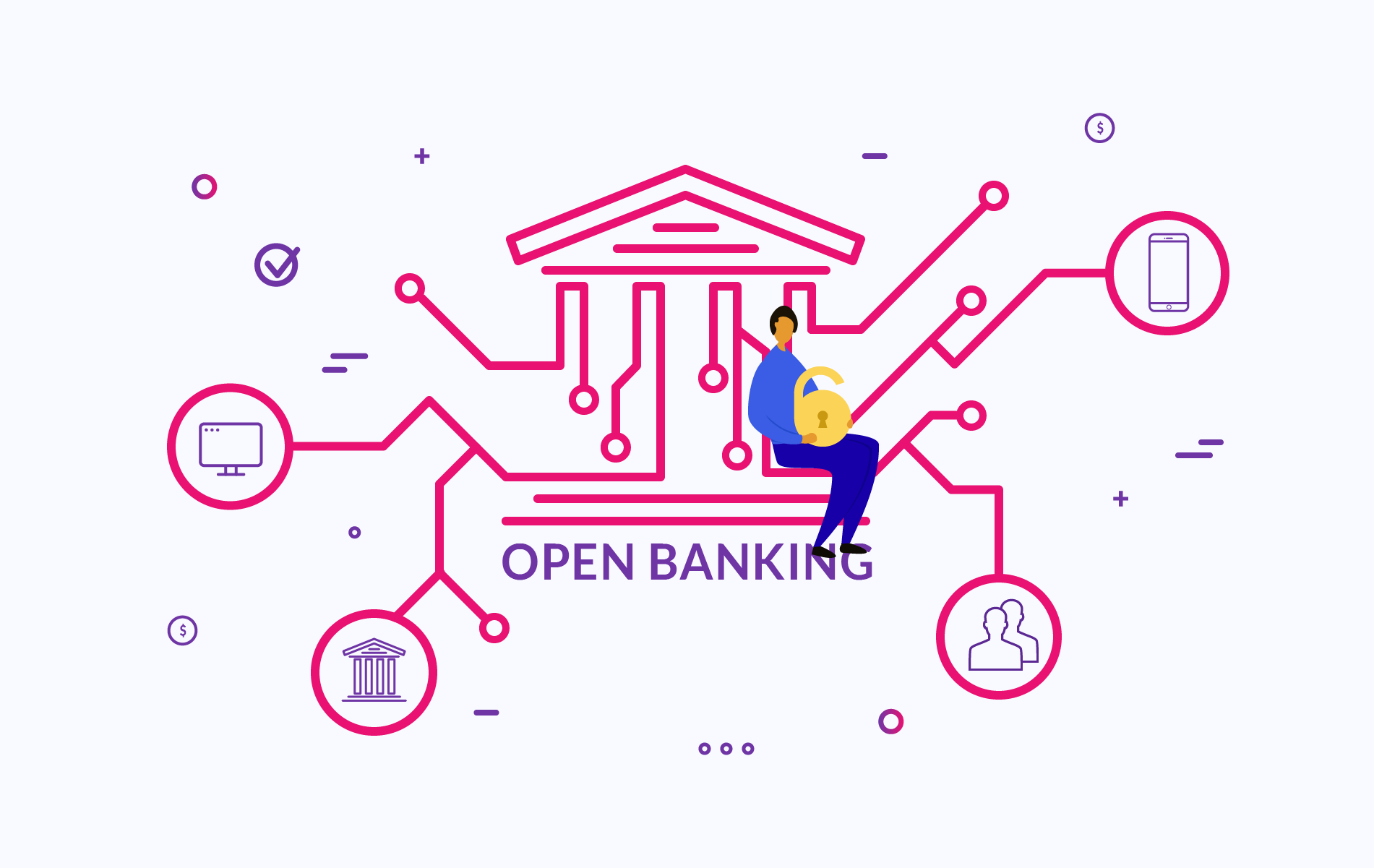
For the uninitiated, Open Banking is simply the provision of APIs by banks and other financial institutions that give users secure access to their transaction and financial data usually for onward delivery to a third party platform for specific purposes i.e identity validation, transaction reports, financial health reporting, etc. Open Banking simply creates a platform for banks to bolster financial inclusion by opening up their data silos and allowing third-party providers (with the consent of user’s off-course) to access these data sets and build unique products on top of them.
There are two standard drives for Open Banking; the first is the regulatory/compliance drive, which is the prevalent motivation behind Open Banking (payments) in the United Kingdom and EU (European Union) – a standard API Format is provided, and banks (or at least the top banks) are mandated to conform to that standard and make the transactional and financial data of their customers accessible (at the consent of the customer) to verified third parties. The second format or drive is the market drive, where there is a need in the market and a firm takes it upon itself to build the infrastructure required for Open Banking to work. This is the case in the United States and Africa. While the Central Bank of Nigeria has released a framework document governing the operation of Open Bank APIs, the API framework hasn’t been deployed yet and TPPs (Third Party Providers) are literally working with whatever the banks provide to them.
If you have ever been sent a WhatsApp message about a person (who you may or may not know) that did business (or took a loan) with a certain company and is now a “fraudulent entity on the run”, then you should probably understand the market need for Open Banking solutions in Nigeria. Most of these unlicensed lenders give unsecured loans at small amounts and as you pay back increase your credit limit to enable you borrow more. They have no proper way (direct debits etc.) to recover their monies, so if you decide to default, for common N13,000 (US$31.36) they will go bonkers on you and inform your father, mother, brother, and even your ex that you are a fraudulent entity and you’re owing them money (not a very comfortable position to be in if you ask me).
Open Banking players make it possible for you to check the transaction history of a customer in real-time and coupled with intelligent prediction software from firms like Indicina, determine the creditworthiness of a customer and give him/her access to credit based on the customer’s bank transaction history. This means a customer earning N300,000 (US$723.76) a month who needs a N150,000 (US$361.88) loan doesn’t need to apply for a N5,000 (US$12.06) loan to start with and gradually build his credit in a silo with a specific provider when he can just get a loan at the amount he is qualified for based on his bank transaction history.
The lender in some cases can place a direct debit mandate on the customer’s bank account and debit the account at predefined repayment times to automate the loan collection process. I imagine the BNPL market (which is projected to grow to US$20.4billion by 2028*), will benefit strongly from the growth of Open API Banking, allowing BNPL providers perform proper credit checks on customers who use their platforms.
According to the Central Bank of Nigeria, there is an annual credit gap of N617.3billion (US$1.48billion) required by MSMEs in Nigeria. While lending is one of the “easiest to spot” use cases for Open Banking, customer onboarding (which I do not intend to go into in detail, considering I do not plan to write a 5000-word essay) is another prominent one. With advanced AI and machine learning technologies, fintechs with access to a customer’s financial transaction data warehoused at the bank can offer smart budgetary, financial advisory, and even investment services to help users grow and multiply their wealth by pushing financial services that suit their specific needs per time.
PAYMENTS AND OPEN BANKING
Beyond transaction data, fintechs offering Open Banking solutions have taken it a step further by offering Payment Initiation Services with Open Banking APIs provided by the banks. Pay with Bank or Account to Account payments (which I will refer to as A2A Payments going forward) has been touted as the future of payments.
A2A Payments is simply being able to debit a store of value (digital wallets, bank accounts, etc) and credit another store of value (digital wallets, bank accounts, etc.) without the need for an intermediate transaction token (credit/debit card, USSD, etc). A2A payments are by default safer (no debit card for someone to skim and use to perform fraud), faster (merchants receive same-day settlement as against T+1 settlements that are common with card transactions), and cheaper (less value chain participants – no card scheme, etc.). Remita is a unique fintech and is probably the only Nigerian fintech that has an A2A switch that can actually make A2A payments occur without relying on any Open Banking infrastructure.
The Payments arm of Open Banking relies largely on banks providing these APIs to Open API fintechs to build on. Banks usually have legacy infrastructure and some banks may struggle to provide these APIs and miss out on the opportunity to make free money, however, the banks who are nimble enough to adapt their infrastructure will provide APIs to TPP (Third Party Providers) and monetize via API calls (charge TPPs via API calls and make money every time their API endpoints are called upon); for context, one million API calls charged at N20 per call is N20million (US$48,248) free revenue for the banks for just providing APIs.
Fintechs like Mono, Okra, and South African Open API fintech Stitch are some of the leading players in this space. Mono powers Flutterwave’s “Pay with Bank” option and reportedly processed N485.5million (US$1,171,234) worth of transactions in December 2021 alone. Stitch, headquartered in South Africa is the most capitalized African player in this space (having raised a US$21million Series A), its open banking route to market in Nigeria is primarily the payments leg of Open Banking – creating an effective and reliable “Pay with Bank” option.
In an Open Banking ecosystem that isn’t compliance driven (i.e the regulator forcing the banks to conform), the Banks play a large role in the success of Open Banking. One of the most technologically advanced banks in Nigeria in this category is Zenith Bank. Zenith is probably the only Nigerian Bank that has a publicly available payment authorization API (an API endpoint that allows you debit an account on a Payment Gateway with only the account number and corresponding OTP to a registered phone number), I think Sterling Bank has something in the likes, but I personally have never seen it implemented. If you know any other banks that have this API publicly available, please share.
The willingness of banks to come on board which is really tied to how security resilient the fintech requesting these APIs are (no bank wants its user’s data spilled everywhere and accessible by fraudulent entities), and the revenue potential of making these assets publicly available is key to the success of Open Banking on the African market considering this market isn’t regulator driven (or at least not yet).
STAKEHOLDER MANAGEMENT
I’m a strong believer in the fact that all innovation lives and dies on stakeholder management. Every new product has stakeholders (excluding the internal ones) that may or may not be adversely affected by the success of the product, your ability to make sure that all relevant stakeholders (including the regulator) are on your side, do not see your business as a threat and are willing to play their roles in the success of your business is key to the success of any product regardless of how innovative the said product may be.
Crypto is a good example of this; one of the major stakeholders in the success of crypto (or any financial service in Nigeria) is the Central Bank of Nigeria. CBN doesn’t like crypto (understandably so, if I were a regulator, I wouldn’t want some “digital money” flying around my ecosystem that I can’t properly monitor to influence monetary policy or that could be used to circumvent anti-money laundering initiatives), however, while CBN is a major stakeholder, the banks are the key stakeholders for crypto firms considering banks are largely the off-ramps and on-ramps for crypto transactions.
The most devastating blow to the crypto industry in Nigeria didn’t happen in February of 2021 when the CBN issued a circular “reminding” the banks of its warning to stay away from crypto, the most devastating blow to the crypto industry happened some weeks back when news about CBN fining banks in billions for circumventing its directive on crypto began to enter the airwaves. Warning a bank is one thing, carrying a big stick (hundreds of millions of Naira in fines) and flogging a bank with it is another. I expect more banks to withdraw from secretly aiding crypto transactions in Nigeria going forward, and this will be extremely detrimental to the Nigerian crypto industry.
Open Banking is however another ball game entirely. The CBN is in support of Open Banking, if not for its potential to revolutionize the financial services industry, for its ability to position the CBN as a forward-thinking regulator (considering this may have been the key reason it was one of the first to launch a retail CBDC). The banks (should) support Open Banking because while it may be considered a threat of some sorts, it still positions them to make free money from data assets that were hitherto sitting idle. Non-financial businesses will have new ways to embed financial services into their offerings while providing and extracting more value from their customers. Innovators will have new infrastructure to build new products and offerings from (think about how Paystack made it possible for PiggyVest to exist). While customers will be able to seamlessly access their financial data from their banks (coupled with the plethora of new use cases this will make possible) and enjoy A2A payments via Payment Initiation Services.
CARD NETWORKS AND OPEN BANKING PAYMENTS
The growth and proliferation of the Payment Initiation bit of Open Banking is a huge and lethal threat to the card networks (VISA and MasterCard). VISA and MasterCard make a ton of money from card transactions globally (VISA reported 2021 revenues of US$24.1billion, while MasterCard reported US$18.88billion in 2021). The growth of A2A payments means that more people will be able to make digital transactions without the use of cards and this will be detrimental to the business model of the card networks.
A good number of countries have attempted to (both successfully and unsuccessfully) wean themselves off dependencies on these card schemes, India’s RuPay now controls 60% of the Indian market for debit cards as of 2020, wresting the market leadership position from VISA in 6 years. Europe attempted to build out its own card scheme to curb rising interchange fees by the card networks, but that didn’t necessarily work out as planned. In Nigeria, according to Statista, VISA and MasterCard are playing second fiddle to Verve (VISA – 19%, MasterCard – 16%, Verve – 65%), which I personally find hard to understand considering I would probably never walk up to a bank and ask for a Verve card.
However, Banks still pay a maintenance fee on the foreign card networks (VISA and MasterCard) that is charged based on transaction volumes, and I imagine that fee isn’t paid in Naira, so banks may be sourcing FX for that, all the more reasons for them to look forward to weaning themselves off the card networks and relying on A2A payments.
However, the card networks (who are definitely aware of the threat) are aggressively making strides into the Open Banking space to reposition themselves. VISA attempted an unsuccessful US$5.3billion acquisition of Plaid in 2020, before snapping up European Open Banking Fintech Tink for US$2.1billion. MasterCard also acquired European Open banking fintech Aiia for an undisclosed amount and the A2A payments business of Nets Group for a reported €2.85billion (US$3.1billion) in 2021. I expect the card networks will likely reposition themselves succinctly and avoid getting disrupted. The future of fintech will look a lot different from what it looks like today.
THE AFRICAN OPPORTUNITY
The African Opportunity for Open Banking is huge, primarily because while there are about 8 major Open Banking players in Africa, none of them (from a continental perspective) has even begun to scratch the surface of Open Banking when compared to what other Open Banking fintechs in other climes have made possible; for example – Tink (the Open Banking fintech acquired by VISA) had successfully connected 3,400+ banks across 18 countries out of the 6,000 banks available in Europe as at the time of its acquisition, Plaid had connected 11,000+ banks and credit unions, and Klarna Kosma (BNPL fintech Klarna’s Open Banking division) had connected about 15,000 banks worldwide. In Africa however, of the 700 banks on the continent, Mono, Okra, and Stitch (three of the leading players in the space) have successfully connected around 44 banks and FIs (Nigeria with 30+ FIs being the primary contributor to that figure). Compared to the 700 banks in Africa, it is clear that the African market for Open Banking is still a growing one with a lot of opportunities for players to capitalize on.
CONCLUSION
When firms like VISA and MasterCard were starting out in the 1960s, I imagine they employed a push approach – reaching out to banks to get them on their card networks, today it’s a pull approach (if you start a bank or an FI today, you look for VISA) I imagine the future of Open Banking is banks starting off and mandatorily looking for Open Banking players to connect to their infrastructure to allow their customers access to new layers of financial services built by the innovators leveraging on these APIs and Infrastructure, bigger Open Banking players will likely begin to acquire the African players with the largest footprints to expand their African play and be “truly global”, while the card networks acquire these bigger Open Banking players to keep their place at the top. It is either the card networks retain their dominance by strategically evolving, or the dominant Open Banking players become the new card networks. Interesting times ahead.
Inspired By The Holy Spirit
Like this:
Like Loading...