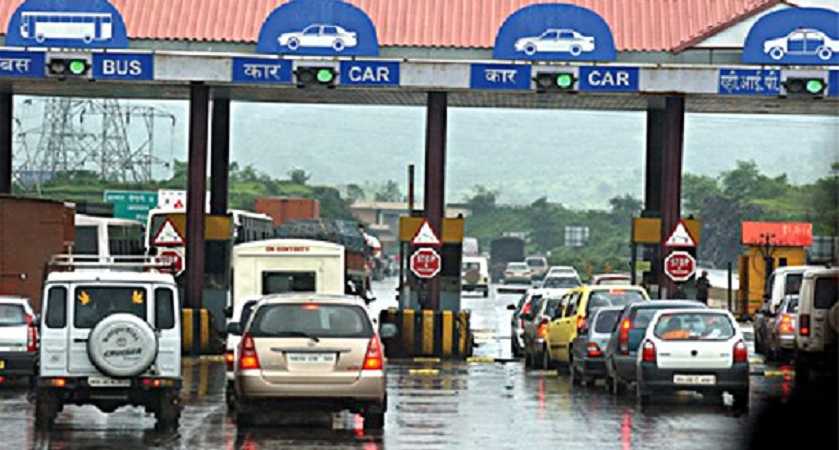
Nigerian president Muhammadu Buhari has approved the reopening of four additional land borders, three years after they were closed.
The approval was announced through a circular signed by El Edorhe, deputy comptroller-general of Nigerian Custom Service (NCS), on behalf of his principal.
The four borders approved to be reopened are scattered across four geo-political zones of the country.
“Sequel to the presidential directive dated 16 December, 2020, granting approval for phased reopening of land borders namely; Mfum, Seme, Illela and Maigatari borders across the country, I am directed to inform you that four additional borders listed below have been approved for re-opening: Idiroko border post, Ogun state (south-west zone); Jibiya border post, Katsina (north-west zone); Kamba border post, Kebbi state (north-west zone); and Ikom border post, Cross River state (south-south zone),” the circular reads.
“Consequently, all customs formations and JBPTs are to take note and ensure that proper manning takes place in compliance with extant operational guidelines,” it added.
The federal government of Nigeria had in 2019, closed its land borders. A decision it said was to curtail the inflow of illicit arms and contraband goods, especially rice, into the country. The federal government said it aimed to boost local rice production by stopping smugglers from saturating Nigerian markets with the already-banned foreign rice.
The border closure, which resulted in inflation and consequently massive hunger across the country, has failed to achieve its aim years after it was ordered. Terrorism and other forms of criminality have increased in the north and some southern parts of Nigeria. As of the first quarter of 2022 alone, a total of 1,884 deaths emanating from armed incidents across the country have been reported, according to SBM Intelligence. Compared to 1071 killed in the same quarter 2019, there is an uptick in armed violence spurred by the proliferation of illicit arms.
Headline inflation as of March 2022 is at 15.92 percent year-on-year, according to data published by Nigerian Bureau of Statistics (NBS). Though there is a little decline compared to the 18.17 percent recorded in the same period last year, the inflation, which was compounded by covid-induced economic strains, means that the Nigerian hunger crisis is far from over.
Over 100 million Nigerians faced food insecurity as of the end of 2020. The United Nations Food and Agriculture Organization (FAO), in its 2021 report, put the number of moderately or severely food insecure people in Nigeria at 116 million people, a 75 percent increase from the 66.1 million people recorded in 2016. FAO said that about 19.4 million Nigerians will face food insecurity between June and August 2022.
Last year, Nigeria’s Minister of Finance, Zainab Ahmed, acknowledged that the federal government’s decision to close the border contributed to the country’s inflation.
The escalation of armed violence, resulting in killings across Nigeria, has been largely attributed to Nigerian porous borders that significantly aided the smuggling of arms into the country. It has also significantly undermined efforts to produce food locally as farmers, particularly in the north, are living at the mercy of terrorists.
With the proliferation of insecurity and rising inflation, Nigerians have questioned the wisdom behind the government’s decision to close the borders. “It has only made a bad situation worse,” they said.