DD
MM
YYYY

PAGES

DD
MM
YYYY

spot_img

PAGES

Home Blog Page 5193

As a Federal Cabinet Member, Ndubuisi Ekekwe Will Automate Out Procurement Corruption in Nigeria

8

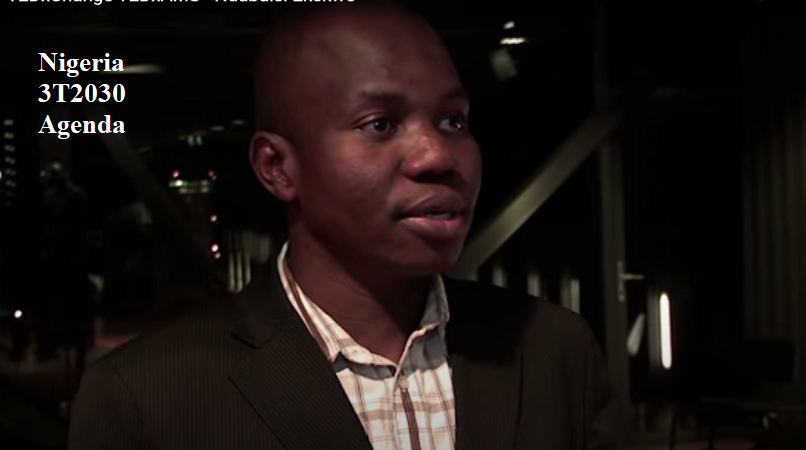
Good People, the big boys are hitting the cities, communities and state houses, making their cases on why Nigerians should hire them as the next President. In my small domain, I am making a case for my candidacy into a federal cabinet.  Drawing from my “3T2030 Plan for Nigeria” – a plan designed to push the GDP of Nigeria from the current sub-$500b to $3trillion by 2030, I present how, as a federal minister, will work with Mr. President, to fight procurement corruption in Nigeria. We will automate out corruption, by building hardened and resilient public institutions.

If the tech guys in the ministries cannot execute, I will ask Mr. President for two weeks to build the stacks and deploy them myself by asking young Nigerians to come for a hackathon with the Honourable minister. We will provide zobo, nkwobi, amala with RSVP (rice and stew very plenty!); here we go.

Number 1:  New Vision for EFCC/ICPC to Focus More On Prevention than Prosecution

I will seek for new KPIs (key performance indicators) to be developed for EFCC/ICPC. I will push for it to spend more resources to build resilient institutions where corruption would be harder than simply and mainly focusing on fighting and prosecuting corruption. We will reform the operations, focusing on how it helps to prevent corruption rather than how many corruption cases it tries and wins. In other words, at the end of any operating year, EFCC/ICPC must explain what it has done in the nation to make it harder for corruption to take place. And those things must be institutionalized.

Will get them to  focus more on preventing corruption than merely fighting and prosecuting it. New KPIs will be developed to ensure they work to PREVENT than just PROSECUTE.

Number 2: Track All Payments of N10million and Above

We will build a corruption-free nation where it would be extremely impossible to perpetuate procurement-based corruption because technology will make things obviously transparent. All government systems must be structured to be corruption-resilient so that people that want to perpetuate corruption will fail. We will publish any government expense that is more than N10 million, quarterly, in a web diary which all citizens will have access to. This applies to all levels in the federal government, from ministries to agencies. For national security reasons, a segment will be available to the accredited civil society and press team.  They will be directions to avoid invoice splitting.

Number 3:  Eliminate or Reduce Procurement Fraud to Near-Zero

(Small section from 3T2030 Document)

Brief: Big data analytics is a special area of computer science that uses high-level mathematical models to provide patterns or trends out of large datasets. Corruption can be drastically reduced in Nigeria through pattern matching and analytics. 

The Idea: Analytics is used to track payment patterns and ascertain procurement integrity.  The idea is to deploy analytic tools to help find inflated or fraudulent procurements made by federal agencies/workers. At the moment, the Central Bank of Nigeria (CBN) pays most federal contractors directly after the specific agency has certified work completion. We will put these contracts in a database and then query them to discover patterns in costs and other parameters. CBN has these documents, they will be scanned and dumped into a server for machine vision.

At the ICPC/EFCC/(or a special unit in the Presidency), our technology will query those documents tracking historical and present costs to see patterns. When too much deviation occurs, the watchdog (for example EFCC)  will get an alert via email. The watchdog will then examine the alert and see if there is need for further investigation.

For example, if Agency A buys a Toyota Camry for N10 million and Agency B plans to buy the same car for N18 million within the same month and city, the system will flag Agency B. The EFCC would like to know if there is fraud or simply the Director General is not a good bargainer when paying for things. Where necessary, the EFCC may recommend training on procurement systems for Agency B. More so, EFCC will have new power with CBN to offer for the contractor which supplied Agency A to supply Agency B. If that happens, the car is purchased and Agency B will still have N8 million to do other things in its bank account.

(CBN makes payments to all federal contractors; we will scan all contract documents and use machine vision to check deviations to mean. Where threshold is exceeded, EFCC will be alerted before payment)

There will be no purchase over an agreed price range, say N2m that will not be tracked. This will become a policing system that puts pressure on agencies of governments to cut costs. The system will also recommend standardizations on RFP and other items so that algorithmic comparisons can be effective.

We think this will help “police” the system and help reduce corruption. The goal is to have a real-time system that looks at every expense in government and determines if the government is getting value for the money spent. As the database matures, the government can decide that any planned purchase outside a certain deviation within a mean amount should be declined. 

And where possible, the watchdog can offer the purchasing officer to use another contractor that will provide the same services at a better price based on historical data in the database.

Number 4 and more: (will share more from the plan with His Excellency)

Comment on Social Media Feed

Comment (edited(: The Cabals controlling Nigeria won’t give room for this.

My Response: Do not lose confidence in yourself and your nation. The reason corruption thrives in Nigeria is that the system talks with people, and is designed around humans. If you use technology which cannot be negotiated with, everything will fall in line. Do you know that we can build a procurement regime which will be human agnostic eliminating most elements of corruption?

 I do not need to talk to a DG but the tech will do it. Either he adheres to the process or he cannot progress. So, I do not care if the DG or agency agrees, provided Mr President has approved it, they will be left to deal with technology systems and not Ndubuisi.

Yes, for that payment to be made to the contractor, upload the contract documents to CBN server where AI will scan it for compliance. If you do not do it, your agency contractor will not be paid!

3 Ways Companies Can Reduce their Fleet’s Fuel Costs

0

The conflict in Ukraine has sent the cost of various commodities skyrocketing, with fuel being chief among them. This is pushing many companies with large fleets to review their strategies in the face of fast-rising operational costs. Companies that didn’t make efficient driving a priority will need to from now on if they want to stay competitive. Thankfully, there are various tools and techniques companies can use to mitigate fuel costs. Here are a few of them.

Reduce Idle Time

The simplest way for companies to reduce fuel costs for fleets is to monitor their drivers better through telematics. And one thing they have to pay very special attention to is how long drivers leave their vehicles idle.

A lot of people aren’t aware of this, but did you know that a truck can burn as much as 1 gallon of fuel per hour while staying idle? Or that leaving a vehicle sitting idle for 30 seconds burns more fuel than restarting the engine? If you have a large fleet and employees driving a range of hours, these costs can easily add up and put a dent in your finances, so do not take this part lightly.

Monitor and Correct Aggressive Driving Patterns

Pay close attention to how aggressive your drivers are on the road, and, if you notice bad patterns, you need to bring bad drivers in for an evaluation and consider giving them specialized training. Aggressive driving could add as much as 31% to your fuel costs, so make this a priority and constantly give your drivers feedback so they can improve on their habits.

Look for things like rapid acceleration, tailgating, harsh braking, and excessive lane change. These are all signs of an aggressive, expensive driver. 

Again, only good telematics tools will allow you to monitor your drivers’ behavior efficiently, so get the best tools you can afford and implement them correctly. You can use the information you get to score drivers. Create a score leaderboard to foster healthy competition between your drivers.

You could go a step further by setting real-time alerts. Many telematics tools allow you to do that and give auditory cues to drivers when they’re driving irresponsibly. This alone could greatly improve their driving by making them more conscious of what they’re doing.

Optimize Routes

You should also try to use the most efficient routes for your drivers. You might assume that more efficient means shorter, but that’s not always the case.

You have to think about elevation as well. If you can take advantage of a downwards slope and avoid going upwards when possible, do it. Going uphill puts a lot of pressure on a semi-truck’s engine, especially when it’s hauling a heavy load. Even things like road quality can affect your fuel costs. So, get information on the terrain and set up pre-scheduled customized routes for them.

These are all ways companies can reduce their fuel costs. Every little thing you do will help, so focus on monitoring behavior and trends down to the last detail while constantly encouraging your drivers to do better.

Is The Judiciary Really The Last Hope Of A Common Man In Nigeria?

3

It is often said that “the judiciary is the last hope of a common man”. What this supposes is that the judiciary is the only place the common man can get justice. According to the known roles of the judiciary, it protects the rule of law and ensures supremacy of the law. It also safeguards the rights of individuals, settles disputes by the law, as well as punishes offenders.

I believe such practices of the Judiciary above-mentioned are mostly practiced in saner climes that do not have their judicial system infiltrated with corrupt practices. Unfortunately, this is not the case for the judicial system in Nigeria as the system has been ravaged by corruption, as judgments and orders are now based on the highest bidder, other than legal merit.

The Nigerian judicial system has been considered weak in the last two years, according to a poll conducted by Gavel, a civic-tech organization with a focus on the judiciary. According to a survey conducted by the anti-corruption Academy of Nigeria, the Nigerian Corruption Index indicates that both the public and private sectors are complicit in the high corruption levels in Nigeria. It might interest you to know that the Judicial sector had the highest level of corruption with a score of 63. The high level of corruption in the judicial sector was attributed to the amount of money being offered as bribes to lawyers handling political cases and all other cases. While scrolling through the Twitter platform yesterday, I came across a story that spurred me to write this article.

A lady once worked for a tech company where she was owed a huge amount of money. She felt strongly displeased about the injustice done to her. She then resigned from the company, and afterward, she decided to go to court. She reached out to a high-flying law firm to work on her case. The payment was made and things seemed to be moving well. Suddenly and without notice, shortly after presenting a professional opinion stating that the tech company was in the wrong and had a case to answer, the law firm quietly informed her that they had been retained by the tech company and they would have to drop her case. Apparently, the tech company has bribed those in charge of the case.

It is indeed shameful that such a profession that is held in high esteem has been turned into something despicable. Judgments are no longer based on legal merits, but rather a case of the most influential, connected, and the highest bidder. Nigeria is indeed a cruel place for the common man to survive because almost all odds seem to be against their favor.

I often say to people who care to listen that Nigeria is a very lawless country, because every rich, connected, and influential person is above the law whether he or she does something wrong, they are never penalized. They do things contrary to the law that is a punishable offense, yet they get away with it. Corruption in the judiciary is indeed happening at an alarming rate, like a wildfire it has engulfed the rooftop already, and it is visible for everyone to see.

Judges seem to no longer regard and uphold their judicial oath as it has merely been turned into a necessary ritual without much reverence for it. The painful thing is this, even if one has a case that is strong in the law, backed with enough facts, and well-built from the outset, they will likely lose the case to a bribe giver.  The chances of getting a good lawyer or judge who is upright and of impeccable character is very slim.

It is disheartening to say that a very high percentage of Judicial officers in Nigeria, fall below the standard expected of them in areas of brightness, integrity, and character. There is already a growing disposition of purchasing judgments of judges by the highest bidder. How does this sound that the judgment of a court is no longer based on law or precedents? or knowing that the law has become unpredictable, despite provisions of facts and glaring evidence.

As long as the judicial system continues to practice corruption, it is therefore imperative to say that the judiciary is not the ‘last’, but the ‘lost’ hope of a common man because the rich and highly connected ones will always emerge victorious in any case. One negative consequence of the corrupt judicial system is that lawlessness, corruption, wickedness, and the likes will continue to plague the society.

IFC Invests $15m in Algebra Fund II to Support Egyptian Tech Startup

0

The International Finance Corporation (IFC) has pledged a $15 million investment in Algebra Ventures’ $90 million second fund.

IFC’s $15 million investment in Algebra Fund II will help support the growth of roughly 20 technology startups, primarily in Egypt but also in Africa more broadly. The fund, which has a target size of $90 million, will have a special focus on women-led businesses and those serving rural communities.

Access to financial capital helps drive economic and job growth – and entrepreneurship is a key contributor. Yet, the amount of venture capital available in Egypt is just a quarter of the emerging market average, though it has grown more than 10-fold since 2016.

“We are delighted to see IFC return as a limited partner in our second fund, having invested in our first fund five years ago as well as directly into our portfolio. IFC has been one of our strongest partners since day one and believed in our vision when there was no venture capital to speak of in Egypt. We look forward to continuing to strengthen our partnership going forward,” said Tarek Assaad, Managing Partner at Algebra Ventures.

“With its young, tech-savvy population and large market, Egypt’s entrepreneurs are perfectly poised to drive change in the country’s economy – with the right support,” said Yasmine El-Hini, IFC Egypt Country Officer and Acting Country Manager for Egypt and Libya. “With this investment, we are helping to push the country’s startup scene forward and encourage innovation.”

The investment is part of IFC’s strategy to support Africa’s blossoming start-up and entrepreneurship ecosystem. Today’s announcement also marks IFC’s second investment in Algebra Ventures.

In 2016, IFC invested $10 million to co-anchor Algebra’s inaugural $54 million fund, which also attracted investments from Cisco Investments, the Egyptian American Enterprise Fund, and the European Bank for Reconstruction and Development. Algebra Fund I was the first Egypt-dedicated VC fund and has supported 21 tech startups and created over 3,500 direct and 28,000 indirect jobs.

Earlier this year, IFC directly invested $5 million in Brimore, an Algebra Ventures portfolio company and social commerce company, and $20 million in the Ezdehar Fund to help smaller businesses access finance.

As of June 2021, IFC’s global Venture Capital investments reached $1.6 billion in over 100 companies and venture capital funds, supporting nearly 1,700 companies and helping to drive innovation and growth.

Egypt has set a tech growth trajectory that is rapidly rising to rival leading nations like Nigeria and South Africa in the African tech ecosystem.

Minister of Information and Communications technology Amr Talaat said in February that Egypt’s information and communications technology (ICT) sector is the fastest growing sector in the Egyptian economy over the past two years, as its contribution to the country’s GDP rose from 3.2 percent in FY 2019/2020 to five percent in the current FY 2021/22.

Since January 2015, more than 791 million dollars has been raised by more than 320 tech startups across over 4450 individual rounds. The North African country has seen yearly increase in its start space, adding 114 tech startups to its ecosystem from a paltry 10 in 2015.  Annual funding secured by the companies rose significantly from 8.6 million dollars to 156 million dollars in 2020.

The “Bill Gates of Africa” Endorses Tekedia Mini-MBA; Enroll Today

0

If you want to master any aspect of business, consider Tekedia Institute. Today, we have students from more than 45 universities in Nigeria co-learning with us. And we also have a strategic partnership with one of the finest universities in the nation – Nnamdi Azikiwe University, Awka. Our programs are delivered by business leaders from companies you admire – and we have got great testimonials. Visit Tekedia Testimonials today here and join.

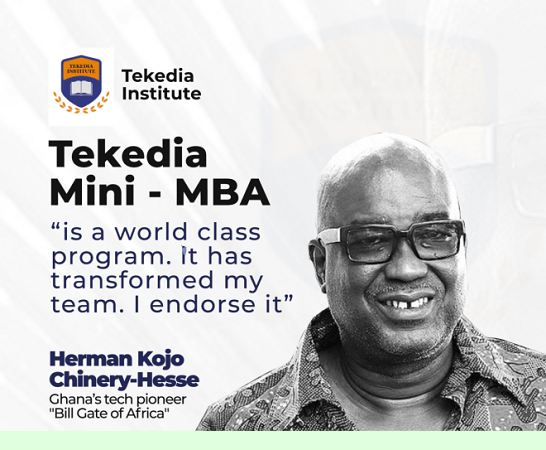
Even the “Bill Gates of Africa” trusts us. You cannot get it wrong when you follow him to train your workers in our Institute . We work with amazing companies and startups, providing knowledge factors of production that are supporting the foundation of an emerging Africa.

From beautiful Ghana, the man who possibly created the first indigenous website in Ghana  thunders  “I endorse [Tekedia Mini-MBA]”. Enroll here today.