DD
MM
YYYY

PAGES

DD
MM
YYYY

spot_img

PAGES

Home Blog Page 52

Asian Stocks Hit Six-Week High As Year-End Risk Rally Gathers Pace, Metals Surge And Yen Keeps Fears alive

0

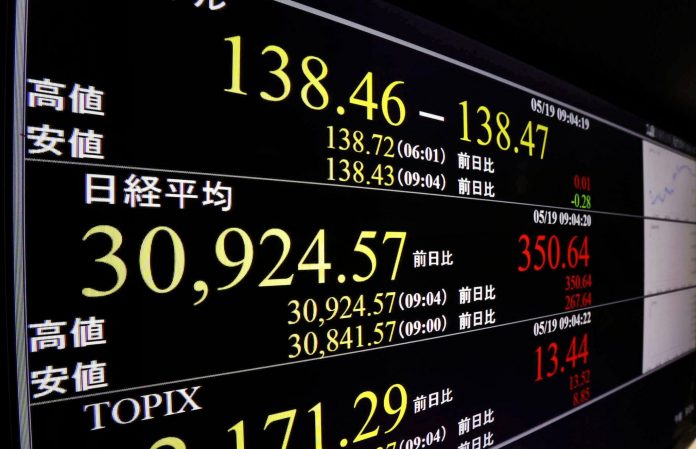
Asian markets extended their late-year rally on Friday, with regional equities climbing to their highest levels in six weeks as investors leaned into risk assets, encouraged by easing inflation pressures, expectations of eventual U.S. rate cuts and a renewed appetite for technology and growth stocks.

At the same time, a relentless surge in precious metals and persistent volatility in currency markets underscored lingering unease over global debt, geopolitics and central bank policy paths.

According to a Reuters report, trading was thinner than usual, with markets in Australia, Hong Kong and most of Europe closed, but the lack of liquidity did little to slow momentum. Investors appeared keen to lock in gains before year-end, extending a recovery that has gathered pace over the past week after markets weathered bouts of volatility in November.

Japan once again stood out. The Topix index rose to a fresh all-time high, last up 0.5%, reflecting strong performance across industrials, exporters and financials. Gains have been supported by improving corporate earnings, shareholder-friendly reforms and still-accommodative financial conditions, even as the Bank of Japan has begun a gradual shift away from ultra-loose policy.

South Korea’s benchmark index advanced 0.6%, pushing its gain for the year to about 72% and making it the world’s best-performing major equity market in 2025. Chipmakers and technology stocks have been the main drivers, buoyed by sustained global demand for semiconductors tied to artificial intelligence, data centers and electric vehicles.

China’s CSI300 blue-chip index rose 0.27%, putting it on course for an annual gain of around 18%, its strongest performance since 2020. The advance reflects a steadier economic outlook, targeted policy support and renewed foreign interest after prolonged underperformance in previous years. The broader MSCI Asia-Pacific index climbed to its highest level since mid-November and is up about 25% for the year, marking a powerful rebound across the region.

Beyond equities, precious metals remained the standout story. Spot silver surged more than 4% to a new record high, while gold also hit a fresh peak, last trading at $4,503.39 per ounce. The rally has accelerated into year-end, driven by a combination of strong central bank buying, heavy inflows into gold-backed exchange-traded funds and investor demand for hard assets amid concerns over rising global debt and long-term currency debasement.

Gold has gained more than 71% this year, its strongest annual performance since 1979, while silver has soared roughly 158%, vastly outperforming most other asset classes. Analysts say the move reflects not only safe-haven demand but also tight physical supply and expectations that looser monetary conditions globally will persist over the medium term.

Soojin Kim, a commodities analyst at MUFG, said the strength of the rally suggests it may not be nearing exhaustion. With major banks projecting further gains into 2026, she noted that persistent geopolitical risks, heavy official-sector demand and uncertainty over fiat currencies continue to underpin prices.

Currency markets, however, painted a more cautious picture. The U.S. dollar remained under pressure as investors focused on the outlook for Federal Reserve policy and political uncertainty around the next Fed chair. Traders are now pricing in at least two rate cuts in 2026, though expectations are that the Fed will hold steady until at least June. The central bank has signaled only one cut next year, and divisions among policymakers have added to market sensitivity.

Attention is also fixed on President Donald Trump’s expected nomination of a successor to Jerome Powell, whose term as Fed chair ends in May. Any signal of Trump’s choice could trigger sharp moves in currencies, bonds and equities, given the potential implications for monetary policy independence.

The dollar index was on track for a 0.8% weekly decline, its weakest showing since July, while the euro, sterling and Swiss franc traded near recent highs. The yen hovered around 156.23 per dollar, slightly weaker on the day but still on course for its biggest weekly gain since September.

Despite the Bank of Japan’s recent rate hike to a 30-year high, the yen has struggled to strengthen decisively. Markets have interpreted Governor Kazuo Ueda’s comments as signaling a cautious, data-dependent approach to further tightening. Analysts say the BOJ is deliberately keeping its guidance ambiguous to retain flexibility, even as it continues to nudge borrowing costs higher.

Japanese officials have repeatedly warned against excessive currency moves, keeping the risk of intervention alive. Thin year-end liquidity has heightened speculation that authorities could step in, as such conditions can amplify the impact of any official action.

In the bond market, Japanese government bonds edged higher, with yields easing back from a 26-year peak. Expectations of restrained debt issuance and reassurances from Prime Minister Sanae Takaichi over fiscal discipline helped calm investor concerns about an expansionary budget and rising borrowing needs.

As markets head into the final stretch of the year, investors are balancing optimism over easing inflation and resilient growth against unresolved risks around monetary policy, geopolitics and government intervention. The strong finish to 2025 across Asian equities and commodities suggests risk appetite remains intact, but thin liquidity and crowded trades leave markets vulnerable to sudden shifts in sentiment.

Nvidia’s $20bn Groq Move Shows How Quietly Big Tech Now Buys Its Way Deeper Into AI Dominance

0

Two days after news surfaced that Nvidia had struck what amounts to a $20 billion deal with Groq, the most striking aspect of the transaction is not just its size, but how little noise accompanied it.

There was no press release from Nvidia. No regulatory filing. No investor call. Instead, confirmation has come indirectly through a 90-word blog post published by Groq late on Christmas Eve and from people familiar with the deal. Nvidia, now the world’s most valuable company, has simply acknowledged that the blog post accurately reflects the arrangement.

“They’re so big now that they can do a $20 billion deal on Christmas Eve with no press release and nobody bats an eye,” Bernstein analyst Stacy Rasgon said Friday on CNBC’s Squawk on the Street, underscoring how normalized mega-deals have become in the AI era.

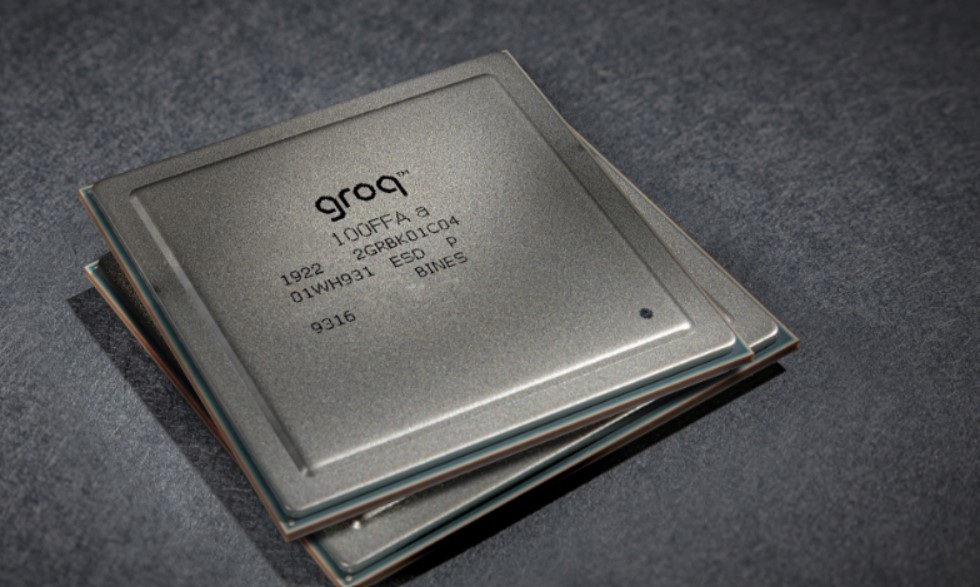
According to CNBC, which cited Groq lead investor Alex Davis, Nvidia agreed to spend $20 billion in cash to acquire key assets and talent from Groq under what the startup described as a “non-exclusive licensing agreement.” Neither company has formally confirmed the price tag, but Davis’ firm, Disruptive, has invested more than $500 million in Groq since its founding and led its most recent funding round in September, when the company was valued at $6.9 billion.

Under the deal, Groq founder and CEO Jonathan Ross, company president Sunny Madra, and several senior leaders will join Nvidia to help scale the licensed technology. Groq will continue operating as an independent company, led by finance chief Simon Edwards, and its cloud business remains outside the transaction.

Had Nvidia pursued a conventional acquisition, Groq would have become by far the largest deal in the chipmaker’s 32-year history. Nvidia’s biggest prior purchase was the $7 billion acquisition of Israeli networking firm Mellanox in 2019, a move that later proved critical to its data center strategy. Instead, Nvidia opted for a structure increasingly favored across Big Tech: paying billions to secure people and technology without formally buying the company.

This approach has been used repeatedly over the past two years by Meta, Google, Microsoft, and Amazon, particularly in AI, where competition for talent and intellectual property has intensified while regulatory scrutiny has grown. Nvidia itself used the same playbook in September, when it spent more than $900 million to hire Enfabrica CEO Rochan Sankar and other employees while licensing the startup’s networking technology.

By avoiding a full acquisition, companies reduce the risk of prolonged antitrust reviews and can close deals faster, while still locking up capabilities competitors might otherwise access. Rasgon noted in a client memo that antitrust risk is the most obvious issue surrounding the Groq transaction, but said the non-exclusive licensing structure may be enough to keep regulators at arm’s length.

Nvidia shares rose about 1% on Friday to $190.53. The stock is up roughly 42% this year and more than thirteenfold since late 2022, when generative AI exploded into the mainstream after the launch of OpenAI’s ChatGPT. Nvidia’s cash position has ballooned alongside that rally. At the end of October, the company held $60.6 billion in cash and short-term investments, up from $13.3 billion in early 2023.

That expanding war chest has allowed Nvidia to spread capital aggressively across the AI ecosystem, including investments in OpenAI and Intel, while tightening its grip on critical parts of the hardware stack.

The strategic logic behind Groq sits squarely in the next phase of AI. Nvidia dominates AI training, where massive amounts of data are processed to teach models how to recognize patterns. Groq’s strength lies in inference — the stage where trained models process new information to generate responses in real time. As AI moves from experimentation to deployment, inference is becoming more commercially important, with customers prioritizing speed, efficiency, and cost.

Groq was founded in 2016 by former Google engineers, including Ross, who helped create Google’s tensor processing units, or TPUs. Those custom chips have emerged as one of the few credible alternatives to Nvidia’s graphics processing units in certain AI workloads. Groq’s language processing units were designed specifically for low-latency inference, positioning the company as a potential rival or acquisition target for any firm seeking to challenge Nvidia’s dominance.

That background helps explain why analysts see the deal as both offensive and defensive. Cantor analysts said in a note Friday that Nvidia is strengthening its full system stack while ensuring Groq’s assets do not end up in the hands of a competitor. They maintained a buy rating and a $300 price target, saying the transaction widens Nvidia’s competitive moat.

BofA Securities analysts also reiterated their buy rating and $275 target, calling the deal “surprising, expensive but strategic.” They said it reflects Nvidia’s recognition that while GPUs have ruled AI training, the industry’s rapid shift toward inference may demand more specialized chips.

At the same time, unanswered questions linger. Analysts have pointed to uncertainty around who controls Groq’s core intellectual property, whether the licensed technology can be made available to Nvidia competitors, and whether Groq’s remaining cloud business could eventually compete with Nvidia’s own AI services on price.

Nvidia has declined to comment on those details. The next opportunity for investors to hear directly from the company will likely come on Jan. 5, when CEO Jensen Huang is scheduled to speak at CES in Las Vegas.

Until then, the Groq deal stands as a clear signal of how Nvidia now operates at scale: moving quietly, spending decisively, and shaping the future of AI hardware without feeling the need to explain every move in real time.

Google’s Parent Company Alphabet Wins Big Tech Stocks in 2025, at 61% YTD

0

Google’s parent company Alphabet, has emerged as the standout winner among Big Tech stocks in 2025, delivering a year-to-date gain of about 61%.

While Artificial Intelligence hype shaped market winners and losers throughout the year, Alphabet did more than keep pace. It steadily pulled ahead of the competition.

The surge in the tech company’s stock comes after some of its investors feared that it had lost its AI edge to OpenAI after the launch of ChatGPT in 2022. As ChatGPT’s popularity exploded, some analysts and investors began to question whether Alphabet the company behind Google, the dominant search engine, and a long-time leader in AI research was being outpaced in the most important technological race of the decade.

However, by 2025, investor sentiment began to shift dramatically. Early in September, investor concerns eased around the Justice Department’s antitrust case over Google Search, as Justice Mehta’s ruling allowed Alphabet to avoid divestiture of Chrome and Android. Also, the company’s third-quarter (Q3) earnings results showed continued strength in Google Search, further dispelling fears.

Notably, Alphabet’s renewed AI strategy, anchored in its Gemini 3 model, started to deliver competitive results. In benchmark evaluations, Gemini 3 began to outperform leading AI models, reshaping perceptions about who truly leads in advanced AI capabilities. Alphabet’s Gemini 3 model climbed to the top of several key industry benchmarks, edging past rival systems in consensus testing and reshaping perceptions of AI leadership.

The development was significant enough to unsettle competitors, reinforcing the idea that the AI race is no longer dominated by a single player. Alphabet, once seen as chasing, is now widely viewed as leading.

“The leap to Gemini 3 and its ability to outshine its peers, especially OpenAI’s ChatGPT, has been the major catalyst,” says analyst Malik Ahmed Khan. He further noted that for this recent rally to continue, the company’s Google Search and Cloud businesses must both stay resilient. He notes that some risks however remain.

Khan calls Gemini 3 the “icing on the cake,” saying it was “a major step up from prior models, and it really positioned Alphabet as an AI leader, not a laggard.” He says Gemini 3’s “multi-modal” capabilities, meaning it can generate video and images in addition to text constitute a “huge competitive advantage,” because users who previously relied on competing LLMs have a reason to switch.

The equity analyst compares Alphabet’s situation to the evolution of social media companies such as Facebook Meta Platforms and Snap, which expanded into video and reels as they matured. “The winnings accrue to the ones with multi-modal capabilities. Google is significantly better than any of its peers now”, he said.

Also, Alphabet has regained momentum this year by turning its cloud business, once an also-ran, into a key growth driver, drawing in Warren Buffett’s Berkshire Hathaway as an investor and winning strong early reviews for its new Gemini 3 model.

Against this backdrop, the rest of the “Magnificent Seven” posted far more modest gains. NVIDIA rose 33% in 2025 strong by most standards, yet well behind Alphabet’s pace. Tesla gained 23%, Microsoft 14%, Meta 11%, and Apple 10%, while Amazon lagged with a 2.4% increase.

Outlook

While AI innovation remains critical, long-term market leadership increasingly depends on control of platforms, data, and global distribution. In 2025, Alphabet proved it has all three and investors rewarded it accordingly.

The tech giant enters 2026 with momentum firmly on its side, but sustaining its leadership will depend on execution rather than hype.

Analysts broadly expect the company to continue benefiting from three reinforcing pillars: AI integration across its core products, accelerating cloud growth, and the durability of Google Search as a cash-generating engine.

Next Crypto to Explode: Little Pepe (LILPEPE) Could Follow Bitcoin’s (BTC) Path

0

The emerging blockchain, Little Pepe (LILPEPE), the Layer 2-based blockchain (that incorporates meme culture and high-performance decentralized finance), is already beginning to be felt in the world of cryptocurrencies. Since its release, LILPEPE has already demonstrated outstanding presale dynamics and a high degree of community involvement, indicating that the project has the potential to become the second-most popular cryptocurrency, next to Bitcoin (BTC), in terms of popularity and consumption rates among its audience.

Little Pepe (LILPEPE) Presale Performance.

The information indicates that Stage 13 of the presale is progressing at a rapid pace, with a subsequent price of $0.0023. Stage 12 tokens are currently trading at $0.0022, and almost 97.07 percent of the total 17.25 billion tokens have already been sold, raising $27,662,668 of the intended $ 28,775,000. Such a high degree of early involvement indicates that investors are very confident and eager about the ecosystem, and this is supported by a tokenomics model that aims to encourage both early believers and long-term holders.

Tokenomics Driving Growth

The tokenomics of Little Pepe would make it especially appealing. Having assigned 26.5% to presale participants, 10% to liquidity, and 13.5 % to staking and rewards, the project appears to be well-organized, allowing it to maintain deep liquidity in the market and reward loyal community members. Other investments include a chain reserve at 30% and marketing at 10%, which are considered a moderate level of ecosystem sustainability and awareness. It is worth noting that LILPEPE is exempt from a buy/sell tax, which is a testament to its quick and inexpensive transactions.

Roadmap Milestones Suggest Strong Potential

The LILPEPE roadmap outlines stages from “Pregnancy” to “Growth,” indicating a phased development strategy. During the Pregnancy stage, partnerships and community hype were built in preparation for presale activities. The Birth phase saw token listings on CoinMarketCap and Uniswap, supported by a major marketing push. The ongoing Growth stage focuses on expanding the Layer 2 EVM network, positioning Little Pepe for a top 100 ranking on CoinMarketCap, and building a robust blockchain ecosystem.

Unique Features Position LILPEPE for Market Leadership

Little Pepe stands out in several ways because, despite being a meme-based chain of Layer 2 that is fast, cheap, and sniper bot-resistant, Little Pepe offers features that allow creators to have their own Meme Launchpad, which can be used to popularize similar digital art and community programs. The project has anonymous high-level meme specialists on its side, providing an aura of legitimacy and strategic advice. Planned listings on two major CEXs, with future ambitions to join the world’s largest exchange, further strengthen its potential market footprint.

Community Incentives Enhance Engagement

Community-focused incentives include ongoing giveaways such as a $777,000 reward where ten lucky participants will each receive $77,000 in LILPEPE tokens. There will also be the Little Pepe Mega Giveaway, which will reward the highest presale purchasers of Stages 12-17 with over 15 ETH to be shared among the major players and randomly chosen lucky winners. With such initiatives, loyalty is increased, leading to customers purchasing products in larger quantities and making the ecosystem more sustainable.

Conclusion

Little Pepe (LILPEPE) is a synthesis of a technologically unique Layer 2 blockchain and a culture of memes, with powerful tokenomics and an active community-rewards program. It states that it could take the steps of innovative cryptocurrencies, such as Bitcoin (BTC), and introduce a new format that combines entertainment, utility, and sustainability. The project will continue to expand into the crypto space as it attracts an increasing number of investors and creators, evolving with its presale and becoming more capable of utilizing Layer 2.

The presale and community initiatives can be learned about through the official channels of the Little Pepe ecosystem, which are accessible to investors and enthusiasts interested in the Little Pepe ecosystem. This allows them to get an early glimpse at what could potentially become a staple Layer 2 meme-driven blockchain.

For more information about Little Pepe (LILPEPE) visit the links below:

Website: https://littlepepe.com

Whitepaper: https://littlepepe.com/whitepaper.pdf

Telegram: https://t.me/littlepepetoken

Twitter/X: https://x.com/littlepepetoken

$777k Giveaway: https://littlepepe.com/777k-giveaway/

Beyond Buses, Governor Alex Otti Is Building A Platform for Commerce in Abia State

0

Question: “Sir, I read a post where someone in the diaspora criticized Abia State for buying 20 EV buses and still funding Abia Line Network, even though the state transporter is losing money. What is your view?”

My Response: Let me speak in my personal capacity and offer a perspective that may help.

I am from Ovim which used to have a railway station. And one of the biggest strategic mistakes Nigeria ever made was allowing the railway system to collapse. As a village boy, I saw with my own eyes what connectivity meant. When trains ran, villages along the corridors grew. We did not feel cut off from cities. I never visited any city until I went to represent Abia State at FGC Okigwe in JETS (junior engineers, technicians and scientists) regional competition, and I enjoyed village because everything was there. Our Oriendu Market Ovim, and many markets along the Port Harcourt–Maiduguri rail line, thrived because goods and people could move.

But when Nigeria shut down the railways, and even the postal services, because they were judged “unprofitable,” those markets faded, and villages lost oxygen. In dismantling rail and post, we dismantled the backbone of our supply chain. And let me be clear: no nation has any chance of becoming an economic promise without a working supply chain because supply chain is commerce.

Today, in Abia State, Governor Alex Otti is deliberately building what I call a platform for commerce, a foundation upon which private enterprise can plan, invest, and grow. But you cannot build commerce without logistics. You cannot grow markets without movement. Transportation must therefore be strengthened, even if, in the short term, it records accounting “losses.” Any loss by Abia Line Network must be seen holistically, not narrowly.

Look around the world. In the United States, Amtrak has not made a profit since it was established in the early 1970s. The U.S. Postal Service has recorded losses for more than two decades. Yet America has not shut them down. From China to the U.K., public transport and postal systems are not designed primarily as profit centers. They are strategic infrastructure in what I have described in Harvard Business Review as a One Oasis: a foundational capability upon which many other activities compound.

China, for instance, loses billions of dollars every year subsidizing transport, not because it enjoys losses, but because it understands that strong logistics is the spine of national competitiveness. In 2022, Abia’s internally generated revenue was about N20 billion. This year, it is projected to exceed N100 billion. If the state spends, or even “loses” N1.2 billion on transport to activate rural and urban commerce that is later taxed, that N1.2 billion can be recovered many times over. What looks like a loss on paper is, in reality, an investment in growth. Eliminating it would be short-sighted.

Yes, 20 buses may look significant today. But I wish Abia had the resources to buy 2,000. When Abians can travel easily, markets grow, services expand, and jobs are created. Over time, that activation will attract private operators. The state is stepping in now precisely because the private sector has not yet shown up at scale. If capable private transporters were ready, government would not need to do this. But you do not wait for perfection before fixing your supply chain. Yes, just as roads are being rebuilt, movement must also be restored.

This is not to defend any government. It is to explain why I believe what Governor Alex Otti is doing is good for Abia State. I am 100% apolitical and non-partisan. The previous administration honored me as Abian of the Year in Diaspora and Abia Ambassador because of my small contributions (google the awards). Under Dr. Otti, I have had opportunities to serve more deeply, as co-chair of the Economic Transformation Council, a member of the Transition Council, and a member of the State Global Economic Advisory Council alongside Dr. Ngozi Okonjo-Iweala and others. What the Governor is executing today reflects the kind of thinking many of these advisers have shared: build foundations first across many verticals including transportation. That is why a huge chunk of next year’s budget will go into infrastructure.

At a personal level, my governing philosophy is simple: government must spend, intentionally and strategically, to stimulate growth. I have seen this in the United States. The so-called blue cities invest heavily in public infrastructure like schools, transport, research, and more than 80% of America’s largest cities and top-ranked universities are in those cities. They understand one thing: invest in foundations, and prosperity compounds.

So, if Abia Line transport needs N1.2 billion support, provided that is not due to waste but is a strategic action to activate markets, then under a comprehensive and integrated revenue framework, Abia will recover it, many times over. Imagine a rail line connecting all LGAs in Abia. Yes, it may lose billions yearly. But those losses would cushion and power the state’s economy. Even the U.S. Postal Service could flip to profit by simply raising stamp prices, yet it refuses, because its mission is bigger than profit. Likewise, I will not advise Abia Line to raise fares just to look profitable.

Our Governor is an economist and a banker, he understands the connections within these policies, and when you speak with him, you hear a visionary who has absolute love for his people. And for those challenging the government, provided it is done with facts, that is good for our state because that is what you need in a democracy. Finally, in economics, not every good investment shows up as profit on the same line of the balance sheet. Some show up in busier markets. Some in new businesses. Some in higher tax receipts. I hope this perspective helps.

Ndubuisi Ekekwe

Member, Abia State Global Economic Advisory Council

Comment on Feed

Please read ABC Transport Plc financials to understand the bus system in Nigeria. No one makes money in that business because of bad roads, insecurity, etc. ABC Transport is a publicly traded company and that means we can see the undiluted data. ABC made losses in 2020, 2021 and could have also continued if not for the support. I do not expect state operated ones to be different.

That sector is terrible in economics. If you check, they have received at least N100 billion bailouts in the last two years via ticket support, CNG conversion, etc. Put that in context, you will agree that states like Abia and others have no chance.

Every state is running losses on this except Lagos. But they hide them under transportation miscellaneous. Abia budget is item-line based and that makes it possible to see everything. That is why you read people write: they bought laptop this, etc because it is detailed to the pencil and pen. You can build institutional capability, but I can tell you that running one is a terrible idea because it does not compound with leverage.

If you close US Postal service, more than 90% of ecommerce companies in US will go bankrupt. The US subsidizes their businesses by making sure logistics works but later recovers by taxing those activities. If Abia moved from N20b IGR to N100B while losing N1.2B, is that not a good strategy? Every part of Abia must be connected to grow IGR to N300b.