
DD
MM
YYYY

PAGES

DD
MM
YYYY

spot_img

PAGES

Home Blog Page 5210

Uber Plans to Add Flights, Trains to Booking in The UK

0

It’s worthy of note that the real wealth of any nation is calculated by its GDP per capita, and Nigeria currently ranks about 140 out of 186 in GDP per capita global ranking.

Per capita GDP is a financial metric that breaks down a country’s economic value (output) per person, and is calculated by dividing the whole GDP by the country’s overall population.

In Economics, it’s widely accepted that technology is the key driver of economic growth of countries, regions or cities. Technological progress allows more efficient production of goods and services, in which prosperity depends on.

Technology brings skills, knowledge, process, technique, and tools together, toward solving problems concerning human existence, thereby making their life secure and happy.

It’s very pertinent in today’s world, because it is driving the global community as well as making it appear better. In fact, it is gradually becoming inevitable in our various homes, offices, and workplaces.

Nigeria’s tech patent has grown to be an envy of all who understands its real content. In terms of human and material attributes, it has over the years remains significant in the global society and market.

Take a walk round the world, you would comprehend that, most recent tech inventions and innovations across the globe were mainly as a result of contributions from Nigerians. Similarly, Nigerians remain the reason several countries’ tech sectors have grown beyond limits.

Ironically, Nigeria’s tech sector is presently nothing to write home about. As the days unfold, the sector continues to decline in its value, hence taking the country’s name to a state of ridicule.

Each day, the governments at all levels come up with empty promises and policies as regards tech-driven activity and innovation. The politicians at the country’s helm of affairs have unequivocally, over the donkey’s years, failed us in this regard.

The good news is that, in spite of the lingering hurdles and challenges, the prospects of the country’s tech value remain obviously great, perhaps owing to the fathomless resources lying fallow.

It’s worth noting that countless factors are behind the ongoing impediments in Nigeria’s tech sector. For us to get it right as a people, these barriers continually posing a threat must be severely tackled by the concerned authorities at all cost.

A certain tech-driven contract might be awarded by the government. In the long run, we would be greeted with a myriad of untold stories attributed to paucity of funds. In such case, it could be either the fund made available for execution of the project had been squandered or that insufficient fund was approved ab initio.

The steady economic fluctuation is another glaring factor that cannot be swept under the carpet. This particular plight has left Nigerians tech experts with no choice than to becloud their reasoning with uncertainties and fear of the unknown.

More so, those who – amidst the tough times – insisted on putting something together, would not find the apt market to sell their products or patents. This could be as a result of infrastructural decay occasioned by lack of maintenance culture, or the required physical infrastructures have never been in existence from the onset. The cost of running a tech firm in Nigeria is too high, to say the least.

Poverty has also on its part really posed a great danger to Nigeria’s tech value. The individuals who have the zeal and ability to invest in their expertise might end up being frustrated, due to lack of capital. This is why the country’s GDP per capita has to be fixed or elevated if she actually wants her tech sector to excel headlong.

Nigerians do not trust made-in-Nigeria goods. The mentality of seeing foreign products as superior while branding domestically-made ones inferior, must be tackled. Aside from sensitization, apt policies can properly assist in eradicating the social menace, which could best be described as a cankerworm that has eaten deep into our collective bone marrow.

The governments must not necessarily invest in technology for their respective tech values to grow. In most countries where technology is seriously thriving, the individuals domiciled therein remain the key players, not the government. But such a phenomenon can never be witnessed if the enabling environment is conspicuously missing.

To fix this anomaly, we must be ready and determined to address the quagmire in the political system. The country’s political instability is so intense, and continues to skyrocket by the day, that one cannot possibly say what the nearest future entails for our indigenous tech patent.

The policies are so weak that they can’t even initiate a project, let alone accomplish it. To get things rightly done, we need to acknowledge that a country’s growth in any sector depends majorly, if not solely, on her extant policies.

To be on the same page with me, take a look at any nation that has grown in a certain sector, and then take time to painstakingly x-ray the policies guiding the area in question. Just a research and adequate analysis would make you understand where exactly I’m coming from.

Growth is not rocket science; it takes some processes. For such processes or procedures to occur, there must be existing principles. The moment the rules (principles) are thwarted, it marks the beginning of the end of the procedures. There are no two ways about it.

Lest I forget, we need to equally take into cognizance that the reason most of the needed policies cannot exist in countries like Nigeria is that our corrupt political leaders have realized that technology exposes corruption. Read my lips.

They are apparently of the view that if tech is deployed in any area, it would certainly expose their corrupt practices. Take for instance, a situation where technology is fully implemented in the country’s electoral system as well as using forensic audit patterns in the finance sector.

The above factors are the reason we ought to clamour for overhaul. The country is in damn need of total overhaul of the system. To achieve this, we need to realize the full benefits of investing in technology.

We are not here to reiterate the numerous merits of technology but to point out the goals and lapses in the said sector, in a bid to do the needful. If we spend time to highlight the outpouring merits, three editions of this column might not be sufficient.

Artificial intelligence is deeply gaining momentum on a daily basis, signifying it has come to stay. Ease of access to information cannot be overestimated. Ease of mobility is another overwhelming experience. Better communication means and improved banking have, beyond reasonable doubts, made the world seem not unlike a minute village.

Learning has been digitalized, thereby silencing any form of impediment, owing to the presence of technology. Cost efficiency and apt time management are being assured in all tech-driven activities. These are verifiable facts.

Countless innovations are springing up by the day in every facet of human endeavour. The ‘disabled’ are now abled, because of tech-driven tools, yet we seemingly await more prophets to tell us that technology has come to take us to the Promised Land.

Promoting Nigeria’s Tech Value And Allied Matters

0
Nigeria's minister of digital economy

It’s worthy of note that the real wealth of any nation is calculated by its GDP per capita, and Nigeria currently ranks about 140 out of 186 in GDP per capita global ranking.

Per capita GDP is a financial metric that breaks down a country’s economic value (output) per person, and is calculated by dividing the whole GDP by the country’s overall population.

In Economics, it’s widely accepted that technology is the key driver of economic growth of countries, regions or cities. Technological progress allows more efficient production of goods and services, in which prosperity depends on.

Technology brings skills, knowledge, process, technique, and tools together, toward solving problems concerning human existence, thereby making their life secure and happy.

It’s very pertinent in today’s world, because it is driving the global community as well as making it appear better. In fact, it is gradually becoming inevitable in our various homes, offices, and workplaces.

Nigeria’s tech patent has grown to be an envy of all who understands its real content. In terms of human and material attributes, it has over the years remains significant in the global society and market.

Take a walk round the world, you would comprehend that, most recent tech inventions and innovations across the globe were mainly as a result of contributions from Nigerians. Similarly, Nigerians remain the reason several countries’ tech sectors have grown beyond limits.

Ironically, Nigeria’s tech sector is presently nothing to write home about. As the days unfold, the sector continues to decline in its value, hence taking the country’s name to a state of ridicule.

Each day, the governments at all levels come up with empty promises and policies as regards tech-driven activity and innovation. The politicians at the country’s helm of affairs have unequivocally, over the donkey’s years, failed us in this regard.

The good news is that, in spite of the lingering hurdles and challenges, the prospects of the country’s tech value remain obviously great, perhaps owing to the fathomless resources lying fallow.

It’s worth noting that countless factors are behind the ongoing impediments in Nigeria’s tech sector. For us to get it right as a people, these barriers continually posing a threat must be severely tackled by the concerned authorities at all cost.

A certain tech-driven contract might be awarded by the government. In the long run, we would be greeted with a myriad of untold stories attributed to paucity of funds. In such case, it could be either the fund made available for execution of the project had been squandered or that insufficient fund was approved ab initio.

The steady economic fluctuation is another glaring factor that cannot be swept under the carpet. This particular plight has left Nigerians tech experts with no choice than to becloud their reasoning with uncertainties and fear of the unknown.

More so, those who – amidst the tough times – insisted on putting something together, would not find the apt market to sell their products or patents. This could be as a result of infrastructural decay occasioned by lack of maintenance culture, or the required physical infrastructures have never been in existence from the onset. The cost of running a tech firm in Nigeria is too high, to say the least.

Poverty has also on its part really posed a great danger to Nigeria’s tech value. The individuals who have the zeal and ability to invest in their expertise might end up being frustrated, due to lack of capital. This is why the country’s GDP per capita has to be fixed or elevated if she actually wants her tech sector to excel headlong.

Nigerians do not trust made-in-Nigeria goods. The mentality of seeing foreign products as superior while branding domestically-made ones inferior, must be tackled. Aside from sensitization, apt policies can properly assist in eradicating the social menace, which could best be described as a cankerworm that has eaten deep into our collective bone marrow.

The governments must not necessarily invest in technology for their respective tech values to grow. In most countries where technology is seriously thriving, the individuals domiciled therein remain the key players, not the government. But such a phenomenon can never be witnessed if the enabling environment is conspicuously missing.

To fix this anomaly, we must be ready and determined to address the quagmire in the political system. The country’s political instability is so intense, and continues to skyrocket by the day, that one cannot possibly say what the nearest future entails for our indigenous tech patent.

The policies are so weak that they can’t even initiate a project, let alone accomplish it. To get things rightly done, we need to acknowledge that a country’s growth in any sector depends majorly, if not solely, on her extant policies.

To be on the same page with me, take a look at any nation that has grown in a certain sector, and then take time to painstakingly x-ray the policies guiding the area in question. Just a research and adequate analysis would make you understand where exactly I’m coming from.

Growth is not rocket science; it takes some processes. For such processes or procedures to occur, there must be existing principles. The moment the rules (principles) are thwarted, it marks the beginning of the end of the procedures. There are no two ways about it.

Lest I forget, we need to equally take into cognizance that the reason most of the needed policies cannot exist in countries like Nigeria is that our corrupt political leaders have realized that technology exposes corruption. Read my lips.

They are apparently of the view that if tech is deployed in any area, it would certainly expose their corrupt practices. Take for instance, a situation where technology is fully implemented in the country’s electoral system as well as using forensic audit patterns in the finance sector.

The above factors are the reason we ought to clamour for overhaul. The country is in damn need of total overhaul of the system. To achieve this, we need to realize the full benefits of investing in technology.

We are not here to reiterate the numerous merits of technology but to point out the goals and lapses in the said sector, in a bid to do the needful. If we spend time to highlight the outpouring merits, three editions of this column might not be sufficient.

Artificial intelligence is deeply gaining momentum on a daily basis, signifying it has come to stay. Ease of access to information cannot be overestimated. Ease of mobility is another overwhelming experience. Better communication means and improved banking have, beyond reasonable doubts, made the world seem not unlike a minute village.

Learning has been digitalized, thereby silencing any form of impediment, owing to the presence of technology. Cost efficiency and apt time management are being assured in all tech-driven activities. These are verifiable facts.

Countless innovations are springing up by the day in every facet of human endeavour. The ‘disabled’ are now abled, because of tech-driven tools, yet we seemingly await more prophets to tell us that technology has come to take us to the Promised Land.
Rwanda Launches Africa’s First Centre Of The Fourth Industrial Revolution

0

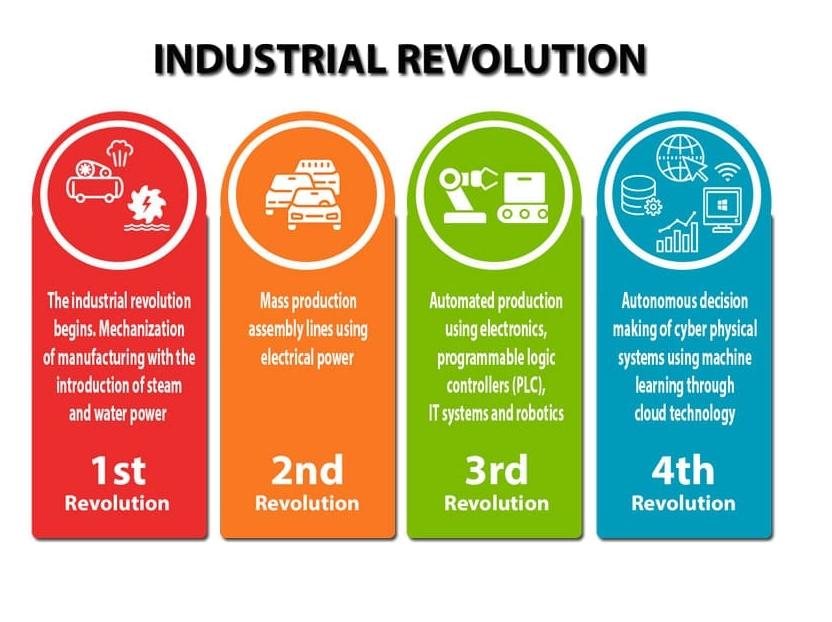
The government of Rwanda has announced the launch of the Centre of the Fourth Industrial Revolution (C4IR) which is said to be the first of its kind to be formally launched on the African continent. According to Rwanda’s Minister of information communication technology and innovation, Paula Ingabire, she disclosed that the launch was due to the rapid innovation witnessed in Africa during the peak of the covid-19 pandemic over the last two years, as well as the arrival of the Fourth Industrial Revolution.

In the words of Rwanda President Paul Kagame “The launch of this centre is enabled by investment that we as a country have been making in science and technology. I hope the center will build on this by making the Fourth industrial revolution an equalizing force, and contributing solutions to some of today’s most pressing challenges. We are very happy to have the World Economic Forum as a partner in this crucial and other endeavors”.

I strongly commend the government of Rwanda for this remarkable project and for being the first in Africa to launch a centre of the Fourth industrial revolution. I am ecstatic to see that the African continent is also ensuring not to be left behind in the implementation of technological advancements to improve the country’s economy as well as other sectors. As they say, ” necessity is the mother of invention”, I believe that the government of Rwanda saw the need to establish a center of the industrial revolution in its country, as it will play an important role in contributing solutions to some of the country’s challenges.

The launch of the center shows how visionary the leadership of Rwanda is as regards the implementation of technological advancements to solve problems in the country as well as improve the economy. In one of my articles, I wrote extensively on how the advancement of technological tools / the establishment of technological centers is boosting national economies. In the last few decades, there has been a drastic transformation as countries strive for economies driven by technology.

It is not far-fetched to say that countries that want to see their economy improve, must implement the use of technological tools/centers to achieve that. In the past years, Africa has been faced with the challenge of providing its youth with the right knowledge and skills needed for the emerging world. As the world constantly evolves into the stage of the industrial revolution of Artificial Intelligence, to harness the potential in the African region, the leaders of countries in the region must make rapid progress in seizing opportunities and overcoming challenges that the continent is often faced with by adopting this technological advancement.

As a region that has a great number of underdeveloped countries ravaged by so many problems, there is a need for countries in the African continent to adopt the system of the fourth industrial revolution, because it will greatly benefit them. The global labor market is increasingly adopting new technology, which poses a lot of advantages. It makes it easier for companies to automate routine tasks which shape time and efforts and the like.

In Labour markets across the globe, there is an evident change of transformation and disruptions already occurring. The fourth industrial revolution mainly involves the adoption of cyber-physical systems like the internet systems. Other African countries must take a cue from Rwanda, as the time has come for Africa to put itself at the very center of a new technological revolution. The undeniably strong entrepreneurial spirit of youths in the region, and the adoption of the fourth industrial revolution will give the continent a competitive advantage.

Tope Awotona, Founder of Calendly, Graces Forbes Billionaire List

0

We use his product and that product is the best in the world. Nigeria’s Tope Awotona, the founder of Calendly, organizes the world of commerce and scheduling. And that mission has made him very rich. In the continental America, he is one of the few billionaires of African origin. He is worth $1.4 billion. In technology, there are just two of them.

He was born in Lagos and he wanted to redeem a bad experience: “When Awotona was 12, he witnessed his father get shot and killed in a carjacking”. He left Lagos, went to college in America, found a great job, but one day, he quit that job for Calendly: “pouring his life savings of $200,000 into it and later quitting his job selling software for EMC.”

When you use Calendly as we do in Tekedia, you will see the simplistic quality in its DNA. Billionaire Awotona, congratulations.

Comment on LinkedIn Feed

Comment 1: I have a question for you Ndubuisi (and anyone who feels they can answer): why is money or riches the first measure of success, especially when it’s not essentially a primary motivation for wealth in the first place? Is it an underlying poverty mindset or plain show off bordering on inferiority complex?

Response: “why is money or riches the first measure of success” – wealth has an underlining element of brilliance in America. It is impossible to see a bottom of the class guy become rich here. I am not talking of Nigeria but US. Tope becoming wealthy has demonstrated brilliance. This brilliance is not graduating #1 in your class or whatever class they offer. This is brilliance in solving society’s problems and that is “Success” itself.

Comment 2: Ndubuisi, so why is his “Brilliance” or tenacity or courage to take such a risk not the crux of this celebration? Why is it money? I struggle with all these shenanigans around making the Forbes list. It reeks of poverty for me.

There’s a joke that’s been around in Lagos. If you didn’t ask me the source of my poverty when I was broke, why are you interested in the source of my wealth now that I am rich?

I have a lot of comments regarding this and all the negativity that can stem from these celebrations and accolades. Ultimately, I think poverty and inferiority complex have a hold on those who extricate and celebrate money as the main reward for any endeavour.

My Response: ” It reeks of poverty for me.” – fair. But those who understand know that you do not invite yourself to Forbes. Forbes comes to you because you have done great things.  Forbes is not a celebration of money. Forbes is a celebration of innovators who through entrepreneurial capitalism make society better. Nonetheless, the reward for that is money but that is not what is being celebrated.

I expect to be in Forbes in 8-11 years looking at my accumulation rate. If that happens, it does not mean that I am dumb and being celebrated because I am in Forbes. It simply means that I have solved problems in society and Forbes recognizes that just as others do.

Forbes is not the destination. It is one of the TV shows of entrepreneurial ascension.

Comment 3: Ndubuisi, Prof, not everyone who got on Forbes is dumb. And that’s not nearly what I’m saying. And to say Forbes is not a celebration of money isn’t even minimally true. Type Forbes List 1 million time online and you get nothing but money!

You said “Forbes comes to you because you have done great things.” What great things are these things? Nobel Peace Prize, Environmental Protection? Good Governance? Or plain old Money? How many Forbes Listers have committed crimes just to grace their cover pages and promptly tumbled into the resulting deep disgrace?

I can almost agree that Forbes celebrates innovators. However, that celebration is centered on how much money the innovation has raked in Billions of dollars. And this “money-centeredness” has serious negative effects on societies at large.

I believe you know that my opinion doesn’t mean you shouldn’t feature on Forbes when you do hit your billions. My hope is that you insist on telling your story differently from just money. You’re too influential to miss that detail. The influence of money is often destructive but the influence of the journey to clean wealth is almost always positive. That’s what I’d sell any day.

My Response:  have been a subscriber of Forbes for years. Forbes uses cases of innovators to challenge you on human possibilities. That is different from Fortune, Economist, etc. Forbes model is relevant as those, and I hope you respect it even as you may not agree. Without Forbes, the spirit of many will dry. Read Forbes, you receive energy to see what others are doing.

Comment: Ndubuisi, Chief, I do read Forbes and so many others. That’s why I have the confidence to say what I’m saying. There’s certainly some inspiration therein. My issue is the heavy slant to riches.

And, yes, I do respect Forbes and the work they do. And I also respect those who make the list and the cover pages because I have an idea of what goes into achieving success let alone on a global scale. I’m just not a fan of what I see as underlying factors to such mentions.

Think of it as a meal of Fugu fish. Edible and very expensive but equally poisonous when prepared and consumed wrongly.

The Egoras’ Business Model And Opening A New Store

0

It is a novel business model: offer zero-interest loan financing collateralized with household items (furniture, phones, generators, TVs, etc) which clients pay storage fees during the term. If they repay principal, they take their items back. But where they do not do that, the items are kept for the principal. All loans are valued to align with the fair market value of the items during loan origination.

Now the engineering phase: for those kept items, refurbish them and open a shop for people to buy them. That is what Egoras does at scale. It has employed hundreds. It is a fintech, an engineering startup and more.

Everything in this store (see video) is refurbished. The engineers are in Aba and Port Harcourt.  We brought in brilliant young Nigerians and asked them to do amazing things. Ugoji Harry, Egoras CEO, has done very well. A new showroom/store will open in PHC this weekend. Enugu and Onitsha on the way. We’re adding more factories and everything sold in our stores will be “Made in Nigeria”! Simply, no import!

Note: every item comes with service guarantees to give you peace of mind; phones – 6 months, generators – 3 months, etc. It has insurance for the items “All items used as collateral are insured and inventory fees are shared with the third party insurance company”

Watch the video here.