DD
MM
YYYY

PAGES

DD
MM
YYYY

spot_img

PAGES

Home Blog Page 5210

President Buhari Presidential Pardon To Ex-Governors – A Drawback To Nigeria’s Fight Against Corruption

0

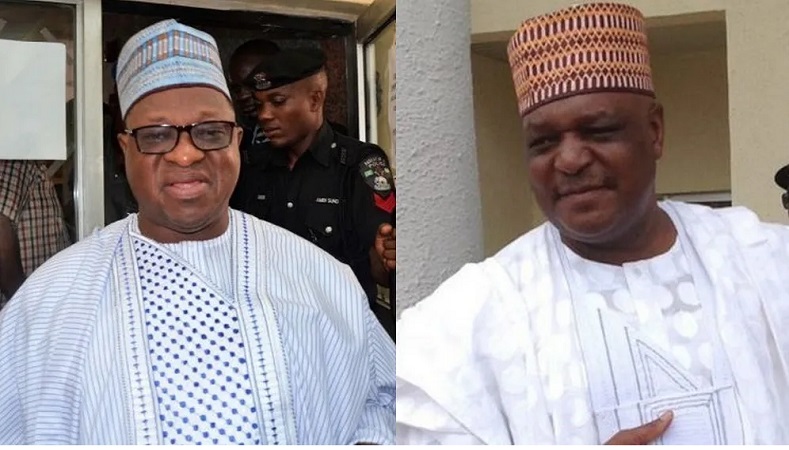
The national council of state has granted state pardon to former governors Joshua Dariye and Jolly Nyame of Plateau and Taraba states respectively, who are serving jail terms in jail for corruption. The governors were among the 159 prisoners pardoned by President Muhammadu Buhari at the presidential villa in Abuja.

According to a presidential source, the two former governors were pardoned on health and age grounds. It will be noted that both governors were jailed for misappropriation of public funds. If we recall President Buhari’s manifesto before he became president, he stated that he will fight corruption to the last and also jail corrupt officials, only for him to go contrary to his campaign promises. This recent pardon to 159 governors jailed for corruption has however dampened the morale of the officials of the anti-graft agencies.

These agencies, EFCC and ICPC have however accused the presidency of sabotaging the fight against corruption. It is more like a drawback to Nigeria’s fight against corruption. Once corrupt officials are occasionally pardoned, then it is imperative to say that corruption will continue to thrive in Nigeria because the law has been compromised. There is no strict punishment pelted out to corrupt politicians to serve as a deterrent to others who might want to follow suit.

Officials of the anti-graft agencies will however feel discouraged to go after corrupt officials and arrest them because it has shown that their efforts will in the end be in vain. I am perplexed as to why a president who came into power on the campaign of fighting corruption will do such an unthinkable act of pardoning highly corrupt governors who are already serving jail terms. This act is indeed a breach of the country’s constitution, with no regard for it.

Presidential pardon for corruption cases is inconsistent with the rule of law, and the public interest because it will undermine the principle of equality before the law. With his tenure almost over and his recent presidential pardon, the President has shown to Nigerians his ill stand against corruption.

Human Rights activist and lawyer, Mike Ozekhome has lashed out at the Presidency, as he lamented that such a callous pardon is a major setback to Nigeria’s fight against corruption. Mr. Ozekhome further disclosed that pardoning corrupt politicians has only validated to the public the perception of Mr. President’s administration’s lopsided corruption fight.

It is sad to note that in most of these cases of pardoned corrupt politicians, some anti-graft officials had to risk their life and friendship to investigate these Ex-governors, only for the President to carelessly grant them a pardon. Some have described the presidential pardon as inequity in politics, as people who embezzled public funds were pardoned, unlike those convicted of petty crimes were overlooked.

Displeased with the Presidential pardon, the socio-economic rights and accountability project (SERAP) have urged President Buhari to specifically withdraw the pardon granted to Ex. Gov. Joshua Dariye and Jolly Nyame are already serving jail terms for the misappropriation of public funds.

SERAP further disclosed that impunity for corruption will continue as long as influential politicians escape justice for their crimes. Nigeria indeed has a very long way to go in fighting corruption, because the presidency can even go against the Constitution not minding whose ox is gored, just to satisfy his political desires.

Handling corruption in Nigeria is indeed clearly political because it has shown that any government in power will do anything possible to ensure that their fellow party man is exempted from any punishment regardless of whether he or she has been convicted for a crime.
In the Federal Cabinet, Ndubuisi Ekekwe Will Unlock Nigeria’s Growth Engines And Unleash Prosperity

1

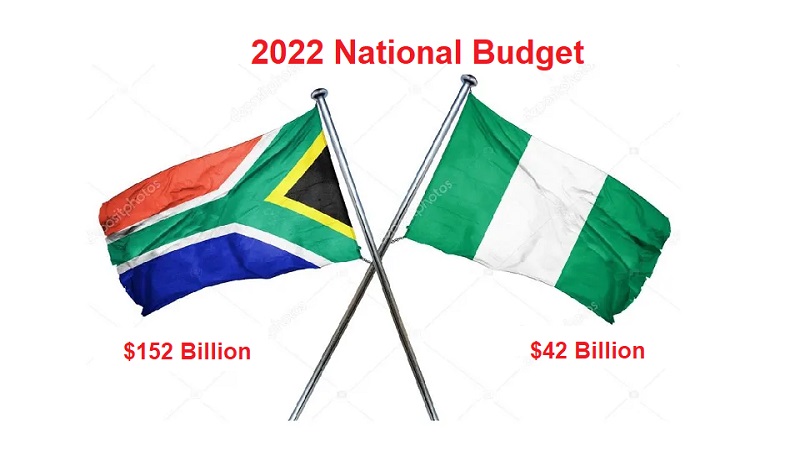
The 2022 national budget of Nigeria hovers around US$42 billion using the most favourable exchange rate in the nation. If you use the rate most of the citizens use, it comes down to $32 billion. In South Africa, the national budget for 2022 comes down to US152 billion: “Total consolidated government spending will amount to R6.62 trillion over the next three years…Additional allocations of R110.8 billion in 2022/23, R60 billion in 2023/24 and R56.6 billion in 2024/25 are made…” If you average, you get my number.

Of course, Nigeria does not typically have a 100% execution performance; we typically do 80%. If that is the case, it does imply that we are spending less than $34 billion. When you contrast with the relatively huge South Africa’s budget, you will get an idea that Nigeria is severely underperforming. (With the 36 states and Abuja, Nigeria’s total budget comes to $64 billion.)

More so, Nigeria has more than 3 times the population of South Africa. So, we are spending $34 billion for 200 million people when South Africa is spending $152 billion for 60 million people. Do you see the disparity? 

In Ndubuisi Ekekwe’s “3T2030 Plan for Greater Nigeria”, I have shared how we can inject capital in the Nigerian economy. 

Nigeria needs to unlock vistas in innovation, powered by property rights to make capital arrive at scale. That is the point I made in the video below. It is only when we do that can we build leverageable factors which can compound to unleash real growth in the economy. As your honourable minister, my desire is to help our nation to the mountaintop. 

Looking at 2,000 years of GWP (gross world product), I have seen how all important nations advanced, and they are unified by one factor. Nigeria, today, does not have that factor, and unless we do, we will not transition to prosperity. I will work to bring that factor into existence and unleash abundance in the nation. I will serve.

Our problem goes beyond efficiency; we also need scale and abundance. If South Africa spends more than $110 billion on a population that is less than 1/3 of Nigeria’s population, you will agree that managing $42 billion is not the full solution. That national budget has to grow. That is why I am running for a ministerial position.

Comment on LinkedIn feed

Comment: If south African budget is $152 Billion and Nigeria $42 Billion. Prof. Ndubuisi Ekekwe explain to me, on what grounds is Nigerian economy the biggest in Africa? It seems something is wrong somewhere.

My Response: GDP is an aggregate of economic activities over a period. Nigeria has many of those activities. But most of those activities are severely informal. They happen but the government does not “feel” them via taxes which are used to fund budgets. Because they are not there, Nigeria does not have money to expend its budget. If you visit your village, you will see many mansions.

In South Africa, those mansions would be taxed yearly, making it possible to boost money for the budget. In Nigeria, no one does the same. In Nigeria, the national budgets are in the citizens’ hands and govt has no control.

Comment : Well, prof, Ndubuisi Ekekwe. The gap is too wide. We also know that the Nigerian government is not smiling when it comes to taxes and other internally generated revenues. Assuming we put a deviance factor of 0.5 or less to account for the generated revenue evasion. Multiplying this factor by our supposed generated revenue based on our acclaimed biggest economy in Africa. We can’t be talking $40b budget while South Africa is chilling with a $152b budget. Unless we conclude that some generated monies by our government which is more than South Africa’s budget are kept somewhere.

My Response: f you tax all lands, properties and farmlands in Nigeria, you will likely get more than $80B per year. Your LGA has no money to buy pencil but there are mansions in your village. If govt taxes those mansions as they do in South Africa, you LGA will have at least $5 million per year to start the year. Check your village market, examine the volume of transactions, imagine if govt takes its 7.5% VAT where the LGA will be. This is not rocket science.

Comment: Prof. Ndubuisi Ekekwe, I wish you all the best in your ministerial ambition. With due respect, I want to make an observation, the way South Africa designed its national budget is different from Nigeria’s budget, South Africa’s national budget is allocated between the three spheres of government (national, provincial, local) While Nigeria’s budget you mentioned in your article is for the federal government alone, not including the 36 States and FTC’s budget. Thank you

My Response: South Africa has a federal budget. Besides that, regions also have budgets approved by Provincial Parliaments. For example, this is Western Cape budget https://www.westerncape.gov.za/provincial-treasury/western-cape-budget-202122 which is different from the federal one http://www.treasury.gov.za/documents/national%20budget/2022/review/FullBR.pdf . The 36 states + FCT in Nigeria as I noted in the piece have a budget around $22 billion. But in that budget, there is an overlap since projections are linked to the group federal sharing from oil. So, if you just count and add states, you are double counting. My comparison is fair.

Fixing Nigeria’s Lackluster Venture Capital Funding

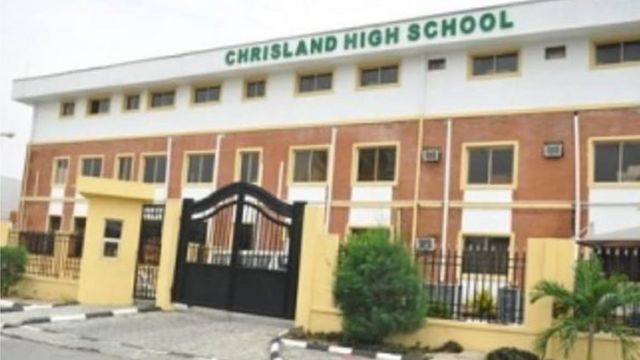
Sharing the Sex Tape of the Chrisland Schools Pupil can land you in jail

0

The social media has been on standstill with the news of the Chrisland Schools pupil that was “gang-raped” by her classmates in Dubai during an international games competition that she and her classmates represented her school in.

As a side note, I have watched the video (the sex video of the little girl and her classmates which are boys, about 4 of them) and it does not seem to me to be rape, it clearly seems to be consensual group sex between the girl and the young boys but the boys made videos of the sex scene and posted it online unless there is something that I am missing. 

That being said, netizens should stop sharing, posting and distributing that video; posting, sharing and distribution of child porn is a crime in Nigeria and other countries of the world that would land you in jail.

This is the provision of s.23 of the cybercrime act, 2015;

S.23 (1) Any person who intentionally uses any computer system or network in or for- (a) producing child pornography;

(b) offering or making available child pornography;

(c) distributing or transmitting child pornography;

(d) procuring child pornography for oneself or for another person;

(e) possessing child pornography in a computer system or on a computer-data storage medium:

commits an offence under this Act and shall be liable on conviction –

(i) in the case of paragraphs (a), (b) and (c) to imprisonment for a term of 10 years or a fine of not more than N20,000,000.00 or to both fine and imprisonment.

Engaging in the production, distribution, and transmission of child pornographic content is a crime punishable with 10 years imprisonment or a fine of N20m or both the fine and the jail term.

Please desist from sharing that video for the sake of the little girl’s future and also  for the sake of public morals. 

As Consensus Proposal Creates Pandemonium In APC, PDP Towards Nigeria 2023

0

As preparations towards the 2023 general elections in Nigeria are currently in top gear, there is reportedly anxiety among leaders of the two leading political parties in the country, the All Progressives Congress (APC) and the Peoples Democratic Party (PDP), over how their presidential flag-bearers for the polls ought to emerge.

Indeed, there are clear indications that the two parties would be bedeviled by renewed crises in the days ahead over their respective consensus arrangements.

While some chieftains of both parties have been rooting for the selection of the presidential candidates through consensus based on the agreement of a few leaders, which is allowed by the Electoral Act, a host of others see the option as undemocratic and another way of imposing the choice of a few members on others.

Though many of the stakeholders are particularly concerned about the presidential aspect, the various states are not left out, as there are equally attempts by the outgoing governors to determine their successors via consensus.

This is particularly the case in Ebonyi and Akwa Ibom states. In Akwa Ibom, PDP stalwarts are yet to buy into Governor Emmanuel Udom’s choice of Pastor Umoh Eno as his preferred successor. This was even as efforts by Governor David Umahi of Ebonyi State to broker a consensus agreement among governorship aspirants in the state chapter of the APC suffered setback within the week as the Izzi clan of Ebonyi North failed to shortlist two aspirants as demanded by the governor.

The present situation in Ebonyi is very similar to what is occurring among PDP presidential aspirants, where the zoning arrangements have generated crisis among the party stalwarts.

Accordingly, serious suspicion and misgivings have set in among the leading presidential aspirants and have put proponents of consensus arrangement on the defensive.

Indication to this effect emerged as prominent leaders of the party from the southern part of the country have expressed doubts about the real motives of the supporters of the consensus.

Former President of the Senate, Bukola Saraki; Governors Aminu Tambuwal (Sokoto), Bala Mohammed (Bauchi) and a former banker, Mohammed Hayatu-Deen, had last month initiated talks about the consensus arrangement in the PDP and have been moving round the country to woo members of the party to support the idea.

Governor Ifeanyi Ugwuanyi told the facilitators of the consensus arrangement during their visit to Enugu State within the week that without adhering to the principles of equity, fairness and justice, the consensus arrangement would be a woeful failure. Similarly, Governor Nyesom Wike of Rivers State has vehemently kicked against the consensus arrangement.

Gov. Wike, who spoke during his recent visit to Cross River State to seek the support of party faithful for his presidential ambition, said: “Some people are moving for consensus. I am not part of that. If you want to run an election, come and run an election. When they came to me, I told them I am not a party to this one. What I don’t like in my life is deceiving people. What I will not do, I will not do. What I will do, I will do.

“If you can’t run again, say it out. Don’t hide under what you call consensus and come to me. Get on and run for the election. To be President of Nigeria is not by ‘dash’; you will sweat it out.”

It is reported that the fact that all the three aspirants who initiated the consensus talks in the PDP hail from the northern part of the country, was a key source of suspicion and rancour among the party high-ranking members.

It’s noteworthy that the new Electoral Act stipulates that for any consensus arrangement to be valid, all aspirants of the party involved must agree to it.

This implies that the leadership of the various prominent political parties in Nigeria must at the moment form a formidable coalition among their members as they prepare towards their respective primary elections.

They need to deploy a means to ensure that there is a tangible agreement among the overall aspirants as regards the consensus proposal, in accordance with the Electoral Act guidelines.

The time to do this is apparently short, hence all concerned must act very fast towards averting a more severe crisis that might lead the parties to a doomed state. 

As Minister, Ndubuisi Ekekwe Will Eliminate Nigeria’s Fuel Subsidy with 4YZero Playbook

1

The top 4 trending articles on Tekedia are on my postulations on how to fix Nigeria. Many politicians have extended invitations to join and advise their campaigns. My policy remains: I will advise ALL but none. In other words, I want to remain with no party even as I serve Nigeria. Yes, I do speak with everyone who calls but I have no interest in joining any political fray where black becomes white, and white becomes red, just to score needless points. In Ndubuisi Ekekwe, you want to see a technocrat , who is independent and fully alloyed to Nigeria’s progress, and not to any politician’s ambition.

Today, I want to present from my “3T2030 Plan for Greater Nigeria”, a plan to scale Nigeria’s GDP to $3 trillion by 2030, on how we can fix fuel subsidies. I believe that Nigeria will not advance economically unless we phase out subsidizing fuel. I have a playbook as someone running for a ministerial position in a future government in Nigeria. My fuel subsidy playbook is called 4YZero (4 years for zero subsidy). 

Nigeria could spend close to $10 billion, about 25% of the national budget,  to finance fuel subsidies this year: “Nigeria’s petrol subsidy scheme could cost 4 trillion naira ($9.6 bln) to finance this year”.  This is simply unfortunate. Under 4YZero,  ceteris paribus on Dangote Refinery, we will wean Nigeria of fuel subsidy in 4 years (I am cautious on Dangote Refinery since it is a private enterprise and I do not want to build a national economic plan fully on one company. So, I will assume that its impact may not change many things immediately).

To deal with this subsidy, we will discuss with the labour union, civil societies, etc and develop a 4 year playbook. In the first year, we will spend $2.5 billion on transportation infrastructure and systems even as we remove 25% of the fuel subsidy. So, prices of fuel will go up by 25% but the recouped or saved funds from subsidies will go to transportation investments.

In Year 2, another 25% will be cut even as $2.5 billion is invested. By the 4th year, all subsidies are removed but $10 billion has been invested in transportation. But this investment will be smart.

We will put 50% of the funds into joint ventures (JVs) with private companies in aviation, waterways, rail and road transportations. The other 50% will be used to build four critical pillars which I have identified in the transportation sector (I will explain those pillars in future posts). 

Upon the 4 pillars, the JVs will increase outputs and by doing that crash prices of transportation through competition (and that will reduce prices of goods and services). If that happens, the citizens will not feel the impact of the fuel subsidy removal.

This playbook makes sense. If Nigeria had focused on subsidizing NITEL to make telecom services accessible, it would have failed. But with Glo, Airtel and MTN, the nation has provided those services outside NITEL. We can do the same thing within transportation but we need anchors and pillars upon which the participants will build.

Under the direction of Mr. President, I will communicate clearly with all parties and together we can build a foundation to advance Nigeria. The problem is not just fuel, our challenge is that we have limited supply in the transportation sector. My village of Ovim minted many traders who bought things from Oriendu Market and used trains to sell them at Enugu and Aba. When the railway system collapsed, those opportunities went – and the farmers who supplied them lost reliable bulk buyers who paid better.

Nigeria’s aviation can double in months if we improve quality, expand infrastructure and invest in the sector. And those JVs will at least provide a vehicle for all major cities to have airports to boost aviation since most people cannot afford to take taxis to far away airports. Our 4 pillars will provide solutions at scale.

The playbook is clear: we will remove fuel subsidies and still grow the economy. That removal will be phased to ensure our most vulnerable citizens will not be negatively impacted.

Comment on LinkedIn Feed

Comment: if we Invest more providing electricity by having mini power grids, solar inclusive, the pressure on petrol and diesel will reduce drastically.

My Response: Nigeria’s electricity problem from my angle is not going to be solved by looking at technologies but by working to fix the legal ordinance which has made reflective pricing difficult. Our recent energy paralysis was seeded by the court which froze rates, depressing good capital going into the industry.

So, unless you fix that root cause, when you attain critical mass via mini-grids, etc, someone will go to court. That fear is why many are not investing since it is the court that determines the price of electric power in Nigeria.

Water rates have not changed in some states for decades. Yet, people say no drinking water. We need to deal with the root cause, transparently and honestly, to get Nigeria going. With that, the mini grids will become attractive to investors.

Comment: You’re the first to come out with solutions but I don’t find how you intend to do JV in aviation or rail or even road transport and succeed, I’m not saying it isn’t doable I’d like the how. When Arik with all the government support failed several FGN assisted mass transit are comatose, even the buses bought during Jonathan era cannot be found so I await the how? Ndubuisi Ekekwe

My Response: The biggest mistake in Nigeria is the government going directly to buy buses, etc and give private players to operate. That is because govt wants to be involved in procurement. We will do it the Israeli way. Inject that money via banks, PEs, VCs, who must match govt commitment. Anyone getting that money knows that it has to be repaid and it is not free. More so, these incentives will be agonistic of individuals or companies: level playing ground for all.