DD
MM
YYYY

PAGES

DD
MM
YYYY

spot_img

PAGES

Home Blog Page 5248

Number Of Poor Nigerians Will Rise To 95.1 Million In 2022 – World Bank

0

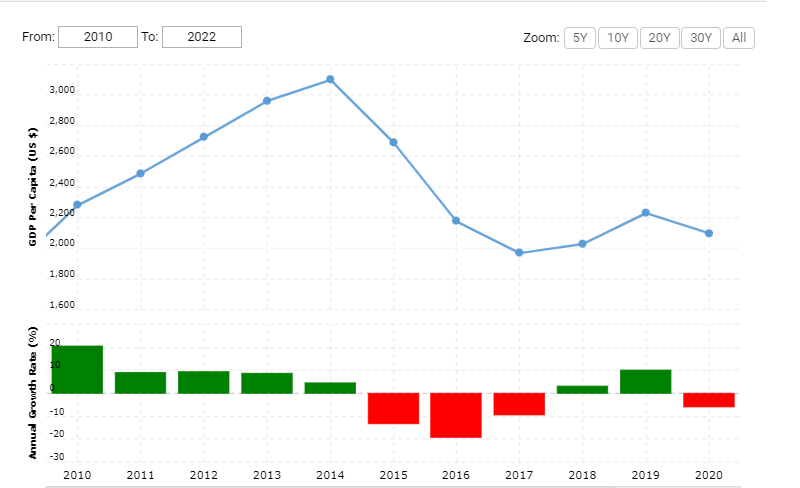
Recently, the world bank disclosed that more Nigerians will fall below the poverty line in the year 2022. According to the Washington-based bank, the number of poor Nigerians is projected to hit 95.1 million in 2022. They further disclosed that the reduction of poverty in the country had stagnated since 2015, given Nigeria’s rapid population growth.

According to a report, it was revealed that the covid-19 pandemic that ravaged nearly the whole world, pushed over 5 million more Nigerians into poverty in 2022. The covid-19 crisis skyrocketed the poverty rate in Nigeria, pushing millions of them into extreme poverty, with the GDP growth being negative in all sectors in the year 2022. Those who were slightly above the poverty line before the covid-19 pandemic, saw a lot of them fall into poverty as many more are still estimated to fall.

Had the covid-19 crisis not have occurred the poverty headcount rate would have remained unchanged with the number of poor people set to rise from 85.2 million in 2020 to 90.0 million in 2022, partly due to the population growth. What this implies is that the covid-19 pandemic drove additional millions of Nigerians into poverty. I once tweeted on the Twitter platform that with the way things are going in the country, with millions of people falling into poverty, there might likely not be a middle class in the country anymore. It might unfortunately be a case of, either you are rich or poor.

It is disheartening that a nation like Nigeria that God has blessed with abundant natural resources which are meant to make the country a place of Eldorado and envy to many nations has a large percentage of its citizens living in poverty. This shows that the elected political leaders have been woeful in their performances as they merely mount power for selfish interest, thereby impoverishing the lives of the people. As a result of extreme corruption, even the poverty reduction programs suffer from no funding and have failed to give the needed remedy to this country. The youths in the country are faced with massive unemployment which the President one time described as “lazy youths”. Such a statement is flawed because the same government refused to provide them with adequate jobs.

Due to being idle, so many of them have subscribed to all sorts of vices in society. Yet the irony of everything going on in the country is that there are abundant natural resources, emerging and industrious citizens, a diversified economy which is indeed needed to move a developing country forward. Yet the leaders fail to utilize these resources in improving the lives of the people. Due to the hardship faced in the country, some households have adopted dangerous coping strategies which include; reducing education, scaling back food consumption, etc, which all of these could have negative long-run consequences for their human capital.

If indeed the government is hell-bent on curbing the poverty rate in the country, their efforts will be felt and visible. But rather, they treat the issue with levity as long as they continue to take home huge sums of money as salaries and allowances. Much needs to be done to help lift millions of Nigerians out of poverty because it is often said that “a hungry man is an angry man”. There are ways which the government could go about it, such as;

  • Boosting the health and education sector in the country
  • Expanding social projection
  • Establishment of skill acquisition Centers
  • Provision of jobs
  • Reform of the Agricultural sector
  • Reforming expensive subsidies (including fuel subsidies)

All these above-mentioned and many more if well implemented, will ensure the reduction of poverty in the country. Achieving all these is not rocket science, with clear-cut strategies, they will be effectively implemented.

Resolving The Perennial ASUU-Federal Government Face-off Through Alternative Funding Means

0

Since 1999 when Nigeria returned to civil rule, the Academic Staff Union of Universities (ASUU) has embarked on strike in no fewer than fifteen (15) times. These range from a few days warning strikes to full blown industrial actions, lasting well over a semester. Demand for better funding and improved working conditions have been said to be the major reasons for these perennial strikes that have seen poor parents/guardians and students as the ultimate losers, because nothing significant has changed in the university system in the last twenty-two (22) years.

This has made me wonder why ASUU, a body of intellectuals, keeps doing the same thing (which has been largely unfruitful) for over two decades and expects a different result. Some of the questions that come to mind include: are there other funding alternatives that can supplement the meagre releases from the States/Federal Governments? Are there no better options than strike actions? What are truly the major hindrances to adequate university funding in Nigeria? Among others.

While I will continue to urge governments at all levels to take education seriously, which has to be shown by adequate funding provision and forward-looking policies formulation and implementation, for Nigeria to make meaningful and sustainable progress; I will suggest that ASUU and university administrators should explore the options below as some of the possible ways of resolving the perennial funding crisis.

ALUMNI ENDOWMENT FUND: Funding of public schools, particularly universities, has become a global challenge for most governments. Therefore, to meet their mandates of advancing knowledge through teaching and research, innovations, community service, among others; and remain a going concern, most universities in the West have resorted to diversification of revenue sources- including endowment funds. Endowment funds for some universities run into several billions of dollars. These are usually contributed or donated by such institutions’ alumni, other individuals and corporate organizations towards the continuous actualization of the school’s mandate in a sustainable manner.

Having worked well in the United States of America and the United Kingdom, for instance, I always wonder why universities in Nigeria have not keyed into the huge opportunities in endowment funds. This led me to conduct a research to ascertain the willingness or otherwise of Nigerians to contribute to an alumni endowment fund. The research was conducted both online and in-person. The research question was “In view of the ASUU-FG face-off, will you contribute to your alma mater’s “alumni endowment fund” annually, as one of the ways of ensuring sustainable funding, if proper system and accountability are in place?” To this, 52% of the respondents answered in the affirmative. 34% said they won’t contribute to an alumni endowment fund, while 14% were undecided. Worried by the large percentage of graduates who are unwilling to give back to their alma mater, I probed further to know what the issues are. The exercise threw up a serious issue in our university system that requires urgent attention- students/lecturers relationship. Almost all the respondents who said “No” cited their experiences in the hands of lecturers and the school system in general as reasons. Here are what some alumni have to say. “God forbids!”, “I do not feel any affiliation to the institution. There was no tradition, no communal spirit, and the faculty definitely did not inspire students to be proud of the school. My better memories were actually my interactions with other students.” “This is supposed to be a laudable initiative but it might suffer like the disparaging feeling of leadership across board. This will sit in the paradigm of what the school did for you when you were there.

Did they provide the needed tutorship and educational care? Most tertiary institutions in Nigeria after the 80s never did anything for their students. Students did almost everything for themselves. So why should I give them? Why would I get involved when some of these lecturers actually frustrated some of our colleagues in school? This sort of thing happens when a school ecosystem builds and supports the individual and most importantly, ensures his or her progress.” It is unfortunate that most lecturers see themselves as gods, creating a master/servant relationship and making the university experience horrible for most students. In my set’s WhatsApp group, discussing our alma mater and course lecturers is usually a sure way to open old wounds for most people. Interestingly, those who said no to voluntarily contributing to a university alumni endowment fund agreed to supporting their secondary school to any length.

Beyond the noxious lecturers/students’ relationships, the institutions themselves have failed on many fronts. How many schools have up-to-date data about their students and alumni in an easily retrievable and ready use manner? This in itself will pose a serious problem to the success of any endowment fund being set up. Most schools in the West have offices specifically for their alumni engagements and this can be attributed to one of the reasons why their endowment funds have been so successful. In the course of putting this piece together, I checked the website of ten (10) federal universities to get insight into their alumni associations and what they are doing.

Of the schools looked into, University of Lagos and University of Jos stood out but can also be improved upon. They appear to have a well-coordinated alumni associations that are well integrated into the institutions, so much so that Unilag alumni has a permanent seat in the university’s governing council. That is highly commendable. For University of Ibadan, apart from their home page which was updated last in 2020 and indicates that they have over 450,000 graduates in about 160 countries, the other pages did not open. The other schools either did not have an alumni page or it did not open at all.

The way forward: Lecturers have to put human face to teaching and learning. There should be connection and rapport between lecturers and students to create an awesome experience that would always make alumni have a sense of gratitude and feel the need to give back to the institution. Also, instead of treating students as just numbers, schools must begin to view every student’s engagement as an opportunity for positive impact and lifelong relationship. Data must necessarily be effectively collected and efficiently processed from the point of admission till whenever; and used for the betterment of the student/alumni, university and society at large.

I understand that on funding, ASUU is demanding N200 billion (Two Hundred Billion Naira) only yearly for 5 years. Now, according to reports, there are 49 Federal Universities in Nigeria. This translates to N4,081,632,653.06 per institution per year on the average. Only the alumni listed on their sites, for Unilag and Unijos, alone can comfortably raise this cash for their respective alma maters. For UI, if 100,000 out of the over 450,000 graduates donate an average of N50,000 each, that is N5 billion.

From the above, it is very obvious that lack of coordination and lack of confidence in the school management (as to utilization of funds) are/will be the major hinderances to the successful establishment and management of Universities’ Alumni Endowment Funds in Nigeria. Therefore, if properly handled, once there is transparency, accountability and corporate governance in the university alumni endowment funds, not only will alumni contribute to it directly, they would also mobilize funds from their organizations and charity organizations abroad to support the cause.

COMMERCIALIZATION OF RESEARCHES: There has been increasing calls for the commercialization of universities’ research works. Top politicians, industry experts and some academia across the world have been advocating this as way of bridging the gap between the industry and higher institutions, and also to act as an alternative source of funding in the face of governments tight budgets. Extensive researches and a lot publications have been made on this subject, both for and against. Some universities around the world have started enjoying the gains of research commercialization, after mitigating against identified risks. Specifically, the success story of research commercialization has been told in Nevada Today’s edition of April 5, 2021.

It is my opinion that Nigerian universities can benefit from massive funding from large corporations, because some organizations will be ready to outsource their research and development (R & D) department or a part of it to the universities, once appropriate laws and enforceable agreements are in place. Also, relevant data access, up-to-date equipment usage, and technical skills transfer from industries to universities for practical experiences are derivable from such collaborations.

This will eventually bring about a healthy competition that will lead to more innovation and attraction to Nigeria and foreign students.

ENTERPRISE AND CONSULTANCY SERVICES: A twitter user mentioned a university name, with massive hectares of land, and asked rhetorically, “how much does XYZ generate from this land annually?” He went ahead to make an analysis of how much they should be making cultivating maize on 5,000 hectares of the university’s unused land. My independent search showed that at a production rate of 1.69 tonnes of maize per hectare, 5,000 hectares would generate N2,112,500,000 (Two Billion, One Hundred and Twelve Million, Five Hundred Thousand Naira) at N250,000 per tonne of maize; assuming a cultivation of once a year. “With the massive population of students in the school, why can’t ABC produce bread that can serve the university community?” A friend also asked in a similar fashion.

I know some universities run consultancy services, but how effective and profitable? A school that teaches how to be resourceful must first and foremost be resourceful. With proper structures and good corporate governance in place, this is expected to enhance hands on practical learning experiences for departments that are directly involved.

Finally, I recommend further research on each of the points above for possible implementation.

I thank all those who graciously participated in the research, especially Dr Joe Abah, former Director General, Bureau of Public Service Reform, whose retweet helped the research question to get huge engagements.

Tekedia Announces Scholarships from Prince Fadipe Foundation for Ekiti State University

0

Tekedia Institute is excited to announce a very generous scholarship from Prince Fadipe Foundation. Through the scholarship, many students of Ekiti State University will attend Tekedia CollegeBoost, a mini-MBA designed for college students. Among others, the Foundation provides “career mentorship and economic empowerment to those who need it the most”. The PFF scholars will spend the next eight weeks at our Institute.

Tekedia Institute thanks the Trustees of this Foundation led by Oluwaseun Fadipe, Ph.D, PMP®,MBA for providing this generous scholarship to enable young people continue to learn during this extended strike in the Nigerian university system.

Check the photos of the scholars here.


Tekedia Institute Wants To Partner With Your School

0

If you run a post-secondary or training institution with physical presence in any location in Africa, Tekedia Institute is available to partner with you. We are expanding rapidly, and want to explore partnerships with you. Today, nationals from 41 countries attend our programs, and our learners community includes professionals, students and scholars from leading companies and universities in Africa and beyond.

With more than 200 subject matter experts and executives in global and local companies, Tekedia Institute has knowledge capabilities to support and partner with you. By next month, our first program with Nnamdi Azikiwe University Awka will go live.

We expect to impact thousands in Onitsha, Awka, Enugu, etc by delivering practical entrepreneurial business education with one of the finest universities in Africa. Visit Tekedia Institute and let us know how we can work together on knowledge creation and dissemination school.tekedia.com

Tekedia Institute and Nnamdi Azikiwe University Sign Massive Strategic Partnership

The Essence of Computing in Workplaces

0
Team at work

Computing is indeed the best way a job could be swiftly and aptly carried out in a workplace. Hence, its essence in the contemporary global society is inevitable.

By the above assertion, it suffices to say that any establishment that’s yet to appreciate the essence of computing, or Information and Communications Technology (ICT) in particular, is still lagging behind.

In recent years, computing has evolved into more complicated and more advanced processes such as quantum computing and quantum sensing. Computing is simply the activity of using a computer and writing programs for it. It can further be described as any goal-oriented activity that requires as well as benefits from a mathematical sequence known as algorithm, through the use of systems (computers) among other devices alike.

It’s noteworthy that the major fields that involve computing include: Computer science, System engineering, Software engineering, and Information technology.

Computing – particularly Information Technology (IT) as it’s fondly called – has become a veritable and integral part of every business plan coupled with day-to-day office work. From multinational firms who maintain mainframe systems and databases, to small establishments that own a single computer, IT obviously plays a key role.

The impact of computing on everyday activity in the office is so vast. Adequate use of computing can enable any firm, regardless of size or status, to handle its human resources effectively. A sound computing would enable the firm to boast of a viable and reliable database of the overall staff alongside their designations.

It would also help the company to update the database in terms of death rate, employment, transfer, maternity leave, or what have you. By doing so, the establishment would invariably realize the worth of its workforce towards boosting efficiency and job control. The human resources of Imo State or Nigeria at large, for example, can only be aptly handled via computing.

Similarly, with a proper use of computing, the employment process would be carried out expressly by the human resources department. With IT, also known as information systems, job seekers can apply without getting to the firm/office involved, thereby avoiding foreseen congestion that could compound office stress or workload.

And, having applied, the various applicants can be easily and properly assessed via the use of computing. We must acknowledge that the manual system of interview is no longer in vogue if we intend to get it right, especially in the area of Aptitude Test.

Management coupled with communication among the staff or between the existing branches of an establishment cannot be overlooked while discussing the essence of computing. Part of management is gathering and disseminating information, and IT can make this routine more accurate by allowing managers to communicate rapidly.

Emailing is quick and effective, but the managers can use information systems even more efficiently by storing documents in folders that they share with the employees who need the information. Such activity can be aided with adequate use of networking systems.

Furthermore, how you manage your firm’s operations depends on the information you have. Information systems can offer more complete and recent info, allowing you to operate your firm/office more efficiently. You can use IT to gain a cost advantage over competitors, or to differentiate your firm’s content by offering better customer service.

For instance, sales’ data give you insights about what customers are purchasing and let you stock or produce items that are selling well. Hence, with guidance from the IT, you can streamline your operations. Additionally, apt use of IT would enable the firm to easily reach out to the public via advertisement, thereby boosting sales or services, as the case may be.

Computing can equally help you make excellent decisions by delivering all the required information. Decision-making involves choosing a course of action from several alternatives and carrying out the corresponding tasks. If you can boast of accurate and up-to-date info, you can make a choice with confidence.

If more than one choice seems appealing, you can use the available information system to x-ray different scenarios. For each possibility, the system can calculate key indicators such as costs, sales/services, and profits, toward helping you determine which channel gives the most beneficial result.

Record purposes are not left out. Your establishment needs records of its daily activities for financial and regulatory purposes, and for ascertaining the causes of problems towards taking corrective measures. Computing enables the firm to store the needed documents as well as revisit histories, communication records, and operational data.

The trick to exploiting this recording capability is organizing the data and using the system to process and present it as useful historical information. You can use such information to prepare cost estimates and forecasts, and to analyze how your actions affected the key indicators of the firm.

Even in our virtually every day private lives and activities, computing or IT has apparently become inevitable. This is to say that the mechanism embedded in the said technology is presently needed in all sectors of human endeavour.

In spite of the astonishing positive role of computing in various formal settings, as well as our individual lives, it’s very ridiculous that several establishments or parastatals across the Nigerian society are yet to embrace the routine.

To this end, governments at all levels and other relevant stakeholders are expected to make investors and public servants see the services of computing as priority with a view to embracing a society where every activity would be done with ease, and in an orderly manner.

Existing entities and individuals must be made to fully acknowledge that computing is gradually overtaking the ancient use of manual gadgets especially in the areas of research, networking, finances and what have you. Hence, it’s high time it is duly inculcated in all our professional doings.

However, though the roles of computing in office works can’t be overemphasized, it’s worth noting that a wrong use or application of it can cost the user an untold loss. Thus, every establishment enjoying the services must endeavour to regularly consult professionals as well as train its staff on various computer/IT skills.

Though the role of computing in the present days’ society remains inevitable, its wrong application ought to be seriously avoided.