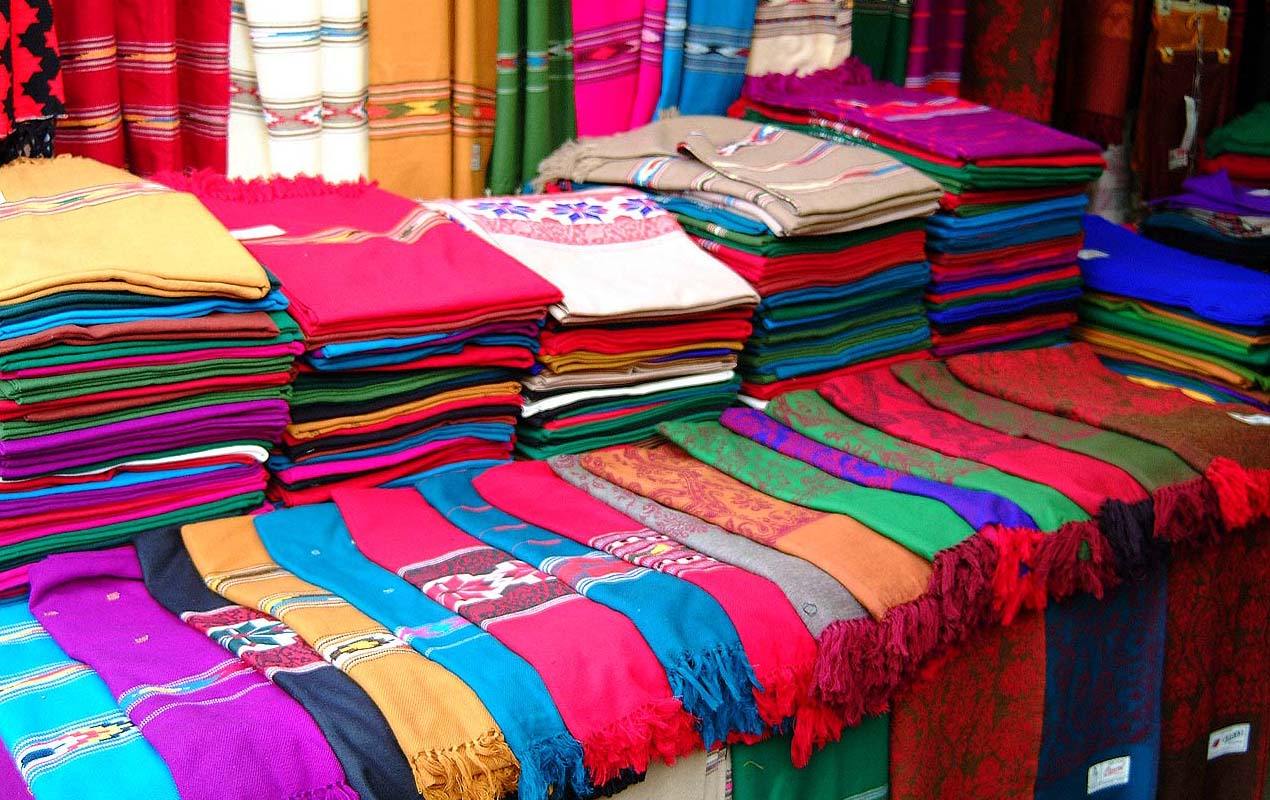
Nigeria’s textile industry was the third largest on the African continent, following Egypt and South Africa. It used to employ over 350,000 individuals when all the textile mills in the country were functional.
The aforementioned figure was about 25% of the entire workforce in Nigeria’s manufacturing sector. It was an indisputable note that the said sector was then the second highest employer of labour, following the country’s civil service.
Between 1985 and 1991, record has it that the sector had an annual growth rate of 67%. Survey showed that the number of mills in operation as at then was about 180 and they were all reportedly doing very well, especially the Kaduna Textile Limited (KTL) and Nigerian Textile Mills (NTM) in Lagos, which were the oldest having been established as at 1957.
It’s therefore needless to assert that the now comatose textile industry was one of the booming subsectors of the nation’s economy during the post-independent era. The current pathetic state of the industry could not be unrelated to the level of neglect experienced by it in recent times owing to the overwhelming dependence on oil revenue.
The obvious decline in, or depreciating effect of, the textile industry could be aptly traced to influx of cheaper textile fabrics from China and India, among others, sold at prices the local mills can’t compete with. This ugly trend has resulted in a drastic downfall of the industry.
It would be recalled that in 2010, the Goodluck Jonathan-led Federal Government (FG) placed a ban on importation of textile fabrics. This approach – like other restrictive trade policies as at then – failed to yield the needed result.
Rather than bringing relief in the industry as expected, the above measure regrettably ended up causing the ‘smuggling industry’ to grow more wings. This unfortunate resultant effect made it possible for continued influx of textile materials into the country. It’s noteworthy that at the moment these materials have virtually zero revenue for the government’s coffer.
In a bid to alleviate the excruciating effects of the present realities, in early March 2019, the Central Bank of Nigeria (CBN) led by Mr. Godwin Emefiele, under the watch of President Muhammadu Buhari, made a frantic move on the moribund textile industry by adding textile materials to the list of the already restricted items regarding foreign exchange (forex).
In his words while disclosing the plan to the textile industry stakeholders during a meeting, Mr. Emefiele informed that the restriction would awaken the sleepy sector and ensure the required growth was actualized.
The CBN’s boss, however, disclosed that – as part of the apex bank’s intervention for the industry – it would currently support the importation of cotton lint for use in textile factories with a view that the concerned importers shall start sourcing all the needed cottons locally, commencing from 2020.
He further stated that as part of the CBN’s Anchor Borrowers’ Programme, the bank would also assist local growers of cotton towards enabling them meet the entire need of the textile industry domiciled in the Nigerian State. Additionally, he notified that the Mother bank would support Nigeria’s cotton farmers to source high yield cotton seedlings with a view to meeting global benchmarks.
It’s worthy of note that the Nigeria Employers’ Consultative Association (NECA), alongside the Senior Staff Association of Textile (SSAT), applauded the Emefiele-led CBN over its restriction of forex to textile importers, saying it would go a long way in rejuvenating the moribund industry.
In a related reaction, the Lagos Chamber of Commerce and Industry (LCCI) however cautioned the FG over the strong move. In his statement, the Director-General of the body Mr. Musa Yusuf opined that there was need for a strategic approach before such policy pronouncement was made.
Mr. Yusuf argued that given the position of Nigeria in Africa as a leader in fashion, the range of fabrics being produced by the Nigerian textile industry could not favourably support the industry in terms of the quantity and quality required by the consumers. He therefore urged the government to reconsider the CBN’s move, which he described as ‘harsh’.
In his swift response to the argument, Mr. Emefiele clarified that the measures as announced by the apex bank were targeted to revive the Cotton, Garment and Textile sector. According to the boss, “the measures were well thought out to reposition the sector for job creation and economic growth”.
To assert the least, the inclusion of the textile materials into the list of the restricted items regarding forex couldn’t have come at a better time than now. The textile industry is almost going into extinction and the era when the FG is apparently intensifying its diversification mantra.
It suffices to enthuse that the frantic move was, without equivocation, a welcome development and a round peg in a round hole. I’m even of the candid view that the austerity measure ought to have been implemented long before it came on board.
Meanwhile, it’s appalling that two years down the line, absolutely nothing is being felt as regards improvement of the said sector, perhaps owing to lack of policy direction and insincerity on the part of the concerned authorities.
Knowing full well that epileptic power supply has hitherto been an overwhelming plight in the manufacturing sector at large, it’s preposterous to remind the FG that efforts need to be thoroughly intensified towards boosting the said source of energy. This will help tremendously to encourage the prospective cotton millers.
Similarly, towards encouraging the cotton growers, the farmers ought to be made to easily assess funds or low-interest loans to enable each of them purchase the needed machinery. It’s not anymore news that the continual deployment of crude pattern of cultivation and harvest has overtime bedeviled Nigeria’s agricultural sector.
In the same vein, the governments at all levels should equally assist in providing adequate irrigation systems for the farmers domiciled in their respective jurisdictions. The enabling environment must holistically be provided by the governments for business to strive.
Inter alia, acknowledging that policies of this kind are often, in the long run, frustrated by the forex black markets littered all over the country as well as importation smugglers, the FG must seriously implement measures to tactically checkmate these markets and our various borders, respectively.
It’s quite appalling that a few years after the policy was reportedly implemented by Nigeria’s apex bank, nothing tangible has been achieved in the country in regard to the textile sector.
Hence, the concerned stakeholders and authorities must be prepared to fish out the bad eggs militating the progress of the lofty initiative.
Like this:
Like Loading...