DD
MM
YYYY

PAGES

DD
MM
YYYY

spot_img

PAGES

Home Blog Page 5281

President Zelenskyy of Ukraine, Call President Putin And Stop The Madness

2
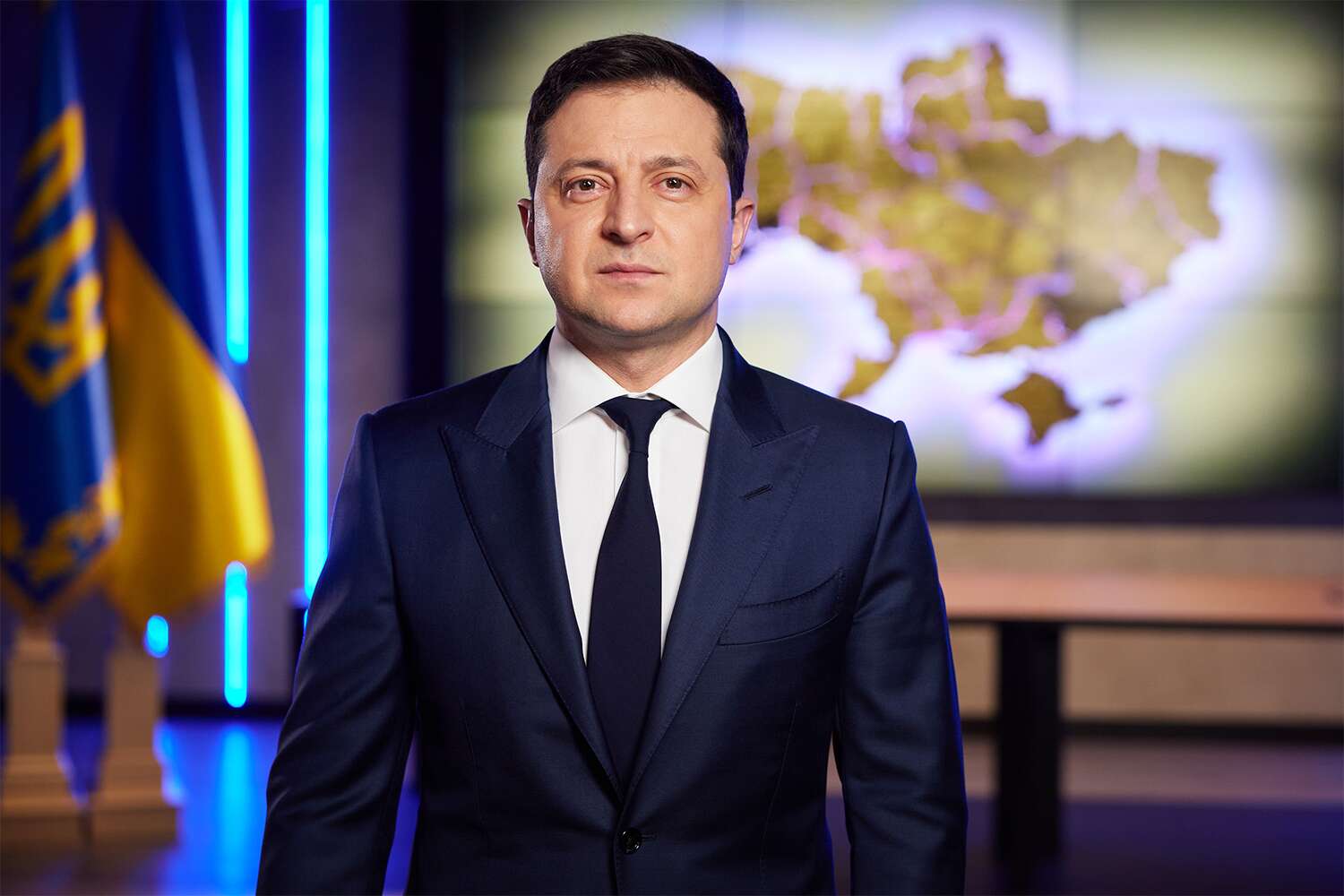
KIEV, UKRAINE - FEBRUARY 22: (----EDITORIAL USE ONLY â MANDATORY CREDIT - "UKRAINIAN PRESIDENCY / HANDOUT" - NO MARKETING NO ADVERTISING CAMPAIGNS - DISTRIBUTED AS A SERVICE TO CLIENTS----) Ukrainian President Volodymyr Zelensky addresses the nation after Russiaâs decision to recognize the Donetsk and Luhansk regions as independent states, on February 22, 2022, in Kiev, Ukraine. (Photo by Ukrainian Presidency / Handout/Anadolu Agency via Getty Images)

As bombs drop in Ukraine, it is time for the President of Ukraine, Volodymyr Zelenskyy,  to open a channel and speak directly with his Russian counterpart, Putin. When a war is fought on your land, you are losing despite whatever anyone tells you! Speaking with Putin is not a sign of weakness; it is understanding asymmetric capabilities and saving the lives of citizens.

I expect many to think otherwise, encouraging President Zelenskyy to keep fighting even as his nation is ravaged. But I do think that he needs to make that call by himself. Interestingly, this is the hypothetical 3am phone call moment and only Zelenskyy can make it and help his nation; France, US, Germany, etc cannot.

Mr Zelenskyy, call Putin and have a conversation as men. Your nation has done well but with this war on your soil, statistically, you have less than 7% of “victory”.

I write this as someone  who grew up in a village in Abia State, Nigeria. More than 50 years after the Biafran war, the signs of desecration remain.

War is bad and a major quasi-victory is making sure NONE is fought in your land. President Zelenskyy, it is now time to call Putin and find a way to stop this madness. Forget those telling you that you are winning; you cannot “win” a war fought on your land.

It’s Sunday; peace to this world.

Comment on Feeds

Comment 1: I agree. He needs to call Putin to try and put an end to this. I stand corrected, but, think I read where Zelenskyy said he called Putin and all he got was silence. I don’t think Putin wants to talk. Putin wants to depose Zelenskyy. As a democratically elected president, Zelenskyy needs to convene his cabinet and make a decision. There is no way he can stand the might of Russia. He can AVERT unnecessary loss to life and infrastructure. The objective now ought to be “anything but war”.

Comment 2; Sure, I support him making the call. But What if Russia gives him a condition he can’t accept? What Russia wants is clear enough. Perpetual keeping of Ukraine under her control. Truly, it’s a dilemma for Ukraine as the big boys have suddenly turned toothless bull dogs. Peace to Ukraine.

Comment 3: True, it’s good to be brave and strong but it’s better to be wise. Lives are being displaced, structures destroyed faster than they can be replaced and all for what?

Comment 4: Well done Professor. There is a difference between common sense and textbooks. I see Putin listening to him and ready to help rebuild Ukraine. There is no need for brothers to fight.

Comment 5: Calling Putin directly at this stage is weakness and nothing else. Unimaginable terms will be put forward by Putin. The best way is for a third party to do the calling. Calling Putin at this stage is weakness I repeat! Ukraine can not be under Russia siege forever as an independent nation. We should also consider the body language of Ukrainians, are they telling the president to do what we think he should do?

My Response to #5: Whether today, next week, next month or next year, that call will happen. Russia has more military power and there is no need delaying the deadline. While the probability that Putin will not attack was not 1, but when he did, the signs were there. No need delaying the show of “weakness” because that is evident.

Comment 6: Mr Zelenskky has tried to call President Putin and the response? Silence! So, this post of yours is a little too late, except you mean he (President Zelenskky) should reinitiate the call which will show a sign of desperation from the Ukrainian President. Putin is out to humiliate Zelenskky, so, the windows for discussion are closed, the next step is either for Zelenskky to surrender or allow the US evacuate him from Kyiv (which he has refused to accept)

Comment 7: Mr Zelenskky has tried to call President Putin and the response? Silence! So, this post of yours is a little too late, except you mean he (President Zelenskky) should reinitiate the call which will show a sign of desperation from the Ukrainian President. Putin is out to humiliate Zelenskky, so, the windows for discussion are closed, the next step is either for Zelenskky to surrender or allow the US evacuate him from Kyiv (which he has refused to accept)

Response to 7: good point. I had a post in my blog but did not share it here. I was waiting to see if Biden will sanction Russia’s oil and gas sector. But when he refused this morning, I concluded that Ukraine has no chance. Technically, Europe and the US do not want to bear the pains through energy prices. If that is the case, what is the end goal for Ukraine? The US sanctions are limited. Russia uses less than 0.1% of global semiconductors (it commands 3% of global GDP) and they probably stocked inventory to last for years before this campaign. So, that semiconductor sanction is toothless. The only pain ti Putin will be oil & gas but no one is ready to go there. That shows that Ukraine is alone.

Further comment to Response 7: Ndubuisi Ekekwe I can not agree more. The man is being cheered on, dressed in military fatigue for photo ops and beautiful inspiring speeches, but none of his cheerleaders is ready to pay the slightest price. There is no substitute for experience. If Ukrainians had elected a knowledgeable experienced politician/leader for a president, he/she would know better (1) not to get himself/his country entangled in a fight between 2 powers, and (2) the necessary damage control measures – rather than stubborn belligerence.

Comment 8: Prof Ndubuisi Ekekwe. God bless you Sir. The people encouraging Ukraine to fight on are the number one enemies. They seat at their comfort while encouraging untrained civilians to take up arms against sophisticated Russian army.
Ukraine cannot win and Ukraine will pay all the prices for the sanctions against Russia. If Zelensky negotiated with Putin now, he can still negotiate from position of strength. Otherwise, Putin will not only demilitarised Ukraine, he will sieze all the weapons being donated and cause infrastructural damages that will take decades to recover. The US, UK, Canada and EU have displayed their strengths, Putin will definitely reciprocate. Unfortunately, that would be on Ukraine soil if nothing is done on time.
While I do not support Russia invasion, I must commend Putin for his professionalism because high rise buildings are still standing firm in Ukraine. The world knows what happed to such buildings in Gaza.

Global Smartphone Market Revenue Crossed $448bn in 2021 – Counterpoint

0

The year 2021, which was the hardest hit by covid, was a year of growth for the tech industry, with almost every player in the sector making groundbreaking figures in revenue.

Though the growth was scuttled by global chip shortage which undermined the production capacities of many companies, from vehicles to smartphone makers. However, like others, the smartphone market defied the chip challenge to cross a revenue threshold in 2021.

The global smartphone market revenue crossed $448 billion in 2021, according to the latest research from Counterpoint’s Market Monitor Service. It grew 7% YoY and 20% QoQ even as component shortages and COVID-19 restrictions continued to disrupt supply chains around the world.

Smartphone average selling price (ASP) grew 12% YoY to reach $322, mainly due to a higher share of 5G smartphones, which have a significantly higher ASP than the 4G models, as well as Apple’s successful launch of its iPhone 13 devices. Besides, more 5G-enabled models were released in 2021 as OEMs such as Xiaomi, vivo, OPPO and realme focused on fulfilling a greater demand for affordable 5G smartphones in emerging markets such as India, Southeast Asia, LATAM and Eastern Europe. As a result, 5G-enabled smartphones contributed more than 40% of the global smartphone shipments in 2021, compared to 18% in 2020.

There has also been a global increase in demand for mid-range and premium smartphones due to the pandemic-linked education, work and entertainment from home convincing some consumers to upgrade their devices for a better overall experience. Lastly, the global shortage of smartphone components has also led major OEMs to increase the retail prices of some of their entry and mid-tier smartphones.

Smartphone Market Revenue by Top 5 Brands, 2017-2021 (in $ billions)

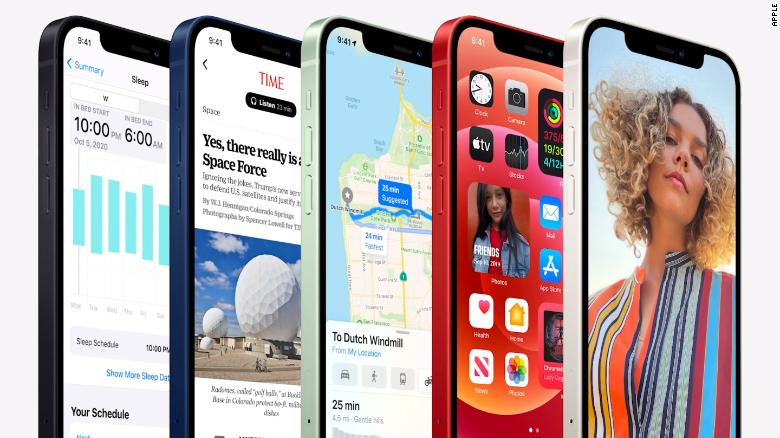
Apple’s iPhone revenue increased 35% YoY to $196 billion in 2021. It captured 44% of total global smartphone revenue in 2021. The high demand for 5G-enabled iPhone 12 and 13 series helped Apple register 14% growth in its overall ASP, which reached $825 in 2021. The brand also managed to increase its share in key emerging markets such as India, Thailand, Vietnam and Brazil.

Samsung’s smartphone revenue increased 11% YoY to reach $72 billion in 2021, compared to $64 billion in 2020. Its ASP grew 5% to $263 in 2021. Samsung managed to increase its global market share in the mid and premium segments with the launch of the Galaxy S flagship series and increase in the share of 5G phones. 2021 also witnessed the launch of two foldable smartphones — Samsung Galaxy Z Fold3 5G and Z Flip3, which also nudged the overall revenue higher. Samsung shipped three times more foldable devices in 2021 than in 2020.

Xiaomi’s revenue increased 49% YoY to reach $36 billion in 2021, compared to $24 billion in 2020, mainly due to the increase in shipments and market share for its mid and premium segment smartphones such as the Mi 11x series. In India, the brand’s biggest market, the smartphones priced at $250 and above grew 39% YoY to account for more than 14% of Xiaomi’s India market, compared to 8% in 2020.

OPPO* saw a revenue increase of 47% YoY to $37 billion. Its ASP grew 15% YoY to reach $259 in 2021. The brand saw an increase in shipments in the $400-$599 and $600-$799 price bands, mainly owing to strong demand for the Reno 6 series, Find X3 and OnePlus 9 series. 5G-enabled smartphones contributed more than 50% of the brand’s yearly shipments in 2021 against 28% in 2020. OPPO* also managed to expand its presence in mature markets such as China, Japan and parts of Europe (including Nordic countries), which drove the higher revenue and ASP. OnePlus revenue grew 33% YoY in 2021 driven by the OnePlus Nord series and OnePlus 9.

vivo’s revenue increased 43% YoY to $34 billion. Its ASP grew 19% YoY to reach $259 in 2021. The brand ranked as the fifth-largest smartphone vendor in 2021 both in terms of revenue and shipments. vivo’s revenue performance was driven by the well-received flagship X60 and S series, exceptional performance in China and a wide product portfolio spread across all price bands.

The Nigeria’s Problem of Many “Companies”

0
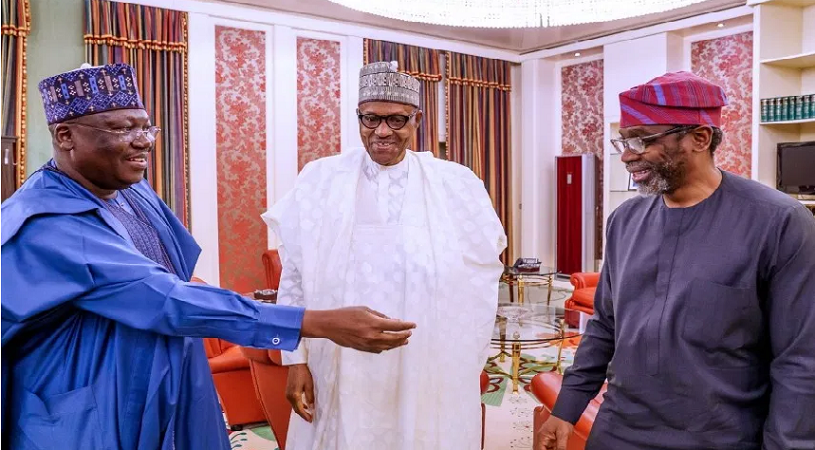
Nigeria leaders

One of Nigeria’s core problems is that we have many “companies”. Of course, the smarter people in the developmental organizations flip everything as signs of vitality and economic progress, and governments push them as evidence of great policies generating the dividends of democracy. Unfortunately, for this village guy from Ovim whose finest leadership moment remains being elected the inaugural President of his village age grade (Uke Udo, the Peace Age Grade), it is an illusion: our weakest link is that we have many companies in Nigeria.

According to SMEDAN (Small and Medium Enterprise Development Agency of Nigeria), about 59 million Nigerians are currently employed by 41 million Micro, Small and Medium Enterprises (MSEMEs).

No matter how you look at it, it is not a healthy ecosystem. Simply, these companies are not growing or expanding. Until we can reduce the paralysis for most to move from micro, small, and medium to large, we will continue to struggle with paucity of good jobs, development paralysis and stasis on the advancement of human welfare. 

Yes, it is like farming where we produce mass hunger with 65% of our working population when the U.S. uses less than 2% to feed itself, and enough to export to the world.

Nigeria needs to find a way to avoid celebrating what should not be celebrated. We need to get annoyed with them. Yes, unless we see them as problems, we will think those things are actually “progress”.  No way, Nigeria does not need everyone to be a business owner!

Of course, I recommend that SMEs register with SMEDAN as even the many we have, we need to know about them.

“On that, we were able to register MSMEs with the SMEDAN unique identification number. The registration is seamless that you can just go into the website www.smedanregister.com and you will be able to register, get your unique identification number and print your certificate. That has been a very good effort and up-till-date we were able to register over three million MSMEs that have full details of their location, the kind of products and services that they provide and their contacts,” Director-General, Dr Dikko Radda said, at the 27th regular valedictory meeting of the governing board of the agency, according to the News Agency of Nigeria.

There needs to be a plan to make sure that some of these SMEs transition into big companies.

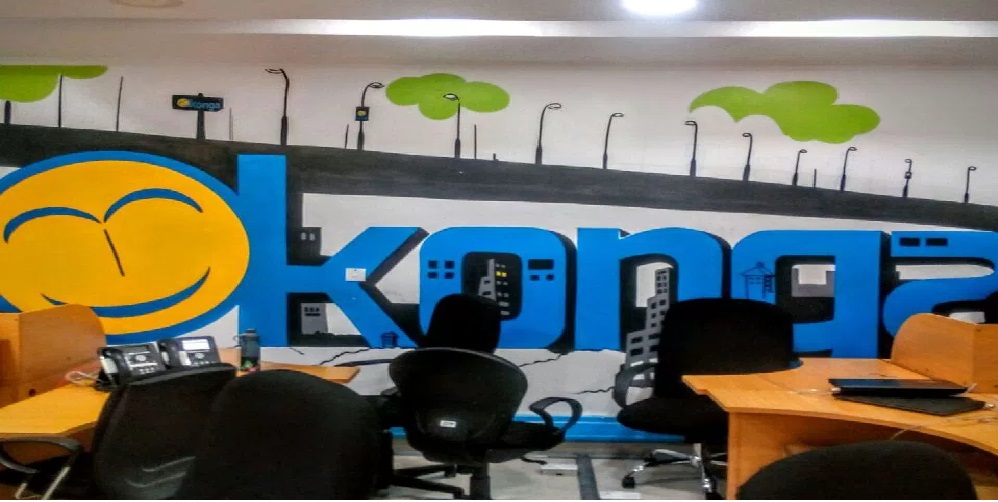
Konga Now Worth $2 Billion – Forbes

0

On a clearly marked paid Konga statement which was posted on Nairametrics, I picked a line which revealed that Forbes estimates Konga to be worth $2 billion: ‘’‘While the brand eyes its listing on the stock market to fulfill its potential in the marketplace, there are reports that it boasts over $2 billion valuation…” Yet, Konga did not clearly confirm that number in the same piece. 

Read the press release below….


Konga, Nigeria’s leading omnichannel e-commerce group has been identified as a strong player on the verge of dominating the African e-commerce scene.

Forbes, a globally renowned media company, focusing on business, investing, technology, entrepreneurship, leadership, and lifestyle, revealed this in a special feature published in its Forbes Africa edition late last week.

In addition to hailing the remarkable growth trajectory that has seen Konga become the first African e-commerce player to hit profitability, Forbes equally referenced the various thriving subsidiaries that have transformed the Konga Group into a formidable, flourishing e-commerce ecosystem, while also highlighting the pivotal role of KongaPay, a Central Bank of Nigeria (CBN)-licensed fintech platform as a leader in the Nigerian e-wallet space.

Following its 2018 acquisition by the Zinox Group and the tremendous growth it has recorded, Konga, Forbes noted, would potentially attract over a $2bn valuation when it eventually decides to go public, as widely envisaged.

‘‘While the brand eyes its listing on the stock market to fulfil its potential in the marketplace, there are reports that it boasts over $2 billion valuation, thanks to its new acquisition by Zinox.

‘‘Konga has continued to show promise in the online marketplace. After its acquisition, a review of the company’s performance shows the brand experienced over 800% growth. This surpasses expectations in e-commerce sectors across the continent. The new phase of Konga, driven by young, ambitious and innovative individuals, has seen it rake over $3oom in investments, according to reports.’

‘‘Efficient management of these investments has driven the brand to succeed in the e-commerce space, placing the brand on a profitable footing. The transformation has seen the brand recording significant progress in its online and offline transactions. Data shows that Konga fulfilled to the last mile 85% of all orders placed on its online and offline platform. The brand has also navigated and found a lasting solution to issues with logistics, one of the great hindering factors with e-commerce in Africa,’’ the article read in part.

In a chat with Co-CEO, Konga Group, Prince Nnamdi Ekeh who is rounding off his MBA studies at Oxford, Forbes also beamed its focus on the future of e-commerce in Africa, with Prince Ekeh who heaped praises on his Co-CEO, Nick Imudia and the entire Management and staff of the Konga Group for their resilience and dedication, revealing that the future remains bright.

‘‘E-commerce in Africa is set to take off to unprecedented heights in the next decade and players who are well-positioned will reap the fruits. Like I mentioned before, we have already seen triple-digit annual growth numbers and yet there is still so much market share left to capture as we transition people into the e-commerce era.

‘‘I also believe blockchain and decentralized finance will play a great role in improving financial inclusion in the continent which will give people more access to digital services like e-commerce. As economists, we were trained to look at indicators and so far, most critical indicators trend positively: Population, youth population, mobile penetration growth rates, connectivity growth rates. If these indicators continue to improve, I have no doubt that Africa will house one of the biggest e-commerce players in the world, and my job is to make that Konga,’’ Prince Ekeh disclosed.

The Need For Employers To Operate A Flexible Workplace

0

It is a proven fact that a flexible workplace increases employees’ productivity and improves work culture. When employers are the only ones allowed to make decisions without seeking the consent of employees it often discourages them and also makes them feel uneasy at the place of work. A flexible workplace has been proven to offer tremendous benefits which include reduced stress, increased creativity, improved productivity, high job satisfaction, etc. Employers need to remain flexible and be open to finding workable solutions that work best for their employees or else risk losing them.

One thing employers need to note is this, as long as the work assigned to employees is effectively carried out, they shouldn’t be concerned about the method used in carrying out the work as long as they see positive results they require. During the outbreak of covid-19, it gave rise to a flexible workplace. A lot of employers had to mandate their staff to resort to working from home. Ever since this paradigm shift in the workplace, according to research, 73% of employees cherished the remote way of working and insisted that even after the covid is over employers should stick to the new workplace structure.

As stated in fortune’s article, 86% of employees want to work from home at least two days a week. Work from home has been proven to be very beneficial to employees giving them the advantage of high productivity, better autonomy, flexibility, work-life balance, healthier lifestyles, more savings, and lesser carbon footprint. The covid period was an eye-opener for some employees to notice that flexibility in the workplace is very effective and produces results. Employers who are not sensitive to their employee’s needs/demands often have to bear some consequences.

Employers have to realize that the workplace has indeed transformed, especially in this 21st century that technology has evolved, making it easy for employees to work from anywhere. Some employers are hell-bent on ensuring that their employees must be present in the office which they believe produces better results and they also get to experience the company’s work culture. This kind of employer often breeds employees who later become recalcitrant and rebellious towards their rules. What they fail to understand is that not all employers find the workplace really productive, some work effectively from home. An understandable employer realizes that how and when their employees work best will vary depending on their circumstances.

The most important thing is that the work gets done effectively and not necessarily that it must be done in a prescribed timeframe and environment. Any reasonable employer will always want to consider the needs of the employees with flexible work arrangements that support improved work-life balance. Few people have this misconception that a flexible workplace is mostly all about allowing employees to work remotely. Not at all. Flexible arrangements in the workplace could be;

  • Unlimited paid time off
  • Shifting arrival and departure time
  • Flexible work shifts
  • Shared employment options
  • Leave
  • Sabbaticals, etc

With more and more employees now expecting flexible working arrangements, it is no longer seen as an option. Flexible working is now an essential business practice. For flexible arrangements to be properly executed in the workplace with positive results, an employer must come up with options that meet the needs of the employees. They should brainstorm on this process with their members, to identify each employee’s pain points and conducive hours. Then finally make arrangements that best suit everyone’s needs.

Final Thoughts

Employers must come to realize that a flexible work structure has become more accepted as a legitimate option for office employees. Times have changed. For employees not to risk losing their team members, they must adopt a flexible work structure.